Tunes Du Jour Presents Covers Of The Rolling Stones

One of the best ways to understand a song’s true strength is to hear it played by someone else. When a song can be lifted from its original context, performed by a different artist in a new style, and still resonate, you know the writers built it on a solid foundation. Looking at the sheer breadth of artists who have successfully interpreted the songs of Mick Jagger and Keith Richards, it becomes clear that their songwriting partnership created something remarkably durable. While their own recordings as The Rolling Stones are iconic, it’s the cover versions that reveal the fundamental power of the compositions themselves.

The playlist immediately highlights how deeply their writing is rooted in the American soul and R&B they revered. It’s one thing to be influenced by a genre; it’s another to write songs that the masters of that genre can inhabit as their own. When you hear Aretha Franklin transform “Jumpin’ Jack Flash” into a gospel-fueled force of nature, or Ike & Tina Turner inject “Honky Tonk Women” with their signature high-octane energy, you realize the songs contain an authentic rhythmic and emotional core. This goes even deeper with Solomon Burke’s take on “I Got the Blues” or Bettye LaVette’s searing, world-weary version of “Salt of the Earth.” These aren’t just covers; they are reclamations, demonstrating that the blueprints Jagger and Richards created were so solid that they could hold the weight of the most powerful voices in soul music.

What’s also remarkable is the structural flexibility of their work. A great Jagger/Richards song often has a distinct personality, yet its core components—melody, lyrical theme, and chordal movement—are adaptable enough to thrive in entirely new environments. The post-punk angularity of Devo’s “(I Can’t Get No) Satisfaction” strips away the blues swagger to expose the lyric’s timeless complaint of modern alienation. The Sundays reimagine the country-tinged “Wild Horses” as a piece of shimmering, ethereal dream pop, proving the song’s beautiful melody is its true anchor. Even more extreme, the Ramones boil “Out of Time” down to its raw essentials, recasting the shuffling pop song as a driving, three-chord punk declaration, while Ituana finds a relaxed, bossa nova groove in the epic “You Can’t Always Get What You Want.” The songs don’t just survive these transformations; they reveal different facets of their character.

Ultimately, this collection of performances underscores that the Jagger/Richards catalog is more than a collection of iconic riffs and rock and roll attitude. These are fundamentally well-crafted songs. They can be country laments in the hands of Johnny Cash (“No Expectations”) or Steve Earle (“Dead Flowers”). They can be theatrical pop statements for David Bowie (“Let’s Spend The Night Together”) or Bryan Ferry (“Sympathy for the Devil”). They can even be played for laughs by “Weird Al” and The Folksmen precisely because the source material is so instantly recognizable. The Rolling Stones’ versions will always be definitive, but these interpretations from other artists give us a clearer view of the writers’ craft, proving the songs stand on their own, ready for anyone to find a piece of their own story within them.

Follow Tunes Du Jour on Facebook

Follow me on Bluesky

Follow me on Instagram

Tunes Du Jour Presents Eagles

You know the songs. Whether it’s the opening guitar strum of “Hotel California” echoing through a retail store or the effortless cool of “Take It Easy” on the radio, the music of the Eagles is woven into the very fabric of popular culture. They are, for many, the definitive sound of 1970s California rock. But when you look at a playlist that pulls not just from the band’s iconic catalog but also from the solo careers of its members, a more complex and interesting story begins to unfold. It’s the story of a band, yes, but also of the powerful creative forces that defined it.

In their early days, the Eagles perfected a blend of country-inflected rock that felt both revolutionary and deeply familiar. With Bernie Leadon’s string-bending authenticity providing a crucial link to traditional country, songs like “Peaceful Easy Feeling” established a sound built on gentle acoustic guitars and those famously pristine vocal harmonies. Yet, the band’s ambition was clear from the start. On a single album like 1973’s Desperado, they demonstrated a remarkable range, offering both the sepia-toned storytelling of “Tequila Sunrise” and the sweeping, cinematic sadness of the title track. Their evolution continued with hits like “One of These Nights,” which pushed their sound forward with a taut, R&B-influenced groove, and the soaring ballad “Take It to the Limit,” a track defined by the unforgettable high-note heroics of bassist Randy Meisner.

The band’s musical expansion went into overdrive in the late 70s with key changes in personnel. First, the arrival of guitarist Joe Walsh injected a new energy, which you can hear clearly on his solo track “Rocky Mountain Way.” He brought a rawer, grittier guitar attitude that made a snarling, high-octane track like “Life in the Fast Lane” possible. But the band’s later sound wasn’t just about getting heavier; it also grew smoother. The addition of bassist Timothy B. Schmit, who brought another key flavor to the group, is perfectly captured in his soulful, impeccable lead vocal on “I Can’t Tell You Why.” It gave the Eagles one of their most enduring and elegant hits, proving they could master polished balladry as effectively as they could rock.

To fully appreciate the band’s dynamic, one also has to listen to what happened when its members went their separate ways in the 1980s. The solo material reveals the individual artistic identities that were often blended within the group. Don Henley, in particular, stepped out from behind the drum kit to become a formidable solo artist, showcasing a cynical and poetic voice on tracks like “The Boys of Summer” and “Dirty Laundry.” At the same time, Glenn Frey delivered pure 80s pop-rock adrenaline with “The Heat Is On,” a sound quite distinct from the band’s collective work. These solo ventures highlight the specific creative impulses each member brought to the table.

Ultimately, a playlist like this offers a richer understanding of the band’s legacy. It shows that the Eagles weren’t a monolith, but a convergence of remarkable talents. You had the foundational country-rock instincts, the powerhouse vocalists who could each take the lead, the gritty guitar hero, and the polished, often pointed, songwriting of Henley and Frey. Listening to the haunting live harmonies of “Seven Bridges Road,” you can hear all those individual voices coming together to create something powerful and lasting. It’s a sound that is much more than any single hit song—it’s the enduring result of a rare and potent combination of artists.

Follow Tunes Du Jour on Facebook

Follow me on Bluesky

Follow me on Instagram
Tunes Du Jour Presents 1963

If you could travel back in time and turn on a car radio in 1963, what would you hear? It was a year poised on the brink of profound change, both culturally and musically. Listening to the pop charts from that year is like opening a time capsule of a specific American moment, one just before the British Invasion, led by The Beatles, would arrive on our shores in January 1964 and rearrange the entire landscape. Using a playlist of the year’s biggest hits, we can get a clear picture of the sounds that defined the last year of this particular pop era.

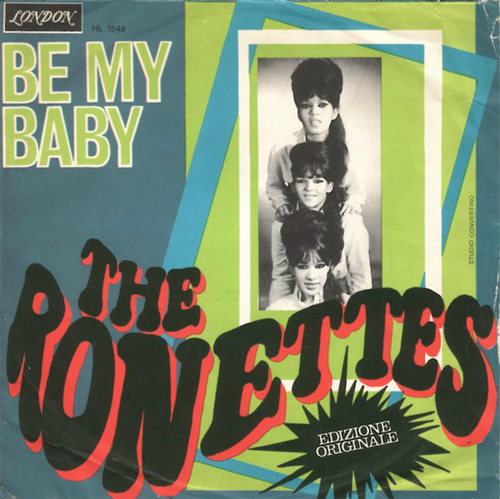
Two major sounds seemed to rule the airwaves, both born from a distinctly American, youthful energy. From the West Coast came the sun-drenched anthems of surf rock. The Beach Boys offered a national invitation with “Surfin’ U.S.A.,” while their friendly rivals Jan & Dean created the idyllic “Surf City.” This wasn’t just a vocal trend; the raw, driving energy of instrumental hits like The Surfaris’ “Wipe Out” and The Chantays’ “Pipeline” provided a visceral, drum-and-guitar-heavy soundtrack for a generation. Complementing this was the sound of the girl groups, often channeling teenage drama through the ambitious production of Phil Spector’s “Wall of Sound” on tracks like The Ronettes’ “Be My Baby” and The Crystals’ “Da Doo Ron Ron.” From the defiant fun of Lesley Gore’s “It’s My Party” to the tough-girl stance of The Angels’ “My Boyfriend’s Back,” these songs were miniature soap operas set to a 4/4 beat.

At the same time, a different kind of sound was solidifying its place at the heart of American music, broadcasting from Detroit and other soul music hubs. Motown was hitting its stride, producing hits that were both commercially successful and artistically sophisticated. You could feel the undeniable energy of Martha Reeves & The Vandellas on “(Love Is Like A) Heat Wave” or get lost in the smooth, clever plea of Smokey Robinson & the Miracles’ “You’ve Really Got a Hold on Me.” A teenage prodigy named Stevie Wonder even captured the explosive energy of his live performances on “Fingertips, Pts. 1 & 2.” It wasn’t just Motown, either. The soulful storytelling of groups like The Drifters on “Up on the Roof” and the raw, emotional performance of Garnet Mimms on “Cry Baby” showed the depth and variety within R&B and soul music.

Beyond these dominant movements, the Top 40 of 1963 was remarkably eclectic. The folk revival crashed onto the pop charts with Peter, Paul and Mary’s earnest version of Bob Dylan’s “Blowin’ In The Wind,” introducing a new layer of social consciousness to mainstream radio. Unclassifiable artists with singular visions also found massive success. Roy Orbison’s haunting, operatic ballad “In Dreams” and Johnny Cash’s iconic, mariachi-inflected “Ring of Fire” were worlds unto themselves. The charts even made room for the wonderfully unexpected: Kyu Sakamoto’s “Sukiyaki,” a beautiful Japanese-language ballad that became a number-one hit, and “Dominique” by The Singing Nun, also a number-one hit, proved that a great melody could transcend any language barrier. And in a class all its own was the wonderfully raw and raucous “Louie, Louie” by The Kingsmen, a garage-rock precursor that parents hated and kids loved.

Looking back, the collection of hits from 1963 represents a high point for a certain kind of American-made pop music. It was a world of surf guitars, dramatic girl-group harmonies, sophisticated soul, and a surprising number of unique one-offs. Every song on the radio, from Andy Williams’ smooth crooning to the gritty simplicity of “Louie, Louie,” was part of the same popular conversation. It was a vibrant and diverse scene, but one operating on its own terms. It had no idea that four young men from Liverpool were about to board a plane, bringing with them a sound that would change the rules for everyone.

Follow Tunes Du Jour on Facebook

Follow me on Bluesky

Follow me on Instagram

Tunes Du Jour Celebrates Bastille Day

Happy Bastille Day!

On this date in 1789, the French people stormed the Bastille Prison in Paris to shout “No More Kings!” They probably shouted that in French. I can’t say for sure as I wasn’t there that day. Anyhoo, it worked! How’ bout that? This uprising ultimately led to the birth of democracy in France.

To celebrate, I compiled a Bastille Day playlist. I’ll be the first to tell you that there are far more accurate Bastille Day playlists out there. I’m using the holiday as an excuse to compile tracks from French artists, songs sung in French, songs with French titles, and one song by Chicago-born 60s song parodist Allan Sherman. I learned more from that three-minute record, baby, than I ever learned in school about the French Revolution.

Follow Tunes Du Jour on Facebook

Follow me on Bluesky

Follow me on Instagram
Tunes Du Jour Presents 2025 Thus Far

Call me old-fashioned, but I operate on a twelve-month calendar. That might be a controversial take, considering that outlets like Rolling Stone dropped their “Best of the Year So Far” lists back in June, apparently under the impression that 2025 is only ten months long. I thought I’d wait for half of the year to pass before I declare that half of the year has passed. For those of us who believe in a twelve-month cycle—not a ten-month one—here are 30 songs that have made my year in music great so far.

Follow Tunes Du Jour on Facebook

Follow me on Bluesky

Follow me on Instagram