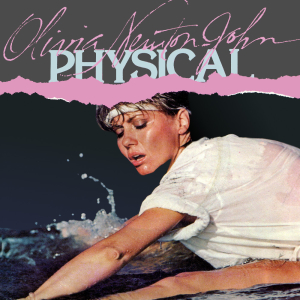
Tunes Du Jour Presents Olivia Newton-John

When you think of Olivia Newton-John, what’s the first image that comes to mind? For millions, it’s the transformation at the end of Grease—the leather jacket, the confident stride, the electrifying duet with John Travolta. But as a quick journey through her song catalog reveals, that iconic moment is just one chapter in a much broader and more fascinating story. Her career wasn’t a single note, but a series of distinct, evolving sounds, all held together by one of the most recognizable and endearing voices in pop music.

Listening to her early work, you can hear an artist with a clear, gentle sensibility rooted in the folk and country music of the era. Songs like her cover of Bob Dylan’s “If Not For You” and the narrative-driven “Banks of the Ohio” established her as a gifted interpreter. This was soon followed by a wave of soft-rock hits that defined the sound of mid-70s radio. With the earnest plea of “If You Love Me (Let Me Know)” and the gentle reassurance of “Have You Never Been Mellow,” she carved out a niche as a vocalist of immense warmth and sincerity. This period culminated in her signature ballad, “I Honestly Love You,” a masterclass in quiet vulnerability that became her first number-one hit in the U.S.

Then, of course, came Grease. The 1978 film wasn’t just a career boost; it was a global phenomenon that showcased her versatility. She effortlessly handled the sock-hop fun of “Summer Nights” and the plaintive, heart-on-her-sleeve performance of “Hopelessly Devoted to You.” But it was the film’s finale, with “You’re the One That I Want” and “We Go Together,” that signaled a change. The energy was bigger, the attitude was bolder, and it set the stage for a musical pivot that would redefine her image for a new decade.

She didn’t wait long to capitalize on that new energy. Her very next album, 1978’s Totally Hot, continued the transformation, trading in the gentle ballads for a tougher, more pop-rock sensibility. A track like “A Little More Love,” with its driving guitar riff and assertive vocal, made it clear that the leather-clad Sandy was here to stay. This embrace of a more contemporary pop sound continued into projects like the soundtrack for Xanadu, which gave us the dreamy, roller-rink-ready perfection of “Magic.” Her most definitive transformation, however, arrived with the 1981 album Physical. The title track, with its pulsing beat and cheeky lyrics, was a world away from her past, and this era gave us energetic, synth-driven tracks like “Make a Move On Me” and “Heart Attack.”

What’s remarkable, looking back at this collection of songs, is not just the stylistic shifts but how natural each one felt. The common thread through the country-folk beginnings, the blockbuster duets, and the slick pop productions is the voice itself—pure, emotive, and instantly recognizable. Whether she was collaborating with Andy Gibb on “I Can’t Help It” or delivering the confident, rhythmic pulse of “A Little More Love,” Olivia Newton-John possessed a rare ability to connect. This playlist isn’t just a random assortment of hits; it’s a document of an artist’s graceful evolution and a reminder of the enduring appeal of a truly great singer.

Follow Tunes Du Jour on Facebook

Follow me on Bluesky

Follow me on Instagram

Tunes Du Jour Presents The Bruce Springsteen Songbook

Bruce Springsteen’s name immediately conjures images of epic live performances and anthemic rock, but beneath the stadium lights and E Street Band’s prowess lies the bedrock of truly exceptional songwriting. While his own interpretations are iconic, a fascinating way to understand the depth and versatility of his craft is to listen to his songs as performed by other artists. This collection of interpretations isn’t just a testament to his popularity; it’s a deep dive into the resilient structure and universal appeal of his compositions. From Manfred Mann’s Earth Band giving “Blinded By The Light” a prog-rock makeover to Patti Smith taking his musical sketch for “Because the Night” and transforming it with her own powerful lyrics, these early releases demonstrated how his musical ideas could flourish in different hands.

What becomes clear through these varied renditions is the enduring power of Springsteen’s narratives. His ability to distill complex human experiences – the struggles of working life, the ache of forgotten dreams, the defiance of the underdog – resonates across genres and generations. Lucinda Williams’ sparse, melancholic “Factory” strips the song to its empathetic core, highlighting the quiet dignity in its depiction of labor. Johnny Cash’s gravelly voice lends a somber weight to the poignant tale of brotherhood and duty in “Highway Patrolman,” while Billy Bragg’s acoustic “Mansion on the Hill” underscores the song’s sharp social commentary on class division. Even a frequently misunderstood anthem like “Born in the U.S.A.” finds its original critical intent amplified in the raw, acoustic performance by Jason Isbell and Amanda Shires, revealing the layered complexities always present in the lyrics.

Beyond the lyrical prowess, this playlist also illuminates the structural and melodic robustness of Springsteen’s music. His compositions possess an inherent strength that allows them to be re-imagined without losing their essence. Take Hot Chip’s electronic reinterpretation of “Dancing In The Dark,” which transforms its mainstream rock energy into an indie-dance anthem, proving how adaptable the song’s core rhythm and melody truly are. Similarly, the minimalist beauty of Kevin Breit and Harry Manx’s “I’m On Fire” distills the song’s longing into a haunting, intimate whisper, while Crooked Fingers’ “The River” captures the stark emotional landscape of its narrative with a raw, almost trembling fragility. Even a track like Donna Summer’s “Protection,” originally given to her by Springsteen, showcases how his knack for catchy hooks and dynamic arrangements could easily translate into a different pop sensibility, illustrating a versatile craft beneath the surface.

This extensive array of interpretations also showcases the broad emotional spectrum Springsteen explores in his writing. His songs aren’t confined to a single mood; they capture the full range of human feeling, from youthful exuberance to weary resignation, from hopeful yearning to quiet despair. The Hollies’ rendition of “4th of July, Asbury Park (Sandy)” evokes a wistful, nostalgic glow, while Southside Johnny & The Asbury Jukes’ raucous “Hearts of Stone” pulsates with a more defiant rock and soul energy. Natalie Cole injects a playful, sassy spirit into “Pink Cadillac,” revealing the sheer fun and swagger that can inhabit his lyrics. And when Bettye LaVette takes on “Streets of Philadelphia,” she strips it down to its raw, aching vulnerability, reminding us of the profound empathy and social conscience that often underlies his work. These varied voices unlock different emotional doors, each revealing another facet of the original composition’s emotional potential.

Ultimately, a journey through these numerous cover versions offers a compelling argument for Bruce Springsteen’s enduring legacy as a songwriter. Stripped of his iconic delivery or re-clothed in entirely new musical garments, his compositions consistently stand tall. They speak to universal truths, craft unforgettable characters, and resonate with melodies that are both immediate and deeply rooted. This diverse collection of interpretations isn’t just a tribute; it’s an educational deep dive into the core strength of his writing, demonstrating that long before they became rock anthems or stadium singalongs, they were simply great songs – versatile, profound, and built to last, capable of inspiring countless artists to make them their own.

Follow Tunes Du Jour on Facebook

Follow me on Bluesky

Follow me on Instagram

Tunes Du Jour Celebrates Famous Dates In Pop Music

It was the third of September / That day I’ll always remember

It was the third of June, another sleepy, dusty Delta day

Early morning, April 4 / Shot rings out in the Memphis sky

Do you remember the twenty-first night of September?

The theme of today’s playlist is dates referenced in song lyrics.

A date can do a lot of heavy lifting in a song. It can anchor a memory, mark a turning point, or drop us directly into a moment in history. Sometimes it’s deeply personal—Jay-Z naming his birthday in “December 4th”—and sometimes it’s collective, as in U2’s “Pride (In the Name of Love),” with its reference to April 4, 1968, the day Martin Luther King Jr. was assassinated.

Songwriters also use dates to heighten mystery. Bobbie Gentry’s “Ode to Billie Joe” begins on June 3, but instead of telling us what happened at the Tallahatchie Bridge, the lyric circles around it, making the day itself loom larger than the unexplained event. Similarly, the Temptations’ “Papa Was a Rolling Stone” ties the father’s death to September 3, a detail that sticks in the mind as much as the funk groove itself.

Not every date is somber. Earth, Wind & Fire turned September 21 into an annual celebration, and Chicago’s “Saturday in the Park” keeps the Fourth of July grounded in a snapshot of music, sunshine, and family fun. Bruce Springsteen’s “4th of July, Asbury Park (Sandy)” is more bittersweet, capturing the mix of romance and restlessness that defined his early work.

Dates can also mark social upheaval. Sublime’s “April 29, 1992 (Miami)” references the Los Angeles riots, while the Neville Brothers’ “Sister Rosa” pays tribute to Rosa Parks’ refusal to give up her bus seat on December 1, 1955. Songs like these remind us that a single day can ripple outward into history.

Taken together, this playlist shows the many ways a songwriter can spin meaning out of the calendar. A date can be the start of a story, a marker of joy or tragedy, or just a sly joke. What matters is how it sticks in your memory, long after the last chord fades.

Follow Tunes Du Jour on Facebook

Follow me on Bluesky

Follow me on Instagram

Tunes Du Jour Presents Nile Rodgers

If you’ve ever found yourself on a dance floor, there’s a very high probability you’ve been moving to the work of Nile Rodgers. While his name might not be as instantly recognizable as the superstars he’s worked with, his sound is an undeniable part of modern music history. Looking at a playlist of his work is like taking a tour through the last five decades of pop, funk, and rock. He’s the common thread, the secret ingredient, and the architect behind countless hits, often armed with his signature 1960 Fender “Hitmaker” Stratocaster.

It all starts with Chic, the band he co-founded with the brilliant bassist Bernard Edwards. On tracks like “Good Times,” “Le Freak,” “I Want Your Love,” “Everybody Dance,” and the rest of the Chic songs on this list, Rodgers served as co-writer, guitarist, and co-producer. This partnership, known as The Chic Organization, became a powerhouse production unit. They took their signature blend of sophisticated funk, propulsive rhythms, and string-laden elegance and applied it to other artists. For Sister Sledge, they wrote, produced, and performed on “We Are Family,” “He’s the Greatest Dancer,” and “Lost In Music,” transforming the family group into global sensations. They did the same for Diana Ross, delivering her iconic hits “Upside Down” and “I’m Coming Out,” where Rodgers once again handled co-writing, guitar, and co-production duties.

As the 1980s dawned, Rodgers stepped into a new role as a solo super-producer, shaping the sound of the decade. He produced David Bowie’s blockbuster album Let’s Dance, playing his distinct, chiming guitar on the title track, “Modern Love,” and “China Girl.” While he didn’t write those songs, his production and arrangements are largely responsible for making them monumental hits. He did the same for Madonna, producing her album Like a Virgin. On tracks like the title song, “Material Girl,” “Dress You Up,” and “Angel,” Rodgers was the producer and a key guitarist, helping to craft the clean, sharp, and irresistibly danceable sound that defined her early career. He also brought his Midas touch to the world of New Wave, producing the hit single version of Duran Duran’s “The Reflex” and co-producing their smash, “Wild Boys.”

Beyond these marquee names, Rodgers’s discography reveals an incredible range. He was the producer who helped The B-52’s craft the polished and joyful sound of “Roam.” He produced the sleek, funk-rock of INXS’s “Original Sin” and the anthemic “Lay Your Hands On Me” for the Thompson Twins. His work with female vocalists continued to shine, from co-writing and co-producing the criminally underrated groove of Carly Simon’s “Why” to lending that same full-service treatment to Debbie Harry’s solo track “Backfired,” Grace Jones’ “I’m Not Perfect,” and Sheila & B. Devotion’s European disco classic, “Spacer.” On each of these, he was not just behind the board but was an active writer and musician.

Decades later, that same unmistakable guitar and rhythmic sensibility are as relevant as ever. His re-emergence into the mainstream wasn’t a comeback, but simply a reminder that he never left. He brought his magic to Daft Punk’s “Get Lucky,” which he co-wrote and on which he played that instantly recognizable guitar riff. More recently, he contributed his guitar playing and received a co-writing credit on Beyoncé’s “CUFF IT,” a track that feels like a direct descendant of the joyful, sophisticated funk he pioneered. From disco to new wave, and from 80s pop to 21st-century R&B, Nile Rodgers’s role has been consistent: he is the man who provides the foundation, the feel, and the funk that makes the world want to dance.

Follow Tunes Du Jour on Facebook

Follow me on Bluesky

Follow me on Instagram

Tunes Du Jour Presents Fiona Apple

Fiona Apple’s career reads like a masterclass in artistic evolution, beginning with the raw vulnerability that made “Criminal” a cultural phenomenon in 1996. From her debut album Tidal, tracks like “Sleep to Dream” and “Shadowboxer” established her as an artist unafraid to excavate the messier corners of human emotion. These early songs showcased a young woman wrestling with desire, anger, and self-discovery through piano-driven compositions that felt both intimate and explosive. Apple’s voice, even then, carried a weight that suggested experiences far beyond her years.

The progression from her debut through albums to its follow-ups When the Pawn… and Extraordinary Machine reveals an artist continuously refining her approach without sacrificing intensity. Songs like “Fast as You Can” and “Paper Bag” demonstrate her ability to craft complex emotional narratives that resist easy categorization.

Apple’s later work, particularly evident in tracks like “Every Single Night” from The Idler Wheel… and the entire Fetch the Bolt Cutters era, shows her pushing into increasingly experimental territory. Songs like “Shameika,” “Heavy Balloon,” and the title track “Fetch the Bolt Cutters” reveal an artist who has grown more confident in her willingness to challenge conventional song structures. The percussion-heavy, almost ritualistic quality of these newer compositions suggests someone who has found liberation in embracing chaos rather than fighting it.

What emerges from examining this collection is Apple’s consistent refusal to smooth over the jagged edges of human experience. Whether exploring themes of mental health in “Heavy Balloon,” childhood trauma in “Shameika,” or relationship dynamics in “Hot Knife” and “Valentine,” she approaches each subject with unflinching honesty. Her willingness to sit with discomfort, both musically and lyrically, has created a body of work that feels essential rather than merely entertaining.

While she is fiercely individual, the playlist also highlights her power as a collaborator and interpreter. Hearing her voice alongside Johnny Cash’s on “Bridge over Troubled Water” is a profound meeting of two artists who share a certain gravitas, and her contributions to songs by The Waterboys or Iron & Wine show how her distinct phrasing can elevate another’s work. This respect from her peers is perhaps best illustrated by an invitation from Bob Dylan to play piano on his epic “Murder Most Foul.” Apple later shared that she felt insecure about the task, but Dylan offered the perfect reassurance: “You’re not here to be perfect, you’re here to be you.” That sentiment gets to the heart of her appeal. She is a musician’s musician, valued precisely for the unique, imperfect, and wholly authentic self she brings to the table.

To listen to Fiona Apple, from the defiant teenager of “Sleep to Dream” to the liberated woman of “I Want You To Love Me,” is to witness an artist in a constant state of unfolding. Her music doesn’t offer easy answers or simple sentiments. Instead, it offers something more valuable: companionship in complexity. It’s a body of work that validates the tangled, messy, and often difficult process of knowing yourself and, when necessary, finding the courage to fetch the bolt cutters and set yourself free.

Follow Tunes Du Jour on Facebook

Follow me on Bluesky

Follow me on Instagram

Tunes Du Jour Presents Bee Gees

Bee Gees. The name alone often conjures images of white suits, falsetto, and disco balls, immediately transporting listeners back to the late 1970s. While their colossal success with the Saturday Night Fever soundtrack undeniably cemented their place in pop culture history, reducing the Gibb brothers’ immense career to just that era would be to overlook one of pop music’s most remarkable and enduring legacies. Their creative output, driven by the unique talents of Barry, Robin, and Maurice Gibb, spans decades and styles, revealing a depth and adaptability that few artists achieve.

Before they ignited dance floors, the Bee Gees were already seasoned songwriters and performers, crafting sophisticated pop and heartfelt ballads. Listen to tracks like 1967’s soulful “To Love Somebody,” inspired by the works of Otis Redding, or the evocative storytelling of “New York Mining Disaster 1941.” Their early period delivered beautifully orchestrated pop with “Massachusetts” and “Holiday,” alongside the melancholic charm of “Words” and “I Started A Joke.” This era showcases a mastery of melody and harmony, often with a dramatic flair, and demonstrates their ability to connect emotionally with audiences through deeply personal narratives, long before the iconic white suits ever came into play.

By the mid-1970s, the Bee Gees were ready for a transformation. Embracing a more R&B-influenced sound, they transitioned with tracks like “Jive Talkin'” and “Nights on Broadway,” which hinted at the rhythmic shift to come. Then came the explosion of Saturday Night Fever, which showcased their incredible range with the unstoppable pulse of “Stayin’ Alive” and “Night Fever” alongside the tender balladry of “How Deep Is Your Love.” This variety proves that even at their commercial peak, they were focused on creating meticulously crafted pop songs, not just dance hits. Their signature harmonies were now wrapped in infectious grooves, demonstrating a keen ear for contemporary sounds while retaining their melodic brilliance. It was a deliberate, and spectacularly successful, reinvention that proved their versatility.

Even as the disco era waned, the Bee Gees continued to write and perform, proving their staying power was rooted in songwriting, not just a trend. Post-fever hits like “Too Much Heaven,” “Tragedy,” and “Love You Inside Out” kept their sound fresh, while later successes like 1987’s “You Win Again” and 1989’s “One” showcased their continued relevance and ability to adapt. Whether they were penning hits for themselves or for other artists, the underlying quality of their compositions remained consistently high, a testament to the brothers’ collaborative genius and their intuitive understanding of what makes a great song.

To explore the Bee Gees’ discography is to embark on a journey through diverse musical landscapes, far beyond any single genre label. From their baroque pop beginnings to their R&B-infused disco zenith and beyond, their extensive catalog reveals a consistent thread of masterful songwriting and unparalleled vocal harmonies. The Gibb brothers were truly innovators, evolving with the times while maintaining an identifiable sound. Their legacy isn’t just about iconic hits; it’s about the sheer breadth and enduring quality of their contribution to popular music, inviting listeners to discover the full, rich story.

Follow Tunes Du Jour on Facebook

Follow me on Bluesky

Follow me on Instagram