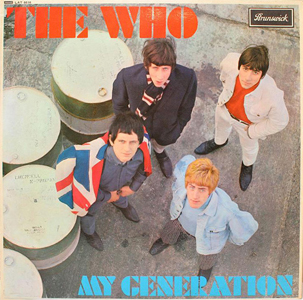
Listening to The Who is an active experience. You don’t just put their music on in the background; you feel it in your chest. A glance at a career-spanning playlist reveals a band that was never content to stand still. It all starts with that jangling, nervous energy of early tracks like “I Can’t Explain” and “Anyway, Anyhow, Anywhere.” These songs are short, sharp declarations of youthful confusion and defiance, built on raw guitar chords and a rhythm section that sounds less like it’s keeping time and more like it’s trying to knock down a wall. With “My Generation,” that feeling was codified into a stuttering, aggressive anthem that perfectly captured the frustration of not being heard. This was the band’s foundation: purposeful noise and a palpable sense of urgency.
But that initial burst of energy quickly gave way to something more complex and narrative-driven. Pete Townshend’s songwriting began to explore characters and unusual situations. Songs like “Pictures Of Lily” and “I’m A Boy” moved beyond simple angst to tell detailed, slightly strange stories about identity and longing. This interest in character-building was a clear precursor to the band’s larger conceptual works. You can hear the DNA of their famous rock operas in the storytelling of a standalone track like “Happy Jack,” and by the time you arrive at pieces like “Pinball Wizard” or the climactic “See Me, Feel Me,” it’s clear this was a group with ambitions far beyond the three-minute pop single.
Of course, no discussion of The Who is complete without acknowledging their unparalleled command of stadium-sized rock. The period that produced “Baba O’Riley,” “Won’t Get Fooled Again,” and “Bargain” found them at the height of their powers, famously integrating synthesizers not as a gimmick, but as a core component of their monumental sound. This is where the four distinct personalities of the band converged perfectly. You had Townshend’s visionary songwriting, Roger Daltrey’s commanding vocal presence, John Entwistle’s incredibly nimble and melodic bass lines (just listen to “The Real Me” or his delightfully dark “Boris the Spider”), and Keith Moon’s explosive, unconventional drumming that gave the band its chaotic heart.
Running through all these different eras is a powerful current of searching and self-examination. From the directness of “The Seeker” to the introspective melancholy of “Behind Blue Eyes,” their music often grapples with the difficulty of figuring out who you are and where you fit in. This theme matures with the band. The youthful frustration of “The Kids Are All Right” evolves into the world-weary questioning of “Who Are You” and the profound desperation for connection in “Love, Reign O’er Me.” It’s a recurring conversation about identity that gives their extensive catalog a remarkable depth and human quality.
Ultimately, a playlist like this demonstrates a journey of constant musical development. The band that covered “Summertime Blues” with raw R&B power is the same band that created the sleek, cynical groove of “Eminence Front” and the charming pop of “You Better You Bet” more than a decade later. They were a band of contradictions—loud yet introspective, chaotic yet meticulously constructed, aggressive yet deeply vulnerable. More than just a collection of hits, their body of work serves as a timeline of a band that never stopped pushing the boundaries of what a rock song could say and do.
Follow Tunes Du Jour on Facebook
Follow me on Bluesky
Follow me on Instagram