Tunes Du Jour Presents Britney Spears

If you scroll through a playlist of Britney Spears’s greatest hits, you’re not just looking at a list of popular songs. You’re tracing a remarkable path through modern pop music, one that is often defined by its distinct chapters. The journey begins with the now-iconic “…Baby One More Time,” a song that launched a career and set a new standard for late-90s pop. Tracks like this, along with “Oops!…I Did It Again” and “(You Drive Me) Crazy,” presented a specific, highly polished image: the approachable girl next door, navigating first loves and heartbreaks. Even in these early days, however, songs like “Lucky”—a surprisingly melancholic look at a famous girl who is crying behind her smile—hinted at the complex relationship with fame that would become a recurring theme in her work.

It wasn’t long before that polished image began to intentionally crack and evolve. The shift is palpable. You can hear it in the slinky, breathless production of “I’m a Slave 4 U,” a track that signaled a clear departure from her previous sound and a confident step into a more adult persona. This era wasn’t just about a new sound; it was about a new narrative. In songs like “Overprotected” and “Stronger,” the lyrics became declarations of independence, pushing back against outside control and expectations. It was a crucial pivot, one where the artist began using her music to comment on her own public journey, a theme she would revisit with even more focus later on.

As her career progressed into the mid-2000s, Spears became a central figure in the electronic and dance-pop wave that would dominate the decade. This is perhaps her most sonically adventurous period, producing some of pop’s most enduring anthems. The frantic, string-driven beat of “Toxic,” the demanding pulse of “Gimme More,” and the robotic sneer of “Womanizer” are all masterclasses in dance floor command. This period also saw the subject matter of her songs become its most self-referential. With “Piece Of Me,” she directly addressed the media frenzy surrounding her life, turning the camera back on the audience with a defiant and clever hook. It’s a bold move that transformed her from a subject of pop culture into one of its sharpest commentators.

Of course, the story isn’t all high-energy production and defiant statements. Woven throughout this catalogue are moments of striking vulnerability that offer a different kind of insight. The simple, piano-led melody of “Everytime” stands in stark contrast to the high-octane tracks that often surrounded it, revealing a quiet fragility. This emotional range is a key part of her artistry. Similarly, her collaborations show her ability to stand alongside fellow icons, from the dance-off with Madonna in “Me Against The Music” to her graceful return on the warm, inviting duet “Hold Me Closer” with Elton John, a track that feels less like a comeback and more like a welcome continuation.

Listening back, from the earnest pop of “Sometimes” to the commanding instruction of “Work Bitch,” what emerges is the sound of an artist continuously recalibrating. Her discography tells a story of growth, defiance, and resilience, all filtered through the lens of pop music. Each song is not just a hit, but a snapshot of a specific moment, capturing a young woman defining herself, a global star navigating immense pressure, and an artist creating a body of work that has profoundly shaped the sound and style of pop for more than two decades.

Follow Tunes Du Jour on Facebook

Follow me on Bluesky

Follow me on Instagram
Tunes Du Jour Presents Randy Newman

If your primary exposure to Randy Newman is the warm reassurance of “You’ve Got A Friend In Me,” you’d be forgiven for missing the bigger picture. If you only know him from the radio controversy surrounding “Short People,” you might have the wrong picture entirely. Listening to a broad selection of his work reveals something far more complex and interesting. Newman is one of America’s most distinct songwriters, a master of inhabiting characters, often to expose their deepest flaws. He doesn’t just write songs about people; he writes songs from their point of view, and he rarely picks the hero of the story to be his narrator.

His most famous method is satire, but it’s a specific kind that requires you to listen closely. The playlist gives us plenty of evidence. He isn’t actually advocating for dropping a bomb in “Political Science” or celebrating unthinking consumerism in “It’s Money That Matters.” He’s putting on a mask, adopting the voice of a jingoistic hawk or a cynical materialist to show how absurd their worldview is. The same goes for the layered, uncomfortable commentary of “Rednecks,” a song that indicts Northern hypocrisy as much as it does Southern prejudice. It’s a high-wire act that relies on the listener understanding that the singer and the songwriter are two different people, a distinction that has sometimes been lost but is central to appreciating his genius.

But to paint Newman as only a satirist is to ignore the profound empathy that runs through his catalog. This is the same writer who can craft a song as devastatingly beautiful as “Louisiana 1927,” a historical account of a flood that feels immediate and heartbreaking. He can capture a deep sense of alienation in “I Think It’s Going To Rain Today” or the quiet despair of “Guilty.” Perhaps the most powerful example of this duality is “God’s Song (That’s Why I Love Mankind),” where a gorgeous, hymn-like melody carries some of the most cynical lyrics ever put to paper. It’s this ability to pair musical beauty with lyrical discomfort that makes his work so compelling and emotionally resonant.

It’s also crucial to remember that Newman began his career as a songwriter for other artists, and his compositions have a sturdiness that allows them to be interpreted in many ways. You can hear this in the playlist. Three Dog Night took the nervous energy of “Mama Told Me (Not To Come)” and turned it into a massive, swaggering rock anthem. In the decade before, singers like Dusty Springfield and Cilla Black were delivering his early, lovelorn ballads (“I Don’t Want To Hear It Anymore,” “I’ve Been Wrong Before”) with the full force of 1960s pop production. More recently, the legendary Mavis Staples found the deep, soulful core of “Losing You,” proving the timelessness of his emotional writing.

Ultimately, exploring Randy Newman’s work is an exercise in listening with an open mind. It’s a collection of American stories told through a unique lens, from the lonely celebrity in “Lonely At The Top” to the romantic simpleton in “Love Story (You And Me).” He uses his signature piano style, a sharp wit, and an unflinching eye for human folly to create a world of songs that are by turns funny, tragic, uncomfortable, and deeply moving. He doesn’t offer easy answers, but he provides a singular and enduring commentary on the strange ways we all get by.

Follow Tunes Du Jour on Facebook

Follow me on Bluesky

Follow me on Instagram
Tunes Du Jour Presents 2009

Looking at a list of songs from 2009 feels a bit like opening a time capsule. It’s a year that feels both incredibly recent and like a completely different era. The internet had firmly established itself as the primary engine of music discovery, yet the monoculture of massive, universally-known hits was still holding on. It was a year of distinct, confident sounds, where different genres weren’t just blending together, but thriving in their own parallel lanes. From stadium-sized anthems to bedroom-born electronic experiments, the music of 2009 was defined by a remarkable breadth of creativity.

One of the most prominent stories of the year was the flourishing of indie rock. This wasn’t the scrappy, underground sound of years past; this was indie at its most ambitious and critically adored. You had the intricate, harmony-drenched compositions of Grizzly Bear on “Two Weeks” and the hypnotic, looping bliss of Animal Collective’s “My Girls.” These were songs that rewarded close listening. Elsewhere, artists like Bat For Lashes (“Daniel”) and Dirty Projectors (“Stillness Is The Move”) were crafting their own unique sonic worlds, while bands like the Yeah Yeah Yeahs (“Zero”) and Japandroids (“Young Hearts Spark Fire”) delivered pure, cathartic energy. It was a moment where “alternative” music felt like it was setting the cultural agenda.

Meanwhile, the top of the charts was being shaped by bold new directions in pop and hip-hop. Lady Gaga’s “Bad Romance” wasn’t just a song; it was a high-concept art project, signaling a new level of theatricality in pop music. This stood alongside the effortless, feel-good charm of Miley Cyrus’s “Party in the U.S.A.” and Kelly Clarkson’s powerhouse hit-making on “My Life Would Suck Without You.” In hip-hop, the genre’s emotional palette was expanding dramatically. You had Jay-Z and Alicia Keys delivering a timeless, triumphant anthem with “Empire State Of Mind,” while at the same time, Kanye West’s auto-tuned melancholy on “Heartless” and Kid Cudi’s spacey introspection on “Day ‘N’ Nite” were paving the way for a more vulnerable sound. The arrival of Drake with “Best I Ever Had” confirmed this shift toward melody and emotional openness was here to stay.

This wasn’t to say that straightforward rock and roll had been left behind. On the contrary, it was a year of massive, unifying rock anthems. Kings Of Leon reached their popular peak with “Use Somebody,” a song that seemed to be playing in every stadium and on every radio station in the world. The UK, meanwhile, was providing its own distinct contributions, from the grand, theatrical rebellion of Muse’s “Uprising” and the clever songwriting of Arctic Monkeys on “Cornerstone” to the dance-floor-ready energy of Franz Ferdinand’s “Ulysses.”

Looking back at this collection of songs, what’s most striking is the confidence of it all. It was a year where artists were creating fully realized worlds for listeners to step into. Whether it was the raw nerve of The Ting Tings, the grime-infused electro of Dizzee Rascal’s “Bonkers,” or the classic synth-pop of Pet Shop Boys, each track feels like a distinct statement. It was a time when you could have a playlist that jumped from an introspective indie ballad to a global pop phenomenon, and the whole thing made perfect sense. It was the sound of several different musical futures all happening at once.

Follow Tunes Du Jour on Facebook

Follow me on Bluesky

Follow me on Instagram
Tunes Du Jour Celebrates Have A Bad Day Day

Today is Have A Bad Day Day. Per holidayinsights.com, as a greeting today, you are encouraged people to wish people a lousy or terrible day.

I think wishing a terrible day to someone to their face might put you in danger. Instead, I choose to celebrate with song. If someone were to hear one of the songs on my Have A Bad Day Day playlist, they’d know that somebody out there wants their day to suck.

Follow Tunes Du Jour on Facebook

Follow me on Bluesky

Follow me on Instagram

Tunes Du Jour Celebrates International Drum Month

Welcome to a journey through rhythm. November is International Drum Month, and this collection honors the masters of the drum kit, the players whose feel, power, and ingenuity define the songs we love. From the tightest pockets to the most explosive solos, these are the heartbeats of modern music. Let’s give the drummers some.

Good Vibrations – The Beach Boys
The legendary session musician Hal Blaine provides the sharp, inventive percussion, using everything from sleigh bells to a detached kick drum to build the song’s complex and sunny atmosphere.

Cissy Strut – The Meters
Joseph “Zigaboo” Modeliste, the architect of New Orleans funk, creates a syncopated, greasy, and endlessly influential groove that has been the blueprint for funk drummers ever since.

Smells Like Teen Spirit – Nirvana
Dave Grohl’s performance is a masterclass in quiet-loud dynamics, with his simple, powerful groove in the verse exploding into a torrent of raw energy for the iconic chorus.

One – Metallica
Lars Ulrich’s machine-gun double bass drumming on the intro is one of metal’s most defining moments, perfectly mimicking the sound of battlefield artillery.

Superstition – Stevie Wonder
The irresistible funk pattern that drives this track was played by none other than Stevie Wonder himself, who laid down the clavinet, bass, and drum parts to create a perfect storm of groove.

The Glamorous Life – Sheila E.
A tour de force from the legendary percussionist and drummer Sheila E., this track is a showcase of her technical virtuosity and incredible funk sensibilities.

In The Air Tonight – Phil Collins
For three minutes, Phil Collins builds unbearable tension before unleashing the most famous drum fill in history, a thunderous burst of gated reverb toms that everyone has air-drummed to.

Rosanna – Toto
The late, great Jeff Porcaro gives a masterclass in the half-time shuffle, creating a feel so iconic and difficult to replicate that it’s now simply known as the “Rosanna shuffle.”

Come Together – The Beatles
Ringo Starr’s signature swampy, tea-towel-dampened tom groove is the unmistakable foundation of this track, proving that feel and creativity are more important than flash.

Brick House – The Commodores
Walter “Clyde” Orange not only provides the lead vocals but also lays down a funk groove so solid and deep you could build a house on it, proving that sometimes the simplest beat is the most effective.

Rock With You – Michael Jackson
Session giant John “JR” Robinson creates a beat that is smooth, sophisticated, and impossibly deep in the pocket, providing the perfect shimmering pulse for dancing.

Sing, Sing, Sing (With A Swing) – Benny Goodman & His Orchestra
Gene Krupa became music’s first superstar drummer with this performance, his primal, floor-tom-driven solo setting the standard for all drum features to come.

Voodoo Child (Slight Return) – The Jimi Hendrix Experience
Mitch Mitchell’s jazz-influenced, wildly improvisational drumming is the perfect foil for Hendrix’s guitar, a chaotic and conversational force of nature.

When The Levee Breaks – Led Zeppelin
Recorded in a stairwell with two microphones, John Bonham’s colossal, booming groove is arguably the most recognizable and revered drum sound ever committed to tape.

Message in a Bottle – The Police
Showcasing his unique, reggae-infused style, Stewart Copeland’s intricate hi-hat work and signature use of the splash cymbal give this song its nervous, driving energy.

Funky Drummer – James Brown
Here, Clyde Stubblefield plays what is perhaps the most-sampled drum break in history, a 20-second piece of rhythmic perfection that became a cornerstone of hip-hop.

Gimme Shelter – The Rolling Stones
The picture of restraint and taste, Charlie Watts enters the song with a deceptively simple beat that carries all the dread and swing the track demands.

I’ve Seen All Good People – Yes
Bill Bruford’s crisp, creative, and complex drumming is on full display, navigating the song’s shifting sections with technical precision and musical grace.

50 Ways to Leave Your Lover – Paul Simon
Steve Gadd lays down one of the most recognizable and clever marching-band-inspired beats in popular music, a sophisticated and instantly memorable pattern.

Think (About It) – Lyn Collins
Another gift to hip-hop from the James Brown band, this track features John “Jabo” Starks’s impossibly tight groove and a legendary drum break that keeps on giving.

White Room – Cream
The inimitable Ginger Baker announces this psychedelic classic with a powerful 5/4 tom-tom intro, setting the stage with his heavy, melodic, and groundbreaking style.

Hot For Teacher – Van Halen
Alex Van Halen’s frantic, shuffling intro sounds like a barely-contained engine, kicking off one of the most exhilarating double-bass-fueled drum tracks in rock history.

Sunday Bloody Sunday – U2
Larry Mullen Jr.’s militaristic, unrelenting snare drum pattern, recorded in a reverberant stairwell, serves as the song’s defiant and unwavering backbone.

Schism – Tool
A master of complexity, Danny Carey navigates the song’s dizzying array of shifting time signatures with a tribal power and mathematical precision that is simply breathtaking.

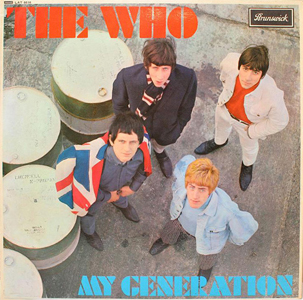
Baba O’Riley – The Who
The untamable Keith Moon crashes and tumbles through this rock anthem, playing with a frenetic energy that threatens to send the song flying off the rails at any moment.

Dig Me Out – Sleater-Kinney
Janet Weiss is the roaring engine of this track, playing with a ferocious power, impeccable timing, and creative fills that drive the song forward relentlessly.

I Heard It Through the Grapevine – Gladys Knight & the Pips
Funk Brothers drummers Uriel Jones and the great Benny Benjamin create a powerhouse rhythm section, delivering a performance full of simmering tension and explosive release that punctuates the song’s raw emotion.

Dancin’ Fool – Frank Zappa
Terry Bozzio is the manic force behind this track, navigating Zappa’s absurd rhythmic twists and turns with an explosive combination of power, precision, and theatrical flair.

One Love/People Get Ready – Bob Marley & The Wailers
Carlton “Carly” Barrett, the originator of the “One Drop” rhythm, gives this song its iconic reggae heartbeat, where the accent is on the third beat of the measure.

Footprints – The Miles Davis Quintet
At just 20 years old, Tony Williams redefined jazz drumming with his explosive and interactive playing, shattering old conventions and pushing the entire band to new heights.

Follow Tunes Du Jour on Facebook

Follow me on Bluesky

Follow me on Instagram

Tunes Du Jour Presents 2000

The year 2000 arrived with a collective sigh of relief. The much-hyped Y2K bug turned out to be a non-event, and the new millennium stretched out before us, feeling both futuristic and strangely familiar. Looking back at the music from that year, you can hear a similar dynamic at play. It wasn’t a time of radical genre fusion or crossover; instead, it felt like several distinct musical movements were all cresting at the exact same time, each one confident and fully-formed. It was a year where you could switch the radio station and feel like you were jumping between entirely different worlds—from the polished pop of Britney Spears to the raw energy of DMX.

On one hand, pop and R&B were operating at peak performance, dominating the charts with precision-engineered hits. This was the era of the blockbuster music video, and artists delivered. Madonna reinvented herself yet again with the electro-thump of “Music,” while Britney Spears’s “Oops!…I Did It Again” perfected the formula she had established just a year prior. At the same time, R&B was in a period of remarkable innovation. You had the staccato, futuristic production of Timbaland on Aaliyah’s “Try Again,” the iconic, conversational flow of Destiny’s Child on “Say My Name,” and the deep, simmering soul of D’Angelo’s “Untitled (How Does It Feel).” These weren’t just great songs; they were statements of intent from artists at the top of their game.

Meanwhile, rock music was pulling in several different directions at once. Pop-punk had fully broken through to the mainstream, and blink-182’s “All the Small Things” was its endlessly catchy, stadium-sized anthem. More established acts like Foo Fighters and Red Hot Chili Peppers were delivering some of their most memorable melodic rock with “Learn to Fly” and “Californication,” respectively. Yet, on the fringes, things were getting much stranger and more interesting. Radiohead completely abandoned guitar-rock expectations with the anxious, electronic pulse of “Idioteque,” while Queens of the Stone Age offered a taste of heavy, hypnotic desert rock with “Feel Good Hit Of The Summer.” There was no single, unified “sound of rock” in 2000; there were several.

Hip-hop was arguably the most creatively vibrant and commercially powerful force of the year. The genre’s expansion was on full display, from the confrontational wit of Eminem’s “The Real Slim Shady” to the pure, unbridled velocity of OutKast’s “B.O.B.” which still sounds like it was beamed in from the future. The clubs were fueled by the aggression of DMX’s “Party Up (Up in Here)” and M.O.P.’s “Ante Up,” while Jay-Z’s “Big Pimpin’” projected an image of untouchable cool. And of course, you can’t talk about 2000 without acknowledging the songs that were simply inescapable. The unabashedly goofy charm of Sisqó’s “Thong Song” and the perhaps baffling, universal appeal of “Who Let the Dogs Out” added a unique and memorable flavor to the year’s sonic identity.

Listening back to this collection of songs now, what’s most striking is how separate but equal everything feels. This was one of the last moments before the digital revolution would completely flatten the music landscape, encouraging artists to borrow from everywhere at once. The year 2000 wasn’t about blending; it was a snapshot of distinct scenes, each with its own definitive soundtrack. From the raw scream of Kelis on “Caught Out There” to the quiet contemplation of Moby’s “Porcelain,” it was a year of powerful, parallel streams, a final, confident roar from the 20th-century music industry before everything changed.

Follow Tunes Du Jour on Facebook

Follow me on Bluesky

Follow me on Instagram
Tunes Du Jour Presents 2018

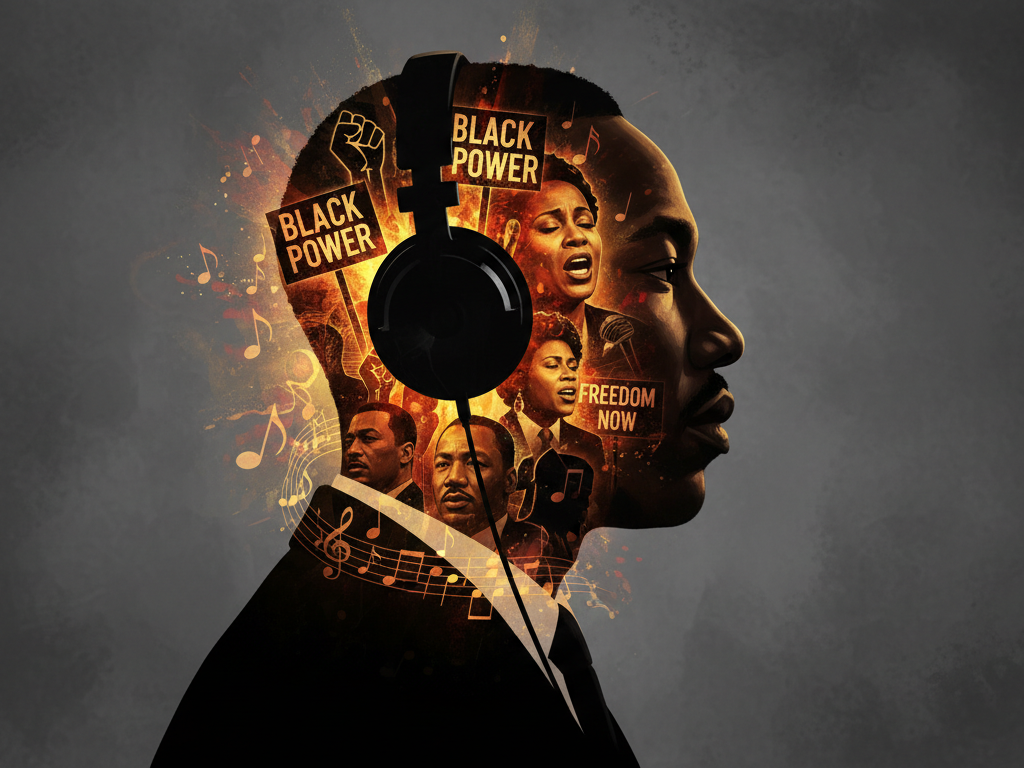
What makes a year in music stick with you? Sometimes it’s a single, dominant sound, but more often, it’s the feeling of multiple, vibrant conversations happening all at once. Looking back at 2018 through a playlist of its key songs, it becomes clear it was a year defined less by a unified trend and more by the strength of its distinct, parallel movements. From event-level releases that captured the cultural zeitgeist to deeply personal songwriting that quietly demanded our attention, the year offered a compelling range of expressions.

It’s impossible to talk about 2018 without acknowledging the sheer creative and commercial force of hip-hop. The genre was the site of some of the year’s most ambitious projects. Childish Gambino’s “This Is America” and The Carters’ “APESHIT” used the music video as a powerful medium for commentary, creating moments that were analyzed far beyond music blogs. At the same time, the genre showcased its sonic breadth. You had the elaborate, multi-part production of Travis Scott’s “SICKO MODE,” the classic, sample-heavy precision of Pusha T’s “If You Know You Know,” and the New Orleans bounce of Drake’s “Nice For What.” With Kendrick Lamar lending his acclaimed lyricism to artists as different as Anderson .Paak, Lil Wayne, and SZA, his presence served as a throughline of quality, underscoring the genre’s central role.

While hip-hop drove many conversations, pop music was busy broadening its own definition. Artists delivered hits by looking outward for inspiration. Janelle Monáe’s “Make Me Feel” was a masterclass in taut, Prince-indebted funk, while Kacey Musgraves blended country sensibilities with a disco beat on the delightfully sly “High Horse.” This spirit of connection was also felt on a global scale. The massive success of Cardi B’s “I Like It” and Camila Cabello’s “Havana” cemented the power of Latin rhythms in the mainstream, and ROSALÍA’s “MALAMENTE” introduced her modern take on flamenco to a worldwide audience, proving that a compelling sound needs no translation.

Alongside these high-energy sounds, a potent strain of rock and indie music thrived on sharp, unflinching songwriting. This was the year of the specific, personal narrative. Artists like Mitski (“Nobody”), Lucy Dacus (“Night Shift”), Phoebe Bridgers (“Motion Sickness”), and Snail Mail (“Pristine”) earned devoted followings by writing with startling clarity about anxiety, heartbreak, and identity. Their work wasn’t about grand statements but about the power of a perfectly articulated observation. In a similar vein, Courtney Barnett’s “Nameless, Faceless” turned everyday frustrations into a pointed critique, showing that even the most direct rock song could carry a vital message.

Ultimately, 2018 wasn’t a year where everything blended together. Instead, it was a year of powerful, coexisting identities. The charts were filled with innovative pop and globally-influenced hits, hip-hop continued to be a space for both blockbuster production and sharp social critique, and a wave of songwriters made their mark with profoundly personal work. From the confident breakup anthem of Ariana Grande’s “thank u, next” to the cathartic release of Robyn’s “Honey,” the music of 2018 offered a rich and varied landscape, setting the stage for many of the sounds and artists we’re still listening to today.

Follow Tunes Du Jour on Facebook

Follow me on Bluesky

Follow me on Instagram
Tunes Du Jour Presents ANOHNI

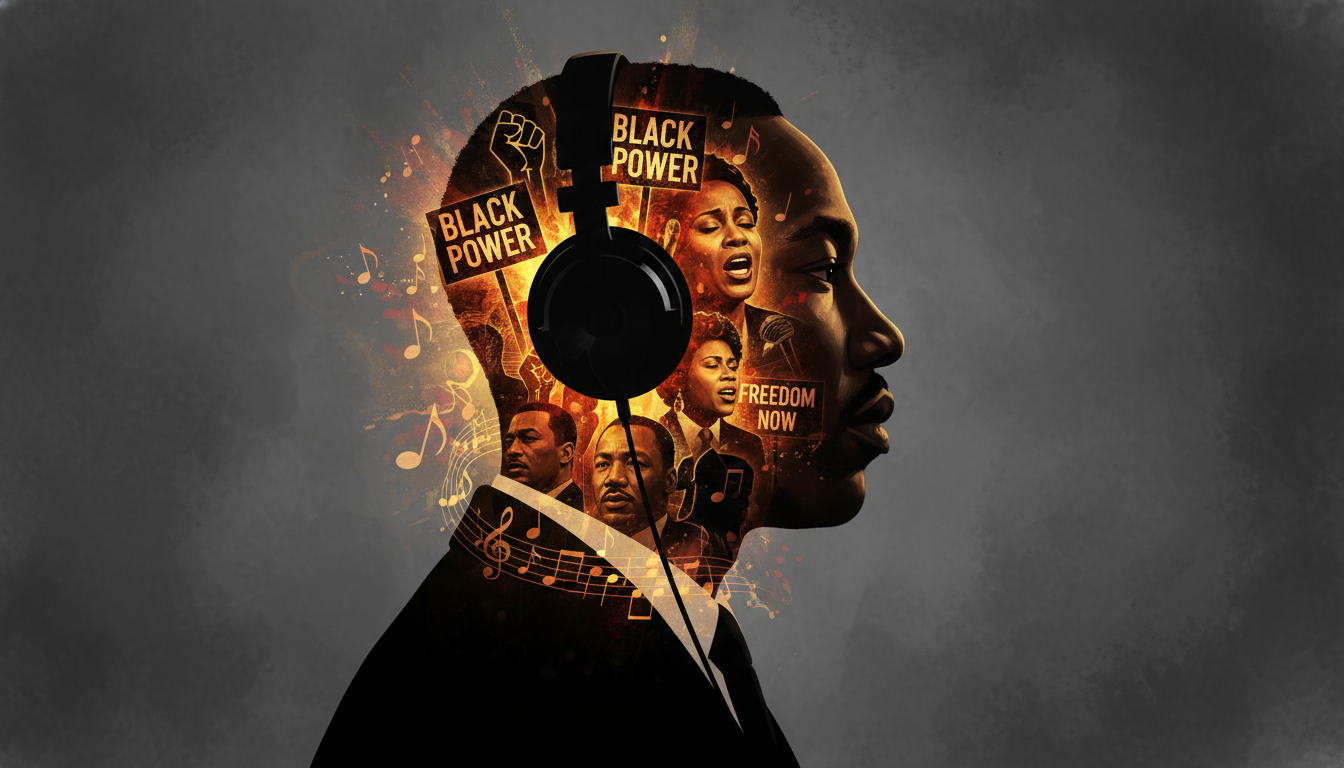
To listen to ANOHNI is, first and foremost, to experience a voice of unmistakable character. It’s a voice that can convey profound fragility and immense power, often within the same breath. A glance at a playlist of her work reveals a career of evolution, an artistic journey that moves from the deeply personal to the unflinchingly political, all while maintaining a core of radical vulnerability.

The early material, released as Antony & the Johnsons, established a unique musical world. Songs like “Hope There’s Someone” and “You Are My Sister” are built around lush arrangements of piano and strings, creating a sound that feels both classic and entirely new. This was the setting for songs of intense personal disclosure, exploring themes of gender identity in “For Today I Am A Boy,” longing for connection in “Cripple And The Starfish,” and the complex nature of love in “Fistful Of Love.” The music is intimate, as if you’re hearing confessions shared in confidence, yet the emotional scale feels grand and operatic.

Later came a jarring, brilliant shift with the 2016 album Hopelessness, released under the name ANOHNI. Here, she traded the orchestral arrangements for stark, powerful electronic production. This sonic change mirrored a thematic one: the focus turned outward. The intense vulnerability that characterized her earlier work was now directed at global crises. On “Drone Bomb Me,” she sings from the perspective of a girl wishing for death from the sky, and on “4 Degrees,” she confronts her own complicity in climate change. It was a confrontational and necessary evolution, proving that her emotional honesty could be a potent tool for political commentary.

This ability to inhabit different sonic and emotional spaces is also clear in her many collaborations and interpretations. On the playlist, we hear her voice providing the soaring, soulful center of Hercules & Love Affair’s house anthem “Blind,” and intertwining with Björk’s on the elemental duet “The Dull Flame Of Desire.” She can also take a well-known song, like Bob Dylan’s “Knockin’ On Heaven’s Door” or Beyoncé’s “Crazy In Love,” and imbue it with a gravity that makes it feel entirely her own, stripping it down to its most sorrowful and honest core.

The recent return to the name ANOHNI and the Johnsons suggests a blending of these threads. Tracks like “It Must Change” and “Sliver of Ice” bring back the soulful, organic instrumentation of the Johnsons, but the perspective feels informed by the clear-eyed global awareness of the ANOHNI material. What remains constant across all of these projects is a profound empathy and a refusal to look away from difficult truths, whether they are found within the self or in the wider world. Her body of work isn’t just a collection of songs, but a continuous, courageous act of testimony.

Follow Tunes Du Jour on Facebook

Follow me on Bluesky

Follow me on Instagram
Tunes Du Jour Presents Broadway Highlights

There’s no shortage of lists claiming to rank the greatest songs in Broadway history — but this isn’t one of them. Think of this playlist as more of a starter pack: thirty memorable performances from original Broadway cast albums, ranging from the golden age to the present day. You’ll hear songs that helped define the genre, alongside a few that deserve to be better known. Together, they offer a taste of what makes Broadway so irresistible — its mix of humor and heartbreak, spectacle and intimacy, old-school glamour and modern wit.

The opening track, “Hello!” from The Book of Mormon, felt like the right way to fling open the curtain. From there, the playlist hops through time and tone: the romantic sweep of South Pacific and Camelot, the biting modernity of Avenue Q and Hamilton, the pure joy of Annie and Bye Bye Birdie, and the emotional fireworks of Dreamgirls and Company. These songs were chosen less for their chart positions or critical acclaim than for the way they make you feel something — whether that’s laughter, goosebumps, or the urge to belt along.

Because this isn’t a comprehensive history lesson, there are many classics missing — and that’s part of the fun. Consider it an invitation to explore further: if you’re drawn to the lush melodies of Rodgers and Hammerstein, the edge of Sondheim, or the showstopping belt of Jennifer Holliday, Broadway’s got plenty more where this came from. For now, just hit play and let the overture begin.

Follow Tunes Du Jour on Facebook

Follow me on Bluesky

Follow me on Instagram