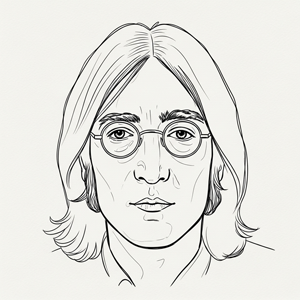
Tunes Du Jour Presents The John Lennon Songbook

It’s interesting to start a playlist of John Lennon songs with David Bowie’s “Fame.” It feels like an outlier at first, until you remember Lennon co-wrote the track, contributed guitar, and sang backup vocals. It’s one of just a handful of songs on this list that isn’t a straightforward cover, and its placement at the top serves as a great reminder: one of the best ways to understand a songwriter’s impact is to see how their work thrives in the hands of others. Listening to a collection like this isn’t just about nostalgia; it’s an active exploration of how durable and adaptable Lennon’s compositions truly are, revealing the deep-seated melodic and lyrical strengths that invite constant reinterpretation.

The sheer variety of artists drawn to his work speaks volumes about its fundamental structure. A Lennon song can be a sturdy vessel for almost any style. In its original form, “Help!” was a desperate plea disguised as an upbeat folk-rock hit. But when Tina Turner gets ahold of it, she strips away the disguise, transforming it into a full-throated, soulful cry for salvation. Similarly, Johnny Cash takes “In My Life,” a song of youthful reflection, and imbues it with the profound weight of a long life lived, making each line land with a different, more somber gravity. From the raw R&B groove Otis Redding finds in “Day Tripper” to the cool, atmospheric poise Roxy Music brings to “Jealous Guy,” these songs prove to be exceptionally resilient, their core emotions accessible to any genre.

Beyond musical versatility, the playlist highlights the different facets of Lennon’s lyrical persona. There’s the acerbic political commentator, whose pointed dissatisfaction is channeled perfectly by the punk sneer of Generation X on “Gimme Some Truth” and the world-weary defiance of Marianne Faithfull on “Working Class Hero.” Then there is the deeply vulnerable Lennon, the man wrangling with insecurity and fame. You can hear this in the anxious, propulsive energy The Feelies bring to “Everybody’s Got Something To Hide (Except Me And My Monkey)” or the stark, pleading quality Maxïmo Park finds in the solo track “Isolation.” He could be pointedly political or achingly personal, and both modes have continued to resonate with artists who have their own truths to tell.

Of course, no look at Lennon’s work would be complete without touching on his more surreal and experimental side. These are often the songs that seem most tied to a specific time, yet they possess a dreamlike logic that continues to inspire. Elton John, a friend and collaborator, treats “Lucy in the Sky with Diamonds” not as a museum piece but as a glam-rock epic. R.E.M. leans into the hypnotic, floating quality of “#9 Dream,” while Fiona Apple’s take on “Across the Universe” honors its ethereal nature while grounding it with her distinctive emotional intensity. These artists don’t just copy the psychedelia; they find new ways to access the spirit of imaginative freedom that fueled the original recordings.

Ultimately, listening through these interpretations feels less like a tribute and more like a conversation across decades. We hear Billy J. Kramer’s simple pop charm on “Bad to Me,” a song Lennon wrote for him in 1963, and then Glen Campbell’s posthumous, heart-rending version of “Grow Old With Me,” one of Lennon’s last compositions. The journey between those two points is remarkable. This collection of songs, re-shaped by everyone from The Breeders to Bettye LaVette, demonstrates that the power of Lennon’s work isn’t just in his own iconic recordings. It’s in the bones of the songs themselves—the unforgettable melodies, the honest lyrics, and the restless spirit that others can’t help but be drawn to, again and again.

Follow Tunes Du Jour on Facebook

Follow me on Bluesky

Follow me on Instagram

Tunes Du Jour Presents 1990

By 1990, pop music was as fragmented as ever, with the charts reflecting a mix of dancefloor anthems, alternative breakthroughs, and genre-defying oddities. Hip-hop’s mainstream ascent was well underway, electronic music was taking shape in new and exciting forms, and rock music was shifting toward something grittier. The year’s defining hits weren’t just about big hooks—they were about movement, whether physical, emotional, or cultural.

Dance music thrived in 1990, blurring the lines between house, hip-hop, and pop. Madonna’s “Vogue” channeled the underground ballroom culture into a global phenomenon, while Deee-Lite’s “Groove Is in the Heart” mixed funk, rap, and psychedelic whimsy into a club classic. Elsewhere, Snap! (“The Power”) and Black Box (“Everybody Everybody”) brought European dance music into the mainstream, and 808 State’s “Pacific (707)” hinted at a future where electronic beats would dominate pop music. Even hip-hop joined the party, with M.C. Hammer’s “U Can’t Touch This” and Digital Underground’s “The Humpty Dance” bringing humor and flamboyance to the genre.

Meanwhile, alternative rock was carving out a larger space. Jane’s Addiction’s “Been Caught Stealing” and Faith No More’s “Epic” merged funk, metal, and punk into something unpredictable. The UK’s Madchester scene, fueled by dance rhythms and psychedelic guitars, produced The Stone Roses’ “Fools Gold,” Happy Mondays’ “Step On,” and Primal Scream’s “Loaded,” while The Charlatans’ “The Only One I Know” signaled Britpop’s coming rise. Across the Atlantic, Tom Petty’s “Free Fallin’” offered a more traditional take on rock, while Aerosmith’s “Janie’s Got a Gun” tackled dark subject matter with arena-sized drama.

Elsewhere, pop and R&B pushed forward with innovation. En Vogue’s “Hold On” showcased impeccable vocal group harmonies, Lisa Stansfield’s “All Around the World” delivered a fresh take on blue-eyed soul, and George Michael’s “Freedom ’90” turned self-reinvention into an art form. Janet Jackson’s “Escapade” and Prince’s “Thieves in the Temple” kept their respective streaks of forward-thinking pop hits alive. And then there was Sinéad O’Connor’s “Nothing Compares 2 U”—a Prince-penned ballad that, in her hands, became one of the most emotionally raw performances of the era.

Yet 1990 also had space for the delightfully weird. They Might Be Giants’ “Birdhouse in Your Soul” was an offbeat yet catchy rock song that felt beamed in from another world, while Pet Shop Boys’ “So Hard” continued their sophisticated synth-pop explorations. Biz Markie’s “Just a Friend” made earnest goofiness into a virtue, and DNA’s remix of Suzanne Vega’s “Tom’s Diner” pioneered a new wave of genre-hopping, blending folk with electronic beats. Even the global phenomenon of “Lambada” proved that music was becoming more borderless. Whether through innovation, reinvention, or sheer force of personality, 1990’s music remains as compelling as ever.

Follow Tunes Du Jour on Facebook

Follow me on Bluesky

Follow me on Instagram

Tunes Du Jour Presents 1986

Looking back at 1986, what stands out isn’t just the quality of the music, but how effortlessly genres merged and boundaries dissolved. Run-D.M.C. and Aerosmith’s “Walk This Way” wasn’t just a collaboration – it was a statement about how rock and hip-hop could amplify each other’s strengths. Prince, at the height of his powers, stripped everything down to bare essentials with “Kiss,” proving his superstardom could take any form. Robert Palmer’s “Addicted to Love” became inescapable, powered by one of the era’s most iconic videos, while Peter Gabriel’s “Sledgehammer” merged art rock with soul and funk, accompanied by groundbreaking stop-motion animation.

The women of pop music wielded particular influence that year. Madonna continued pushing buttons with “Papa Don’t Preach,” tackling teenage pregnancy in a way that sparked national conversation. Whitney Houston’s “How Will I Know” showcased her extraordinary vocal range while proving dance-pop could be both sophisticated and irresistible. Janet Jackson asked “What Have You Done for Me Lately,” establishing herself as a force independent of her famous family. Cyndi Lauper’s “True Colors” transcended its moment, becoming an enduring anthem of self-acceptance that would be covered for decades to come.

The underground was rising to the surface, but keeping its edge. The Smiths’ “There Is A Light That Never Goes Out” brought literary depth to alternative rock, while New Order’s “Bizarre Love Triangle” helped blueprint the future of electronic dance music. The Pet Shop Boys’ “West End Girls” married street-smart observations with pristine synth-pop, and Public Image Ltd.’s “Rise” proved post-punk could evolve without losing its bite. Even The Cure, with “In Between Days,” found a way to make melancholy sound surprisingly radio-friendly.

Soul and R&B were experiencing their own renaissance. Anita Baker’s “Sweet Love” brought sophisticated quiet storm to the mainstream, while Cameo’s “Word Up!” demonstrated funk’s continuing vitality. Grace Jones’ “Slave to the Rhythm” showcased the artist’s commanding presence, and James Brown reminded everyone he was still the Godfather of Soul with “Living in America.” The year also saw George Michael step out of Wham!’s shadow with “A Different Corner,” proving he could hold his own as a solo artist.

The year proved fertile ground for both established and emerging voices. Bruce Springsteen’s “My Hometown” painted a portrait of a changing America, while Billy Bragg’s “Levi Stubbs’ Tears” showed how personal stories could carry political weight. Elvis Costello’s “I Want You” pushed the boundaries of what a love song could express, and R.E.M.’s “Fall on Me” managed to be both cryptic and urgently relevant. Meanwhile, LL Cool J’s “I Can’t Live Without My Radio” brought hip-hop closer to the mainstream while maintaining its street credibility. In retrospect, 1986 wasn’t just a great year for music – it was a moment when artists across the spectrum proved that innovation and accessibility weren’t mutually exclusive.

Follow Tunes du Jour on Facebook

Follow me on Bluesky

Follow me on Instagram

Tunes Du Jour Presents 2001

The music of 2001 offered listeners a diverse array of sounds, reflecting the eclectic tastes and creative experimentation prevalent at the turn of the millennium. From hip-hop’s continued evolution to electronic music’s broader appeal, the year’s musical landscape was characterized by a spirit of innovation and cross-genre pollination. While not necessarily revolutionary, 2001’s musical offerings showcased artists pushing boundaries and audiences embracing fresh sounds across multiple genres.

At the forefront of this sonic revolution was Missy Elliott’s “Get Ur Freak On,” a track that redefined hip-hop with its bold beats and futuristic soundscapes. Elliott’s unique style blended traditional hip-hop with global influences, introducing a raw, hyper-sexualized energy that was both provocative and empowering. This era also saw the rise of Jay-Z with “Izzo (H.O.V.A.),” a masterclass in braggadocio that solidified his status as one of rap’s most influential figures. Meanwhile, newcomer Alicia Keys made her mark with the soulful “Fallin’,” combining classical piano with soulful vocals to create a fresh voice in R&B that earned her critical acclaim and multiple awards.

Electronic music found its way into the mainstream consciousness with Daft Punk’s “One More Time,” a euphoric dance anthem that transcended the dance floor, bridging the gap between underground rave culture and pop sensibilities. This electronic influence seeped into other genres as well, with acts like Gorillaz blending hip-hop, rock, and electronica on their debut hit “Clint Eastwood.” The cross-pollination of genres was further exemplified by Eve and Gwen Stefani’s collaboration on “Let Me Blow Ya Mind,” a standout track that seamlessly merged rap and pop elements.

Rock music in 2001 was marked by both innovation and nostalgia. Radiohead continued to push boundaries with the haunting “Pyramid Song,” a complex composition that resonated with fans and critics alike. Meanwhile, bands like The Strokes and The White Stripes led a garage rock revival with “The Modern Age” and “Hotel Yorba” respectively, influencing a new generation of bands. System of a Down’s “Chop Suey!” delivered a powerful mix of metal and alternative rock, addressing themes of life and death with intense energy. Veterans weren’t left behind, as evidenced by Bob Dylan’s “Mississippi” and R.E.M.’s “Imitation of Life,” both of which showcased the enduring relevance of established artists.

The pop landscape of 2001 was equally dynamic, with artists like Britney Spears (“I’m a Slave 4 U”) and P!nk (“Get The Party Started”) dominating the airwaves with infectious hooks and undeniable energy. Janet Jackson’s “All for You” brought a feel-good vibe with its upbeat tempo and catchy chorus. This era also saw the last major hit from Michael Jackson during his lifetime, “You Rock My World.” From the reggae-pop fusion of Shaggy’s “It Wasn’t Me” to the unexpected success of Afroman’s “Because I Got High,” 2001 offered a rich and varied soundtrack that balanced humor with storytelling, demonstrating that sometimes a catchy hook and a good story are all you need to make a hit. In retrospect, 2001 was a pivotal year that saw the emergence of new stars, the redefinition of established genres, and a time when music felt refreshingly unpredictable, with artists boldly experimenting and audiences eagerly embracing the new and unfamiliar.