Paul McCartney’s genius as a songwriter extends far beyond his work with The Beatles, revealing itself most clearly in how other artists have transformed his compositions across genres and generations. This remarkable collection of covers demonstrates McCartney’s rare ability to write songs that function as both complete artistic statements and flexible frameworks for reinterpretation. When Joe Cocker turned “With A Little Help From My Friends” into a soulful anthem, or when Guns N’ Roses gave “Live and Let Die” a hard rock edge, they weren’t just covering songs—they were unlocking different emotional possibilities that McCartney had embedded in the original compositions. The breadth of artists drawn to his work, from Aretha Franklin’s gospel-tinged “Eleanor Rigby” to Beyoncé’s contemporary reimagining of “Blackbird,” speaks to the universal resonance of his melodic and lyrical craftsmanship.
What makes McCartney particularly fascinating as a songwriter is his willingness to write specifically for other artists’ strengths while maintaining his distinctive voice. Songs like “A World Without Love” for Peter & Gordon and “Come And Get It” for Badfinger weren’t Beatles cast-offs but carefully crafted compositions that suited those acts perfectly. His collaboration with Elvis Costello on “Veronica” and his work with Michael Jackson on “Girlfriend” show an artist constantly evolving and adapting his approach to different musical contexts. Even when writing for others, McCartney’s melodic sensibility—that ability to find the hook that sticks in your mind—remains unmistakably present, whether it’s the yearning quality of “Yesterday” that En Vogue brought to R&B or the infectious rhythm of “Ob-La-Di, Ob-La-Da” that Celia Cruz infused with Latin flavor.
The lasting power of McCartney’s songwriting becomes evident when artists as diverse as Ray Charles, Stevie Wonder, and Andre 3000 find something meaningful in his catalog. These aren’t novelty covers or tribute performances—they’re genuine artistic connections where musicians recognize something in McCartney’s work that speaks to their own creative vision. From Little Richard’s rock and roll interpretation of “I Saw Her Standing There” to k.d. lang’s haunting take on “Golden Slumbers,” each cover reveals new layers in songs that seemed perfectly complete in their original form. This ongoing dialogue between McCartney’s compositions and successive generations of artists suggests something profound about his approach to songwriting: he creates musical spaces that invite inhabitation rather than mere imitation, proving that truly great songs don’t just endure—they continue to grow.
Many of us grow up assuming the hit version of a song is the original. This playlist celebrates those surprising musical genealogies: well-known songs that were originally recorded by someone else, often with little fanfare. Here are the stories behind the transformations—where they started, and how they became iconic.
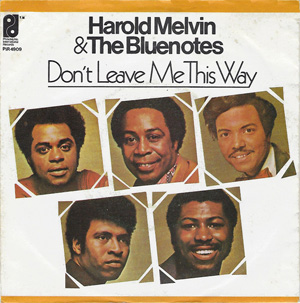
“Don’t Leave Me This Way” – Thelma Houston / Originally by Harold Melvin & the Blue Notes (1975) Houston’s disco anthem actually began life as a Philly soul track sung by Teddy Pendergrass. Thelma took it to the dancefloor—and to #1.
“War” – Edwin Starr / Originally by The Temptations (1970) This protest song started as an album cut by The Temptations. Starr’s rawer, angrier take made it a searing hit during the Vietnam era.
“Strawberry Letter 23” – The Brothers Johnson / Originally by Shuggie Otis (1971) Otis’ dreamy, psychedelic original flew under the radar until producer Quincy Jones supercharged it with funk for The Brothers Johnson.
“I Feel for You” – Chaka Khan / Originally by Prince (1979) Prince wrote it, recorded it, and released it on his 1979 self-titled album. Chaka Khan added Stevie Wonder’s harmonica and Melle Mel’s rap, creating a genre-blurring smash that gave the song a second life—and a much bigger audience.
“Louie Louie” – The Kingsmen / Originally by Richard Berry (1957) Berry’s calypso-tinged rhythm & blues song became an unintelligible rock ‘n’ roll classic in the hands of teenage garage rockers.
“Pass The Koutchie” – Musical Youth as “Pass the Dutchie” / Originally by Mighty Diamonds (1981) Musical Youth’s version cleaned up the ganja references but kept the groove. A British reggae hit born from a roots original.
“Tainted Love” – Soft Cell / Originally by Gloria Jones (1964) This Northern Soul favorite was ignored in the U.S. until Soft Cell’s chilly synth-pop cover turned it into an international sensation.
“You Are So Beautiful” – Joe Cocker / Originally by Billy Preston (1974) Preston’s gospel-inflected original was co-written with Dennis Wilson of the Beach Boys. Cocker slowed it down into a tearjerking ballad.
“The First Cut Is The Deepest” – Rod Stewart / Originally by P.P. Arnold (1967) Before Cat Stevens, the song’s writer, sang it himself, P.P. Arnold delivered a powerful version. Stewart’s cover gave it global traction.
“Red, Red Wine” – UB40 / Originally by Neil Diamond (1967) Diamond’s mournful original was a slow ballad. UB40’s reggae version confused even him—he didn’t recognize his own song on the radio.
“Brand New Cadillac” – The Clash / Originally by Vince Taylor and His Playboys (1959) This rockabilly obscurity became a snarling punk track on London Calling. Vince Taylor later served as an inspiration for David Bowie’s Ziggy Stardust persona.
“Take Me To The River” – Talking Heads / Originally by Al Green (1974) Green’s swampy soul gave way to Talking Heads’ jittery art-funk. An old-school spiritual reborn in new wave style.
“The Tide Is High” – Blondie / Originally by The Paragons (1967) Jamaican rocksteady meets NYC cool. Blondie took this mellow gem and gave it a global pop sheen.
“Brandy” – Barry Manilow as “Mandy” / Originally by Scott English (1971) English’s sad and simple original got a new name and new polish. Manilow’s grand version topped the charts.
“Don’t Let Me Be Misunderstood” – The Animals / Originally by Nina Simone (1964) Simone’s pleading ballad became a snarling British Invasion hit. Her nuanced sorrow gave way to the raw edge of rock.
“Bette Davis Eyes” – Kim Carnes / Originally by Jackie DeShannon (1974) The original was breezy and piano-driven. Carnes and her producer Val Garay turned it into new wave noir.
“Heaven Must Have Sent You” – Bonnie Pointer / Originally by The Elgins (1966) Pointer’s disco version revived a Motown deep cut and put it back on the charts over a decade later.
“Love Buzz” – Nirvana / Originally by Shocking Blue (1969) Nirvana turned this obscure Dutch psych-rock tune into a distorted grunge landmark. Their debut single.
“Piece Of My Heart” – Big Brother & The Holding Company / Originally by Erma Franklin (1967) Aretha’s sister recorded it first, but Janis Joplin made it a fiery centerpiece of her legend.
“It’s Oh So Quiet” – Björk / Originally by Betty Hutton (1951) A novelty big-band number revived by Björk into a theatrical showstopper. Old Hollywood meets Icelandic art-pop.
“China Girl” – David Bowie / Originally by Iggy Pop (1977) Co-written with Bowie, Iggy’s version was skeletal and raw. Bowie’s version added synth gloss and MTV appeal.
“Good Lovin'” – The Young Rascals / Originally by The Olympics (1965) The Olympics had the groove, but The Rascals turned it into a garage-rock rave-up and a #1 hit.
“Valerie” – Mark Ronson featuring Amy Winehouse / Originally by The Zutons (2006) The Zutons wrote it as a bluesy rock song. Winehouse made it retro-soul perfection.
“Police On My Back” – The Clash / Originally by The Equals (1967) A stomping, paranoid track from Eddy Grant’s first band. The Clash turned it into a punk fugitive anthem.
“After Midnight” – Eric Clapton / Originally by J.J. Cale (1966) Cale’s laid-back shuffle was juiced up with guitar licks by Clapton, who kept the songwriter’s cool intact.
“On Broadway” – The Drifters / Originally by The Cookies (1962) Songwriters Barry Mann & Cynthia Weil gave this to a girl group first, but The Drifters made it a city-slick R&B classic.
“Love Hurts” – Nazareth / Originally by The Everly Brothers (1960) Gentle heartbreak became hard rock agony. Nazareth’s arena wail made the song a power ballad staple.
“I Love Rock ‘n’ Roll” – Joan Jett & the Blackhearts / Originally by The Arrows (1975) Jett saw it on UK TV and recorded a fiercer, snarling version that girls (and boys) everywhere could scream along to.
“Without You” – Nilsson / Originally by Badfinger (1970) Badfinger’s version was plaintive; Nilsson’s was operatic. He didn’t just sing it—he wailed it.
“Superman” – R.E.M. / Originally by The Clique (1969) A psychedelic pop obscurity turned indie-rock cult classic. One of R.E.M.’s rare early tracks not written by the band.
These songs remind us that inspiration doesn’t always strike where the spotlight shines. Sometimes greatness is borrowed—and reinvented.
The music of 1971 was shaped by a world in transition. The optimism of the ’60s had given way to a more complicated reality—political upheaval, the Vietnam War, and shifting cultural norms weighed heavily on society. In response, many artists channeled these changes into their music, whether through protest, storytelling, or deeply personal reflection. The result was a year that produced enduring songs across multiple genres, from confessional singer-songwriter fare to hard-hitting rock and infectious soul.
Some of the most memorable hits of the year leaned into personal themes rather than overt social commentary. Carole King’s “It’s Too Late” and Elton John’s “Your Song” exemplified the rise of the singer-songwriter era, blending lyrical vulnerability with sophisticated melodies. Al Green’s “Tired of Being Alone” showcased his effortless mix of longing and smooth Southern soul, while Rod Stewart’s “Maggie May” became his breakthrough solo hit, telling the story of youthful romance with a blend of folk and rock. At the same time, Marvin Gaye’s “What’s Going On” took a broader view, addressing war, inequality, and injustice in a way that felt both urgent and timeless.
Rock music remained as dominant as ever, though it took on new forms. Led Zeppelin’s “Immigrant Song” showcased their thunderous power, while The Who’s “Won’t Get Fooled Again” harnessed synthesizers and political defiance to craft an enduring anthem. The Rolling Stones’ “Brown Sugar,” released without much controversy at the time, has since been reevaluated due to its lyrical content. Meanwhile, The Doors painted a dark, atmospheric landscape on “Riders on the Storm,” and Paul & Linda McCartney’s “Uncle Albert/Admiral Halsey” leaned into whimsical experimentation, proving that rock still had room for playfulness.
Soul and funk made significant strides in 1971, with Sly & The Family Stone’s “Family Affair” pioneering a more subdued, groove-heavy sound. The Staple Singers’ “Respect Yourself” and Curtis Mayfield’s “Move On Up” carried messages of empowerment, while Honey Cone’s “Want Ads” and Jean Knight’s “Mr. Big Stuff” infused attitude into their infectious rhythms. The Jackson 5’s “Never Can Say Goodbye” demonstrated a maturing sound beyond their bubblegum pop beginnings, while Cher’s “Gypsies, Tramps and Thieves” and Melanie’s “Brand New Key” brought storytelling into the pop realm with memorable melodies and an enduring campiness.
Fifty-plus years later, the music of 1971 still resonates. Whether through the social commentary of “What’s Going On,” the country-rock warmth of “Me and Bobby McGee,” or the swampy energy of Ike & Tina Turner’s “Proud Mary,” these songs remain essential listening. They serve as both a time capsule and a reminder that great music doesn’t just reflect its era—it continues to shape the generations that follow.
Today is World Kindness Day. While every day would be a great day to practice basic human decency, some people are nasty assbags with no regard for others. If you’re one of those walking masterpieces of jackholery, here’s a wild idea: try being kind for ONE WHOLE DAY and see what it does. For example, let’s say you’re the personal assistant to someone who lives in a building with other residents. When you’re walking out of the building’s front door just in front of a neighbor who is holding his 17-year-old blind dog and leading his other pupper on a leash, maybe – and I’m just spitballing here – don’t let the door slam in their face, you self-absorbed piece of human garbage. And if said neighbor thoughtfully moves your precious Tesla charging cable to prevent damage (gasp – the audacity of helping!), perhaps, don’t show up at his door and berate him for protecting your property. Wild concept: Show some gratitude for his thoughtfulness. Consider saying “thank you,” you self-important, unreasonable, entitled, high-handed weenie.
FFS people, be kind! Rewind!
(Any resemblance to persons unfortunately living is purely intentional.)
Hit shuffle on any classic soul playlist and chances are, you’ll land on the unmistakable voice of Al Green. His smooth, expressive vocals and heartfelt lyrics have captivated audiences for over five decades, solidifying his place as a legend in the music industry.
Green’s sound is a perfect blend of soul and gospel. Tracks like “Let’s Stay Together” and “Take Me to the River” showcase his incredible range, effortlessly shifting from powerful declarations of love to introspective pleas. But his music goes beyond technical prowess. Green imbues every song with a raw sincerity that resonates deeply with listeners.
Green’s accolades speak for themselves. He’s a Grammy Award winner (11 times!), a Rock & Roll Hall of Fame inductee, and has even been recognized by Rolling Stone as one of the greatest artists of all time. But perhaps the most telling testament to his impact is the enduring popularity of his music. These songs, filled with raw emotion and genuine feeling, continue to resonate with listeners across generations. So hit play, let Al Green’s voice wash over you, and experience the magic for yourself.
1972. The Vietnam War raged on, Watergate loomed, and the social landscape shifted beneath our feet. Amidst this backdrop of upheaval, our ears tuned in to a soundtrack that transcended mere melodies—it pulsed with the countercultural spirit and the burgeoning individuality of an era. Let us step back in time, dust off the record player, and explore the timeless tunes that wove themselves into the fabric of our lives—a kaleidoscope of genres and voices that defined a generation.
Al Green crooned “Let’s Stay Together,” his velvet voice weaving an unwavering plea for commitment.
Roberta Flack tenderly sang “The First Time Ever I Saw Your Face,” etching raw vulnerability into our hearts.
Don McLean painted a poignant picture of a generation in transition with his epic “American Pie.”
Alice Cooper’s rebellious anthem “School’s Out” became the rallying cry for youth liberation, its raucous energy echoing through high school corridors.
Across the pond, T. Rex electrified listeners with glam rock swagger in “Bang a Gong (Get It On).”
Johnny Nash offered optimism with “I Can See Clearly Now,” a beacon of hope cutting through the haze.
Meanwhile, Elton John’s cosmic odyssey “Rocket Man” and David Bowie’s otherworldly anthem “Starman” transported us to distant galaxies, reflecting the era’s fascination with space exploration and introspection.
Jimmy Cliff addressed racial injustice and social struggles in “The Harder They Come.”
Big Star captured the bittersweet angst of adolescence in “Thirteen.”
The bluesy, swaggering classic “Tumbling Dice” by The Rolling Stones left an indelible marks on musical history.
And let’s not forget Elvis Presley, who still had magic to spare with “Burning Love.”
From the introspective musings of Lou Reed’s “Perfect Day” to the raw energy of Led Zeppelin, each track on this playlist embodies the spirit of its time while transcending it—a symphony that continues to resonate across generations.
The music of 1972 continues to evoke nostalgia and stir emotions across generations. These iconic tunes remind us of the enduring legacy of artists who dared to push boundaries and challenge the status quo. So turn up the volume and let these timeless tunes whisk you back to celebrate the enduring beauty of music that transcends generations.
Anita Baker was born on this date in 1958. Her classic album Rapture is not on Spotify, though a few of its cuts are. They’re included on today’s playlist.
One of the very things I ordered from the Columbia House Record and tape Club when I signed up back in 1975 was the Earth, Wind & Fire album That’s The Way Of The World, which includes their breakthrough hit “Shining Star.” Loved it then, love it now.
The late Maurice White of Earth, Wind & Fire was born on this date in 1941. Lots of EWF on today’s playlist.