
Tunes Du Jour Presents The John Lennon Songbook

It’s interesting to start a playlist of John Lennon songs with David Bowie’s “Fame.” It feels like an outlier at first, until you remember Lennon co-wrote the track, contributed guitar, and sang backup vocals. It’s one of just a handful of songs on this list that isn’t a straightforward cover, and its placement at the top serves as a great reminder: one of the best ways to understand a songwriter’s impact is to see how their work thrives in the hands of others. Listening to a collection like this isn’t just about nostalgia; it’s an active exploration of how durable and adaptable Lennon’s compositions truly are, revealing the deep-seated melodic and lyrical strengths that invite constant reinterpretation.

The sheer variety of artists drawn to his work speaks volumes about its fundamental structure. A Lennon song can be a sturdy vessel for almost any style. In its original form, “Help!” was a desperate plea disguised as an upbeat folk-rock hit. But when Tina Turner gets ahold of it, she strips away the disguise, transforming it into a full-throated, soulful cry for salvation. Similarly, Johnny Cash takes “In My Life,” a song of youthful reflection, and imbues it with the profound weight of a long life lived, making each line land with a different, more somber gravity. From the raw R&B groove Otis Redding finds in “Day Tripper” to the cool, atmospheric poise Roxy Music brings to “Jealous Guy,” these songs prove to be exceptionally resilient, their core emotions accessible to any genre.

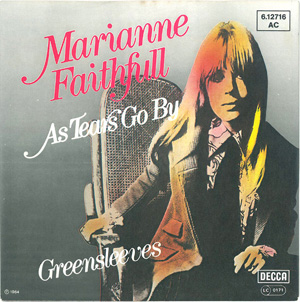
Beyond musical versatility, the playlist highlights the different facets of Lennon’s lyrical persona. There’s the acerbic political commentator, whose pointed dissatisfaction is channeled perfectly by the punk sneer of Generation X on “Gimme Some Truth” and the world-weary defiance of Marianne Faithfull on “Working Class Hero.” Then there is the deeply vulnerable Lennon, the man wrangling with insecurity and fame. You can hear this in the anxious, propulsive energy The Feelies bring to “Everybody’s Got Something To Hide (Except Me And My Monkey)” or the stark, pleading quality Maxïmo Park finds in the solo track “Isolation.” He could be pointedly political or achingly personal, and both modes have continued to resonate with artists who have their own truths to tell.

Of course, no look at Lennon’s work would be complete without touching on his more surreal and experimental side. These are often the songs that seem most tied to a specific time, yet they possess a dreamlike logic that continues to inspire. Elton John, a friend and collaborator, treats “Lucy in the Sky with Diamonds” not as a museum piece but as a glam-rock epic. R.E.M. leans into the hypnotic, floating quality of “#9 Dream,” while Fiona Apple’s take on “Across the Universe” honors its ethereal nature while grounding it with her distinctive emotional intensity. These artists don’t just copy the psychedelia; they find new ways to access the spirit of imaginative freedom that fueled the original recordings.

Ultimately, listening through these interpretations feels less like a tribute and more like a conversation across decades. We hear Billy J. Kramer’s simple pop charm on “Bad to Me,” a song Lennon wrote for him in 1963, and then Glen Campbell’s posthumous, heart-rending version of “Grow Old With Me,” one of Lennon’s last compositions. The journey between those two points is remarkable. This collection of songs, re-shaped by everyone from The Breeders to Bettye LaVette, demonstrates that the power of Lennon’s work isn’t just in his own iconic recordings. It’s in the bones of the songs themselves—the unforgettable melodies, the honest lyrics, and the restless spirit that others can’t help but be drawn to, again and again.

Follow Tunes Du Jour on Facebook

Follow me on Bluesky

Follow me on Instagram

Tunes Du Jour Presents The Bruce Springsteen Songbook

Bruce Springsteen’s name immediately conjures images of epic live performances and anthemic rock, but beneath the stadium lights and E Street Band’s prowess lies the bedrock of truly exceptional songwriting. While his own interpretations are iconic, a fascinating way to understand the depth and versatility of his craft is to listen to his songs as performed by other artists. This collection of interpretations isn’t just a testament to his popularity; it’s a deep dive into the resilient structure and universal appeal of his compositions. From Manfred Mann’s Earth Band giving “Blinded By The Light” a prog-rock makeover to Patti Smith taking his musical sketch for “Because the Night” and transforming it with her own powerful lyrics, these early releases demonstrated how his musical ideas could flourish in different hands.

What becomes clear through these varied renditions is the enduring power of Springsteen’s narratives. His ability to distill complex human experiences – the struggles of working life, the ache of forgotten dreams, the defiance of the underdog – resonates across genres and generations. Lucinda Williams’ sparse, melancholic “Factory” strips the song to its empathetic core, highlighting the quiet dignity in its depiction of labor. Johnny Cash’s gravelly voice lends a somber weight to the poignant tale of brotherhood and duty in “Highway Patrolman,” while Billy Bragg’s acoustic “Mansion on the Hill” underscores the song’s sharp social commentary on class division. Even a frequently misunderstood anthem like “Born in the U.S.A.” finds its original critical intent amplified in the raw, acoustic performance by Jason Isbell and Amanda Shires, revealing the layered complexities always present in the lyrics.

Beyond the lyrical prowess, this playlist also illuminates the structural and melodic robustness of Springsteen’s music. His compositions possess an inherent strength that allows them to be re-imagined without losing their essence. Take Hot Chip’s electronic reinterpretation of “Dancing In The Dark,” which transforms its mainstream rock energy into an indie-dance anthem, proving how adaptable the song’s core rhythm and melody truly are. Similarly, the minimalist beauty of Kevin Breit and Harry Manx’s “I’m On Fire” distills the song’s longing into a haunting, intimate whisper, while Crooked Fingers’ “The River” captures the stark emotional landscape of its narrative with a raw, almost trembling fragility. Even a track like Donna Summer’s “Protection,” originally given to her by Springsteen, showcases how his knack for catchy hooks and dynamic arrangements could easily translate into a different pop sensibility, illustrating a versatile craft beneath the surface.

This extensive array of interpretations also showcases the broad emotional spectrum Springsteen explores in his writing. His songs aren’t confined to a single mood; they capture the full range of human feeling, from youthful exuberance to weary resignation, from hopeful yearning to quiet despair. The Hollies’ rendition of “4th of July, Asbury Park (Sandy)” evokes a wistful, nostalgic glow, while Southside Johnny & The Asbury Jukes’ raucous “Hearts of Stone” pulsates with a more defiant rock and soul energy. Natalie Cole injects a playful, sassy spirit into “Pink Cadillac,” revealing the sheer fun and swagger that can inhabit his lyrics. And when Bettye LaVette takes on “Streets of Philadelphia,” she strips it down to its raw, aching vulnerability, reminding us of the profound empathy and social conscience that often underlies his work. These varied voices unlock different emotional doors, each revealing another facet of the original composition’s emotional potential.

Ultimately, a journey through these numerous cover versions offers a compelling argument for Bruce Springsteen’s enduring legacy as a songwriter. Stripped of his iconic delivery or re-clothed in entirely new musical garments, his compositions consistently stand tall. They speak to universal truths, craft unforgettable characters, and resonate with melodies that are both immediate and deeply rooted. This diverse collection of interpretations isn’t just a tribute; it’s an educational deep dive into the core strength of his writing, demonstrating that long before they became rock anthems or stadium singalongs, they were simply great songs – versatile, profound, and built to last, capable of inspiring countless artists to make them their own.

Follow Tunes Du Jour on Facebook

Follow me on Bluesky

Follow me on Instagram
Tunes Du Jour Presents Covers Of The Rolling Stones

One of the best ways to understand a song’s true strength is to hear it played by someone else. When a song can be lifted from its original context, performed by a different artist in a new style, and still resonate, you know the writers built it on a solid foundation. Looking at the sheer breadth of artists who have successfully interpreted the songs of Mick Jagger and Keith Richards, it becomes clear that their songwriting partnership created something remarkably durable. While their own recordings as The Rolling Stones are iconic, it’s the cover versions that reveal the fundamental power of the compositions themselves.

The playlist immediately highlights how deeply their writing is rooted in the American soul and R&B they revered. It’s one thing to be influenced by a genre; it’s another to write songs that the masters of that genre can inhabit as their own. When you hear Aretha Franklin transform “Jumpin’ Jack Flash” into a gospel-fueled force of nature, or Ike & Tina Turner inject “Honky Tonk Women” with their signature high-octane energy, you realize the songs contain an authentic rhythmic and emotional core. This goes even deeper with Solomon Burke’s take on “I Got the Blues” or Bettye LaVette’s searing, world-weary version of “Salt of the Earth.” These aren’t just covers; they are reclamations, demonstrating that the blueprints Jagger and Richards created were so solid that they could hold the weight of the most powerful voices in soul music.

What’s also remarkable is the structural flexibility of their work. A great Jagger/Richards song often has a distinct personality, yet its core components—melody, lyrical theme, and chordal movement—are adaptable enough to thrive in entirely new environments. The post-punk angularity of Devo’s “(I Can’t Get No) Satisfaction” strips away the blues swagger to expose the lyric’s timeless complaint of modern alienation. The Sundays reimagine the country-tinged “Wild Horses” as a piece of shimmering, ethereal dream pop, proving the song’s beautiful melody is its true anchor. Even more extreme, the Ramones boil “Out of Time” down to its raw essentials, recasting the shuffling pop song as a driving, three-chord punk declaration, while Ituana finds a relaxed, bossa nova groove in the epic “You Can’t Always Get What You Want.” The songs don’t just survive these transformations; they reveal different facets of their character.

Ultimately, this collection of performances underscores that the Jagger/Richards catalog is more than a collection of iconic riffs and rock and roll attitude. These are fundamentally well-crafted songs. They can be country laments in the hands of Johnny Cash (“No Expectations”) or Steve Earle (“Dead Flowers”). They can be theatrical pop statements for David Bowie (“Let’s Spend The Night Together”) or Bryan Ferry (“Sympathy for the Devil”). They can even be played for laughs by “Weird Al” and The Folksmen precisely because the source material is so instantly recognizable. The Rolling Stones’ versions will always be definitive, but these interpretations from other artists give us a clearer view of the writers’ craft, proving the songs stand on their own, ready for anyone to find a piece of their own story within them.

Follow Tunes Du Jour on Facebook

Follow me on Bluesky

Follow me on Instagram

Tunes Du Jour Celebrates World Kindness Day

Today is World Kindness Day. While every day would be a great day to practice basic human decency, some people are nasty assbags with no regard for others. If you’re one of those walking masterpieces of jackholery, here’s a wild idea: try being kind for ONE WHOLE DAY and see what it does. For example, let’s say you’re the personal assistant to someone who lives in a building with other residents. When you’re walking out of the building’s front door just in front of a neighbor who is holding his 17-year-old blind dog and leading his other pupper on a leash, maybe – and I’m just spitballing here – don’t let the door slam in their face, you self-absorbed piece of human garbage. And if said neighbor thoughtfully moves your precious Tesla charging cable to prevent damage (gasp – the audacity of helping!), perhaps, don’t show up at his door and berate him for protecting your property. Wild concept: Show some gratitude for his thoughtfulness. Consider saying “thank you,” you self-important, unreasonable, entitled, high-handed weenie.

FFS people, be kind! Rewind!

(Any resemblance to persons unfortunately living is purely intentional.)

Follow Tunes Du Jour on Facebook

Follow Tunes Du Jour on Twitter

Follow me on Instagram