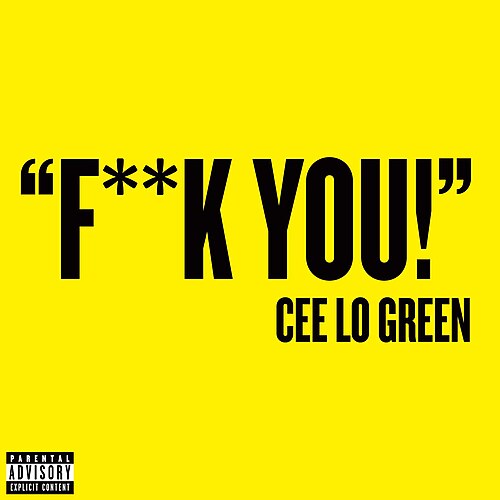
Today is Have A Bad Day Day. Per holidayinsights.com, as a greeting today, you are encouraged people to wish people a lousy or terrible day.
I think wishing a terrible day to someone to their face might put you in danger. Instead, I choose to celebrate with song. If someone were to hear one of the songs on my Have A Bad Day Day playlist, they’d know that somebody out there wants their day to suck.
The year 2000 arrived with a collective sigh of relief. The much-hyped Y2K bug turned out to be a non-event, and the new millennium stretched out before us, feeling both futuristic and strangely familiar. Looking back at the music from that year, you can hear a similar dynamic at play. It wasn’t a time of radical genre fusion or crossover; instead, it felt like several distinct musical movements were all cresting at the exact same time, each one confident and fully-formed. It was a year where you could switch the radio station and feel like you were jumping between entirely different worlds—from the polished pop of Britney Spears to the raw energy of DMX.
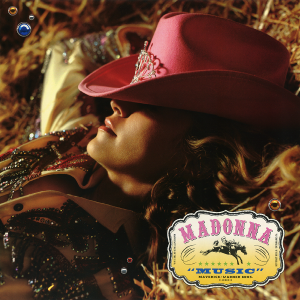
On one hand, pop and R&B were operating at peak performance, dominating the charts with precision-engineered hits. This was the era of the blockbuster music video, and artists delivered. Madonna reinvented herself yet again with the electro-thump of “Music,” while Britney Spears’s “Oops!…I Did It Again” perfected the formula she had established just a year prior. At the same time, R&B was in a period of remarkable innovation. You had the staccato, futuristic production of Timbaland on Aaliyah’s “Try Again,” the iconic, conversational flow of Destiny’s Child on “Say My Name,” and the deep, simmering soul of D’Angelo’s “Untitled (How Does It Feel).” These weren’t just great songs; they were statements of intent from artists at the top of their game.
Meanwhile, rock music was pulling in several different directions at once. Pop-punk had fully broken through to the mainstream, and blink-182’s “All the Small Things” was its endlessly catchy, stadium-sized anthem. More established acts like Foo Fighters and Red Hot Chili Peppers were delivering some of their most memorable melodic rock with “Learn to Fly” and “Californication,” respectively. Yet, on the fringes, things were getting much stranger and more interesting. Radiohead completely abandoned guitar-rock expectations with the anxious, electronic pulse of “Idioteque,” while Queens of the Stone Age offered a taste of heavy, hypnotic desert rock with “Feel Good Hit Of The Summer.” There was no single, unified “sound of rock” in 2000; there were several.
Hip-hop was arguably the most creatively vibrant and commercially powerful force of the year. The genre’s expansion was on full display, from the confrontational wit of Eminem’s “The Real Slim Shady” to the pure, unbridled velocity of OutKast’s “B.O.B.” which still sounds like it was beamed in from the future. The clubs were fueled by the aggression of DMX’s “Party Up (Up in Here)” and M.O.P.’s “Ante Up,” while Jay-Z’s “Big Pimpin’” projected an image of untouchable cool. And of course, you can’t talk about 2000 without acknowledging the songs that were simply inescapable. The unabashedly goofy charm of Sisqó’s “Thong Song” and the perhaps baffling, universal appeal of “Who Let the Dogs Out” added a unique and memorable flavor to the year’s sonic identity.
Listening back to this collection of songs now, what’s most striking is how separate but equal everything feels. This was one of the last moments before the digital revolution would completely flatten the music landscape, encouraging artists to borrow from everywhere at once. The year 2000 wasn’t about blending; it was a snapshot of distinct scenes, each with its own definitive soundtrack. From the raw scream of Kelis on “Caught Out There” to the quiet contemplation of Moby’s “Porcelain,” it was a year of powerful, parallel streams, a final, confident roar from the 20th-century music industry before everything changed.
Fifty years ago, radio dials and turntables were spinning an uncommonly diverse mix of sounds. The charts of 1975 didn’t follow a single storyline—instead, they captured a moment when multiple musical currents were flowing with equal strength. Disco was gaining momentum but hadn’t yet dominated everything in its path. Rock was simultaneously reaching for arena-sized ambition and stripping down to raw emotion. Soul and funk were evolving into more sophisticated forms, while pop continued doing what it does best: making people hum along whether they meant to or not.
The year belonged, in many ways, to artists who understood that hooks and ambition weren’t mutually exclusive. Bruce Springsteen’s “Born to Run” arrived like a desperate prayer wrapped in Phil Spector production, while Queen’s “Killer Queen” proved that flamboyance and precision could coexist in three minutes of glam-rock perfection. Led Zeppelin stretched “Kashmir” across nearly nine minutes of Eastern-influenced grandeur, and Pink Floyd’s “Wish You Were Here” turned melancholy into an art form. Even Bob Dylan, never one to stand still, was crafting the narrative complexity of “Tangled Up in Blue.” These weren’t just songs—they were statements about how far popular music could reach while still connecting with listeners.
Meanwhile, dance floors were becoming cultural epicenters. KC and the Sunshine Band’s “That’s the Way (I Like It)” and Gloria Gaynor’s “Never Can Say Goodbye” helped establish disco as something more than a passing trend. The Bee Gees’ “Jive Talkin'” showed that the brothers Gibb could pivot from balladeers to funk-influenced hitmakers. Labelle’s “Lady Marmalade” brought New Orleans sass and unapologetic sexuality to the mainstream, while Earth, Wind & Fire’s “Shining Star” blended funk, soul, and jazz into something that felt both cosmic and grounded. The groove wasn’t just a rhythm—it was becoming a philosophy.
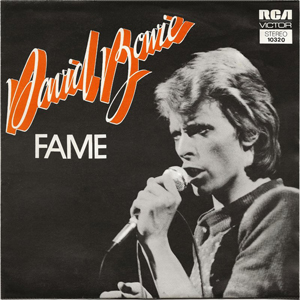
What’s striking about 1975 is how much sonic territory gets covered without any single approach dominating. 10cc’s “I’m Not in Love” used studio technology to create something hauntingly atmospheric, while Kraftwerk’s “Autobahn” was quietly suggesting what electronic music might become. Barry White continued orchestrating romantic opulence, Minnie Riperton’s five-octave range soared through “Lovin’ You,” and Linda Ronstadt’s “You’re No Good” proved that straightforward rock could still pack a punch. David Bowie’s “Fame,” co-written with John Lennon, showed him already moving past glam into funk-inflected territory. Glen Campbell brought “Rhinestone Cowboy” to country-pop crossover success, while Average White Band demonstrated that Scottish musicians could master American funk with “Pick Up the Pieces.”
Listening to these songs now, what emerges isn’t just nostalgia but a reminder of a particular kind of creative confidence. These artists weren’t afraid to be big or vulnerable, funky or introspective, polished or raw—sometimes all within the same track. The year didn’t belong to any single movement or sound, and that might be exactly what made it memorable. It was a time when the radio could take you from the Staple Singers’ gospel-infused soul to Sweet’s glitter-rock crunch to ABBA’s pristine pop architecture without anyone thinking twice about the journey. That kind of range feels worth celebrating.
When you think of Olivia Newton-John, what’s the first image that comes to mind? For millions, it’s the transformation at the end of Grease—the leather jacket, the confident stride, the electrifying duet with John Travolta. But as a quick journey through her song catalog reveals, that iconic moment is just one chapter in a much broader and more fascinating story. Her career wasn’t a single note, but a series of distinct, evolving sounds, all held together by one of the most recognizable and endearing voices in pop music.
Listening to her early work, you can hear an artist with a clear, gentle sensibility rooted in the folk and country music of the era. Songs like her cover of Bob Dylan’s “If Not For You” and the narrative-driven “Banks of the Ohio” established her as a gifted interpreter. This was soon followed by a wave of soft-rock hits that defined the sound of mid-70s radio. With the earnest plea of “If You Love Me (Let Me Know)” and the gentle reassurance of “Have You Never Been Mellow,” she carved out a niche as a vocalist of immense warmth and sincerity. This period culminated in her signature ballad, “I Honestly Love You,” a masterclass in quiet vulnerability that became her first number-one hit in the U.S.
Then, of course, came Grease. The 1978 film wasn’t just a career boost; it was a global phenomenon that showcased her versatility. She effortlessly handled the sock-hop fun of “Summer Nights” and the plaintive, heart-on-her-sleeve performance of “Hopelessly Devoted to You.” But it was the film’s finale, with “You’re the One That I Want” and “We Go Together,” that signaled a change. The energy was bigger, the attitude was bolder, and it set the stage for a musical pivot that would redefine her image for a new decade.
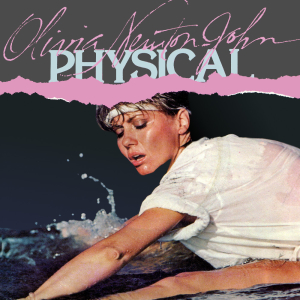
She didn’t wait long to capitalize on that new energy. Her very next album, 1978’s Totally Hot, continued the transformation, trading in the gentle ballads for a tougher, more pop-rock sensibility. A track like “A Little More Love,” with its driving guitar riff and assertive vocal, made it clear that the leather-clad Sandy was here to stay. This embrace of a more contemporary pop sound continued into projects like the soundtrack for Xanadu, which gave us the dreamy, roller-rink-ready perfection of “Magic.” Her most definitive transformation, however, arrived with the 1981 album Physical. The title track, with its pulsing beat and cheeky lyrics, was a world away from her past, and this era gave us energetic, synth-driven tracks like “Make a Move On Me” and “Heart Attack.”
What’s remarkable, looking back at this collection of songs, is not just the stylistic shifts but how natural each one felt. The common thread through the country-folk beginnings, the blockbuster duets, and the slick pop productions is the voice itself—pure, emotive, and instantly recognizable. Whether she was collaborating with Andy Gibb on “I Can’t Help It” or delivering the confident, rhythmic pulse of “A Little More Love,” Olivia Newton-John possessed a rare ability to connect. This playlist isn’t just a random assortment of hits; it’s a document of an artist’s graceful evolution and a reminder of the enduring appeal of a truly great singer.
It was the third of September / That day I’ll always remember
It was the third of June, another sleepy, dusty Delta day
Early morning, April 4 / Shot rings out in the Memphis sky
Do you remember the twenty-first night of September?
The theme of today’s playlist is dates referenced in song lyrics.
A date can do a lot of heavy lifting in a song. It can anchor a memory, mark a turning point, or drop us directly into a moment in history. Sometimes it’s deeply personal—Jay-Z naming his birthday in “December 4th”—and sometimes it’s collective, as in U2’s “Pride (In the Name of Love),” with its reference to April 4, 1968, the day Martin Luther King Jr. was assassinated.
Songwriters also use dates to heighten mystery. Bobbie Gentry’s “Ode to Billie Joe” begins on June 3, but instead of telling us what happened at the Tallahatchie Bridge, the lyric circles around it, making the day itself loom larger than the unexplained event. Similarly, the Temptations’ “Papa Was a Rolling Stone” ties the father’s death to September 3, a detail that sticks in the mind as much as the funk groove itself.
Not every date is somber. Earth, Wind & Fire turned September 21 into an annual celebration, and Chicago’s “Saturday in the Park” keeps the Fourth of July grounded in a snapshot of music, sunshine, and family fun. Bruce Springsteen’s “4th of July, Asbury Park (Sandy)” is more bittersweet, capturing the mix of romance and restlessness that defined his early work.
Dates can also mark social upheaval. Sublime’s “April 29, 1992 (Miami)” references the Los Angeles riots, while the Neville Brothers’ “Sister Rosa” pays tribute to Rosa Parks’ refusal to give up her bus seat on December 1, 1955. Songs like these remind us that a single day can ripple outward into history.
Taken together, this playlist shows the many ways a songwriter can spin meaning out of the calendar. A date can be the start of a story, a marker of joy or tragedy, or just a sly joke. What matters is how it sticks in your memory, long after the last chord fades.
Fiona Apple’s career reads like a masterclass in artistic evolution, beginning with the raw vulnerability that made “Criminal” a cultural phenomenon in 1996. From her debut album Tidal, tracks like “Sleep to Dream” and “Shadowboxer” established her as an artist unafraid to excavate the messier corners of human emotion. These early songs showcased a young woman wrestling with desire, anger, and self-discovery through piano-driven compositions that felt both intimate and explosive. Apple’s voice, even then, carried a weight that suggested experiences far beyond her years.
The progression from her debut through albums to its follow-ups When the Pawn… and Extraordinary Machine reveals an artist continuously refining her approach without sacrificing intensity. Songs like “Fast as You Can” and “Paper Bag” demonstrate her ability to craft complex emotional narratives that resist easy categorization.
Apple’s later work, particularly evident in tracks like “Every Single Night” from The Idler Wheel… and the entire Fetch the Bolt Cutters era, shows her pushing into increasingly experimental territory. Songs like “Shameika,” “Heavy Balloon,” and the title track “Fetch the Bolt Cutters” reveal an artist who has grown more confident in her willingness to challenge conventional song structures. The percussion-heavy, almost ritualistic quality of these newer compositions suggests someone who has found liberation in embracing chaos rather than fighting it.
What emerges from examining this collection is Apple’s consistent refusal to smooth over the jagged edges of human experience. Whether exploring themes of mental health in “Heavy Balloon,” childhood trauma in “Shameika,” or relationship dynamics in “Hot Knife” and “Valentine,” she approaches each subject with unflinching honesty. Her willingness to sit with discomfort, both musically and lyrically, has created a body of work that feels essential rather than merely entertaining.
While she is fiercely individual, the playlist also highlights her power as a collaborator and interpreter. Hearing her voice alongside Johnny Cash’s on “Bridge over Troubled Water” is a profound meeting of two artists who share a certain gravitas, and her contributions to songs by The Waterboys or Iron & Wine show how her distinct phrasing can elevate another’s work. This respect from her peers is perhaps best illustrated by an invitation from Bob Dylan to play piano on his epic “Murder Most Foul.” Apple later shared that she felt insecure about the task, but Dylan offered the perfect reassurance: “You’re not here to be perfect, you’re here to be you.” That sentiment gets to the heart of her appeal. She is a musician’s musician, valued precisely for the unique, imperfect, and wholly authentic self she brings to the table.
To listen to Fiona Apple, from the defiant teenager of “Sleep to Dream” to the liberated woman of “I Want You To Love Me,” is to witness an artist in a constant state of unfolding. Her music doesn’t offer easy answers or simple sentiments. Instead, it offers something more valuable: companionship in complexity. It’s a body of work that validates the tangled, messy, and often difficult process of knowing yourself and, when necessary, finding the courage to fetch the bolt cutters and set yourself free.
Have you ever looked at a playlist from a single year and felt a sense of disbelief? It’s one thing for a year to produce a few memorable hits, but it’s another for it to feel like a highlight reel of music history. Looking at the charts from 1965 is exactly that kind of experience. It wasn’t just a year of good songs; it was a pivotal moment when popular music seemed to mature in several different directions at once, producing an astonishing collection of classics that still resonate today.
On one hand, 1965 saw the art of the immaculately produced pop song reach a new peak. The Motown machine was in full, glorious swing, giving us the suave romance of The Temptations’ “My Girl” and the intricate heartbreak of Smokey Robinson’s “The Tracks of My Tears.” The Supremes demanded attention with the dramatic plea of “Stop! In the Name of Love,” a perfect example of studio craftsmanship meeting raw emotion. Across the Atlantic, Petula Clark’s “Downtown” offered a sweeping, cinematic vision of city life. These weren’t just catchy tunes; they were impeccably arranged, powerfully sung, and emotionally direct pieces of art that defined a certain kind of pop perfection.
At the very same time, a grittier, more defiant sound was taking hold. The Rolling Stones’ “(I Can’t Get No) Satisfaction” wasn’t just a hit song; it was a statement of intent, built around a fuzzy, unforgettable guitar riff that sounded like pure frustration. This raw energy was a common thread. From the garage-rock howl of Them’s “Gloria” to the stuttering, youthful angst of The Who’s “I Can’t Explain,” rock music was shedding its cleaner-cut image. This wasn’t the polished sound of the studio; it was the restless sound of the rehearsal room, and it was connecting with an entire generation.
Beyond the evolving sounds, the lyrical substance of popular music was deepening profoundly. Bob Dylan completely rewrote the rules with “Like a Rolling Stone,” a six-minute epic of poetic scorn that proved a hit single could be complex, challenging, and literary. That same year, The Byrds took Dylan’s words and electrified them, creating a new genre overnight with their shimmering version of “Mr. Tambourine Man.” This new lyrical consciousness also carried immense social weight. Sam Cooke’s posthumously released “A Change Is Gonna Come” and The Impressions’ hopeful “People Get Ready” became enduring anthems of the Civil Rights Movement, demonstrating that music could be both a comfort and a powerful call for progress.
What makes 1965 so striking is that none of these developments happened in isolation. It was a year of convergence, where you could hear the sweet soul of Marvin Gaye’s “How Sweet It Is (To Be Loved By You)” on the radio right next to the birth of funk in James Brown’s “Papa’s Got a Brand New Bag.” The carefree optimism of The Beach Boys’ “California Girls” shared the airwaves with the deep, aching soul of Otis Redding’s “I’ve Been Loving You Too Long.” The sheer volume of landmark recordings from this single 12-month period is a testament to a unique moment in time—a year when the boundaries of pop music were expanding in every direction, leaving us with a collection of songs that feel less like relics and more like foundation stones.
August is National Eye Exam Month in the US of A, so do yourself a favor and make an appointment to see an eye care professional. Your eyes will thank you (which is reason enough to see such a doctor, for if your eyes are talking, something is very very wrong).
Below are 30 songs with the word “eye” (or “eyes”) in the title.
One way to measure a songwriter’s reach is not by how often their work is covered, but how widely. The playlist below spans decades, genres, and sensibilities—from Adele to The Dead Weather, from Johnny Cash to the Neville Brothers—and all roads lead back to Bob Dylan. This is not just a reflection of his prominence; it’s a testament to the adaptability of his writing. Dylan’s lyrics aren’t locked into one style or moment—they hold up when filtered through gospel, punk, glam, folk, or soul. His songs invite reimagining because they’re grounded in strong narrative bones and emotional honesty, not ornamental frills.
Consider the different shades of “All Along the Watchtower.” Dylan’s original version is stark and cryptic; Hendrix turned it into an electrified storm. Likewise, “I Shall Be Released,” rendered with hushed reverence by The Band, has the structure of a gospel hymn but the ambiguity of a fable. “Make You Feel My Love,” one of Dylan’s later compositions, found new life in Adele’s version—proof that his songwriting didn’t peak in the ’60s, but simply evolved. His voice as a writer has always been the constant: a blend of plainspoken wisdom, sly humor, and a deep sense of historical and emotional context.
It’s notable, too, how Dylan’s songs seem to absorb the character of the performer. When Elvis Presley sings “Tomorrow Is a Long Time,” it feels like a Southern ballad. When PJ Harvey takes on “Highway 61 Revisited,” it becomes something raw and jagged. Nina Simone’s version of “Just Like Tom Thumb’s Blues” brings out a haunted intensity not present in Dylan’s own delivery. That elasticity points to a rare kind of craftsmanship—songs written with enough specificity to be meaningful, but enough openness to be inhabited.
Even in unexpected settings, Dylan’s words linger. Tom Petty co-wrote the lyrics to “Jammin’ Me” with him, a pointed pop-rock critique of media saturation. Patti Smith’s “Changing of the Guards” channels the mystical imagery and layered storytelling that Dylan deployed throughout the ’70s. And when The Specials tear into “Maggie’s Farm,” it becomes a statement of punk-era defiance. These aren’t nostalgia pieces—they’re songs that meet each era on its own terms.
Dylan’s catalog isn’t just influential; it’s usable. His songs function as cultural currency, endlessly exchangeable yet retaining value. Whether you hear him through Joan Osborne’s gothic reading of “Man in the Long Black Coat” or the crystalline harmonies of Peter, Paul and Mary’s “Blowin’ in the Wind,” what’s most striking is not just who sings Dylan—but what his songs reveal when they do.
For those of you outside the U.S., today is National Joe Day — an important holiday stateside. Anyone named Joe (or Joseph, Josephine, Joey or Johanna) gets the day off. No work, no mail delivery, no access to federal buildings. Some Joels try to sneak in on the action, but they’re swiftly dealt with—usually by a retired mall cop wielding a two-by-four.