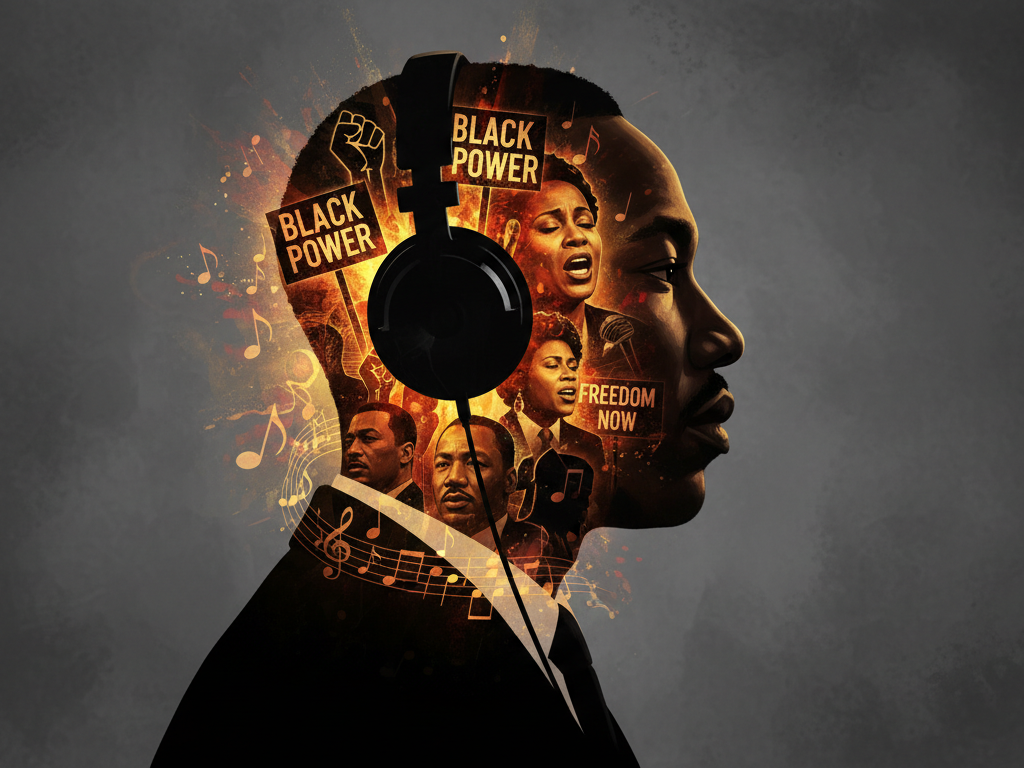
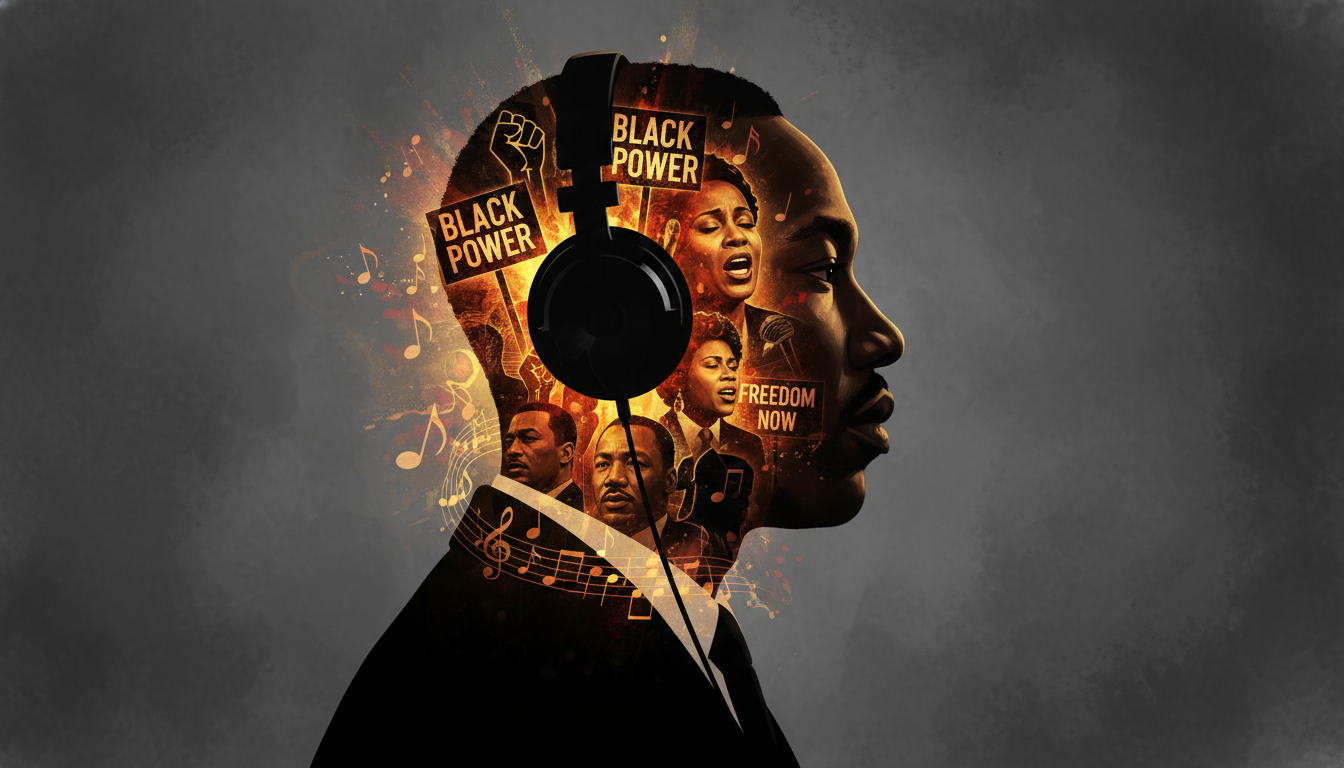
Music has always been more than just a backdrop to history; it is a living, breathing part of it. It’s the coded message in a spiritual, the roar of protest in a soul anthem, and the unshakeable pride in a hip-hop verse. This playlist was curated with that spirit in mind. It is not just a collection of songs by Black artists or about Black experiences, but a deliberate sonic journey where each track serves as a chapter in the long, complex, and powerful story of Black history. From the harrowing journey of the Middle Passage in The O’Jays’ “Ship Ahoy” to the defiant celebration of identity in Beyoncé’s “BROWN SKIN GIRL,” every song here is a direct link to a person, an event, a movement, or some combination of the three.
The running order is intentional, designed to guide the listener through a powerful emotional and historical arc. We begin in the depths of oppression, bearing witness to the brutality of slavery, the terror of Jim Crow, and the pain of foundational betrayals. From that bitter root, the playlist pivots to the fire of resistance. It chronicles the fight for Civil Rights in America and the parallel global struggle against apartheid, honoring the heroes who led the charge and the anthems that fueled their movements. The narrative then moves into the modern era, where the fight for justice continues in the face of new challenges, chronicled with unflinching honesty by artists from Bruce Springsteen to Janelle Monáe.
This journey through pain and protest ultimately leads to a place of empowerment, joy, and hard-won hope. The final act of the playlist is a celebration of contribution, a lesson in self-love for future generations, and a recognition of monumental triumphs. It culminates in the profound resilience of Aretha Franklin’s “A Change Is Gonna Come”—a final, stirring testament to an unshakeable faith in the future. This Black History Month, we invite you to not just hear these songs, but to truly listen. Follow the stories, look up the names, and feel the weight and glory of the history they carry. Let the rhythms move you, but let the histories change you.
Welcome to a journey through rhythm. November is International Drum Month, and this collection honors the masters of the drum kit, the players whose feel, power, and ingenuity define the songs we love. From the tightest pockets to the most explosive solos, these are the heartbeats of modern music. Let’s give the drummers some.
Good Vibrations – The Beach Boys The legendary session musician Hal Blaine provides the sharp, inventive percussion, using everything from sleigh bells to a detached kick drum to build the song’s complex and sunny atmosphere.
Cissy Strut – The Meters Joseph “Zigaboo” Modeliste, the architect of New Orleans funk, creates a syncopated, greasy, and endlessly influential groove that has been the blueprint for funk drummers ever since.
Smells Like Teen Spirit – Nirvana Dave Grohl’s performance is a masterclass in quiet-loud dynamics, with his simple, powerful groove in the verse exploding into a torrent of raw energy for the iconic chorus.
One – Metallica Lars Ulrich’s machine-gun double bass drumming on the intro is one of metal’s most defining moments, perfectly mimicking the sound of battlefield artillery.
Superstition – Stevie Wonder The irresistible funk pattern that drives this track was played by none other than Stevie Wonder himself, who laid down the clavinet, bass, and drum parts to create a perfect storm of groove.
The Glamorous Life – Sheila E. A tour de force from the legendary percussionist and drummer Sheila E., this track is a showcase of her technical virtuosity and incredible funk sensibilities.
In The Air Tonight – Phil Collins For three minutes, Phil Collins builds unbearable tension before unleashing the most famous drum fill in history, a thunderous burst of gated reverb toms that everyone has air-drummed to.
Rosanna – Toto The late, great Jeff Porcaro gives a masterclass in the half-time shuffle, creating a feel so iconic and difficult to replicate that it’s now simply known as the “Rosanna shuffle.”
Come Together – The Beatles Ringo Starr’s signature swampy, tea-towel-dampened tom groove is the unmistakable foundation of this track, proving that feel and creativity are more important than flash.
Brick House – The Commodores Walter “Clyde” Orange not only provides the lead vocals but also lays down a funk groove so solid and deep you could build a house on it, proving that sometimes the simplest beat is the most effective.
Rock With You – Michael Jackson Session giant John “JR” Robinson creates a beat that is smooth, sophisticated, and impossibly deep in the pocket, providing the perfect shimmering pulse for dancing.
Sing, Sing, Sing (With A Swing) – Benny Goodman & His Orchestra Gene Krupa became music’s first superstar drummer with this performance, his primal, floor-tom-driven solo setting the standard for all drum features to come.
Voodoo Child (Slight Return) – The Jimi Hendrix Experience Mitch Mitchell’s jazz-influenced, wildly improvisational drumming is the perfect foil for Hendrix’s guitar, a chaotic and conversational force of nature.
When The Levee Breaks – Led Zeppelin Recorded in a stairwell with two microphones, John Bonham’s colossal, booming groove is arguably the most recognizable and revered drum sound ever committed to tape.
Message in a Bottle – The Police Showcasing his unique, reggae-infused style, Stewart Copeland’s intricate hi-hat work and signature use of the splash cymbal give this song its nervous, driving energy.
Funky Drummer – James Brown Here, Clyde Stubblefield plays what is perhaps the most-sampled drum break in history, a 20-second piece of rhythmic perfection that became a cornerstone of hip-hop.
Gimme Shelter – The Rolling Stones The picture of restraint and taste, Charlie Watts enters the song with a deceptively simple beat that carries all the dread and swing the track demands.
I’ve Seen All Good People – Yes Bill Bruford’s crisp, creative, and complex drumming is on full display, navigating the song’s shifting sections with technical precision and musical grace.
50 Ways to Leave Your Lover – Paul Simon Steve Gadd lays down one of the most recognizable and clever marching-band-inspired beats in popular music, a sophisticated and instantly memorable pattern.
Think (About It) – Lyn Collins Another gift to hip-hop from the James Brown band, this track features John “Jabo” Starks’s impossibly tight groove and a legendary drum break that keeps on giving.
White Room – Cream The inimitable Ginger Baker announces this psychedelic classic with a powerful 5/4 tom-tom intro, setting the stage with his heavy, melodic, and groundbreaking style.
Hot For Teacher – Van Halen Alex Van Halen’s frantic, shuffling intro sounds like a barely-contained engine, kicking off one of the most exhilarating double-bass-fueled drum tracks in rock history.
Sunday Bloody Sunday – U2 Larry Mullen Jr.’s militaristic, unrelenting snare drum pattern, recorded in a reverberant stairwell, serves as the song’s defiant and unwavering backbone.
Schism – Tool A master of complexity, Danny Carey navigates the song’s dizzying array of shifting time signatures with a tribal power and mathematical precision that is simply breathtaking.
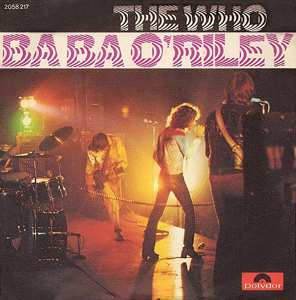
Baba O’Riley – The Who The untamable Keith Moon crashes and tumbles through this rock anthem, playing with a frenetic energy that threatens to send the song flying off the rails at any moment.
Dig Me Out – Sleater-Kinney Janet Weiss is the roaring engine of this track, playing with a ferocious power, impeccable timing, and creative fills that drive the song forward relentlessly.
I Heard It Through the Grapevine – Gladys Knight & the Pips Funk Brothers drummers Uriel Jones and the great Benny Benjamin create a powerhouse rhythm section, delivering a performance full of simmering tension and explosive release that punctuates the song’s raw emotion.
Dancin’ Fool – Frank Zappa Terry Bozzio is the manic force behind this track, navigating Zappa’s absurd rhythmic twists and turns with an explosive combination of power, precision, and theatrical flair.
One Love/People Get Ready – Bob Marley & The Wailers Carlton “Carly” Barrett, the originator of the “One Drop” rhythm, gives this song its iconic reggae heartbeat, where the accent is on the third beat of the measure.
Footprints – The Miles Davis Quintet At just 20 years old, Tony Williams redefined jazz drumming with his explosive and interactive playing, shattering old conventions and pushing the entire band to new heights.
The late Terry Hall of Fun Boy Three and The Specials was born on this date in 1959. Some highlights from his career in music are included on today’s playlist.
Bob Marley was more than just a musician. He was a cultural icon, a spiritual leader, and a voice for the oppressed. His songs of peace, love, and justice resonated with millions of people around the world, and his legacy continues to inspire new generations of artists and activists.
Bob Marley was born in 1945 in Jamaica. He grew up in poverty and faced discrimination for being mixed-race, but he found solace and joy in music. He started his career in the early 1960s, forming a group called The Wailers with Peter Tosh and Bunny Wailer. Marley and The Wailers achieved international fame in the 1970s, after signing with Island Records and touring extensively. Their albums, such as Catch a Fire, Burnin’, Natty Dread, and Exodus, are considered classics of the reggae genre, and feature some of Marley’s most beloved songs, such as “No Woman, No Cry”, “Jamming”, “Exodus”, and “Is This Love.”
Bob Marley used his music as a platform to address the issues that affected his people and the world, such as poverty, oppression, racism, violence, and corruption. He also advocated for peace, unity, and human rights, and supported various causes and movements, such as the anti-apartheid struggle in South Africa and the empowerment of the Jamaican people.
Some of his songs, such as “Get Up Stand Up”, “Redemption Song”, “War”, and “Zimbabwe,” are anthems of protest and liberation, and have been adopted by many social movements and campaigns. Marley also participated in several concerts and events that aimed to promote peace and justice, such as the One Love Peace Concert in 1978, where he famously joined the hands of the rival Jamaican political leaders Michael Manley and Edward Seaga, and the Zimbabwe Independence Celebrations in 1980, where he performed for the newly freed nation.
Bob Marley died in 1981, at the age of 36, after a long battle with cancer. He left behind a legacy of music and humanity that transcends borders, cultures, and generations. He is widely regarded as one of the greatest and most influential musicians of all time, and has been honored with numerous awards and recognitions, such as the Grammy Lifetime Achievement Award, induction into the Rock and Roll Hall of Fame, and the Order of Merit of Jamaica. He is also a symbol of Jamaican identity and culture, and a global icon of peace and love.
Bob Marley’s music and message continue to live and grow, and to touch the hearts and minds of millions of people around the world. His songs are timeless and universal, and can be enjoyed by anyone, regardless of their age, background, or taste. His songs are also a source of inspiration and motivation. As he once said, “Don’t worry about a thing, ’cause every little thing gonna be alright.”