Tunes Du Jour Presents 1984

It’s hard to overstate how culturally dominant pop music was in 1984—or how much the year reshaped the landscape. Many of the songs on this playlist weren’t just hits; they were defining moments, launching or solidifying the careers of artists whose names still carry weight today. The sheer number of songs from 1984 that are still instantly recognizable points to a moment when creativity, commerce, and cultural change aligned. The presence of “Thriller”—Michael Jackson’s seventh single from the album of the same name—reminds us that the music business had never seen anything quite like this before. And yet, he wasn’t the only artist making history.

Prince’s “Purple Rain” marked not just a commercial breakthrough, but a creative one. It’s a song, an album, and a film—each enhancing the other’s mythology. Similarly, “Like a Virgin” signaled Madonna’s arrival as more than a pop star; she became a cultural force. Tina Turner, with “What’s Love Got to Do with It,” pulled off one of the most celebrated comebacks in music history. And Cyndi Lauper’s “Girls Just Want to Have Fun” brought an infectious blend of new wave and punky playfulness to the mainstream, reshaping ideas about femininity and pop performance.

Meanwhile, the rock world was hardly on pause. “Jump” became Van Halen’s biggest hit, thanks to its synth hook and anthemic chorus, while Bruce Springsteen’s “Dancing in the Dark” pushed his career into stadium territory. Across the Atlantic, U2’s “Pride (In the Name of Love)” began their transformation from college radio favorites to global headliners. The Replacements’ “I Will Dare,” from Let It Be, captured the heart of American indie rock—irreverent, emotionally raw, and just tuneful enough to hint at wider possibilities. And among the post-punk and alternative set, songs like “The Killing Moon” by Echo & the Bunnymen and “Heaven Knows I’m Miserable Now” by The Smiths gave moody introspection a lasting soundtrack.

What also stands out in 1984 is the range of genres that made a mainstream impact. Shannon’s “Let the Music Play” helped lay groundwork for freestyle, and Chaka Khan’s “I Feel for You” was a pivotal crossover moment, bringing together R&B, pop, and hip-hop. Run-D.M.C.’s “Rock Box” did something similar, blending rap and rock before it was fashionable. The Pointer Sisters’ “Automatic” was one of several hits that proved they could thrive in an electronic pop era without losing their vocal identity. Even novelty songs like “Ghostbusters” or the cheerful “Wake Me Up Before You Go-Go” helped shape the sound of the time.

Beyond chart success, 1984’s songs carried messages—sometimes playful, sometimes political. “Free Nelson Mandela” by The Special A.K.A. was a global anthem of protest. Depeche Mode’s “Blasphemous Rumours” examined faith and fate with a dark electronic edge. And “Somebody’s Watching Me,” a paranoid slice of synth-pop, foreshadowed a media culture on the verge of explosion. Whether on the dancefloor, in dorm rooms, or through the television set, 1984’s music didn’t just reflect its era—it helped define it.

Follow Tunes Du Jour on Facebook

Follow me on Bluesky

Follow me on Instagram
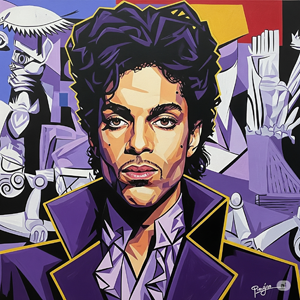
Tunes Du Jour Presents The Prince Songbook

Prince’s genius as a performer is well-documented, but his legacy as a songwriter may be even more far-reaching. The songs he wrote—sometimes directly for others, sometimes borrowed or reimagined—traveled in unexpected directions, often landing in voices very different from his own. Sinéad O’Connor’s haunting version of “Nothing Compares 2 U” turned emotional restraint into a global anthem, while Chaka Khan’s take on “I Feel for You” transformed a tightly wound synth-funk track into a dancefloor juggernaut with help from Melle Mel and Stevie Wonder. The Bangles’ jangly “Manic Monday” showed his facility with classic pop forms.

Sometimes Prince gave away songs without credit. Stevie Nicks has said “Stand Back” wouldn’t exist without his impromptu help; he played the synth part that defined the track, and then slipped away, declining a formal writing credit. His fingerprints are on the Sheila E. hit “The Glamorous Life” and The Time’s “Jungle Love,” both written and produced by Prince but performed by his protégés. Even artists as distinct as Alicia Keys and Tom Jones found new depths and textures in his work, whether covering “How Come You Don’t Call Me” or reinterpreting “Kiss.” In many cases, he gave female artists some of their most complex and empowered material: see Sheena Easton’s risqué “Sugar Walls” or Martika’s spiritual “Love… Thy Will Be Done.”

What’s most remarkable is how well these songs hold up when refracted through other voices. Cyndi Lauper brought vulnerability to “When You Were Mine,” TLC made “If I Was Your Girlfriend” even more intimate, and even idiosyncratic takes like Sufjan Stevens on “Alphabet Street” or P.M. Dawn’s dreamlike “1999” as incorporated in “Fantasia’s Confidential Ghetto” show how flexible his songwriting was. Prince’s compositions had structure, hooks, and heart, but they were never rigid. That elasticity allowed other artists not just to sing his songs, but to inhabit them.

Follow Tunes Du Jour on Facebook

Follow me on Bluesky

Follow me on Instagram

Tunes Du Jour Presents 1986

Looking back at 1986, what stands out isn’t just the quality of the music, but how effortlessly genres merged and boundaries dissolved. Run-D.M.C. and Aerosmith’s “Walk This Way” wasn’t just a collaboration – it was a statement about how rock and hip-hop could amplify each other’s strengths. Prince, at the height of his powers, stripped everything down to bare essentials with “Kiss,” proving his superstardom could take any form. Robert Palmer’s “Addicted to Love” became inescapable, powered by one of the era’s most iconic videos, while Peter Gabriel’s “Sledgehammer” merged art rock with soul and funk, accompanied by groundbreaking stop-motion animation.

The women of pop music wielded particular influence that year. Madonna continued pushing buttons with “Papa Don’t Preach,” tackling teenage pregnancy in a way that sparked national conversation. Whitney Houston’s “How Will I Know” showcased her extraordinary vocal range while proving dance-pop could be both sophisticated and irresistible. Janet Jackson asked “What Have You Done for Me Lately,” establishing herself as a force independent of her famous family. Cyndi Lauper’s “True Colors” transcended its moment, becoming an enduring anthem of self-acceptance that would be covered for decades to come.

The underground was rising to the surface, but keeping its edge. The Smiths’ “There Is A Light That Never Goes Out” brought literary depth to alternative rock, while New Order’s “Bizarre Love Triangle” helped blueprint the future of electronic dance music. The Pet Shop Boys’ “West End Girls” married street-smart observations with pristine synth-pop, and Public Image Ltd.’s “Rise” proved post-punk could evolve without losing its bite. Even The Cure, with “In Between Days,” found a way to make melancholy sound surprisingly radio-friendly.

Soul and R&B were experiencing their own renaissance. Anita Baker’s “Sweet Love” brought sophisticated quiet storm to the mainstream, while Cameo’s “Word Up!” demonstrated funk’s continuing vitality. Grace Jones’ “Slave to the Rhythm” showcased the artist’s commanding presence, and James Brown reminded everyone he was still the Godfather of Soul with “Living in America.” The year also saw George Michael step out of Wham!’s shadow with “A Different Corner,” proving he could hold his own as a solo artist.

The year proved fertile ground for both established and emerging voices. Bruce Springsteen’s “My Hometown” painted a portrait of a changing America, while Billy Bragg’s “Levi Stubbs’ Tears” showed how personal stories could carry political weight. Elvis Costello’s “I Want You” pushed the boundaries of what a love song could express, and R.E.M.’s “Fall on Me” managed to be both cryptic and urgently relevant. Meanwhile, LL Cool J’s “I Can’t Live Without My Radio” brought hip-hop closer to the mainstream while maintaining its street credibility. In retrospect, 1986 wasn’t just a great year for music – it was a moment when artists across the spectrum proved that innovation and accessibility weren’t mutually exclusive.

Follow Tunes du Jour on Facebook

Follow me on Bluesky

Follow me on Instagram

Tunes Du Jour Celebrates World Kindness Day

Today is World Kindness Day. While every day would be a great day to practice basic human decency, some people are nasty assbags with no regard for others. If you’re one of those walking masterpieces of jackholery, here’s a wild idea: try being kind for ONE WHOLE DAY and see what it does. For example, let’s say you’re the personal assistant to someone who lives in a building with other residents. When you’re walking out of the building’s front door just in front of a neighbor who is holding his 17-year-old blind dog and leading his other pupper on a leash, maybe – and I’m just spitballing here – don’t let the door slam in their face, you self-absorbed piece of human garbage. And if said neighbor thoughtfully moves your precious Tesla charging cable to prevent damage (gasp – the audacity of helping!), perhaps, don’t show up at his door and berate him for protecting your property. Wild concept: Show some gratitude for his thoughtfulness. Consider saying “thank you,” you self-important, unreasonable, entitled, high-handed weenie.

FFS people, be kind! Rewind!

(Any resemblance to persons unfortunately living is purely intentional.)

Follow Tunes Du Jour on Facebook

Follow Tunes Du Jour on Twitter

Follow me on Instagram

Tunes Du Jour Celebrates PRIDE!

Music has long been a powerful force for self-expression and building community for LGBTQ+ artists and listeners alike. This Pride playlist celebrates the incredible diversity within the LGBTQ+ community through a wide range of styles, eras, and voices.

From enduring anthems like Diana Ross’ “I’m Coming Out” and Queen’s defiant “I Want To Break Free” to recent hits from Lil Nas X, Janelle Monae, and Troye Sivan, the songs seamlessly blend messages of pride, self-acceptance, and living authentically. Legendary artists like Elton John, George Michael, and Melissa Etheridge stand alongside bold new voices like Rina Sawayama and Perfume Genius, showing how LGBTQ+ musicians have blazed trails across decades.

The playlist pays tribute to tracks that turned the spotlight on LGBTQ+ experiences through storytelling, like The Kinks’ “Lola,” Pet Shop Boys’ “It’s a Sin,” and Bronski Beat’s “Smalltown Boy.” It also uplifts joyful, celebratory bops, such as “I’m Still Standing,” “Go West,” and the iconic “It’s Raining Men.” 

With a mix of pop smashes, singer-songwriter confessionals, rock anthems, and hip-hop ground-breakers, the eclectic playlist reflects how LGBTQ+ artists have fruitfully influenced every corner of the musical landscape. From Carl Bean’s pioneering disco hit “I Was Born This Way” to Gossip’s “Standing in the Way of Control,” these songs unite in championing self-love, equality, and the fundamental human rights that the LGBTQ+ community continues fighting for.

Ultimately, this playlist invites listeners of all identities and backgrounds to share in the uplifting spirit of Pride. It’s a vibrant, multi-dimensional celebration of the perseverance, creativity, and unshakeable truth at the heart of the LGBTQ+ experience.

Follow Tunes Du Jour on Facebook

Follow Tunes Du Jour on Twitter

Follow me on Instagram

Your (Almost) Daily Playlist: 6-14-23

Culture Club’s “Do You Really Want to Hurt Me“ takes me back to Newbury Comics in Cambridge, Massachusetts in late 1982. There was a TV in the shop that showed music videos. That was my first exposure to this song and to Boy George. I was transfixed, partly because the song is so good, and partly because I couldn’t figure out the singer’s gender. We only knew of two genders back then. Though I had not yet been recruited into the homosexual lifestyle, I became fascinated with Boy George. It helped that his band’s music was so good, for a while anyway. His solo catalogue has some worthwhile numbers as well.

Boy George was born on this date in 1961.

Follow Tunes du Jour on Facebook

Follow Tunes du Jour on Twitter

Follow me on Instagram