
We all know everything
That he stood for time will bring
For in peace our hearts will sing
Thanks to Martin Luther King
Follow Tunes Du Jour on Facebook
Follow me on Bluesky
Follow me on Instagram
Many of us grow up assuming the hit version of a song is the original. This playlist celebrates those surprising musical genealogies: well-known songs that were originally recorded by someone else, often with little fanfare. Here are the stories behind the transformations—where they started, and how they became iconic.
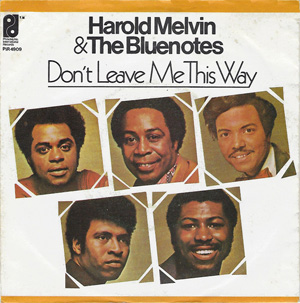
“Don’t Leave Me This Way” – Thelma Houston / Originally by Harold Melvin & the Blue Notes (1975)
Houston’s disco anthem actually began life as a Philly soul track sung by Teddy Pendergrass. Thelma took it to the dancefloor—and to #1.
“War” – Edwin Starr / Originally by The Temptations (1970)
This protest song started as an album cut by The Temptations. Starr’s rawer, angrier take made it a searing hit during the Vietnam era.
“Strawberry Letter 23” – The Brothers Johnson / Originally by Shuggie Otis (1971)
Otis’ dreamy, psychedelic original flew under the radar until producer Quincy Jones supercharged it with funk for The Brothers Johnson.
“I Feel for You” – Chaka Khan / Originally by Prince (1979)
Prince wrote it, recorded it, and released it on his 1979 self-titled album. Chaka Khan added Stevie Wonder’s harmonica and Melle Mel’s rap, creating a genre-blurring smash that gave the song a second life—and a much bigger audience.
“Louie Louie” – The Kingsmen / Originally by Richard Berry (1957)
Berry’s calypso-tinged rhythm & blues song became an unintelligible rock ‘n’ roll classic in the hands of teenage garage rockers.
“Pass The Koutchie” – Musical Youth as “Pass the Dutchie” / Originally by Mighty Diamonds (1981)
Musical Youth’s version cleaned up the ganja references but kept the groove. A British reggae hit born from a roots original.
“Tainted Love” – Soft Cell / Originally by Gloria Jones (1964)
This Northern Soul favorite was ignored in the U.S. until Soft Cell’s chilly synth-pop cover turned it into an international sensation.
“You Are So Beautiful” – Joe Cocker / Originally by Billy Preston (1974)
Preston’s gospel-inflected original was co-written with Dennis Wilson of the Beach Boys. Cocker slowed it down into a tearjerking ballad.
“The First Cut Is The Deepest” – Rod Stewart / Originally by P.P. Arnold (1967)
Before Cat Stevens, the song’s writer, sang it himself, P.P. Arnold delivered a powerful version. Stewart’s cover gave it global traction.
“Red, Red Wine” – UB40 / Originally by Neil Diamond (1967)
Diamond’s mournful original was a slow ballad. UB40’s reggae version confused even him—he didn’t recognize his own song on the radio.
“Brand New Cadillac” – The Clash / Originally by Vince Taylor and His Playboys (1959)
This rockabilly obscurity became a snarling punk track on London Calling. Vince Taylor later served as an inspiration for David Bowie’s Ziggy Stardust persona.
“Take Me To The River” – Talking Heads / Originally by Al Green (1974)
Green’s swampy soul gave way to Talking Heads’ jittery art-funk. An old-school spiritual reborn in new wave style.
“The Tide Is High” – Blondie / Originally by The Paragons (1967)
Jamaican rocksteady meets NYC cool. Blondie took this mellow gem and gave it a global pop sheen.
“Brandy” – Barry Manilow as “Mandy” / Originally by Scott English (1971)
English’s sad and simple original got a new name and new polish. Manilow’s grand version topped the charts.
“Don’t Let Me Be Misunderstood” – The Animals / Originally by Nina Simone (1964)
Simone’s pleading ballad became a snarling British Invasion hit. Her nuanced sorrow gave way to the raw edge of rock.
“Bette Davis Eyes” – Kim Carnes / Originally by Jackie DeShannon (1974)
The original was breezy and piano-driven. Carnes and her producer Val Garay turned it into new wave noir.
“Heaven Must Have Sent You” – Bonnie Pointer / Originally by The Elgins (1966)
Pointer’s disco version revived a Motown deep cut and put it back on the charts over a decade later.
“Love Buzz” – Nirvana / Originally by Shocking Blue (1969)
Nirvana turned this obscure Dutch psych-rock tune into a distorted grunge landmark. Their debut single.
“Piece Of My Heart” – Big Brother & The Holding Company / Originally by Erma Franklin (1967)
Aretha’s sister recorded it first, but Janis Joplin made it a fiery centerpiece of her legend.
“It’s Oh So Quiet” – Björk / Originally by Betty Hutton (1951)
A novelty big-band number revived by Björk into a theatrical showstopper. Old Hollywood meets Icelandic art-pop.
“China Girl” – David Bowie / Originally by Iggy Pop (1977)
Co-written with Bowie, Iggy’s version was skeletal and raw. Bowie’s version added synth gloss and MTV appeal.
“Good Lovin'” – The Young Rascals / Originally by The Olympics (1965)
The Olympics had the groove, but The Rascals turned it into a garage-rock rave-up and a #1 hit.
“Valerie” – Mark Ronson featuring Amy Winehouse / Originally by The Zutons (2006)
The Zutons wrote it as a bluesy rock song. Winehouse made it retro-soul perfection.
“Police On My Back” – The Clash / Originally by The Equals (1967)
A stomping, paranoid track from Eddy Grant’s first band. The Clash turned it into a punk fugitive anthem.
“After Midnight” – Eric Clapton / Originally by J.J. Cale (1966)
Cale’s laid-back shuffle was juiced up with guitar licks by Clapton, who kept the songwriter’s cool intact.
“On Broadway” – The Drifters / Originally by The Cookies (1962)
Songwriters Barry Mann & Cynthia Weil gave this to a girl group first, but The Drifters made it a city-slick R&B classic.
“Love Hurts” – Nazareth / Originally by The Everly Brothers (1960)
Gentle heartbreak became hard rock agony. Nazareth’s arena wail made the song a power ballad staple.
“I Love Rock ‘n’ Roll” – Joan Jett & the Blackhearts / Originally by The Arrows (1975)
Jett saw it on UK TV and recorded a fiercer, snarling version that girls (and boys) everywhere could scream along to.
“Without You” – Nilsson / Originally by Badfinger (1970)
Badfinger’s version was plaintive; Nilsson’s was operatic. He didn’t just sing it—he wailed it.
“Superman” – R.E.M. / Originally by The Clique (1969)
A psychedelic pop obscurity turned indie-rock cult classic. One of R.E.M.’s rare early tracks not written by the band.
These songs remind us that inspiration doesn’t always strike where the spotlight shines. Sometimes greatness is borrowed—and reinvented.
Follow Tunes Du Jour on Facebook
Follow me on Bluesky
Follow me on Instagram

In the 1970s, Kenneth Gamble and Leon Huff shaped the sound of a generation with their signature brand of sophisticated, richly orchestrated soul music. As the architects of what became known as Philly soul, the duo crafted anthems that balanced deep emotional resonance with tight, danceable grooves. Their work as producers at Philadelphia International Records (PIR) established a sonic identity that was as polished as it was powerful, laying the foundation for later developments in R&B and disco.
Philly soul stood apart from other regional styles of the time, thanks in large part to Gamble and Huff’s emphasis on lush string arrangements, driving rhythm sections, and socially conscious lyrics. With a stable of top-tier session musicians—collectively known as MFSB—they created an expansive sound that was both cinematic and immediate. Songs like “Back Stabbers” by The O’Jays and “The Love I Lost” by Harold Melvin & The Blue Notes turned heartbreak and betrayal into dramatic musical statements, while dancefloor favorites like “Do It Any Way You Wanna” by People’s Choice showcased their ability to craft irresistibly propulsive rhythms.
As producers, Gamble and Huff had a particular talent for pairing the right voices with the right material. Lou Rawls’ baritone found a new dimension on “You’ll Never Find Another Love Like Mine,” and Billy Paul’s jazz-influenced phrasing made “Me and Mrs. Jones” a timeless tale of illicit romance. They also helped usher in the rise of Teddy Pendergrass, whose raw, commanding delivery gave Harold Melvin & The Blue Notes a distinct edge on tracks like “Wake Up Everybody” and “Don’t Leave Me This Way” before his successful solo career under their guidance.
Beyond crafting individual hits, Gamble and Huff understood the power of music as a cultural force. Songs like “Love Train” promoted unity and optimism, while “For the Love of Money” took a hard look at greed and materialism. Their productions weren’t just about making records—they were about shaping the mood of the era. Even their instrumental work, such as MFSB’s “T.S.O.P. (The Sound of Philadelphia),” became anthemic, doubling as the theme for Soul Train and solidifying Philly soul’s influence on popular culture.
The legacy of Gamble and Huff’s production work is undeniable. Their seamless blend of elegance and groove paved the way for the disco explosion, influenced generations of R&B artists, and remains a touchstone for contemporary soul revivalists. Whether through the soaring harmonies of The Three Degrees, the anthemic hooks of The Jacksons, or the velvet-toned storytelling of Jerry Butler, their music continues to resonate—proof that the sound of Philadelphia was more than just a moment in time. It was, and still is, a movement.
Follow Tunes Du Jour on Facebook
Follow me on Bluesky
Follow me on Instagram

Today is World Kindness Day. While every day would be a great day to practice basic human decency, some people are nasty assbags with no regard for others. If you’re one of those walking masterpieces of jackholery, here’s a wild idea: try being kind for ONE WHOLE DAY and see what it does. For example, let’s say you’re the personal assistant to someone who lives in a building with other residents. When you’re walking out of the building’s front door just in front of a neighbor who is holding his 17-year-old blind dog and leading his other pupper on a leash, maybe – and I’m just spitballing here – don’t let the door slam in their face, you self-absorbed piece of human garbage. And if said neighbor thoughtfully moves your precious Tesla charging cable to prevent damage (gasp – the audacity of helping!), perhaps, don’t show up at his door and berate him for protecting your property. Wild concept: Show some gratitude for his thoughtfulness. Consider saying “thank you,” you self-important, unreasonable, entitled, high-handed weenie.
FFS people, be kind! Rewind!
(Any resemblance to persons unfortunately living is purely intentional.)
Follow Tunes Du Jour on Facebook
Follow Tunes Du Jour on Twitter
Follow me on Instagram

This fall marks fifty years since Billboard magazine began publishing its disco chart, an acknowledgment of a genre that danced its way into the hearts of millions. Disco music, with its infectious rhythms and vibrant energy, was more than just a soundtrack for nightlife; it was a cultural phenomenon rooted in the experiences of Black, Latinx, and gay communities. The genre’s pulsating beats and soulful melodies offered an escape, a place where people could come together and express themselves freely on the dance floor.
Disco’s origins can be traced back to the dance halls of New York City, where marginalized communities created spaces for celebration and expression. Early tracks like The Trammps’ “That’s Where the Happy People Go” and Shirley & Co’s “Shame, Shame, Shame” laid the foundation for what would become a global movement. These songs, along with others from the era, were not just about the beats but also about creating a sense of community and shared experience on the dance floor, where people from all walks of life could come together and express themselves freely.
Black artists played a central role in shaping disco’s sound and message. Chic’s “Le Freak” and Sister Sledge’s “He’s the Greatest Dancer” brought sophisticated grooves that transcended race, while Marvin Gaye’s “Got to Give It Up” and Diana Ross’s “Upside Down” combined soul with danceable rhythms, pushing the genre into mainstream consciousness. The smooth yet dynamic production styles and vocals showcased a depth that went beyond the glittering surface often associated with disco.
Latinx influences also left an indelible mark on the genre. Songs like “Turn The Beat Around” by Vicki Sue Robinson and “Cherchez La Femme” by Dr. Buzzard’s Original Savannah Band infused Latin rhythms with disco beats, creating a vibrant and eclectic sound. This cross-pollination of cultures on the dance floor reflected the diversity of the communities that embraced disco, making it a genre that celebrated inclusivity long before it became a mainstream value.
As we commemorate fifty years since Billboard recognized disco’s impact, it’s important to remember that disco was more than just a moment in time. It was a movement that broke down social barriers and created a space where joy and liberation could thrive. Whether it’s the enduring appeal of “Stayin’ Alive” by the Bee Gees or the timeless groove of KC & the Sunshine Band’s “That’s the Way (I Like It),” disco’s legacy lives on, reminding us of the power of music to unite and uplift.


1972. The Vietnam War raged on, Watergate loomed, and the social landscape shifted beneath our feet. Amidst this backdrop of upheaval, our ears tuned in to a soundtrack that transcended mere melodies—it pulsed with the countercultural spirit and the burgeoning individuality of an era. Let us step back in time, dust off the record player, and explore the timeless tunes that wove themselves into the fabric of our lives—a kaleidoscope of genres and voices that defined a generation.
From the introspective musings of Lou Reed’s “Perfect Day” to the raw energy of Led Zeppelin, each track on this playlist embodies the spirit of its time while transcending it—a symphony that continues to resonate across generations.
The music of 1972 continues to evoke nostalgia and stir emotions across generations. These iconic tunes remind us of the enduring legacy of artists who dared to push boundaries and challenge the status quo. So turn up the volume and let these timeless tunes whisk you back to celebrate the enduring beauty of music that transcends generations.
Follow Tunes du Jour on Facebook
Follow Tunes du Jour on Twitter
Follow me on Instagram

The theme of today’s playlist is cover versions of songs that originated in stage musicals. Here are the songs listed with the shows that introduced them:
Follow Tunes du Jour on Facebook
Follow Tunes du Jour on Twitter
Follow me on Instagram