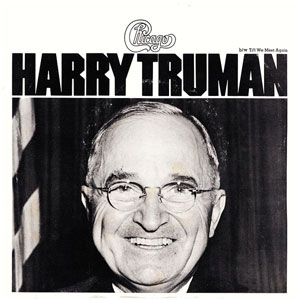
‘Tis the season.
Follow Tunes Du Jour on Facebook
Follow me on Bluesky
Follow me on Instagram
Welcome to a journey through rhythm. November is International Drum Month, and this collection honors the masters of the drum kit, the players whose feel, power, and ingenuity define the songs we love. From the tightest pockets to the most explosive solos, these are the heartbeats of modern music. Let’s give the drummers some.
Good Vibrations – The Beach Boys
The legendary session musician Hal Blaine provides the sharp, inventive percussion, using everything from sleigh bells to a detached kick drum to build the song’s complex and sunny atmosphere.
Cissy Strut – The Meters
Joseph “Zigaboo” Modeliste, the architect of New Orleans funk, creates a syncopated, greasy, and endlessly influential groove that has been the blueprint for funk drummers ever since.
Smells Like Teen Spirit – Nirvana
Dave Grohl’s performance is a masterclass in quiet-loud dynamics, with his simple, powerful groove in the verse exploding into a torrent of raw energy for the iconic chorus.
One – Metallica
Lars Ulrich’s machine-gun double bass drumming on the intro is one of metal’s most defining moments, perfectly mimicking the sound of battlefield artillery.
Superstition – Stevie Wonder
The irresistible funk pattern that drives this track was played by none other than Stevie Wonder himself, who laid down the clavinet, bass, and drum parts to create a perfect storm of groove.
The Glamorous Life – Sheila E.
A tour de force from the legendary percussionist and drummer Sheila E., this track is a showcase of her technical virtuosity and incredible funk sensibilities.
In The Air Tonight – Phil Collins
For three minutes, Phil Collins builds unbearable tension before unleashing the most famous drum fill in history, a thunderous burst of gated reverb toms that everyone has air-drummed to.
Rosanna – Toto
The late, great Jeff Porcaro gives a masterclass in the half-time shuffle, creating a feel so iconic and difficult to replicate that it’s now simply known as the “Rosanna shuffle.”
Come Together – The Beatles
Ringo Starr’s signature swampy, tea-towel-dampened tom groove is the unmistakable foundation of this track, proving that feel and creativity are more important than flash.
Brick House – The Commodores
Walter “Clyde” Orange not only provides the lead vocals but also lays down a funk groove so solid and deep you could build a house on it, proving that sometimes the simplest beat is the most effective.
Rock With You – Michael Jackson
Session giant John “JR” Robinson creates a beat that is smooth, sophisticated, and impossibly deep in the pocket, providing the perfect shimmering pulse for dancing.
Sing, Sing, Sing (With A Swing) – Benny Goodman & His Orchestra
Gene Krupa became music’s first superstar drummer with this performance, his primal, floor-tom-driven solo setting the standard for all drum features to come.
Voodoo Child (Slight Return) – The Jimi Hendrix Experience
Mitch Mitchell’s jazz-influenced, wildly improvisational drumming is the perfect foil for Hendrix’s guitar, a chaotic and conversational force of nature.
When The Levee Breaks – Led Zeppelin
Recorded in a stairwell with two microphones, John Bonham’s colossal, booming groove is arguably the most recognizable and revered drum sound ever committed to tape.
Message in a Bottle – The Police
Showcasing his unique, reggae-infused style, Stewart Copeland’s intricate hi-hat work and signature use of the splash cymbal give this song its nervous, driving energy.
Funky Drummer – James Brown
Here, Clyde Stubblefield plays what is perhaps the most-sampled drum break in history, a 20-second piece of rhythmic perfection that became a cornerstone of hip-hop.
Gimme Shelter – The Rolling Stones
The picture of restraint and taste, Charlie Watts enters the song with a deceptively simple beat that carries all the dread and swing the track demands.
I’ve Seen All Good People – Yes
Bill Bruford’s crisp, creative, and complex drumming is on full display, navigating the song’s shifting sections with technical precision and musical grace.
50 Ways to Leave Your Lover – Paul Simon
Steve Gadd lays down one of the most recognizable and clever marching-band-inspired beats in popular music, a sophisticated and instantly memorable pattern.
Think (About It) – Lyn Collins
Another gift to hip-hop from the James Brown band, this track features John “Jabo” Starks’s impossibly tight groove and a legendary drum break that keeps on giving.
White Room – Cream
The inimitable Ginger Baker announces this psychedelic classic with a powerful 5/4 tom-tom intro, setting the stage with his heavy, melodic, and groundbreaking style.
Hot For Teacher – Van Halen
Alex Van Halen’s frantic, shuffling intro sounds like a barely-contained engine, kicking off one of the most exhilarating double-bass-fueled drum tracks in rock history.
Sunday Bloody Sunday – U2
Larry Mullen Jr.’s militaristic, unrelenting snare drum pattern, recorded in a reverberant stairwell, serves as the song’s defiant and unwavering backbone.
Schism – Tool
A master of complexity, Danny Carey navigates the song’s dizzying array of shifting time signatures with a tribal power and mathematical precision that is simply breathtaking.
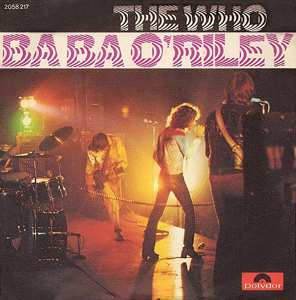
Baba O’Riley – The Who
The untamable Keith Moon crashes and tumbles through this rock anthem, playing with a frenetic energy that threatens to send the song flying off the rails at any moment.
Dig Me Out – Sleater-Kinney
Janet Weiss is the roaring engine of this track, playing with a ferocious power, impeccable timing, and creative fills that drive the song forward relentlessly.
I Heard It Through the Grapevine – Gladys Knight & the Pips
Funk Brothers drummers Uriel Jones and the great Benny Benjamin create a powerhouse rhythm section, delivering a performance full of simmering tension and explosive release that punctuates the song’s raw emotion.
Dancin’ Fool – Frank Zappa
Terry Bozzio is the manic force behind this track, navigating Zappa’s absurd rhythmic twists and turns with an explosive combination of power, precision, and theatrical flair.
One Love/People Get Ready – Bob Marley & The Wailers
Carlton “Carly” Barrett, the originator of the “One Drop” rhythm, gives this song its iconic reggae heartbeat, where the accent is on the third beat of the measure.
Footprints – The Miles Davis Quintet
At just 20 years old, Tony Williams redefined jazz drumming with his explosive and interactive playing, shattering old conventions and pushing the entire band to new heights.
Follow Tunes Du Jour on Facebook
Follow me on Bluesky
Follow me on Instagram
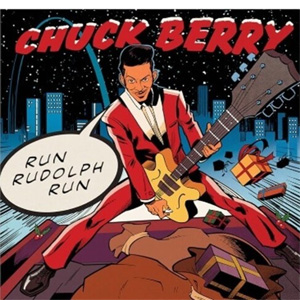
Have you ever looked at a playlist from a single year and felt a sense of disbelief? It’s one thing for a year to produce a few memorable hits, but it’s another for it to feel like a highlight reel of music history. Looking at the charts from 1965 is exactly that kind of experience. It wasn’t just a year of good songs; it was a pivotal moment when popular music seemed to mature in several different directions at once, producing an astonishing collection of classics that still resonate today.
On one hand, 1965 saw the art of the immaculately produced pop song reach a new peak. The Motown machine was in full, glorious swing, giving us the suave romance of The Temptations’ “My Girl” and the intricate heartbreak of Smokey Robinson’s “The Tracks of My Tears.” The Supremes demanded attention with the dramatic plea of “Stop! In the Name of Love,” a perfect example of studio craftsmanship meeting raw emotion. Across the Atlantic, Petula Clark’s “Downtown” offered a sweeping, cinematic vision of city life. These weren’t just catchy tunes; they were impeccably arranged, powerfully sung, and emotionally direct pieces of art that defined a certain kind of pop perfection.
At the very same time, a grittier, more defiant sound was taking hold. The Rolling Stones’ “(I Can’t Get No) Satisfaction” wasn’t just a hit song; it was a statement of intent, built around a fuzzy, unforgettable guitar riff that sounded like pure frustration. This raw energy was a common thread. From the garage-rock howl of Them’s “Gloria” to the stuttering, youthful angst of The Who’s “I Can’t Explain,” rock music was shedding its cleaner-cut image. This wasn’t the polished sound of the studio; it was the restless sound of the rehearsal room, and it was connecting with an entire generation.
Beyond the evolving sounds, the lyrical substance of popular music was deepening profoundly. Bob Dylan completely rewrote the rules with “Like a Rolling Stone,” a six-minute epic of poetic scorn that proved a hit single could be complex, challenging, and literary. That same year, The Byrds took Dylan’s words and electrified them, creating a new genre overnight with their shimmering version of “Mr. Tambourine Man.” This new lyrical consciousness also carried immense social weight. Sam Cooke’s posthumously released “A Change Is Gonna Come” and The Impressions’ hopeful “People Get Ready” became enduring anthems of the Civil Rights Movement, demonstrating that music could be both a comfort and a powerful call for progress.
What makes 1965 so striking is that none of these developments happened in isolation. It was a year of convergence, where you could hear the sweet soul of Marvin Gaye’s “How Sweet It Is (To Be Loved By You)” on the radio right next to the birth of funk in James Brown’s “Papa’s Got a Brand New Bag.” The carefree optimism of The Beach Boys’ “California Girls” shared the airwaves with the deep, aching soul of Otis Redding’s “I’ve Been Loving You Too Long.” The sheer volume of landmark recordings from this single 12-month period is a testament to a unique moment in time—a year when the boundaries of pop music were expanding in every direction, leaving us with a collection of songs that feel less like relics and more like foundation stones.
Follow Tunes Du Jour on Facebook
Follow me on Bluesky
Follow me on Instagram
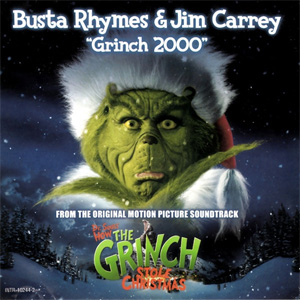
The music of 1962 wasn’t so much at a crossroads as it was following several lively paths at once. What captivated the public ranged from soul ballads to novelty records to stirrings of folk activism. Instrumentals, dance crazes, and heartfelt pop all found room on the charts. It’s this eclecticism — rather than any one dominant trend — that best characterizes the year. Yet in small ways, a few songs hinted at larger shifts to come. For example, The Tornados’ “Telstar,” the first U.S. number one by a British group, captured a sense of futuristic possibility that would soon manifest more dramatically with the Beatles and the British Invasion.
Instrumentals found their way into the spotlight in very different forms. While “Telstar” beamed into space with its shimmering, otherworldly sound, Booker T. & the MG’s grounded listeners with the earthy groove of “Green Onions.” Meanwhile, Stan Getz and Charlie Byrd’s “Desafinado” introduced many American listeners to the smoother, jazz-inflected rhythms of bossa nova — a style that would quietly influence pop and jazz recordings throughout the decade. Taken together, these instrumentals showed how musical expression could take new forms without abandoning broad popular appeal, and how lyrics weren’t always necessary to convey strong emotion.
Soul music also solidified its foundation. Sam Cooke’s “Bring It on Home to Me” and Solomon Burke’s “Cry to Me” mixed gospel roots with secular longing in ways that would help define soul music itself. Girl groups and doo-wop continued to resonate, with The Crystals’ “He’s a Rebel” and The Shirelles’ “Soldier Boy” offering different takes on devotion and defiance. Dion’s “The Wanderer” carried forward some of doo-wop’s spirit, while Gene Chandler’s “Duke of Earl” stood proudly as a bridge from doo-wop’s earlier heyday into a new era of soul and R&B. Even novelty records had staying power — Bobby “Boris” Pickett’s “Monster Mash” reached number one and, thanks to perennial Hallowe’en airplay, remains a cultural touchstone.
Folk music, too, gained traction. Peter, Paul & Mary’s debut album, featuring “If I Had a Hammer,” became one of the year’s bestsellers, spending over a month at number one. Its clean harmonies and calls for justice would help set the stage for the socially conscious folk boom led by artists like Bob Dylan, whose own debut — mostly overlooked in 1962 — was just the beginning of a rapid ascent. Meanwhile, outside the U.S., Françoise Hardy’s “Tous Les Garçons Et Les Filles” offered a moody, introspective style that would come to influence the understated emotionality of later French pop and, indirectly, certain strands of indie pop decades later.
Some of 1962’s biggest hits have proven remarkably enduring. Elvis Presley’s “Can’t Help Falling in Love,” originally from the Blue Hawaii soundtrack, has since become one of his most covered and beloved songs. The Contours’ raucous “Do You Love Me” found new life decades later with Dirty Dancing, while Carole King, years before Tapestry, scored her first chart hit as a performer with “It Might as Well Rain Until September” — even as she continued to dominate as a songwriter, co-writing Little Eva’s infectious “The Loco-Motion.” These songs from 1962 don’t just capture a moment in time; they reveal a popular music scene that was broadening and diversifying while quietly laying the groundwork for upcoming revolutions, capturing both the fleeting spirit of its moment and the lasting power of pop at its best in a year where no single trend reigned supreme.
Follow Tunes Du Jour on Facebook
Follow me on Bluesky
Follow me on Instagram
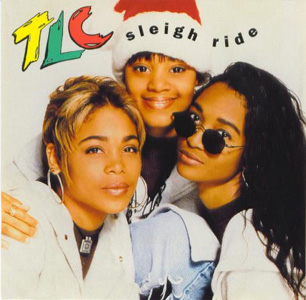
It started, as these things often do, with a law.
Or more accurately, with three: “Law of the Land” (Temptations), “The Laws Have Changed” (New Pornographers), and “You Can’t Rule Me” (Lucinda Williams). A trifecta of declarations, all suggesting that whether you’re enforcing the law or dodging it, someone’s about to get into trouble.
This playlist is my musical tribute to International Be Kind To Lawyers Day — a real holiday, celebrated annually on the second Tuesday in April, for reasons that are presumably legal. It’s not just about lawyers, though. This 30-track journey follows the trajectory of a full-blown legal drama: rules are established, rules are broken, crimes are committed, time is served, lawyers are called, and justice is… complicated.
We meet a few Fun Lovin’ Criminals, some Smooth Criminals, and even those who insist they’re just Criminal Minded. The lawbreakers get caught — there’s fighting, testifying, jail time, and at least one unfortunate visit to the Court of the Crimson King (which, I suspect, is not a traffic violation court).
And let’s not forget the lawyers themselves. They’re gun-toting in one song, love-struck in another, and altogether overburdened. But in honor of their service — and in defense of their billable hours — we end on a note of redemption: “Return to Innocence” by Enigma. Because if music has taught us anything, it’s that legal complications can always be resolved in just over four minutes.
So, whether you’re in the mood to break the law, beat the rap, or rap to the beat of the Fat Boys (or Snoop, Freddie Gibbs, Boogie Down Productions…), press play and pass the gavel. And if you happen to know a lawyer, consider saying something nice. After all, they know where all the paperwork is buried.
Follow Tunes du Jour on Facebook
Follow me on Bluesky
Follow me on Instagram
By 1966, rock and pop music had reached a critical turning point. The early, relatively simple sounds of rock and roll were giving way to a more experimental, ambitious approach, yet the airwaves were still filled with instantly memorable melodies. The year saw the release of songs that would go on to define entire careers—The Beach Boys’ “Good Vibrations” took pop production to new heights, The Four Tops’ “Reach Out (I’ll Be There)” solidified Motown’s dominance, and The Rolling Stones’ “Paint It Black” pushed rock into darker, more dramatic territory. Meanwhile, The Monkees burst onto the scene with “I’m a Believer,” adding a dose of manufactured but undeniably catchy charm to the mix.
Psychedelia was creeping into mainstream music, foreshadowing the sonic explorations that would fully take hold in the coming years. The Byrds’ “Eight Miles High” and The 13th Floor Elevators’ “You’re Gonna Miss Me” hinted at a new, mind-expanding direction for rock, while The Beatles’ “Paperback Writer” and its B-side, “Rain,” found the band toying with the limits of studio technology. The Who’s “My Generation,” released in late 1965 but peaking on the US charts in ’66, captured the rebellious energy of youth culture, while ? and the Mysterians’ “96 Tears” gave garage rock one of its most enduring anthems.
Soul music was also in full bloom, delivering some of its most powerful and enduring records. Percy Sledge’s “When a Man Loves a Woman” became an instant classic, dripping with raw emotion. Jimmy Ruffin’s “What Becomes of the Brokenhearted” and The Supremes’ “You Can’t Hurry Love” showcased Motown’s knack for blending heartache and joy in equal measure. Meanwhile, James Brown’s “It’s a Man’s Man’s Man’s World” was a testament to his singular ability to infuse deep soul with commentary. Over in the R&B realm, Ike & Tina Turner’s “River Deep – Mountain High”—though not a hit in the U.S. at the time—demonstrated producer Phil Spector’s bombastic “Wall of Sound” approach at its most overwhelming.
The year also had its share of songs that were simply too infectious to ignore. The Lovin’ Spoonful’s “Summer in the City” painted a sweltering urban landscape with its mix of laid-back verses and explosive choruses. Nancy Sinatra’s “These Boots Are Made for Walkin’” turned a simple, stomping beat into a statement of defiant cool. The Walker Brothers’ “The Sun Ain’t Gonna Shine Anymore” and The Left Banke’s “Walk Away Renée” delivered lush, baroque pop melancholy, while Eddie Floyd’s “Knock on Wood” became one of the defining records of Stax-style Southern soul.
Perhaps what’s most striking about 1966 in retrospect is just how many of these songs have endured. Whether through original recordings, countless covers, or their presence in film and television, these records still resonate. From the garage rock sneer of The Bobby Fuller Four’s “I Fought the Law” to the hypnotic stomp of The Troggs’ “Wild Thing,” the music of 1966 wasn’t just a snapshot of its time—it was the foundation for what was to come.
Follow Tunes Du Jour on Facebook
Follow me on Bluesky
Follow me on Instagram
Looking back at 1986, what stands out isn’t just the quality of the music, but how effortlessly genres merged and boundaries dissolved. Run-D.M.C. and Aerosmith’s “Walk This Way” wasn’t just a collaboration – it was a statement about how rock and hip-hop could amplify each other’s strengths. Prince, at the height of his powers, stripped everything down to bare essentials with “Kiss,” proving his superstardom could take any form. Robert Palmer’s “Addicted to Love” became inescapable, powered by one of the era’s most iconic videos, while Peter Gabriel’s “Sledgehammer” merged art rock with soul and funk, accompanied by groundbreaking stop-motion animation.
The women of pop music wielded particular influence that year. Madonna continued pushing buttons with “Papa Don’t Preach,” tackling teenage pregnancy in a way that sparked national conversation. Whitney Houston’s “How Will I Know” showcased her extraordinary vocal range while proving dance-pop could be both sophisticated and irresistible. Janet Jackson asked “What Have You Done for Me Lately,” establishing herself as a force independent of her famous family. Cyndi Lauper’s “True Colors” transcended its moment, becoming an enduring anthem of self-acceptance that would be covered for decades to come.
The underground was rising to the surface, but keeping its edge. The Smiths’ “There Is A Light That Never Goes Out” brought literary depth to alternative rock, while New Order’s “Bizarre Love Triangle” helped blueprint the future of electronic dance music. The Pet Shop Boys’ “West End Girls” married street-smart observations with pristine synth-pop, and Public Image Ltd.’s “Rise” proved post-punk could evolve without losing its bite. Even The Cure, with “In Between Days,” found a way to make melancholy sound surprisingly radio-friendly.
Soul and R&B were experiencing their own renaissance. Anita Baker’s “Sweet Love” brought sophisticated quiet storm to the mainstream, while Cameo’s “Word Up!” demonstrated funk’s continuing vitality. Grace Jones’ “Slave to the Rhythm” showcased the artist’s commanding presence, and James Brown reminded everyone he was still the Godfather of Soul with “Living in America.” The year also saw George Michael step out of Wham!’s shadow with “A Different Corner,” proving he could hold his own as a solo artist.
The year proved fertile ground for both established and emerging voices. Bruce Springsteen’s “My Hometown” painted a portrait of a changing America, while Billy Bragg’s “Levi Stubbs’ Tears” showed how personal stories could carry political weight. Elvis Costello’s “I Want You” pushed the boundaries of what a love song could express, and R.E.M.’s “Fall on Me” managed to be both cryptic and urgently relevant. Meanwhile, LL Cool J’s “I Can’t Live Without My Radio” brought hip-hop closer to the mainstream while maintaining its street credibility. In retrospect, 1986 wasn’t just a great year for music – it was a moment when artists across the spectrum proved that innovation and accessibility weren’t mutually exclusive.
Follow Tunes du Jour on Facebook
Follow me on Bluesky
Follow me on Instagram