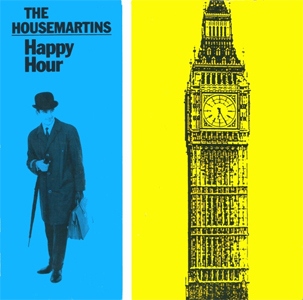
Today is World Bartender Day, and to celebrate, here are 30 alcohol-inspired tunes. I’ll drink to that!
Follow Tunes Du Jour on Facebook
Follow me on Bluesky
Follow me on Instagram

Looking back at 2007, what stands out isn’t a single dominant sound but rather the year’s refusal to commit to any one direction. Rihanna’s “Umbrella” became the year’s unavoidable anthem, its rain-soaked hook lodging itself in collective consciousness while Jay-Z’s opening verse added hip-hop credibility to what was already a perfectly constructed pop song. Meanwhile, Amy Winehouse’s “Rehab” proved that retro-soul could feel urgent and contemporary, her defiant delivery turning personal struggle into something both devastating and oddly triumphant. These weren’t songs that simply topped charts—they were cultural moments that demonstrated pop music’s expanding possibilities.
The indie and alternative world was having its own moment of crossover success, with acts that had been bubbling under suddenly finding mainstream attention. Peter Bjorn & John’s “Young Folks” turned a whistle riff into an inescapable earworm, while Feist’s “1 2 3 4” made counting feel revolutionary, particularly after its appearance in an iPod commercial blurred the lines between advertising and artistry. LCD Soundsystem’s “Someone Great” offered something more melancholic, a dance-punk meditation on loss that proved electronic music could carry genuine emotional weight. These songs suggested that the wall between “indie” and “popular” was becoming increasingly porous, if not entirely irrelevant.
Rock music in 2007 occupied a fascinating space between theatrical ambition and raw simplicity. My Chemical Romance’s “Welcome To The Black Parade” opened with a piano line that promised—and delivered—pure arena-ready drama, a five-minute epic that wore its Queen influences proudly. On the opposite end of the spectrum, The White Stripes’ “Icky Thump” was all garage-rock aggression and Jack White’s snarling guitar work, while Kaiser Chiefs’ “Ruby” split the difference with its hooky, festival-ready energy. Even Foo Fighters’ “The Pretender” managed to sound both massive and tightly controlled, proof that straightforward rock could still command attention.
The electronic and dance music represented here reveals a year when those genres were becoming more adventurous and less confined to clubs. Justice’s “D.A.N.C.E.” filtered disco through a French electro lens, creating something that felt both nostalgic and futuristic, while Klaxons’ “Golden Skans” brought rave culture into the indie sphere with its pulsing urgency. Björk’s “Earth Intruders” and Battles’ “Atlas” pushed even further into experimental territory, the former with its martial rhythms and the latter with its stuttering, math-rock complexity. These tracks suggested that electronic music was no longer content with simply making people move—it wanted to challenge and surprise them too.
What emerges from this collection isn’t a neat narrative about where music was headed, but rather evidence of a year when multiple possibilities existed simultaneously. You had Britney Spears’ “Gimme More” and its deliberate, almost menacing production sitting alongside P!nk’s “Who Knew,” a straightforward power ballad that wouldn’t have felt out of place a decade earlier. Mims’ “This Is Why I’m Hot” represented hip-hop’s confident swagger, while Modest Mouse’s “Dashboard” showed alternative rock could still be genuinely weird and still find an audience. Two thousand and seven was a year when the music industry hadn’t yet fully figured out what the streaming era would mean, when radio still mattered but was losing its grip, and when artists could still surprise us by becoming stars without following any established playbook.
Follow Tunes Du Jour on Facebook
Follow me on Bluesky
Follow me on Instagram

Looking at a list of songs from 2009 feels a bit like opening a time capsule. It’s a year that feels both incredibly recent and like a completely different era. The internet had firmly established itself as the primary engine of music discovery, yet the monoculture of massive, universally-known hits was still holding on. It was a year of distinct, confident sounds, where different genres weren’t just blending together, but thriving in their own parallel lanes. From stadium-sized anthems to bedroom-born electronic experiments, the music of 2009 was defined by a remarkable breadth of creativity.
One of the most prominent stories of the year was the flourishing of indie rock. This wasn’t the scrappy, underground sound of years past; this was indie at its most ambitious and critically adored. You had the intricate, harmony-drenched compositions of Grizzly Bear on “Two Weeks” and the hypnotic, looping bliss of Animal Collective’s “My Girls.” These were songs that rewarded close listening. Elsewhere, artists like Bat For Lashes (“Daniel”) and Dirty Projectors (“Stillness Is The Move”) were crafting their own unique sonic worlds, while bands like the Yeah Yeah Yeahs (“Zero”) and Japandroids (“Young Hearts Spark Fire”) delivered pure, cathartic energy. It was a moment where “alternative” music felt like it was setting the cultural agenda.
Meanwhile, the top of the charts was being shaped by bold new directions in pop and hip-hop. Lady Gaga’s “Bad Romance” wasn’t just a song; it was a high-concept art project, signaling a new level of theatricality in pop music. This stood alongside the effortless, feel-good charm of Miley Cyrus’s “Party in the U.S.A.” and Kelly Clarkson’s powerhouse hit-making on “My Life Would Suck Without You.” In hip-hop, the genre’s emotional palette was expanding dramatically. You had Jay-Z and Alicia Keys delivering a timeless, triumphant anthem with “Empire State Of Mind,” while at the same time, Kanye West’s auto-tuned melancholy on “Heartless” and Kid Cudi’s spacey introspection on “Day ‘N’ Nite” were paving the way for a more vulnerable sound. The arrival of Drake with “Best I Ever Had” confirmed this shift toward melody and emotional openness was here to stay.
This wasn’t to say that straightforward rock and roll had been left behind. On the contrary, it was a year of massive, unifying rock anthems. Kings Of Leon reached their popular peak with “Use Somebody,” a song that seemed to be playing in every stadium and on every radio station in the world. The UK, meanwhile, was providing its own distinct contributions, from the grand, theatrical rebellion of Muse’s “Uprising” and the clever songwriting of Arctic Monkeys on “Cornerstone” to the dance-floor-ready energy of Franz Ferdinand’s “Ulysses.”
Looking back at this collection of songs, what’s most striking is the confidence of it all. It was a year where artists were creating fully realized worlds for listeners to step into. Whether it was the raw nerve of The Ting Tings, the grime-infused electro of Dizzee Rascal’s “Bonkers,” or the classic synth-pop of Pet Shop Boys, each track feels like a distinct statement. It was a time when you could have a playlist that jumped from an introspective indie ballad to a global pop phenomenon, and the whole thing made perfect sense. It was the sound of several different musical futures all happening at once.
Follow Tunes Du Jour on Facebook
Follow me on Bluesky
Follow me on Instagram
The year 2000 arrived with a collective sigh of relief. The much-hyped Y2K bug turned out to be a non-event, and the new millennium stretched out before us, feeling both futuristic and strangely familiar. Looking back at the music from that year, you can hear a similar dynamic at play. It wasn’t a time of radical genre fusion or crossover; instead, it felt like several distinct musical movements were all cresting at the exact same time, each one confident and fully-formed. It was a year where you could switch the radio station and feel like you were jumping between entirely different worlds—from the polished pop of Britney Spears to the raw energy of DMX.
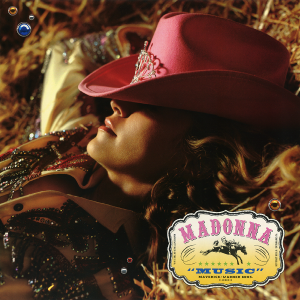
On one hand, pop and R&B were operating at peak performance, dominating the charts with precision-engineered hits. This was the era of the blockbuster music video, and artists delivered. Madonna reinvented herself yet again with the electro-thump of “Music,” while Britney Spears’s “Oops!…I Did It Again” perfected the formula she had established just a year prior. At the same time, R&B was in a period of remarkable innovation. You had the staccato, futuristic production of Timbaland on Aaliyah’s “Try Again,” the iconic, conversational flow of Destiny’s Child on “Say My Name,” and the deep, simmering soul of D’Angelo’s “Untitled (How Does It Feel).” These weren’t just great songs; they were statements of intent from artists at the top of their game.
Meanwhile, rock music was pulling in several different directions at once. Pop-punk had fully broken through to the mainstream, and blink-182’s “All the Small Things” was its endlessly catchy, stadium-sized anthem. More established acts like Foo Fighters and Red Hot Chili Peppers were delivering some of their most memorable melodic rock with “Learn to Fly” and “Californication,” respectively. Yet, on the fringes, things were getting much stranger and more interesting. Radiohead completely abandoned guitar-rock expectations with the anxious, electronic pulse of “Idioteque,” while Queens of the Stone Age offered a taste of heavy, hypnotic desert rock with “Feel Good Hit Of The Summer.” There was no single, unified “sound of rock” in 2000; there were several.
Hip-hop was arguably the most creatively vibrant and commercially powerful force of the year. The genre’s expansion was on full display, from the confrontational wit of Eminem’s “The Real Slim Shady” to the pure, unbridled velocity of OutKast’s “B.O.B.” which still sounds like it was beamed in from the future. The clubs were fueled by the aggression of DMX’s “Party Up (Up in Here)” and M.O.P.’s “Ante Up,” while Jay-Z’s “Big Pimpin’” projected an image of untouchable cool. And of course, you can’t talk about 2000 without acknowledging the songs that were simply inescapable. The unabashedly goofy charm of Sisqó’s “Thong Song” and the perhaps baffling, universal appeal of “Who Let the Dogs Out” added a unique and memorable flavor to the year’s sonic identity.
Listening back to this collection of songs now, what’s most striking is how separate but equal everything feels. This was one of the last moments before the digital revolution would completely flatten the music landscape, encouraging artists to borrow from everywhere at once. The year 2000 wasn’t about blending; it was a snapshot of distinct scenes, each with its own definitive soundtrack. From the raw scream of Kelis on “Caught Out There” to the quiet contemplation of Moby’s “Porcelain,” it was a year of powerful, parallel streams, a final, confident roar from the 20th-century music industry before everything changed.
Follow Tunes Du Jour on Facebook
Follow me on Bluesky
Follow me on Instagram

What makes a year in music stick with you? Sometimes it’s a single, dominant sound, but more often, it’s the feeling of multiple, vibrant conversations happening all at once. Looking back at 2018 through a playlist of its key songs, it becomes clear it was a year defined less by a unified trend and more by the strength of its distinct, parallel movements. From event-level releases that captured the cultural zeitgeist to deeply personal songwriting that quietly demanded our attention, the year offered a compelling range of expressions.
It’s impossible to talk about 2018 without acknowledging the sheer creative and commercial force of hip-hop. The genre was the site of some of the year’s most ambitious projects. Childish Gambino’s “This Is America” and The Carters’ “APESHIT” used the music video as a powerful medium for commentary, creating moments that were analyzed far beyond music blogs. At the same time, the genre showcased its sonic breadth. You had the elaborate, multi-part production of Travis Scott’s “SICKO MODE,” the classic, sample-heavy precision of Pusha T’s “If You Know You Know,” and the New Orleans bounce of Drake’s “Nice For What.” With Kendrick Lamar lending his acclaimed lyricism to artists as different as Anderson .Paak, Lil Wayne, and SZA, his presence served as a throughline of quality, underscoring the genre’s central role.
While hip-hop drove many conversations, pop music was busy broadening its own definition. Artists delivered hits by looking outward for inspiration. Janelle Monáe’s “Make Me Feel” was a masterclass in taut, Prince-indebted funk, while Kacey Musgraves blended country sensibilities with a disco beat on the delightfully sly “High Horse.” This spirit of connection was also felt on a global scale. The massive success of Cardi B’s “I Like It” and Camila Cabello’s “Havana” cemented the power of Latin rhythms in the mainstream, and ROSALÍA’s “MALAMENTE” introduced her modern take on flamenco to a worldwide audience, proving that a compelling sound needs no translation.
Alongside these high-energy sounds, a potent strain of rock and indie music thrived on sharp, unflinching songwriting. This was the year of the specific, personal narrative. Artists like Mitski (“Nobody”), Lucy Dacus (“Night Shift”), Phoebe Bridgers (“Motion Sickness”), and Snail Mail (“Pristine”) earned devoted followings by writing with startling clarity about anxiety, heartbreak, and identity. Their work wasn’t about grand statements but about the power of a perfectly articulated observation. In a similar vein, Courtney Barnett’s “Nameless, Faceless” turned everyday frustrations into a pointed critique, showing that even the most direct rock song could carry a vital message.
Ultimately, 2018 wasn’t a year where everything blended together. Instead, it was a year of powerful, coexisting identities. The charts were filled with innovative pop and globally-influenced hits, hip-hop continued to be a space for both blockbuster production and sharp social critique, and a wave of songwriters made their mark with profoundly personal work. From the confident breakup anthem of Ariana Grande’s “thank u, next” to the cathartic release of Robyn’s “Honey,” the music of 2018 offered a rich and varied landscape, setting the stage for many of the sounds and artists we’re still listening to today.
Follow Tunes Du Jour on Facebook
Follow me on Bluesky
Follow me on Instagram

It was the third of September / That day I’ll always remember
It was the third of June, another sleepy, dusty Delta day
Early morning, April 4 / Shot rings out in the Memphis sky
Do you remember the twenty-first night of September?
The theme of today’s playlist is dates referenced in song lyrics.
A date can do a lot of heavy lifting in a song. It can anchor a memory, mark a turning point, or drop us directly into a moment in history. Sometimes it’s deeply personal—Jay-Z naming his birthday in “December 4th”—and sometimes it’s collective, as in U2’s “Pride (In the Name of Love),” with its reference to April 4, 1968, the day Martin Luther King Jr. was assassinated.
Songwriters also use dates to heighten mystery. Bobbie Gentry’s “Ode to Billie Joe” begins on June 3, but instead of telling us what happened at the Tallahatchie Bridge, the lyric circles around it, making the day itself loom larger than the unexplained event. Similarly, the Temptations’ “Papa Was a Rolling Stone” ties the father’s death to September 3, a detail that sticks in the mind as much as the funk groove itself.
Not every date is somber. Earth, Wind & Fire turned September 21 into an annual celebration, and Chicago’s “Saturday in the Park” keeps the Fourth of July grounded in a snapshot of music, sunshine, and family fun. Bruce Springsteen’s “4th of July, Asbury Park (Sandy)” is more bittersweet, capturing the mix of romance and restlessness that defined his early work.
Dates can also mark social upheaval. Sublime’s “April 29, 1992 (Miami)” references the Los Angeles riots, while the Neville Brothers’ “Sister Rosa” pays tribute to Rosa Parks’ refusal to give up her bus seat on December 1, 1955. Songs like these remind us that a single day can ripple outward into history.
Taken together, this playlist shows the many ways a songwriter can spin meaning out of the calendar. A date can be the start of a story, a marker of joy or tragedy, or just a sly joke. What matters is how it sticks in your memory, long after the last chord fades.
Follow Tunes Du Jour on Facebook
Follow me on Bluesky
Follow me on Instagram


For those of you outside the U.S., today is National Joe Day — an important holiday stateside. Anyone named Joe (or Joseph, Josephine, Joey or Johanna) gets the day off. No work, no mail delivery, no access to federal buildings. Some Joels try to sneak in on the action, but they’re swiftly dealt with—usually by a retired mall cop wielding a two-by-four.
Follow Tunes Du Jour on Facebook
Follow me on Bluesky
Follow me on Instagram

Jay-Z’s musical journey is a testament to artistic evolution, entrepreneurial spirit, and the power of reinvention. Born Shawn Corey Carter in Brooklyn’s Marcy Projects, he transformed the challenges of his early life into a narrative of remarkable success that extends far beyond music. His discography reflects not just his lyrical prowess, but a strategic approach to storytelling that captures the complexities of urban experience, ambition, and personal growth.
From early tracks like “Can’t Knock the Hustle” to later, more reflective works like “The Story of O.J.,” Jay-Z has consistently demonstrated an ability to narrate his life’s trajectory with remarkable honesty and insight. His collaborations reveal another dimension of his artistry – whether trading verses with Kanye West, creating anthems with Rihanna, or exploring complex themes with artists like Justin Timberlake, he has always been more than just a solo performer. These partnerships showcase his versatility and his skill in creating music that resonates across different genres and audiences.
Beyond music, Jay-Z emerged as a cultural entrepreneur who redefined what success could look like for a hip-hop artist. His business ventures – from Roc-A-Fella Records to Tidal, and partnerships with brands like Armand de Brignac champagne – illustrate a vision that extends well beyond creating hit tracks. He transformed the traditional narrative of a rapper’s career, positioning himself not just as an artist, but as a mogul who could navigate both creative and corporate landscapes with equal finesse.
His personal life, particularly his relationship with Beyoncé, has also been a significant part of his public persona. Together, they’ve created a power couple narrative that transcends music, touching on themes of love, family, and shared ambition. Albums like EVERYTHING IS LOVE demonstrate their ability to collaborate not just as romantic partners, but as artistic collaborators who can create groundbreaking work together.
What makes Jay-Z’s journey particularly compelling is how he has continually evolved. From street narratives to introspective explorations of success, race, and personal growth, he has never allowed himself to be confined by early expectations. His music has become a form of cultural commentary, addressing systemic issues while celebrating individual achievement. Whether through tracks that become New York anthems like “Empire State of Mind” or provocative statements like “D.O.A. (Death of Auto-Tune),” he has consistently pushed musical and cultural boundaries, cementing his status as not just a hip-hop artist, but a true cultural icon.
Follow Tunes du Jour on Facebook
Follow me on Bluesky
Follow me on Instagram

Beyoncé’s impact on music is undeniable, her influence spanning over two decades as she continually reinvents herself and her sound. From her early days as the lead singer of Destiny’s Child to her illustrious solo career, Beyoncé has pushed the boundaries of pop, R&B, and hip-hop, creating a catalog that resonates across generations. The playlist below showcases some of her most iconic tracks, such as “Crazy in Love” and “Single Ladies (Put a Ring on It),” both of which exemplify her ability to craft anthems that become cultural landmarks.
Beyond the music, Beyoncé’s contributions to social issues are equally significant. Her 2016 hit “Formation” is more than just a song—it’s a statement on Black identity and resilience, with a music video that touches on themes of police brutality and the aftermath of Hurricane Katrina. Beyoncé uses her platform not just to entertain, but to educate and inspire. The inclusion of Chimamanda Ngozi Adichie’s feminist speech in “***Flawless” is another example of how she seamlessly weaves activism into her art, promoting messages of female empowerment and equality.
Philanthropy is another area where Beyoncé has made her mark. She has consistently used her influence to support a range of causes. In 2017, she launched the Formation Scholars program to support young women in college, specifically those studying creative arts, music, literature, or African American studies. This initiative is a testament to her commitment to uplifting marginalized communities and promoting diversity in education.
Moreover, Beyoncé’s involvement in the Black Lives Matter movement further cements her role as an advocate for social justice. Her contributions have included financial donations, raising awareness, and dedicating performances to victims of racial violence. The song “BLACK PARADE,” released on Juneteenth in 2020, is a celebration of Black culture and a call to action, with proceeds from the song going to support Black-owned small businesses.
In a career filled with accolades and achievements, what sets Beyoncé apart is her ability to use her platform for the greater good. Her music continues to evolve, and with it, her commitment to social change. Beyoncé’s legacy is one of both artistic brilliance and a deep-seated dedication to making the world a more just and inclusive place.