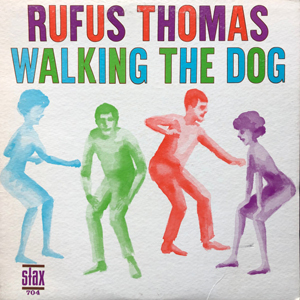
If you walk your dog only one day a year, today should be that day.
Follow Tunes Du Jour on Facebook
Follow me on Bluesky
Follow me on Instagram


Have you ever looked at a playlist from a single year and felt a sense of disbelief? It’s one thing for a year to produce a few memorable hits, but it’s another for it to feel like a highlight reel of music history. Looking at the charts from 1965 is exactly that kind of experience. It wasn’t just a year of good songs; it was a pivotal moment when popular music seemed to mature in several different directions at once, producing an astonishing collection of classics that still resonate today.
On one hand, 1965 saw the art of the immaculately produced pop song reach a new peak. The Motown machine was in full, glorious swing, giving us the suave romance of The Temptations’ “My Girl” and the intricate heartbreak of Smokey Robinson’s “The Tracks of My Tears.” The Supremes demanded attention with the dramatic plea of “Stop! In the Name of Love,” a perfect example of studio craftsmanship meeting raw emotion. Across the Atlantic, Petula Clark’s “Downtown” offered a sweeping, cinematic vision of city life. These weren’t just catchy tunes; they were impeccably arranged, powerfully sung, and emotionally direct pieces of art that defined a certain kind of pop perfection.
At the very same time, a grittier, more defiant sound was taking hold. The Rolling Stones’ “(I Can’t Get No) Satisfaction” wasn’t just a hit song; it was a statement of intent, built around a fuzzy, unforgettable guitar riff that sounded like pure frustration. This raw energy was a common thread. From the garage-rock howl of Them’s “Gloria” to the stuttering, youthful angst of The Who’s “I Can’t Explain,” rock music was shedding its cleaner-cut image. This wasn’t the polished sound of the studio; it was the restless sound of the rehearsal room, and it was connecting with an entire generation.
Beyond the evolving sounds, the lyrical substance of popular music was deepening profoundly. Bob Dylan completely rewrote the rules with “Like a Rolling Stone,” a six-minute epic of poetic scorn that proved a hit single could be complex, challenging, and literary. That same year, The Byrds took Dylan’s words and electrified them, creating a new genre overnight with their shimmering version of “Mr. Tambourine Man.” This new lyrical consciousness also carried immense social weight. Sam Cooke’s posthumously released “A Change Is Gonna Come” and The Impressions’ hopeful “People Get Ready” became enduring anthems of the Civil Rights Movement, demonstrating that music could be both a comfort and a powerful call for progress.
What makes 1965 so striking is that none of these developments happened in isolation. It was a year of convergence, where you could hear the sweet soul of Marvin Gaye’s “How Sweet It Is (To Be Loved By You)” on the radio right next to the birth of funk in James Brown’s “Papa’s Got a Brand New Bag.” The carefree optimism of The Beach Boys’ “California Girls” shared the airwaves with the deep, aching soul of Otis Redding’s “I’ve Been Loving You Too Long.” The sheer volume of landmark recordings from this single 12-month period is a testament to a unique moment in time—a year when the boundaries of pop music were expanding in every direction, leaving us with a collection of songs that feel less like relics and more like foundation stones.
Follow Tunes Du Jour on Facebook
Follow me on Bluesky
Follow me on Instagram


Nineteen sixty-seven stands as a pivotal moment in the evolution of popular music, a year when artistic boundaries expanded dramatically across multiple genres. The musical landscape was transformed by groundbreaking releases from established artists and remarkable debuts from newcomers who would become legends. From Aretha Franklin’s powerful rendition of “Respect” to Pink Floyd’s psychedelic “See Emily Play,” the year produced an extraordinary collection of songs that continue to resonate decades later.
Soul music experienced a remarkable surge, with Aretha Franklin’s definitive version of “Respect” establishing her as the genre’s preeminent female voice. The raw emotion of Otis Redding’s “Try a Little Tenderness,” the exuberance of Jackie Wilson’s “(Your Love Keeps Lifting Me) Higher and Higher,” and the groove-driven “Soul Man” by Sam & Dave showcased the genre’s diversity and emotional range. Motown continued its dominance with several more hits for Diana Ross & the Supremes, including “The Happening,” while Smokey Robinson & the Miracles added “I Second That Emotion” to their growing catalog of hits. Marvin Gaye enjoyed multiple chart successes in 1967, with “Your Precious Love” being just one of several duets with Tammi Terrell that would define this productive period.
Meanwhile, rock music underwent seismic shifts as experimentation became the norm. The Beatles had an astonishingly prolific year, releasing the landmark album Sgt. Pepper’s Lonely Hearts Club Band while also producing standalone singles of remarkable quality like “Strawberry Fields Forever” and “Penny Lane.” The Doors’ extended opus “Light My Fire” and The Jimi Hendrix Experience’s revolutionary “Purple Haze” redefined what electric guitars could accomplish. The Rolling Stones contributed the melancholic beauty of “Ruby Tuesday,” which ironically became the bigger hit after radio stations deemed its intended A-side, “Let’s Spend the Night Together,” too controversial for airplay. The Who’s powerhouse “I Can See for Miles” and Buffalo Springfield’s protest anthem “For What It’s Worth” reflected rock’s increasing social consciousness. Perhaps most radical was The Velvet Underground’s “Heroin,” which brought an unprecedented rawness to discussions of addiction.
The year’s diversity extended far beyond these genres. The Monkees transcended their manufactured origins with the wistful “Daydream Believer,” while Van Morrison crafted the timeless “Brown Eyed Girl.” Bobbie Gentry’s Southern Gothic narrative “Ode to Billie Joe” demonstrated songwriting’s storytelling potential, and Procol Harum’s “A Whiter Shade of Pale” merged classical influences with rock sensibilities. Jefferson Airplane’s “White Rabbit” and Pink Floyd’s “See Emily Play” pushed psychedelic music further into the mainstream, establishing both bands as significant forces in the burgeoning psychedelic scene.
What made 1967 truly remarkable was how these diverse sounds coexisted and influenced each other, creating a musical conversation that crossed genre lines. This was the year when album-oriented rock solidified, soul music reached new emotional depths, and psychedelia flowered into mainstream consciousness. The thirty songs listed here barely scratch the surface of a year that saw popular music mature into an art form capable of expressing the full spectrum of human experience. Many artists were at their creative peaks, producing multiple hit singles and groundbreaking albums within this single exceptional year. These recordings capture a moment when musical innovation accelerated at an unprecedented pace, leaving an enduring legacy that continues to inspire and influence musicians more than half a century later.
Follow Tunes Du Jour on Facebook
Follow me on Instagram
Follow me on Bluesky

The music of 1971 was shaped by a world in transition. The optimism of the ’60s had given way to a more complicated reality—political upheaval, the Vietnam War, and shifting cultural norms weighed heavily on society. In response, many artists channeled these changes into their music, whether through protest, storytelling, or deeply personal reflection. The result was a year that produced enduring songs across multiple genres, from confessional singer-songwriter fare to hard-hitting rock and infectious soul.
Some of the most memorable hits of the year leaned into personal themes rather than overt social commentary. Carole King’s “It’s Too Late” and Elton John’s “Your Song” exemplified the rise of the singer-songwriter era, blending lyrical vulnerability with sophisticated melodies. Al Green’s “Tired of Being Alone” showcased his effortless mix of longing and smooth Southern soul, while Rod Stewart’s “Maggie May” became his breakthrough solo hit, telling the story of youthful romance with a blend of folk and rock. At the same time, Marvin Gaye’s “What’s Going On” took a broader view, addressing war, inequality, and injustice in a way that felt both urgent and timeless.
Rock music remained as dominant as ever, though it took on new forms. Led Zeppelin’s “Immigrant Song” showcased their thunderous power, while The Who’s “Won’t Get Fooled Again” harnessed synthesizers and political defiance to craft an enduring anthem. The Rolling Stones’ “Brown Sugar,” released without much controversy at the time, has since been reevaluated due to its lyrical content. Meanwhile, The Doors painted a dark, atmospheric landscape on “Riders on the Storm,” and Paul & Linda McCartney’s “Uncle Albert/Admiral Halsey” leaned into whimsical experimentation, proving that rock still had room for playfulness.
Soul and funk made significant strides in 1971, with Sly & The Family Stone’s “Family Affair” pioneering a more subdued, groove-heavy sound. The Staple Singers’ “Respect Yourself” and Curtis Mayfield’s “Move On Up” carried messages of empowerment, while Honey Cone’s “Want Ads” and Jean Knight’s “Mr. Big Stuff” infused attitude into their infectious rhythms. The Jackson 5’s “Never Can Say Goodbye” demonstrated a maturing sound beyond their bubblegum pop beginnings, while Cher’s “Gypsies, Tramps and Thieves” and Melanie’s “Brand New Key” brought storytelling into the pop realm with memorable melodies and an enduring campiness.
Fifty-plus years later, the music of 1971 still resonates. Whether through the social commentary of “What’s Going On,” the country-rock warmth of “Me and Bobby McGee,” or the swampy energy of Ike & Tina Turner’s “Proud Mary,” these songs remain essential listening. They serve as both a time capsule and a reminder that great music doesn’t just reflect its era—it continues to shape the generations that follow.
Follow Tunes Du Jour on Facebook
Follow me on Bluesky
Follow me on Instagram

ABC wasn’t wrong—when Smokey sings, everything is wonderful. But just as impressive as his voice is his pen. Smokey Robinson didn’t just write hit songs; he crafted narratives, emotions, and melodies so timeless that they continue to be recorded and reinterpreted decades later. His songwriting, marked by poetic lyricism and effortless hooks, helped define the Motown sound and set a gold standard for pop and R&B composition.
His songs weren’t just catchy; they were masterclasses in storytelling. “My Girl” gave The Temptations a signature hit with a lyric so simple yet evocative that it remains a cultural touchstone. “My Guy” did the same for Mary Wells, its playful devotion making it an anthem of unwavering love. Whether it was the swagger of “Get Ready,” the tenderness of “Ooh Baby Baby,” or the clever metaphor of “The Hunter Gets Captured by the Game,” Smokey knew how to tap into universal feelings and dress them in melodies that lingered.
His influence extended far beyond Motown, as shown by the sheer range of artists who have covered his work. The Beatles took on “You Really Got a Hold on Me,” Elvis Costello recorded “From Head to Toe,” The Rolling Stones tackled “Going to a Go-Go,” D’Angelo put his own spin on “Cruisin’,” and Peter Tosh reimagined “(You Gotta Walk And) Don’t Look Back.” Whether through his own performances or the countless reinterpretations of his songs, Smokey Robinson’s writing continues to resonate, proving that while it’s great when Smokey sings, it’s just as magical when Smokey writes.
Follow Tunes du Jour on Facebook
Follow me on Bluesky
Follow me on Instagram

Thirty duets for your listening/singing-along-with pleasure!
Follow Tunes Du Jour on Facebhttp://www.facebook.com/tunesdujourook
Follow me on Bluesky
Follow me on Instagram