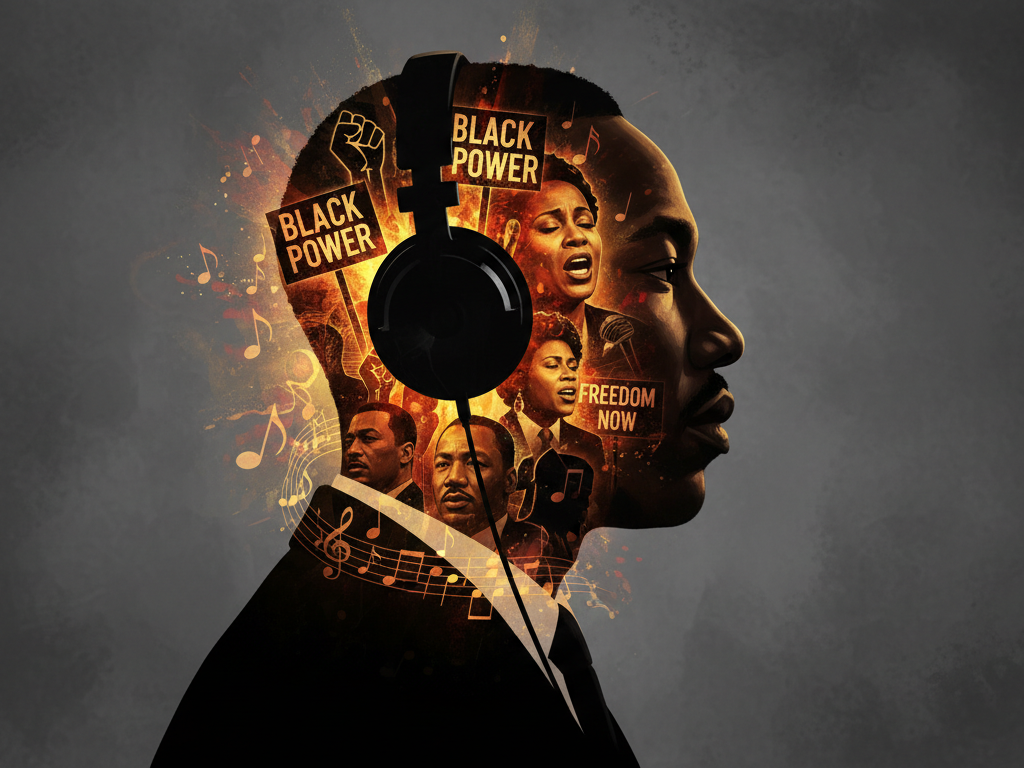
Music has always been more than just a backdrop to history; it is a living, breathing part of it. It’s the coded message in a spiritual, the roar of protest in a soul anthem, and the unshakeable pride in a hip-hop verse. This playlist was curated with that spirit in mind. It is not just a collection of songs by Black artists or about Black experiences, but a deliberate sonic journey where each track serves as a chapter in the long, complex, and powerful story of Black history. From the harrowing journey of the Middle Passage in The O’Jays’ “Ship Ahoy” to the defiant celebration of identity in Beyoncé’s “BROWN SKIN GIRL,” every song here is a direct link to a person, an event, a movement, or some combination of the three.
The running order is intentional, designed to guide the listener through a powerful emotional and historical arc. We begin in the depths of oppression, bearing witness to the brutality of slavery, the terror of Jim Crow, and the pain of foundational betrayals. From that bitter root, the playlist pivots to the fire of resistance. It chronicles the fight for Civil Rights in America and the parallel global struggle against apartheid, honoring the heroes who led the charge and the anthems that fueled their movements. The narrative then moves into the modern era, where the fight for justice continues in the face of new challenges, chronicled with unflinching honesty by artists from Bruce Springsteen to Janelle Monáe.
This journey through pain and protest ultimately leads to a place of empowerment, joy, and hard-won hope. The final act of the playlist is a celebration of contribution, a lesson in self-love for future generations, and a recognition of monumental triumphs. It culminates in the profound resilience of Aretha Franklin’s “A Change Is Gonna Come”—a final, stirring testament to an unshakeable faith in the future. This Black History Month, we invite you to not just hear these songs, but to truly listen. Follow the stories, look up the names, and feel the weight and glory of the history they carry. Let the rhythms move you, but let the histories change you.
Many of us grow up assuming the hit version of a song is the original. This playlist celebrates those surprising musical genealogies: well-known songs that were originally recorded by someone else, often with little fanfare. Here are the stories behind the transformations—where they started, and how they became iconic.
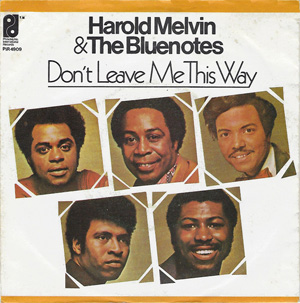
“Don’t Leave Me This Way” – Thelma Houston / Originally by Harold Melvin & the Blue Notes (1975) Houston’s disco anthem actually began life as a Philly soul track sung by Teddy Pendergrass. Thelma took it to the dancefloor—and to #1.
“War” – Edwin Starr / Originally by The Temptations (1970) This protest song started as an album cut by The Temptations. Starr’s rawer, angrier take made it a searing hit during the Vietnam era.
“Strawberry Letter 23” – The Brothers Johnson / Originally by Shuggie Otis (1971) Otis’ dreamy, psychedelic original flew under the radar until producer Quincy Jones supercharged it with funk for The Brothers Johnson.
“I Feel for You” – Chaka Khan / Originally by Prince (1979) Prince wrote it, recorded it, and released it on his 1979 self-titled album. Chaka Khan added Stevie Wonder’s harmonica and Melle Mel’s rap, creating a genre-blurring smash that gave the song a second life—and a much bigger audience.
“Louie Louie” – The Kingsmen / Originally by Richard Berry (1957) Berry’s calypso-tinged rhythm & blues song became an unintelligible rock ‘n’ roll classic in the hands of teenage garage rockers.
“Pass The Koutchie” – Musical Youth as “Pass the Dutchie” / Originally by Mighty Diamonds (1981) Musical Youth’s version cleaned up the ganja references but kept the groove. A British reggae hit born from a roots original.
“Tainted Love” – Soft Cell / Originally by Gloria Jones (1964) This Northern Soul favorite was ignored in the U.S. until Soft Cell’s chilly synth-pop cover turned it into an international sensation.
“You Are So Beautiful” – Joe Cocker / Originally by Billy Preston (1974) Preston’s gospel-inflected original was co-written with Dennis Wilson of the Beach Boys. Cocker slowed it down into a tearjerking ballad.
“The First Cut Is The Deepest” – Rod Stewart / Originally by P.P. Arnold (1967) Before Cat Stevens, the song’s writer, sang it himself, P.P. Arnold delivered a powerful version. Stewart’s cover gave it global traction.
“Red, Red Wine” – UB40 / Originally by Neil Diamond (1967) Diamond’s mournful original was a slow ballad. UB40’s reggae version confused even him—he didn’t recognize his own song on the radio.
“Brand New Cadillac” – The Clash / Originally by Vince Taylor and His Playboys (1959) This rockabilly obscurity became a snarling punk track on London Calling. Vince Taylor later served as an inspiration for David Bowie’s Ziggy Stardust persona.
“Take Me To The River” – Talking Heads / Originally by Al Green (1974) Green’s swampy soul gave way to Talking Heads’ jittery art-funk. An old-school spiritual reborn in new wave style.
“The Tide Is High” – Blondie / Originally by The Paragons (1967) Jamaican rocksteady meets NYC cool. Blondie took this mellow gem and gave it a global pop sheen.
“Brandy” – Barry Manilow as “Mandy” / Originally by Scott English (1971) English’s sad and simple original got a new name and new polish. Manilow’s grand version topped the charts.
“Don’t Let Me Be Misunderstood” – The Animals / Originally by Nina Simone (1964) Simone’s pleading ballad became a snarling British Invasion hit. Her nuanced sorrow gave way to the raw edge of rock.
“Bette Davis Eyes” – Kim Carnes / Originally by Jackie DeShannon (1974) The original was breezy and piano-driven. Carnes and her producer Val Garay turned it into new wave noir.
“Heaven Must Have Sent You” – Bonnie Pointer / Originally by The Elgins (1966) Pointer’s disco version revived a Motown deep cut and put it back on the charts over a decade later.
“Love Buzz” – Nirvana / Originally by Shocking Blue (1969) Nirvana turned this obscure Dutch psych-rock tune into a distorted grunge landmark. Their debut single.
“Piece Of My Heart” – Big Brother & The Holding Company / Originally by Erma Franklin (1967) Aretha’s sister recorded it first, but Janis Joplin made it a fiery centerpiece of her legend.
“It’s Oh So Quiet” – Björk / Originally by Betty Hutton (1951) A novelty big-band number revived by Björk into a theatrical showstopper. Old Hollywood meets Icelandic art-pop.
“China Girl” – David Bowie / Originally by Iggy Pop (1977) Co-written with Bowie, Iggy’s version was skeletal and raw. Bowie’s version added synth gloss and MTV appeal.
“Good Lovin'” – The Young Rascals / Originally by The Olympics (1965) The Olympics had the groove, but The Rascals turned it into a garage-rock rave-up and a #1 hit.
“Valerie” – Mark Ronson featuring Amy Winehouse / Originally by The Zutons (2006) The Zutons wrote it as a bluesy rock song. Winehouse made it retro-soul perfection.
“Police On My Back” – The Clash / Originally by The Equals (1967) A stomping, paranoid track from Eddy Grant’s first band. The Clash turned it into a punk fugitive anthem.
“After Midnight” – Eric Clapton / Originally by J.J. Cale (1966) Cale’s laid-back shuffle was juiced up with guitar licks by Clapton, who kept the songwriter’s cool intact.
“On Broadway” – The Drifters / Originally by The Cookies (1962) Songwriters Barry Mann & Cynthia Weil gave this to a girl group first, but The Drifters made it a city-slick R&B classic.
“Love Hurts” – Nazareth / Originally by The Everly Brothers (1960) Gentle heartbreak became hard rock agony. Nazareth’s arena wail made the song a power ballad staple.
“I Love Rock ‘n’ Roll” – Joan Jett & the Blackhearts / Originally by The Arrows (1975) Jett saw it on UK TV and recorded a fiercer, snarling version that girls (and boys) everywhere could scream along to.
“Without You” – Nilsson / Originally by Badfinger (1970) Badfinger’s version was plaintive; Nilsson’s was operatic. He didn’t just sing it—he wailed it.
“Superman” – R.E.M. / Originally by The Clique (1969) A psychedelic pop obscurity turned indie-rock cult classic. One of R.E.M.’s rare early tracks not written by the band.
These songs remind us that inspiration doesn’t always strike where the spotlight shines. Sometimes greatness is borrowed—and reinvented.
One way to measure a songwriter’s reach is not by how often their work is covered, but how widely. The playlist below spans decades, genres, and sensibilities—from Adele to The Dead Weather, from Johnny Cash to the Neville Brothers—and all roads lead back to Bob Dylan. This is not just a reflection of his prominence; it’s a testament to the adaptability of his writing. Dylan’s lyrics aren’t locked into one style or moment—they hold up when filtered through gospel, punk, glam, folk, or soul. His songs invite reimagining because they’re grounded in strong narrative bones and emotional honesty, not ornamental frills.
Consider the different shades of “All Along the Watchtower.” Dylan’s original version is stark and cryptic; Hendrix turned it into an electrified storm. Likewise, “I Shall Be Released,” rendered with hushed reverence by The Band, has the structure of a gospel hymn but the ambiguity of a fable. “Make You Feel My Love,” one of Dylan’s later compositions, found new life in Adele’s version—proof that his songwriting didn’t peak in the ’60s, but simply evolved. His voice as a writer has always been the constant: a blend of plainspoken wisdom, sly humor, and a deep sense of historical and emotional context.
It’s notable, too, how Dylan’s songs seem to absorb the character of the performer. When Elvis Presley sings “Tomorrow Is a Long Time,” it feels like a Southern ballad. When PJ Harvey takes on “Highway 61 Revisited,” it becomes something raw and jagged. Nina Simone’s version of “Just Like Tom Thumb’s Blues” brings out a haunted intensity not present in Dylan’s own delivery. That elasticity points to a rare kind of craftsmanship—songs written with enough specificity to be meaningful, but enough openness to be inhabited.
Even in unexpected settings, Dylan’s words linger. Tom Petty co-wrote the lyrics to “Jammin’ Me” with him, a pointed pop-rock critique of media saturation. Patti Smith’s “Changing of the Guards” channels the mystical imagery and layered storytelling that Dylan deployed throughout the ’70s. And when The Specials tear into “Maggie’s Farm,” it becomes a statement of punk-era defiance. These aren’t nostalgia pieces—they’re songs that meet each era on its own terms.
Dylan’s catalog isn’t just influential; it’s usable. His songs function as cultural currency, endlessly exchangeable yet retaining value. Whether you hear him through Joan Osborne’s gothic reading of “Man in the Long Black Coat” or the crystalline harmonies of Peter, Paul and Mary’s “Blowin’ in the Wind,” what’s most striking is not just who sings Dylan—but what his songs reveal when they do.
Few artists have embodied as many roles as Nina Simone. She was a classically trained pianist, a jazz singer, a blues interpreter, a protest leader, and a torch song specialist—often all in the span of a single performance. Simone’s catalog is as vast as her influence, but this playlist highlights the breadth of her artistry, from the tenderness of “I Loves You, Porgy” to the fiery urgency of “Mississippi Goddam.” Whether reimagining the standards or giving voice to the Civil Rights Movement, Simone delivered each song with a conviction that made it undeniably her own.
Simone’s ability to transform a song was unmatched. Her take on “To Love Somebody” strips the Bee Gees’ original of its pop sheen and replaces it with raw yearning, while “I Put a Spell on You” moves beyond Screamin’ Jay Hawkins’ theatrical growl into something genuinely haunting. She injected “Mr. Bojangles” with a quiet sorrow that feels more lived-in than nostalgic, and her version of “Here Comes the Sun” trades George Harrison’s optimism for a more hesitant hopefulness. Even when covering others, she reshaped the material to fit her vision.
Yet Simone’s greatest impact may have come through her role as a protest singer. Songs like “To Be Young, Gifted and Black” and “I Wish I Knew How It Would Feel to Be Free” were more than recordings; they were rallying cries. “Mississippi Goddam,” written in response to the murder of Medgar Evers and the bombing of the 16th Street Baptist Church, remains one of the most blistering indictments of racial injustice ever put to music. “Four Women” delivers a stark, unflinching portrayal of Black womanhood, a subject few artists tackled so directly at the time.
Simone’s ability to balance the political with the deeply personal is part of what makes her catalog so compelling. “The Other Woman” and “I Want a Little Sugar in My Bowl” reveal her mastery of intimate storytelling, while “Wild Is the Wind” and “Feeling Good” showcase her ability to evoke sweeping emotion. Even in moments of defiance, as on “Revolution (Pts. 1 and 2)” or “Go to Hell,” there is an undercurrent of vulnerability—Simone was never just delivering messages; she was baring her soul.
Through it all, her voice remained unmistakable: sometimes smooth, sometimes jagged, always expressive. She could whisper, growl, or soar, depending on what the song demanded. Whether she was interpreting Dylan (“Just Like a Woman,” “I Shall Be Released”) or spirituals (“Sinnerman”), jazz standards (“Nobody Knows You When You’re Down and Out”), or contemporary compositions (“Baltimore”), she inhabited the music in a way that few artists ever have. Nina Simone didn’t just sing—she made sure you felt every note.
Jazz is a genre that defies easy definition, yet its influence is undeniable across decades of music history. At its core, jazz represents freedom – freedom of artistic expression, freedom to improvise and venture into uncharted musical territory. From the early days of jazz pioneers like Louis Armstrong, Duke Ellington, and Billie Holiday, this artistic freedom has been the driving force behind the ever-evolving sounds of jazz.
The genius of jazz lies in its ability to seamlessly blend composition and spontaneity. Take Miles Davis’ seminal album Kind of Blue, where masterful musicians like John Coltrane and Cannonball Adderley were given a simple modal framework to build upon through their improvisations. The result was a transcendent exploration of space, melody, and emotion that still captivates listeners today. Similarly, Dave Brubeck’s “Take Five” broke new ground with its innovative use of quintuple meter, exemplifying jazz’s boundary-pushing spirit.
Yet jazz is more than just innovative time signatures and harmonic progressions. It’s a language of human experience, a means of conveying the full spectrum of emotions through sound. Billie Holiday’s haunting rendition of “Strange Fruit” transformed a song into a searing indictment of racism and injustice. Nina Simone’s stirring vocals on “My Baby Just Cares for Me” radiate warmth and playfulness. And Chet Baker’s rendition of “My Funny Valentine” captures the exquisite vulnerability of heartbreak with effortless cool.
As the genre evolved through the latter half of the 20th century, jazz continued to defy conventions and push creative boundaries. The modal jazz of John Coltrane’s “A Love Supreme” was a spiritual exploration unlike anything that came before it. Ornette Coleman’s pioneering free jazz broke down traditional concepts of melody and harmony. And the fusion era saw artists like Herbie Hancock, Weather Report, and Grover Washington Jr. incorporate elements of funk, rock, and R&B into their jazz foundations.
From its humble beginnings in New Orleans to its modern global influence, jazz has remained a quintessential expression of artistic freedom. Its ability to constantly reinvent itself while maintaining a deep reverence for its roots is what makes it one of the most vital and culturally significant art forms of our time. Jazz is more than just a genre – it’s a living, breathing embodiment of the human spirit’s endless capacity for creativity and innovation.
The theme of today’s playlist is cover versions of songs that originated in stage musicals. Here are the songs listed with the shows that introduced them:
Mack the Knife by Bobby Darin – From The Threepenny Opera (1928)
Till There Was You by The Beatles – From The Music Man (1957)
Smoke Gets In Your Eyes by The Platters – From Roberta (1933)
Little Girl Blue by Nina Simone – From Jumbo (1935)
You’ll Never Walk Alone by Gerry & The Pacemakers – From Carousel (1945)
I Am What I Am by Gloria Gaynor – From La Cage aux Folles (1983)
On The Street Where You Live by Vic Damone – From My Fair Lady (1956)
Everything’s Coming Up Roses by The Replacements – From Gypsy (1959)
Send In The Clowns by Judy Collins – From A Little Night Music (1973)
I Don’t Know How to Love Him by Helen Reddy – From Jesus Christ Superstar (1970)
Hair by The Cowsills – From Hair (1967)
Put On A Happy Face by Diana Ross & The Supremes – From Bye Bye Birdie (1960)
Losing My Mind by Liza Minnelli – From Follies (1971)
Tomorrow by Grace Jones – From Annie (1977)
My Favorite Things by John Coltrane – From The Sound of Music (1959)
Well Did You Evah? by Debbie Harry & Iggy Pop – From DuBarry Was a Lady (1939)
The Man I Love by Kate Bush – From Lady, Be Good! (1924)
If My Friends Could See Me Now by Linda Clifford – From Sweet Charity (1966)
Summertime by Big Brother & The Holding Company – From Porgy and Bess (1935)
Cabaret by Harold Melvin & The Blue Notes – From Cabaret (1966)
I Get A Kick Out Of You by Frank Sinatra – From Anything Goes (1934)
Don’t Cry For Me Argentina by Festival – From Evita (1978)
Somewhere by Pet Shop Boys – From West Side Story (1957)
The Lady is a Tramp by Tony Bennett & Lady Gaga – From Babes in Arms (1937)
I’ll Never Fall In Love Again by Dionne Warwick – From Promises, Promises (1968)
I Love Paris by Screamin’ Jay Hawkins – From Can-Can (1953)
Night + Day by U2 – From Gay Divorce (1932)
There Are Worse Things I Could Do by Alison Moyet – From Grease (1971)
Corner of the Sky by The Jackson 5 – From Pippin (1972)
I Enjoy Being a Girl by Phranc – From Flower Drum Song (1958)