Tunes Du Jour Celebrates International Drum Month

Welcome to a journey through rhythm. November is International Drum Month, and this collection honors the masters of the drum kit, the players whose feel, power, and ingenuity define the songs we love. From the tightest pockets to the most explosive solos, these are the heartbeats of modern music. Let’s give the drummers some.

Good Vibrations – The Beach Boys
The legendary session musician Hal Blaine provides the sharp, inventive percussion, using everything from sleigh bells to a detached kick drum to build the song’s complex and sunny atmosphere.

Cissy Strut – The Meters
Joseph “Zigaboo” Modeliste, the architect of New Orleans funk, creates a syncopated, greasy, and endlessly influential groove that has been the blueprint for funk drummers ever since.

Smells Like Teen Spirit – Nirvana
Dave Grohl’s performance is a masterclass in quiet-loud dynamics, with his simple, powerful groove in the verse exploding into a torrent of raw energy for the iconic chorus.

One – Metallica
Lars Ulrich’s machine-gun double bass drumming on the intro is one of metal’s most defining moments, perfectly mimicking the sound of battlefield artillery.

Superstition – Stevie Wonder
The irresistible funk pattern that drives this track was played by none other than Stevie Wonder himself, who laid down the clavinet, bass, and drum parts to create a perfect storm of groove.

The Glamorous Life – Sheila E.
A tour de force from the legendary percussionist and drummer Sheila E., this track is a showcase of her technical virtuosity and incredible funk sensibilities.

In The Air Tonight – Phil Collins
For three minutes, Phil Collins builds unbearable tension before unleashing the most famous drum fill in history, a thunderous burst of gated reverb toms that everyone has air-drummed to.

Rosanna – Toto
The late, great Jeff Porcaro gives a masterclass in the half-time shuffle, creating a feel so iconic and difficult to replicate that it’s now simply known as the “Rosanna shuffle.”

Come Together – The Beatles
Ringo Starr’s signature swampy, tea-towel-dampened tom groove is the unmistakable foundation of this track, proving that feel and creativity are more important than flash.

Brick House – The Commodores
Walter “Clyde” Orange not only provides the lead vocals but also lays down a funk groove so solid and deep you could build a house on it, proving that sometimes the simplest beat is the most effective.

Rock With You – Michael Jackson
Session giant John “JR” Robinson creates a beat that is smooth, sophisticated, and impossibly deep in the pocket, providing the perfect shimmering pulse for dancing.

Sing, Sing, Sing (With A Swing) – Benny Goodman & His Orchestra
Gene Krupa became music’s first superstar drummer with this performance, his primal, floor-tom-driven solo setting the standard for all drum features to come.

Voodoo Child (Slight Return) – The Jimi Hendrix Experience
Mitch Mitchell’s jazz-influenced, wildly improvisational drumming is the perfect foil for Hendrix’s guitar, a chaotic and conversational force of nature.

When The Levee Breaks – Led Zeppelin
Recorded in a stairwell with two microphones, John Bonham’s colossal, booming groove is arguably the most recognizable and revered drum sound ever committed to tape.

Message in a Bottle – The Police
Showcasing his unique, reggae-infused style, Stewart Copeland’s intricate hi-hat work and signature use of the splash cymbal give this song its nervous, driving energy.

Funky Drummer – James Brown
Here, Clyde Stubblefield plays what is perhaps the most-sampled drum break in history, a 20-second piece of rhythmic perfection that became a cornerstone of hip-hop.

Gimme Shelter – The Rolling Stones
The picture of restraint and taste, Charlie Watts enters the song with a deceptively simple beat that carries all the dread and swing the track demands.

I’ve Seen All Good People – Yes
Bill Bruford’s crisp, creative, and complex drumming is on full display, navigating the song’s shifting sections with technical precision and musical grace.

50 Ways to Leave Your Lover – Paul Simon
Steve Gadd lays down one of the most recognizable and clever marching-band-inspired beats in popular music, a sophisticated and instantly memorable pattern.

Think (About It) – Lyn Collins
Another gift to hip-hop from the James Brown band, this track features John “Jabo” Starks’s impossibly tight groove and a legendary drum break that keeps on giving.

White Room – Cream
The inimitable Ginger Baker announces this psychedelic classic with a powerful 5/4 tom-tom intro, setting the stage with his heavy, melodic, and groundbreaking style.

Hot For Teacher – Van Halen
Alex Van Halen’s frantic, shuffling intro sounds like a barely-contained engine, kicking off one of the most exhilarating double-bass-fueled drum tracks in rock history.

Sunday Bloody Sunday – U2
Larry Mullen Jr.’s militaristic, unrelenting snare drum pattern, recorded in a reverberant stairwell, serves as the song’s defiant and unwavering backbone.

Schism – Tool
A master of complexity, Danny Carey navigates the song’s dizzying array of shifting time signatures with a tribal power and mathematical precision that is simply breathtaking.

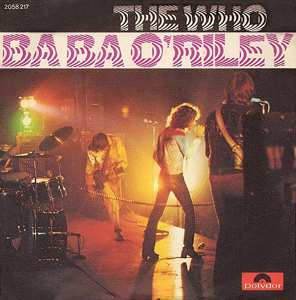
Baba O’Riley – The Who
The untamable Keith Moon crashes and tumbles through this rock anthem, playing with a frenetic energy that threatens to send the song flying off the rails at any moment.

Dig Me Out – Sleater-Kinney
Janet Weiss is the roaring engine of this track, playing with a ferocious power, impeccable timing, and creative fills that drive the song forward relentlessly.

I Heard It Through the Grapevine – Gladys Knight & the Pips
Funk Brothers drummers Uriel Jones and the great Benny Benjamin create a powerhouse rhythm section, delivering a performance full of simmering tension and explosive release that punctuates the song’s raw emotion.

Dancin’ Fool – Frank Zappa
Terry Bozzio is the manic force behind this track, navigating Zappa’s absurd rhythmic twists and turns with an explosive combination of power, precision, and theatrical flair.

One Love/People Get Ready – Bob Marley & The Wailers
Carlton “Carly” Barrett, the originator of the “One Drop” rhythm, gives this song its iconic reggae heartbeat, where the accent is on the third beat of the measure.

Footprints – The Miles Davis Quintet
At just 20 years old, Tony Williams redefined jazz drumming with his explosive and interactive playing, shattering old conventions and pushing the entire band to new heights.

Follow Tunes Du Jour on Facebook

Follow me on Bluesky

Follow me on Instagram
Tunes Du Jour Presents The Original Versions

Many of us grow up assuming the hit version of a song is the original. This playlist celebrates those surprising musical genealogies: well-known songs that were originally recorded by someone else, often with little fanfare. Here are the stories behind the transformations—where they started, and how they became iconic.


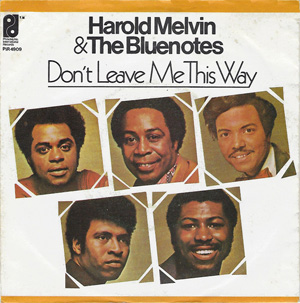
“Don’t Leave Me This Way” – Thelma Houston / Originally by Harold Melvin & the Blue Notes (1975)
Houston’s disco anthem actually began life as a Philly soul track sung by Teddy Pendergrass. Thelma took it to the dancefloor—and to #1.

“War” – Edwin Starr / Originally by The Temptations (1970)
This protest song started as an album cut by The Temptations. Starr’s rawer, angrier take made it a searing hit during the Vietnam era.

“Strawberry Letter 23” – The Brothers Johnson / Originally by Shuggie Otis (1971)
Otis’ dreamy, psychedelic original flew under the radar until producer Quincy Jones supercharged it with funk for The Brothers Johnson.

“I Feel for You” – Chaka Khan / Originally by Prince (1979)
Prince wrote it, recorded it, and released it on his 1979 self-titled album. Chaka Khan added Stevie Wonder’s harmonica and Melle Mel’s rap, creating a genre-blurring smash that gave the song a second life—and a much bigger audience.

“Louie Louie” – The Kingsmen / Originally by Richard Berry (1957)
Berry’s calypso-tinged rhythm & blues song became an unintelligible rock ‘n’ roll classic in the hands of teenage garage rockers.

“Pass The Koutchie” – Musical Youth as “Pass the Dutchie” / Originally by Mighty Diamonds (1981)
Musical Youth’s version cleaned up the ganja references but kept the groove. A British reggae hit born from a roots original.

“Tainted Love” – Soft Cell / Originally by Gloria Jones (1964)
This Northern Soul favorite was ignored in the U.S. until Soft Cell’s chilly synth-pop cover turned it into an international sensation.

“You Are So Beautiful” – Joe Cocker / Originally by Billy Preston (1974)
Preston’s gospel-inflected original was co-written with Dennis Wilson of the Beach Boys. Cocker slowed it down into a tearjerking ballad.

“The First Cut Is The Deepest” – Rod Stewart / Originally by P.P. Arnold (1967)
Before Cat Stevens, the song’s writer, sang it himself, P.P. Arnold delivered a powerful version. Stewart’s cover gave it global traction.

“Red, Red Wine” – UB40 / Originally by Neil Diamond (1967)
Diamond’s mournful original was a slow ballad. UB40’s reggae version confused even him—he didn’t recognize his own song on the radio.

“Brand New Cadillac” – The Clash / Originally by Vince Taylor and His Playboys (1959)
This rockabilly obscurity became a snarling punk track on London Calling. Vince Taylor later served as an inspiration for David Bowie’s Ziggy Stardust persona.

“Take Me To The River” – Talking Heads / Originally by Al Green (1974)
Green’s swampy soul gave way to Talking Heads’ jittery art-funk. An old-school spiritual reborn in new wave style.

“The Tide Is High” – Blondie / Originally by The Paragons (1967)
Jamaican rocksteady meets NYC cool. Blondie took this mellow gem and gave it a global pop sheen.

“Brandy” – Barry Manilow as “Mandy” / Originally by Scott English (1971)
English’s sad and simple original got a new name and new polish. Manilow’s grand version topped the charts.

“Don’t Let Me Be Misunderstood” – The Animals / Originally by Nina Simone (1964)
Simone’s pleading ballad became a snarling British Invasion hit. Her nuanced sorrow gave way to the raw edge of rock.

“Bette Davis Eyes” – Kim Carnes / Originally by Jackie DeShannon (1974)
The original was breezy and piano-driven. Carnes and her producer Val Garay turned it into new wave noir.

“Heaven Must Have Sent You” – Bonnie Pointer / Originally by The Elgins (1966)
Pointer’s disco version revived a Motown deep cut and put it back on the charts over a decade later.

“Love Buzz” – Nirvana / Originally by Shocking Blue (1969)
Nirvana turned this obscure Dutch psych-rock tune into a distorted grunge landmark. Their debut single.

“Piece Of My Heart” – Big Brother & The Holding Company / Originally by Erma Franklin (1967)
Aretha’s sister recorded it first, but Janis Joplin made it a fiery centerpiece of her legend.

“It’s Oh So Quiet” – Björk / Originally by Betty Hutton (1951)
A novelty big-band number revived by Björk into a theatrical showstopper. Old Hollywood meets Icelandic art-pop.

“China Girl” – David Bowie / Originally by Iggy Pop (1977)
Co-written with Bowie, Iggy’s version was skeletal and raw. Bowie’s version added synth gloss and MTV appeal.

“Good Lovin'” – The Young Rascals / Originally by The Olympics (1965)
The Olympics had the groove, but The Rascals turned it into a garage-rock rave-up and a #1 hit.

“Valerie” – Mark Ronson featuring Amy Winehouse / Originally by The Zutons (2006)
The Zutons wrote it as a bluesy rock song. Winehouse made it retro-soul perfection.

“Police On My Back” – The Clash / Originally by The Equals (1967)
A stomping, paranoid track from Eddy Grant’s first band. The Clash turned it into a punk fugitive anthem.

“After Midnight” – Eric Clapton / Originally by J.J. Cale (1966)
Cale’s laid-back shuffle was juiced up with guitar licks by Clapton, who kept the songwriter’s cool intact.

“On Broadway” – The Drifters / Originally by The Cookies (1962)
Songwriters Barry Mann & Cynthia Weil gave this to a girl group first, but The Drifters made it a city-slick R&B classic.

“Love Hurts” – Nazareth / Originally by The Everly Brothers (1960)
Gentle heartbreak became hard rock agony. Nazareth’s arena wail made the song a power ballad staple.

“I Love Rock ‘n’ Roll” – Joan Jett & the Blackhearts / Originally by The Arrows (1975)
Jett saw it on UK TV and recorded a fiercer, snarling version that girls (and boys) everywhere could scream along to.

“Without You” – Nilsson / Originally by Badfinger (1970)
Badfinger’s version was plaintive; Nilsson’s was operatic. He didn’t just sing it—he wailed it.

“Superman” – R.E.M. / Originally by The Clique (1969)
A psychedelic pop obscurity turned indie-rock cult classic. One of R.E.M.’s rare early tracks not written by the band.


These songs remind us that inspiration doesn’t always strike where the spotlight shines. Sometimes greatness is borrowed—and reinvented.


Follow Tunes Du Jour on Facebook

Follow me on Bluesky

Follow me on Instagram

Tunes Du Jour Presents Nirvana

Nirvana’s story began in 1987 in Aberdeen, Washington, when Kurt Cobain and Krist Novoselic formed a band that would eventually reshape rock music. Their early sound, captured on singles like “Love Buzz” and developed through constant performing in the Seattle underground scene, blended punk’s raw energy with unexpected melodic sensibility. The band recorded their debut album Bleach in 1989 with drummer Chad Channing for just $600, producing rough-edged tracks like “Negative Creep,” “About A Girl,” and “Dive” that showcased Cobain’s emerging songwriting talents while operating firmly within the regional grunge movement.

A significant shift occurred when drummer Dave Grohl joined in 1990, completing the classic Nirvana lineup. His powerful, precise drumming became essential to the band’s evolving sound as they recorded Nevermind with producer Butch Vig. Released in 1991, the album unexpectedly exploded into the mainstream, eventually displacing Michael Jackson at the top of the charts. “Smells Like Teen Spirit” became the unlikely anthem that introduced millions to alternative rock, while songs like “Come As You Are,” “Lithium,” and “In Bloom” demonstrated a perfect balance between accessibility and artistic integrity. The album’s range was impressive, from the aggressive punk energy of “Territorial Pissings” to quieter, more introspective pieces like “Polly” and “Something In The Way.”

Uncomfortable with sudden fame and determined to reclaim their artistic direction, Nirvana created a deliberately challenging follow-up with 1993’s In Utero. Working with producer Steve Albini, they crafted a rawer, less polished album featuring abrasive tracks like “Scentless Apprentice” alongside more melodic offerings such as “Heart-Shaped Box,” “Dumb,” and “All Apologies.” The album also included pointed commentary on their newfound fame with songs like “Serve The Servants” and “Rape Me.” Though initially controversial, In Utero has come to be recognized as a brave artistic statement that balanced commercial viability with uncompromising creative vision.

In November 1993, Nirvana recorded their legendary MTV Unplugged session, which aired shortly before being released as an album in 1994. This performance revealed yet another dimension of the band through acoustic renditions of lesser-known tracks like “Pennyroyal Tea” and “On a Plain,” alongside covers including “The Man Who Sold the World” and the haunting closer “Where Did You Sleep Last Night?” The stripped-down setting highlighted Cobain’s emotional vocal delivery and the underlying strength of the songwriting, proving Nirvana’s music could resonate beyond their electric intensity. Tragically, this would be one of their final recorded performances before Cobain’s death by suicide in April 1994, an event that stunned fans worldwide and prematurely ended the band’s career.

Nirvana’s final studio recording, “You Know You’re Right,” remained unreleased until 2002, serving as a poignant reminder of what might have been. Even with their relatively small catalog—spanning just seven years from formation to end—Nirvana’s influence remains immeasurable. They brought underground sounds to mainstream audiences, challenged gender norms in rock, and inspired countless musicians across genres. Beyond the mythology that formed after Cobain’s death, their music continues to connect with new generations through its emotional authenticity and artistic integrity. From early tracks like “Sliver” to expressions like “All Apologies,” Nirvana created music that captured genuine human experience in all its complexity—uncomfortable, beautiful, angry, and ultimately enduring.

Follow Tunes Du Jour on Facebook

Follow me on Bluesky

Follow me on Instagram

Tunes Du Jour Presents The David Bowie Songbook

David Bowie’s songwriting genius extends far beyond his own performances, as evidenced by this eclectic collection of covers spanning five decades. From punk pioneers to country legends, pop icons to elementary school choirs, artists across the musical spectrum have found fresh ways to interpret Bowie’s compositions. Iggy Pop’s raw, proto-punk “Lust for Life” shares space with Willie Nelson and Karen O’s unlikely but touching duet on “Under Pressure,” while Barbra Streisand’s take on “Life on Mars” contrasts with Ibibio Sound Machine’s Afrofuturistic reimagining of “Heroes.”

What’s particularly fascinating is how these songs illuminate different facets of Bowie’s writing. Some artists stay relatively faithful to the originals, while others take bold creative liberties. Together, these versions demonstrate not only Bowie’s versatility as a songwriter but also the enduring adaptability of his work across genres, generations, and cultures.

Follow Tunes Du Jour on Facebook

Follow me on Bluesky

Follow me on Instagram

Tunes Du Jour Celebrates International Left-Handers Day

Happy International Left-Handers Day! 🖐

Did you know that in the 1600s, lefties were suspected of witchcraft? Fast forward to today, and we’re still navigating a world designed for righties. From scissors to can openers, life’s full of little challenges for the left-handed among us.

Even language hasn’t been kind – check a thesaurus and you might find some surprisingly negative synonyms for “left-handed.” (Have you ever been accused of giving a left-handed compliment?) But lefties in good company! Some of the world’s most creative minds have been southpaws.

To celebrate this most important of holidays, I’ve put together a playlist featuring 30 incredible left-handed musicians. From rock legends to pop icons, these artists have left their mark on music history.

Tunes Du Jour Presents 1989

Although 1989 may not have been a groundbreaking year for popular music, it bestowed upon us an array of iconic hits spanning diverse genres. Take, for instance, The B-52’s infectious “Love Shack,” with its quirky lyrics and irresistible beat that whisked revelers away to a neon-lit haven of love and laughter. Meanwhile, Neneh Cherry’s “Buffalo Stance” effortlessly blended hip-hop beats and funk, showcasing Cherry’s distinct rap-singing style and exuding an aura of boldness and unapologetic confidence.

On a more introspective note, The Cure’s “Lovesong” captured the poignant ache of love’s longing through haunting melodies and Robert Smith’s plaintive vocals. In contrast, Paula Abdul’s “Straight Up” emerged as a pop gem, infusing catchy hooks with Abdul’s signature sassy charm. Public Enemy’s “Fight the Power” thundered onto the scene as a resounding anthem against social injustice, urging listeners to question authority and demand change.

Meanwhile, De La Soul’s “Me, Myself And I” provided a playful yet insightful commentary on self-identity and individuality, solidifying their status as pioneers of alternative rap. Pixies’ “Debaser” shattered musical conventions with its raw energy, while N.W.A’s “Express Yourself” defiantly resonated with those embracing authenticity. Enya’s “Orinoco Flow” whisked us away on Celtic winds, and Young M.C.’s “Bust A Move” had us grooving to its playful rap verses.

Then there were the soulful strains of Guns N’ Roses’ “Patience,” revealing a softer side to the rock rebels, and Madonna’s “Like a Prayer,” a fusion of pop sensibility with gospel-infused vocals that pushed boundaries. Fine Young Cannibals’ “She Drives Me Crazy” pulsated with infectious energy, blending pop, new wave, and soul, while Prince’s “Batdance” defied genres with its blend of funk, rock, and pop flamboyance. Meanwhile, Nirvana’s “About a Girl” hinted at the seismic shift the band would bring to the music industry.

Reflecting on the music of 1989, we’re reminded of its enduring legacy and profound impact on contemporary music. Each song in this playlist serves as a time capsule, transporting us to a moment when music had the power to unite, inspire, and ignite imaginations. So let’s press play and embark on a journey through the sonic landscape of 1989, where every note resonates with the magic of music.

Follow Tunes du Jour on Facebook

Follow Tunes du Jour on Twitter

Follow me on Instagram