Tunes Du Jour Presents The Bruce Springsteen Songbook

Bruce Springsteen’s name immediately conjures images of epic live performances and anthemic rock, but beneath the stadium lights and E Street Band’s prowess lies the bedrock of truly exceptional songwriting. While his own interpretations are iconic, a fascinating way to understand the depth and versatility of his craft is to listen to his songs as performed by other artists. This collection of interpretations isn’t just a testament to his popularity; it’s a deep dive into the resilient structure and universal appeal of his compositions. From Manfred Mann’s Earth Band giving “Blinded By The Light” a prog-rock makeover to Patti Smith taking his musical sketch for “Because the Night” and transforming it with her own powerful lyrics, these early releases demonstrated how his musical ideas could flourish in different hands.

What becomes clear through these varied renditions is the enduring power of Springsteen’s narratives. His ability to distill complex human experiences – the struggles of working life, the ache of forgotten dreams, the defiance of the underdog – resonates across genres and generations. Lucinda Williams’ sparse, melancholic “Factory” strips the song to its empathetic core, highlighting the quiet dignity in its depiction of labor. Johnny Cash’s gravelly voice lends a somber weight to the poignant tale of brotherhood and duty in “Highway Patrolman,” while Billy Bragg’s acoustic “Mansion on the Hill” underscores the song’s sharp social commentary on class division. Even a frequently misunderstood anthem like “Born in the U.S.A.” finds its original critical intent amplified in the raw, acoustic performance by Jason Isbell and Amanda Shires, revealing the layered complexities always present in the lyrics.

Beyond the lyrical prowess, this playlist also illuminates the structural and melodic robustness of Springsteen’s music. His compositions possess an inherent strength that allows them to be re-imagined without losing their essence. Take Hot Chip’s electronic reinterpretation of “Dancing In The Dark,” which transforms its mainstream rock energy into an indie-dance anthem, proving how adaptable the song’s core rhythm and melody truly are. Similarly, the minimalist beauty of Kevin Breit and Harry Manx’s “I’m On Fire” distills the song’s longing into a haunting, intimate whisper, while Crooked Fingers’ “The River” captures the stark emotional landscape of its narrative with a raw, almost trembling fragility. Even a track like Donna Summer’s “Protection,” originally given to her by Springsteen, showcases how his knack for catchy hooks and dynamic arrangements could easily translate into a different pop sensibility, illustrating a versatile craft beneath the surface.

This extensive array of interpretations also showcases the broad emotional spectrum Springsteen explores in his writing. His songs aren’t confined to a single mood; they capture the full range of human feeling, from youthful exuberance to weary resignation, from hopeful yearning to quiet despair. The Hollies’ rendition of “4th of July, Asbury Park (Sandy)” evokes a wistful, nostalgic glow, while Southside Johnny & The Asbury Jukes’ raucous “Hearts of Stone” pulsates with a more defiant rock and soul energy. Natalie Cole injects a playful, sassy spirit into “Pink Cadillac,” revealing the sheer fun and swagger that can inhabit his lyrics. And when Bettye LaVette takes on “Streets of Philadelphia,” she strips it down to its raw, aching vulnerability, reminding us of the profound empathy and social conscience that often underlies his work. These varied voices unlock different emotional doors, each revealing another facet of the original composition’s emotional potential.

Ultimately, a journey through these numerous cover versions offers a compelling argument for Bruce Springsteen’s enduring legacy as a songwriter. Stripped of his iconic delivery or re-clothed in entirely new musical garments, his compositions consistently stand tall. They speak to universal truths, craft unforgettable characters, and resonate with melodies that are both immediate and deeply rooted. This diverse collection of interpretations isn’t just a tribute; it’s an educational deep dive into the core strength of his writing, demonstrating that long before they became rock anthems or stadium singalongs, they were simply great songs – versatile, profound, and built to last, capable of inspiring countless artists to make them their own.

Follow Tunes Du Jour on Facebook

Follow me on Bluesky

Follow me on Instagram
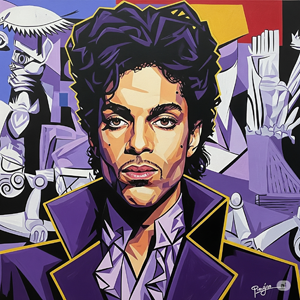
Tunes Du Jour Presents The Prince Songbook

Prince’s genius as a performer is well-documented, but his legacy as a songwriter may be even more far-reaching. The songs he wrote—sometimes directly for others, sometimes borrowed or reimagined—traveled in unexpected directions, often landing in voices very different from his own. Sinéad O’Connor’s haunting version of “Nothing Compares 2 U” turned emotional restraint into a global anthem, while Chaka Khan’s take on “I Feel for You” transformed a tightly wound synth-funk track into a dancefloor juggernaut with help from Melle Mel and Stevie Wonder. The Bangles’ jangly “Manic Monday” showed his facility with classic pop forms.

Sometimes Prince gave away songs without credit. Stevie Nicks has said “Stand Back” wouldn’t exist without his impromptu help; he played the synth part that defined the track, and then slipped away, declining a formal writing credit. His fingerprints are on the Sheila E. hit “The Glamorous Life” and The Time’s “Jungle Love,” both written and produced by Prince but performed by his protégés. Even artists as distinct as Alicia Keys and Tom Jones found new depths and textures in his work, whether covering “How Come You Don’t Call Me” or reinterpreting “Kiss.” In many cases, he gave female artists some of their most complex and empowered material: see Sheena Easton’s risqué “Sugar Walls” or Martika’s spiritual “Love… Thy Will Be Done.”

What’s most remarkable is how well these songs hold up when refracted through other voices. Cyndi Lauper brought vulnerability to “When You Were Mine,” TLC made “If I Was Your Girlfriend” even more intimate, and even idiosyncratic takes like Sufjan Stevens on “Alphabet Street” or P.M. Dawn’s dreamlike “1999” as incorporated in “Fantasia’s Confidential Ghetto” show how flexible his songwriting was. Prince’s compositions had structure, hooks, and heart, but they were never rigid. That elasticity allowed other artists not just to sing his songs, but to inhabit them.

Follow Tunes Du Jour on Facebook

Follow me on Bluesky

Follow me on Instagram
Tunes Du Jour Presents The Bob Dylan Songbook

One way to measure a songwriter’s reach is not by how often their work is covered, but how widely. The playlist below spans decades, genres, and sensibilities—from Adele to The Dead Weather, from Johnny Cash to the Neville Brothers—and all roads lead back to Bob Dylan. This is not just a reflection of his prominence; it’s a testament to the adaptability of his writing. Dylan’s lyrics aren’t locked into one style or moment—they hold up when filtered through gospel, punk, glam, folk, or soul. His songs invite reimagining because they’re grounded in strong narrative bones and emotional honesty, not ornamental frills.

Consider the different shades of “All Along the Watchtower.” Dylan’s original version is stark and cryptic; Hendrix turned it into an electrified storm. Likewise, “I Shall Be Released,” rendered with hushed reverence by The Band, has the structure of a gospel hymn but the ambiguity of a fable. “Make You Feel My Love,” one of Dylan’s later compositions, found new life in Adele’s version—proof that his songwriting didn’t peak in the ’60s, but simply evolved. His voice as a writer has always been the constant: a blend of plainspoken wisdom, sly humor, and a deep sense of historical and emotional context.

It’s notable, too, how Dylan’s songs seem to absorb the character of the performer. When Elvis Presley sings “Tomorrow Is a Long Time,” it feels like a Southern ballad. When PJ Harvey takes on “Highway 61 Revisited,” it becomes something raw and jagged. Nina Simone’s version of “Just Like Tom Thumb’s Blues” brings out a haunted intensity not present in Dylan’s own delivery. That elasticity points to a rare kind of craftsmanship—songs written with enough specificity to be meaningful, but enough openness to be inhabited.

Even in unexpected settings, Dylan’s words linger. Tom Petty co-wrote the lyrics to “Jammin’ Me” with him, a pointed pop-rock critique of media saturation. Patti Smith’s “Changing of the Guards” channels the mystical imagery and layered storytelling that Dylan deployed throughout the ’70s. And when The Specials tear into “Maggie’s Farm,” it becomes a statement of punk-era defiance. These aren’t nostalgia pieces—they’re songs that meet each era on its own terms.

Dylan’s catalog isn’t just influential; it’s usable. His songs function as cultural currency, endlessly exchangeable yet retaining value. Whether you hear him through Joan Osborne’s gothic reading of “Man in the Long Black Coat” or the crystalline harmonies of Peter, Paul and Mary’s “Blowin’ in the Wind,” what’s most striking is not just who sings Dylan—but what his songs reveal when they do.

Follow Tunes Du Jour on Facebook

Follow me on Bluesky

Follow me on Instagram

Tunes Du Jour Presents Punk

Ask ten people to define punk rock, and you’re likely to get at least fifteen answers. That’s part of its charm—and its challenge. Punk has always been more than a style of music; it’s a way of questioning the status quo, pushing back against complacency, and refusing to color inside the lines. The 30 songs in this playlist represent the genre’s many branches: from the snarling minimalism of the Sex Pistols’ “God Save the Queen” to the tightly coiled fury of Black Flag’s “Rise Above,” from Patti Smith’s poetic incantations to the danceable paranoia of Talking Heads’ “Psycho Killer.”

The roots of punk go deep, even before the term existed. “I’m Waiting for the Man” by The Velvet Underground and “Kick Out the Jams” by MC5 helped pave the way with their raw sound and confrontational lyrics. By the mid-1970s, punk had taken recognizable form in both New York and London. The Ramones stripped rock to its bare essentials with “Sheena Is a Punk Rocker,” while The Clash’s London Calling album pointed to punk’s potential to absorb and reflect broader influences—including reggae, ska, and politics.

Acts like Gang of Four and Television took the energy of punk and redirected it into jagged rhythms and angular guitars. The B-52’s “Rock Lobster” and Talking Heads introduced eccentricity and art-school sensibilities, while the Dead Kennedys and Sham 69 channeled punk into direct political protest. Meanwhile, bands like The Jam and Buzzcocks added a melodic urgency, and Iggy Pop and the New York Dolls injected glam and danger into the proceedings.

In the decades that followed, punk fragmented and flourished. Rancid’s “Time Bomb” leaned into ska-punk; Blink-182’s “Dammit” helped define a generation’s version of pop-punk adolescence. Bikini Kill’s “Rebel Girl” roared from the riot grrrl movement with feminist fire, and Billy Bragg brought punk’s commitment to social critique to a solo singer-songwriter context. Even grunge touchstones like Mudhoney carried punk’s DNA—loud, unpolished, and emotionally direct.

This playlist doesn’t claim to be definitive—if anything, it’s a conversation starter. It suggests that punk isn’t a sound so much as a stance. Whether it’s The Replacements thumbing their nose at success in “Bastards of Young,” or Green Day channeling disillusionment into “American Idiot,” punk continues to reinvent itself. It may shift forms, but it never goes quietly.

Follow Tunes du Jour on Facebook

Follow me on Bluesky

Follow me on Instagram

Tunes Du Jour Presents 1978

The year 1978 was a pivotal moment in music history, showcasing a striking contrast between the mainstream hits dominating the airwaves and the underground sounds bubbling beneath the surface. This year offered a rich assortment of genres, from disco and pop ruling the charts to punk and new wave carving out their own rebellious niches.

Disco was undoubtedly the dominant force in popular music. The Bee Gees’ “Stayin’ Alive” became an anthem of the era, while Chic’s “Le Freak,” A Taste of Honey’s “Boogie Oogie Oogie,” Donna Summer’s “Last Dance,” and Alicia Bridges’ “I Love the Nightlife (Disco ‘Round)” kept the dance floors packed. Even rock legends like the Rolling Stones couldn’t resist disco’s pull oor, as evidenced by their hit “Miss You.”

But 1978 wasn’t all about disco. Pop music thrived with ABBA’s timeless “Take a Chance on Me” and Electric Light Orchestra’s upbeat “Mr. Blue Sky.” Queen’s anthemic “We Are the Champions” became a staple at sporting events worldwide. In R&B, the Commodores’ soulful ballad “Three Times a Lady,” Funkadelic’s anthemic “One Nation Under a Groove,” and Chaka Khan’s empowering “I’m Every Woman” showcased the genre’s range. The soundtrack to Grease, featuring John Travolta and Olivia Newton-John’s “You’re the One That I Want,” dominated both radio and cinema.

While mainstream pop and disco ruled the charts, a counter-cultural revolution was taking place in underground venues. The Clash’s “(White Man) In Hammersmith Palais” blended social commentary with irresistible hooks, while the Buzzcocks’ “Ever Fallen in Love (With Someone You Shouldn’t’ve)” captured the essence of punk’s raw emotional energy. The Undertones’ “Teenage Kicks” embodied the unbridled spirit of youth, and Siouxsie & the Banshees’ “Hong Kong Garden” showcased the emerging goth-punk sound. Public Image Ltd.’s self-titled track “Public Image” signaled the evolution of post-punk.

1978 also saw the emergence of artists who defied easy categorization. Kate Bush’s haunting “Wuthering Heights” introduced a unique voice to the pop landscape, blending literary references with art-rock sensibilities. Kraftwerk’s “The Model” pushed the boundaries of electronic music, influencing countless genres in the decades to come. Patti Smith’s “Because the Night” (co-written with Bruce Springsteen) bridged the gap between punk poetry and mainstream rock. The year also saw reggae making inroads with Althea & Donna’s “Uptown Top Ranking,” while Randy Newman’s misunderstood “Short People” showcased his brilliance in crafting satirical, thought-provoking pop.

Looking back, it’s clear that 1978 was more than just a year of disco balls and safety pins. It was a time of musical diversity and innovation, where chart-toppers and underground icons coexisted, each pushing the boundaries of their respective genres. From the dancefloor anthems to punk’s raw energy, from synth-pop’s early days to reggae’s growing influence, 1978 offered a rich and varied soundtrack that continues to resonate today. This dynamic interplay between mainstream and alternative sounds would continue to shape the musical landscape for years to come, making 1978 a truly unforgettable year in music history.

Follow Tunes Du Jour on Facebook

Follow Tunes Du Jour on Twitter

Follow me on Instagram

Your (Almost) Daily Playlist: 2-3-24

Melanie Safka wrote the song “Lay Down” after performing at Woodstock in 1969, where she was inspired by the sight of the audience lighting candles in the rain. It became her first US hit, peaking at number 6 on the Billboard Hot 100. 

Melanie was born on this date in 1947. She passed away just over a week ago. A few of her songs are on today’s playlist.

Follow Tunes du Jour on Facebook

Follow Tunes du Jour on Twitter

Follow me on Instagram

Your (Almost) Daily Playlist: 1-13-24

“One minute you’re just cooking up someone’s order of French fries and the next minute you’re laying on the floor and they blow your brains out.”-   The Flaming Lips’ Wayne Coyne reflecting on being held up at gunpoint when he was a fry cook at Long John Silver’s 

The Flaming Lips’ Wayne Coyne on this date in 1961. A few of his band’s cuts are included on today’s playlist.

Follow Tunes du Jour on Facebook

Follow Tunes du Jour on Twitter

Follow me on Instagram