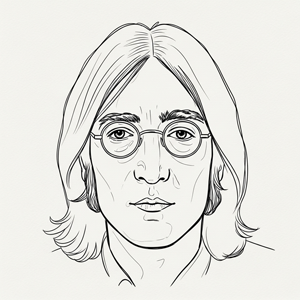
Tunes Du Jour Presents The John Lennon Songbook

It’s interesting to start a playlist of John Lennon songs with David Bowie’s “Fame.” It feels like an outlier at first, until you remember Lennon co-wrote the track, contributed guitar, and sang backup vocals. It’s one of just a handful of songs on this list that isn’t a straightforward cover, and its placement at the top serves as a great reminder: one of the best ways to understand a songwriter’s impact is to see how their work thrives in the hands of others. Listening to a collection like this isn’t just about nostalgia; it’s an active exploration of how durable and adaptable Lennon’s compositions truly are, revealing the deep-seated melodic and lyrical strengths that invite constant reinterpretation.

The sheer variety of artists drawn to his work speaks volumes about its fundamental structure. A Lennon song can be a sturdy vessel for almost any style. In its original form, “Help!” was a desperate plea disguised as an upbeat folk-rock hit. But when Tina Turner gets ahold of it, she strips away the disguise, transforming it into a full-throated, soulful cry for salvation. Similarly, Johnny Cash takes “In My Life,” a song of youthful reflection, and imbues it with the profound weight of a long life lived, making each line land with a different, more somber gravity. From the raw R&B groove Otis Redding finds in “Day Tripper” to the cool, atmospheric poise Roxy Music brings to “Jealous Guy,” these songs prove to be exceptionally resilient, their core emotions accessible to any genre.

Beyond musical versatility, the playlist highlights the different facets of Lennon’s lyrical persona. There’s the acerbic political commentator, whose pointed dissatisfaction is channeled perfectly by the punk sneer of Generation X on “Gimme Some Truth” and the world-weary defiance of Marianne Faithfull on “Working Class Hero.” Then there is the deeply vulnerable Lennon, the man wrangling with insecurity and fame. You can hear this in the anxious, propulsive energy The Feelies bring to “Everybody’s Got Something To Hide (Except Me And My Monkey)” or the stark, pleading quality Maxïmo Park finds in the solo track “Isolation.” He could be pointedly political or achingly personal, and both modes have continued to resonate with artists who have their own truths to tell.

Of course, no look at Lennon’s work would be complete without touching on his more surreal and experimental side. These are often the songs that seem most tied to a specific time, yet they possess a dreamlike logic that continues to inspire. Elton John, a friend and collaborator, treats “Lucy in the Sky with Diamonds” not as a museum piece but as a glam-rock epic. R.E.M. leans into the hypnotic, floating quality of “#9 Dream,” while Fiona Apple’s take on “Across the Universe” honors its ethereal nature while grounding it with her distinctive emotional intensity. These artists don’t just copy the psychedelia; they find new ways to access the spirit of imaginative freedom that fueled the original recordings.

Ultimately, listening through these interpretations feels less like a tribute and more like a conversation across decades. We hear Billy J. Kramer’s simple pop charm on “Bad to Me,” a song Lennon wrote for him in 1963, and then Glen Campbell’s posthumous, heart-rending version of “Grow Old With Me,” one of Lennon’s last compositions. The journey between those two points is remarkable. This collection of songs, re-shaped by everyone from The Breeders to Bettye LaVette, demonstrates that the power of Lennon’s work isn’t just in his own iconic recordings. It’s in the bones of the songs themselves—the unforgettable melodies, the honest lyrics, and the restless spirit that others can’t help but be drawn to, again and again.

Follow Tunes Du Jour on Facebook

Follow me on Bluesky

Follow me on Instagram

Tunes Du Jour Presents 1976

By 1976, disco had moved from underground clubs to the top of the charts, and rock music found itself facing challenges from multiple fronts. Donna Summer’s “Love to Love You Baby” and Diana Ross’ “Love Hangover” showcased the genre’s hypnotic groove and sensuality, while Wild Cherry’s “Play That Funky Music” blurred the lines between rock and funk, proving that even guitar-driven bands weren’t immune to disco’s influence. Hits like Andrea True Connection’s “More, More, More” and Candi Staton’s “Young Hearts Run Free” reinforced that this was no passing trend—it was a movement reshaping popular music.

Mainstream rock, meanwhile, leaned into grandeur and melody. Queen’s “Bohemian Rhapsody” became a landmark in songcraft, a multi-part epic that defied conventional structure and solidified the band’s place in rock history. Boston’s “More Than a Feeling” offered a soaring, polished take on arena rock, while Blue Öyster Cult’s “(Don’t Fear) The Reaper” balanced an ethereal mood with a sinister undercurrent. Even David Bowie, ever the shape-shifter, leaned into a sleeker sound with “Golden Years.”

Yet, outside of the glossy productions and layered harmonies, a different kind of energy was brewing. The Sex Pistols’ “Anarchy in the U.K.” was a shot across the bow, rejecting the excesses of rock in favor of raw urgency. While not a punk act, Thin Lizzy’s “The Boys Are Back in Town” carried a swagger and directness that resonated with rock fans who would soon embrace punk’s stripped-down ethos. Punk’s full-blown arrival was just around the corner, but 1976 gave the first clear signs that the dominant sounds of the decade were about to face a reckoning.

Beyond disco and rock, R&B and soul continued to thrive, offering both lush ballads and infectious grooves. The Manhattans’ “Kiss and Say Goodbye” and Lou Rawls’ “You’ll Never Find Another Love Like Mine” showcased rich, emotive vocal performances, while Spinners’ “The Rubberband Man” and Boz Scaggs’ “Lowdown” leaned into rhythmic sophistication. Daryl Hall & John Oates’ “She’s Gone” marked a breakthrough for the duo, setting the stage for their string of hits in the late 1970s and early 1980s, where they refined their blend of blue-eyed soul and pop.

In a year that saw both nostalgia and forward momentum, songs like the Four Seasons’ “December, 1963 (Oh, What a Night)” and Gordon Lightfoot’s “The Wreck of the Edmund Fitzgerald” reminded listeners of storytelling’s power in song. Meanwhile, ABBA’s “Mamma Mia” and Elton John and Kiki Dee’s “Don’t Go Breaking My Heart” offered sheer pop exuberance. The music of 1976 reflected an industry in transition—disco was ascendant, rock was splintering, and a new wave of rebellion was beginning to make itself heard.

Follow Tunes Du Jour on Facebook

Follow me on Bluesky

Follow me on Instagram

Tunes Du Jour Presents 1982

Nineteen eighty-two was a musical kaleidoscope. New wave, punk, rap, and pop collided in glorious ways, creating a year of iconic sounds that still resonate today. Synth-pop rose to prominence, rock anthems solidified their place in our hearts, and the pulsating beats of new wave and post-disco ruled dance floors and radio waves alike.

It was the year that brought us iconic songs and sounds that still resonate today, like Soft Cell’s “Tainted Love,” a synth-pop masterpiece, and The Human League’s “Don’t You Want Me,” a song so ingrained in our collective consciousness it practically begs to be sung along to. Both are emblematic of the New Wave movement that dominated the airwaves.

New Wave wasn’t the only game in town, though. Rock received a shot of adrenaline with Joan Jett’s “I Love Rock N’ Roll,” a fist-pumping reminder of the genre’s enduring power. Queen and David Bowie delivered the masterpiece “Under Pressure” – a testament to the power of collaboration (and maybe a metaphor for the year itself!). Meanwhile, Bruce Springsteen’s “Atlantic City” offered a poignant look at the working class experience.

The year also marked a significant moment for hip-hop with Grandmaster Flash & The Furious Five’s “The Message,” a track that brought social consciousness to the forefront, laying down the reality of urban life with a beat that demanded attention.

Laurie Anderson’s “O Superman” experimented with spoken word and electronic sounds, a heady trip that felt like a message from the future. Afrika Bambaataa’s “Planet Rock” introduced audiences to the future of electro-funk. On the other end of the spectrum, “I’ve Never Been to Me” by Charlene… well, let’s just say it was a unique contribution to the musical landscape.

The Jam’s “A Town Called Malice” captured the youthful angst of British punk, while Madness’ “House of Fun” and Depeche Mode’s “Just Can’t Get Enough” offered a quirky new wave charm.

Pop had its share of fun too. Who can forget The J. Geils Band’s “Centerfold?” There was also the infectious “Jack & Diane” by John Cougar, a little ditty about young love in a small town. The Go-Go’s “We Got the Beat” declared female empowerment with a pop-rock punch, while Stray Cats’ “Rock This Town” brought rockabilly back into the mainstream. Even bubblegum pop got a look-in with Bow Wow Wow’s sugary sweet “I Want Candy.”

Nineteen eighty-two was a year where music embraced the weird, the wonderful, and everything in between. So crank up the volume, dig out your leg warmers (optional), and let this playlist take you back to a time when music wasn’t afraid to experiment and have a whole lot of fun.

Follow Tunes du Jour on Facebook

Follow Tunes du Jour on Twitter

Follow me on Instagram

Tunes Du Jour Presents 1972

1972. The Vietnam War raged on, Watergate loomed, and the social landscape shifted beneath our feet. Amidst this backdrop of upheaval, our ears tuned in to a soundtrack that transcended mere melodies—it pulsed with the countercultural spirit and the burgeoning individuality of an era.  Let us step back in time, dust off the record player, and explore the timeless tunes that wove themselves into the fabric of our lives—a kaleidoscope of genres and voices that defined a generation.

  • Al Green crooned “Let’s Stay Together,” his velvet voice weaving an unwavering plea for commitment.
  • Roberta Flack tenderly sang “The First Time Ever I Saw Your Face,” etching raw vulnerability into our hearts.
  • Don McLean painted a poignant picture of a generation in transition with his epic “American Pie.”
  • Alice Cooper’s rebellious anthem “School’s Out” became the rallying cry for youth liberation, its raucous energy echoing through high school corridors.
  • Across the pond, T. Rex electrified listeners with glam rock swagger in “Bang a Gong (Get It On).”
  • Johnny Nash offered optimism with “I Can See Clearly Now,” a beacon of hope cutting through the haze.
  • Meanwhile, Elton John’s cosmic odyssey “Rocket Man” and David Bowie’s otherworldly anthem “Starman” transported us to distant galaxies, reflecting the era’s fascination with space exploration and introspection.
  • Jimmy Cliff addressed racial injustice and social struggles in “The Harder They Come.”
  • Big Star captured the bittersweet angst of adolescence in “Thirteen.”
  • The bluesy, swaggering classic “Tumbling Dice” by The Rolling Stones left an indelible marks on musical history.
  • And let’s not forget Elvis Presley, who still had magic to spare with “Burning Love.”

From the introspective musings of Lou Reed’s “Perfect Day” to the raw energy of Led Zeppelin, each track on this playlist embodies the spirit of its time while transcending it—a symphony that continues to resonate across generations.

The music of 1972 continues to evoke nostalgia and stir emotions across generations. These iconic tunes remind us of the enduring legacy of artists who dared to push boundaries and challenge the status quo. So turn up the volume and let these timeless tunes whisk you back to celebrate the enduring beauty of music that transcends generations.

Follow Tunes du Jour on Facebook

Follow Tunes du Jour on Twitter

Follow me on Instagram