Tunes Du Jour Presents 1962

The music of 1962 wasn’t so much at a crossroads as it was following several lively paths at once. What captivated the public ranged from soul ballads to novelty records to stirrings of folk activism. Instrumentals, dance crazes, and heartfelt pop all found room on the charts. It’s this eclecticism — rather than any one dominant trend — that best characterizes the year. Yet in small ways, a few songs hinted at larger shifts to come. For example, The Tornados’ “Telstar,” the first U.S. number one by a British group, captured a sense of futuristic possibility that would soon manifest more dramatically with the Beatles and the British Invasion.

Instrumentals found their way into the spotlight in very different forms. While “Telstar” beamed into space with its shimmering, otherworldly sound, Booker T. & the MG’s grounded listeners with the earthy groove of “Green Onions.” Meanwhile, Stan Getz and Charlie Byrd’s “Desafinado” introduced many American listeners to the smoother, jazz-inflected rhythms of bossa nova — a style that would quietly influence pop and jazz recordings throughout the decade. Taken together, these instrumentals showed how musical expression could take new forms without abandoning broad popular appeal, and how lyrics weren’t always necessary to convey strong emotion.

Soul music also solidified its foundation. Sam Cooke’s “Bring It on Home to Me” and Solomon Burke’s “Cry to Me” mixed gospel roots with secular longing in ways that would help define soul music itself. Girl groups and doo-wop continued to resonate, with The Crystals’ “He’s a Rebel” and The Shirelles’ “Soldier Boy” offering different takes on devotion and defiance. Dion’s “The Wanderer” carried forward some of doo-wop’s spirit, while Gene Chandler’s “Duke of Earl” stood proudly as a bridge from doo-wop’s earlier heyday into a new era of soul and R&B. Even novelty records had staying power — Bobby “Boris” Pickett’s “Monster Mash” reached number one and, thanks to perennial Hallowe’en airplay, remains a cultural touchstone.

Folk music, too, gained traction. Peter, Paul & Mary’s debut album, featuring “If I Had a Hammer,” became one of the year’s bestsellers, spending over a month at number one. Its clean harmonies and calls for justice would help set the stage for the socially conscious folk boom led by artists like Bob Dylan, whose own debut — mostly overlooked in 1962 — was just the beginning of a rapid ascent. Meanwhile, outside the U.S., Françoise Hardy’s “Tous Les Garçons Et Les Filles” offered a moody, introspective style that would come to influence the understated emotionality of later French pop and, indirectly, certain strands of indie pop decades later.

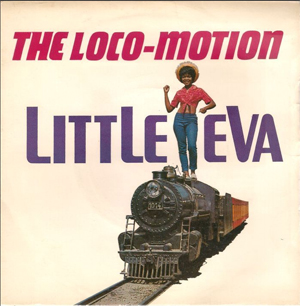
Some of 1962’s biggest hits have proven remarkably enduring. Elvis Presley’s “Can’t Help Falling in Love,” originally from the Blue Hawaii soundtrack, has since become one of his most covered and beloved songs. The Contours’ raucous “Do You Love Me” found new life decades later with Dirty Dancing, while Carole King, years before Tapestry, scored her first chart hit as a performer with “It Might as Well Rain Until September” — even as she continued to dominate as a songwriter, co-writing Little Eva’s infectious “The Loco-Motion.” These songs from 1962 don’t just capture a moment in time; they reveal a popular music scene that was broadening and diversifying while quietly laying the groundwork for upcoming revolutions, capturing both the fleeting spirit of its moment and the lasting power of pop at its best in a year where no single trend reigned supreme.

Follow Tunes Du Jour on Facebook

Follow me on Bluesky

Follow me on Instagram
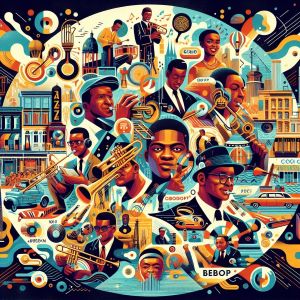
Tunes Du Jour Celebrates International Jazz Day

Jazz is a genre that defies easy definition, yet its influence is undeniable across decades of music history. At its core, jazz represents freedom – freedom of artistic expression, freedom to improvise and venture into uncharted musical territory. From the early days of jazz pioneers like Louis Armstrong, Duke Ellington, and Billie Holiday, this artistic freedom has been the driving force behind the ever-evolving sounds of jazz.

The genius of jazz lies in its ability to seamlessly blend composition and spontaneity. Take Miles Davis’ seminal album Kind of Blue, where masterful musicians like John Coltrane and Cannonball Adderley were given a simple modal framework to build upon through their improvisations. The result was a transcendent exploration of space, melody, and emotion that still captivates listeners today. Similarly, Dave Brubeck’s “Take Five” broke new ground with its innovative use of quintuple meter, exemplifying jazz’s boundary-pushing spirit.

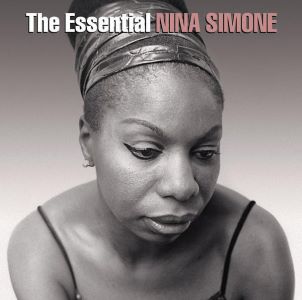
Yet jazz is more than just innovative time signatures and harmonic progressions. It’s a language of human experience, a means of conveying the full spectrum of emotions through sound. Billie Holiday’s haunting rendition of “Strange Fruit” transformed a song into a searing indictment of racism and injustice. Nina Simone’s stirring vocals on “My Baby Just Cares for Me” radiate warmth and playfulness. And Chet Baker’s rendition of “My Funny Valentine” captures the exquisite vulnerability of heartbreak with effortless cool.

As the genre evolved through the latter half of the 20th century, jazz continued to defy conventions and push creative boundaries. The modal jazz of John Coltrane’s “A Love Supreme” was a spiritual exploration unlike anything that came before it. Ornette Coleman’s pioneering free jazz broke down traditional concepts of melody and harmony. And the fusion era saw artists like Herbie Hancock, Weather Report, and Grover Washington Jr. incorporate elements of funk, rock, and R&B into their jazz foundations.

From its humble beginnings in New Orleans to its modern global influence, jazz has remained a quintessential expression of artistic freedom. Its ability to constantly reinvent itself while maintaining a deep reverence for its roots is what makes it one of the most vital and culturally significant art forms of our time. Jazz is more than just a genre – it’s a living, breathing embodiment of the human spirit’s endless capacity for creativity and innovation.

Follow Tunes du Jour on Facebook

Follow Tunes du Jour on Twitter

Follow me on Instagram

Tunes Du Jour Presents 1964

In 1964, the musical landscape was undergoing a seismic shift. From the electrifying British Invasion to the soulful sounds of Motown, 1964 was a year that truly had something for everyone.

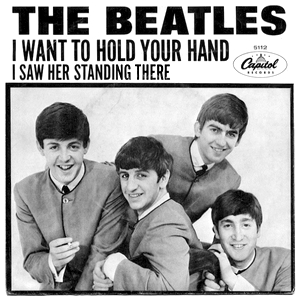
One cannot discuss the music of 1964 without acknowledging the unparalleled influence of The Beatles. With their chart-topping hit “I Want To Hold Your Hand,” the Fab Four ignited a phenomenon that would forever alter the course of popular music. Their harmonious blend of catchy melodies and innovative arrangements captivated audiences worldwide, laying the groundwork for the British Invasion that would dominate the airwaves in the years to come.

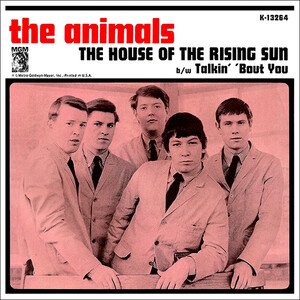
The UK also brought us The Animals, whose “House Of The Rising Sun” captivated audiences with its electrifying intensity, while The Kinks offered a more garage-band, raw sound with “You Really Got Me.”

But 1964 was not just about the British Invasion; it was also a time of soulful sounds and Motown magic. Artists like Martha & The Vandellas, The Supremes, and The Four Tops delivered soul-stirring performances on classic hits.

The surf rock craze was in full swing, with The Beach Boys’ “I Get Around” capturing the carefree California lifestyle. And for those who preferred a more melancholic sound, there were ballads like Dionne Warwick’s “Walk On By.”

Beyond the well-known names associated with 1964, this playlist unearths other soundtracks of the year, like “My Boy Lollipop” by Millie Small, a ska track that became a surprise summer hit, and “The Girl From Ipanema” by Stan Getz & Astrud Gilberto, a bossa nova masterpiece that brought a touch of Brazilian cool to the airwaves.

This playlist is just a taste of the incredible music that 1964 had to offer, though even a brief exploration of 1964’s music reveals a year brimming with creativity and cultural impact. From the infectious melodies of pop anthems to the raw energy of rock and roll, these songs continue to resonate with listeners today, reminding us of the enduring power of music to capture a moment in time and transport us back. It was a year that changed the landscape of popular music forever, leaving behind a legacy that continues to inspire and entertain generations of listeners.

Follow Tunes Du Jour on Facebook

Follow Tunes Du Jour on Twitter

Follow me on Instagram

Throwback Thursday: 1964

Nobody would deny that 1964 was among the most pivotal years in rock and roll. Nobody except Lester, a guy I worked with decades ago. He was an idiot. The Beatles and the other artists who stormed the US pop charts during the first British Invasion made an indelible impact on contemporary music and culture. Motown was ascending and producing classic singles. Girl groups were still hanging around creating pop perfection. Bob Dylan was making himself known, messing with the vocals one expected on a hit record. And Dionne Warwick was already the queen of Twitter.

Here are thirty songs that partly defined 1964. Take note, Lester.

Follow Tunes du Jour on Facebook.

Follow Tunes du Jour on Twitter.

Follow me on Instagram.

Records of the Year

The Grammy Awards are being presented tonight. Woo. It’s billed as “music’s biggest night,” just as May 7 through May 16 is billed as “the biggest week in American birding,” if only because ten days is a lot for one week. Birders. Am I right, people? Performers at this year’s Grammys include Bruno Mars and Anderson .Paak doing their new song, because what better way to celebrate the music of 2020 than with a single that was released last week? Performers I’m looking forward to include Miranda Lambert, Cardi B, HAIM, Megan Thee Stallion, Brittany Howard, Doja Cat, Dua Lipa, and Billie Eilish, whose “Everything I Wanted” is up for Record of the Year. That’s my favorite of the nominees, though I think the award will go to Beyoncé for “Black Parade,” and I have no problem with that. However, if the award goes to that record I never heard of until I started typing this sentence, sneakers will be thrown at my television (though that record may be good for all I know). For Album of the Year my vote goes to Fiona Apple’s Fetch the Bolt Cutters, as it was handily the best album of 2020. It probably won’t win, seeing as it wasn’t nominated. What was nominated over Apple’s album? That Coldplay album you forgot about and the Jacob Collier album you never heard of until you started reading this sentence (though that album may be good for all you know). Of the albums nominated, I’d pick HAIM’s. It’s very good. Not Fetch The Bolt Cutters good, but very good nonetheless. If HAIM win I hope they hand their award to Fiona Apple live on the telecast, which would be super impressive, seeing as they won’t be in the same room. I’m sure tonight’s show will include a tribute to dead people done by living people who are no match for said dead people. I’d rather want a montage of clips of the dead people performing when they were living people. <Fill in the blank> screaming is not representative of what made Aretha Franklin amazing. No disrespect to <fill in the blank>, but there’s more to being the Queen of Soul than having a mic and ovaries.

It’s easy to shit on the Grammys, as they are so shittable, but to be fair, not every Record of the Year is as terrible as 1988’s recipient, “Don’t Worry, Be Happy.” Here are thirty of the better winners:

Follow Tunes du Jour on Facebook.

Follow Tunes du Jour on Twitter.

Follow me on Instagram.

Your (Almost)Daily Playlist (2-4-20)

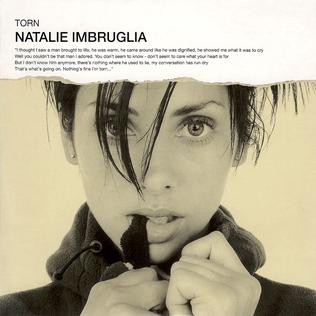
Inspired by the February 4 birthdays of Alice Cooper, Cam’ron, James’ Tim Booth, and Natalie Imbruglia; the February 3 birthdays of The Temptations’ Dennis Edwards, The Kinks’ Dave Davies, Melanie, and Daddy Yankee; and the February 2 birthdays of Graham Nash, Honey Cone’s Edna Wright, Shakira, Howard Bellamy and Stan Getz; and the February 3 anniversary of the passing of Buddy Holly.

Click here to like Tunes du Jour on Facebook.
Follow me on Twitter.
Follow me on Instagram.