‘Tis the season.
Follow Tunes Du Jour on Facebook
Follow me on Bluesky
Follow me on Instagram
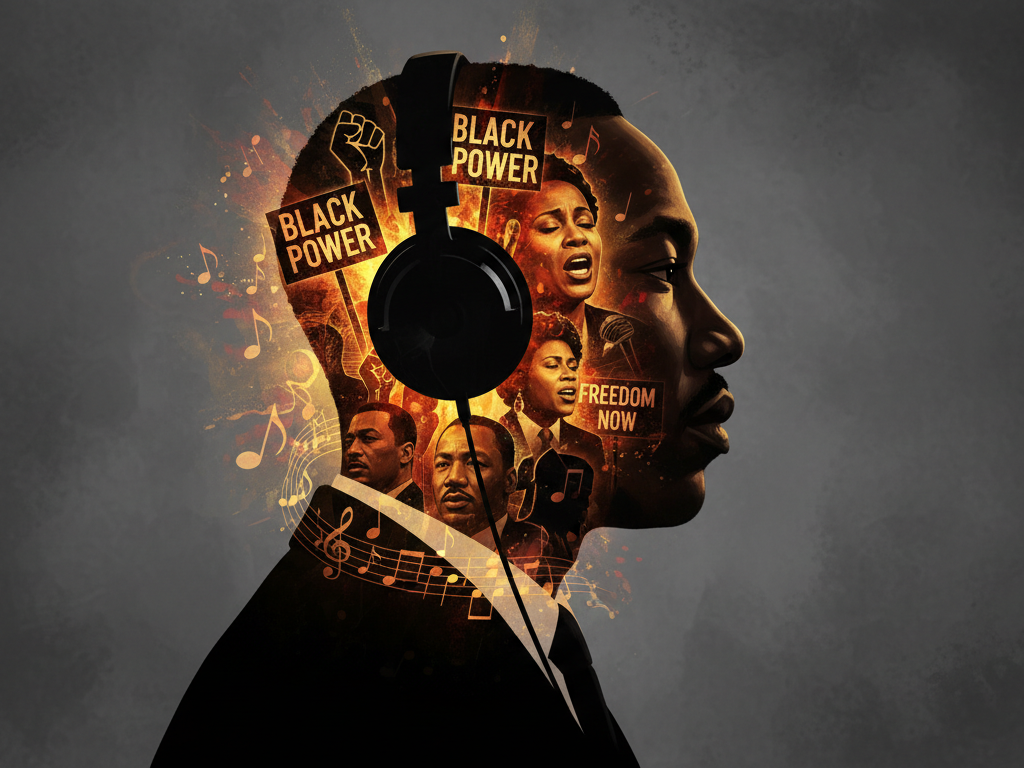
Welcome to a journey through rhythm. November is International Drum Month, and this collection honors the masters of the drum kit, the players whose feel, power, and ingenuity define the songs we love. From the tightest pockets to the most explosive solos, these are the heartbeats of modern music. Let’s give the drummers some.
Good Vibrations – The Beach Boys
The legendary session musician Hal Blaine provides the sharp, inventive percussion, using everything from sleigh bells to a detached kick drum to build the song’s complex and sunny atmosphere.
Cissy Strut – The Meters
Joseph “Zigaboo” Modeliste, the architect of New Orleans funk, creates a syncopated, greasy, and endlessly influential groove that has been the blueprint for funk drummers ever since.
Smells Like Teen Spirit – Nirvana
Dave Grohl’s performance is a masterclass in quiet-loud dynamics, with his simple, powerful groove in the verse exploding into a torrent of raw energy for the iconic chorus.
One – Metallica
Lars Ulrich’s machine-gun double bass drumming on the intro is one of metal’s most defining moments, perfectly mimicking the sound of battlefield artillery.
Superstition – Stevie Wonder
The irresistible funk pattern that drives this track was played by none other than Stevie Wonder himself, who laid down the clavinet, bass, and drum parts to create a perfect storm of groove.
The Glamorous Life – Sheila E.
A tour de force from the legendary percussionist and drummer Sheila E., this track is a showcase of her technical virtuosity and incredible funk sensibilities.
In The Air Tonight – Phil Collins
For three minutes, Phil Collins builds unbearable tension before unleashing the most famous drum fill in history, a thunderous burst of gated reverb toms that everyone has air-drummed to.
Rosanna – Toto
The late, great Jeff Porcaro gives a masterclass in the half-time shuffle, creating a feel so iconic and difficult to replicate that it’s now simply known as the “Rosanna shuffle.”
Come Together – The Beatles
Ringo Starr’s signature swampy, tea-towel-dampened tom groove is the unmistakable foundation of this track, proving that feel and creativity are more important than flash.
Brick House – The Commodores
Walter “Clyde” Orange not only provides the lead vocals but also lays down a funk groove so solid and deep you could build a house on it, proving that sometimes the simplest beat is the most effective.
Rock With You – Michael Jackson
Session giant John “JR” Robinson creates a beat that is smooth, sophisticated, and impossibly deep in the pocket, providing the perfect shimmering pulse for dancing.
Sing, Sing, Sing (With A Swing) – Benny Goodman & His Orchestra
Gene Krupa became music’s first superstar drummer with this performance, his primal, floor-tom-driven solo setting the standard for all drum features to come.
Voodoo Child (Slight Return) – The Jimi Hendrix Experience
Mitch Mitchell’s jazz-influenced, wildly improvisational drumming is the perfect foil for Hendrix’s guitar, a chaotic and conversational force of nature.
When The Levee Breaks – Led Zeppelin
Recorded in a stairwell with two microphones, John Bonham’s colossal, booming groove is arguably the most recognizable and revered drum sound ever committed to tape.
Message in a Bottle – The Police
Showcasing his unique, reggae-infused style, Stewart Copeland’s intricate hi-hat work and signature use of the splash cymbal give this song its nervous, driving energy.
Funky Drummer – James Brown
Here, Clyde Stubblefield plays what is perhaps the most-sampled drum break in history, a 20-second piece of rhythmic perfection that became a cornerstone of hip-hop.
Gimme Shelter – The Rolling Stones
The picture of restraint and taste, Charlie Watts enters the song with a deceptively simple beat that carries all the dread and swing the track demands.
I’ve Seen All Good People – Yes
Bill Bruford’s crisp, creative, and complex drumming is on full display, navigating the song’s shifting sections with technical precision and musical grace.
50 Ways to Leave Your Lover – Paul Simon
Steve Gadd lays down one of the most recognizable and clever marching-band-inspired beats in popular music, a sophisticated and instantly memorable pattern.
Think (About It) – Lyn Collins
Another gift to hip-hop from the James Brown band, this track features John “Jabo” Starks’s impossibly tight groove and a legendary drum break that keeps on giving.
White Room – Cream
The inimitable Ginger Baker announces this psychedelic classic with a powerful 5/4 tom-tom intro, setting the stage with his heavy, melodic, and groundbreaking style.
Hot For Teacher – Van Halen
Alex Van Halen’s frantic, shuffling intro sounds like a barely-contained engine, kicking off one of the most exhilarating double-bass-fueled drum tracks in rock history.
Sunday Bloody Sunday – U2
Larry Mullen Jr.’s militaristic, unrelenting snare drum pattern, recorded in a reverberant stairwell, serves as the song’s defiant and unwavering backbone.
Schism – Tool
A master of complexity, Danny Carey navigates the song’s dizzying array of shifting time signatures with a tribal power and mathematical precision that is simply breathtaking.
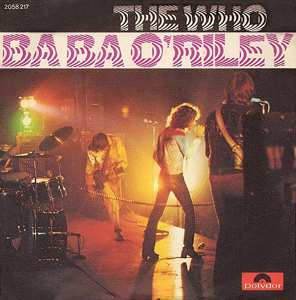
Baba O’Riley – The Who
The untamable Keith Moon crashes and tumbles through this rock anthem, playing with a frenetic energy that threatens to send the song flying off the rails at any moment.
Dig Me Out – Sleater-Kinney
Janet Weiss is the roaring engine of this track, playing with a ferocious power, impeccable timing, and creative fills that drive the song forward relentlessly.
I Heard It Through the Grapevine – Gladys Knight & the Pips
Funk Brothers drummers Uriel Jones and the great Benny Benjamin create a powerhouse rhythm section, delivering a performance full of simmering tension and explosive release that punctuates the song’s raw emotion.
Dancin’ Fool – Frank Zappa
Terry Bozzio is the manic force behind this track, navigating Zappa’s absurd rhythmic twists and turns with an explosive combination of power, precision, and theatrical flair.
One Love/People Get Ready – Bob Marley & The Wailers
Carlton “Carly” Barrett, the originator of the “One Drop” rhythm, gives this song its iconic reggae heartbeat, where the accent is on the third beat of the measure.
Footprints – The Miles Davis Quintet
At just 20 years old, Tony Williams redefined jazz drumming with his explosive and interactive playing, shattering old conventions and pushing the entire band to new heights.
Follow Tunes Du Jour on Facebook
Follow me on Bluesky
Follow me on Instagram
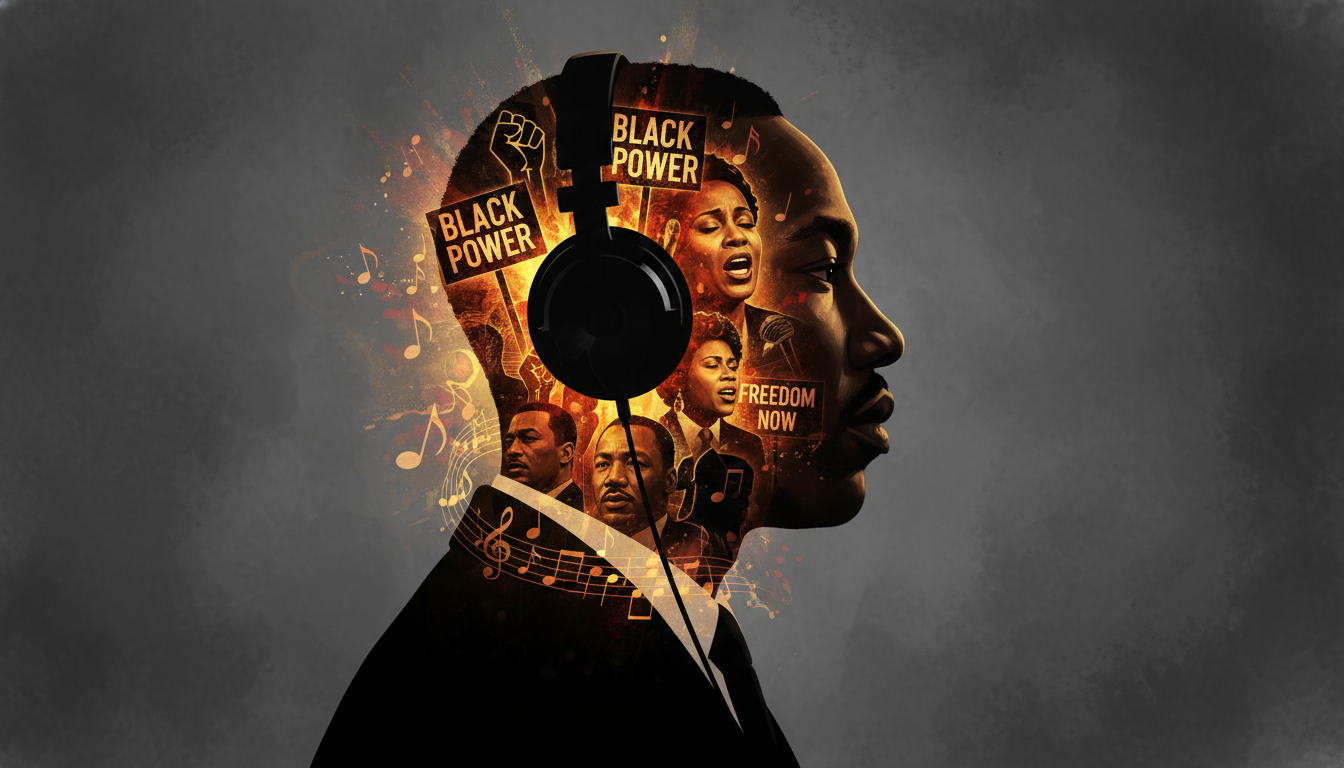
Fifty years ago, radio dials and turntables were spinning an uncommonly diverse mix of sounds. The charts of 1975 didn’t follow a single storyline—instead, they captured a moment when multiple musical currents were flowing with equal strength. Disco was gaining momentum but hadn’t yet dominated everything in its path. Rock was simultaneously reaching for arena-sized ambition and stripping down to raw emotion. Soul and funk were evolving into more sophisticated forms, while pop continued doing what it does best: making people hum along whether they meant to or not.
The year belonged, in many ways, to artists who understood that hooks and ambition weren’t mutually exclusive. Bruce Springsteen’s “Born to Run” arrived like a desperate prayer wrapped in Phil Spector production, while Queen’s “Killer Queen” proved that flamboyance and precision could coexist in three minutes of glam-rock perfection. Led Zeppelin stretched “Kashmir” across nearly nine minutes of Eastern-influenced grandeur, and Pink Floyd’s “Wish You Were Here” turned melancholy into an art form. Even Bob Dylan, never one to stand still, was crafting the narrative complexity of “Tangled Up in Blue.” These weren’t just songs—they were statements about how far popular music could reach while still connecting with listeners.
Meanwhile, dance floors were becoming cultural epicenters. KC and the Sunshine Band’s “That’s the Way (I Like It)” and Gloria Gaynor’s “Never Can Say Goodbye” helped establish disco as something more than a passing trend. The Bee Gees’ “Jive Talkin'” showed that the brothers Gibb could pivot from balladeers to funk-influenced hitmakers. Labelle’s “Lady Marmalade” brought New Orleans sass and unapologetic sexuality to the mainstream, while Earth, Wind & Fire’s “Shining Star” blended funk, soul, and jazz into something that felt both cosmic and grounded. The groove wasn’t just a rhythm—it was becoming a philosophy.
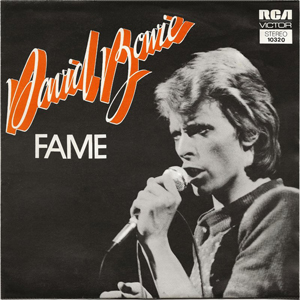
What’s striking about 1975 is how much sonic territory gets covered without any single approach dominating. 10cc’s “I’m Not in Love” used studio technology to create something hauntingly atmospheric, while Kraftwerk’s “Autobahn” was quietly suggesting what electronic music might become. Barry White continued orchestrating romantic opulence, Minnie Riperton’s five-octave range soared through “Lovin’ You,” and Linda Ronstadt’s “You’re No Good” proved that straightforward rock could still pack a punch. David Bowie’s “Fame,” co-written with John Lennon, showed him already moving past glam into funk-inflected territory. Glen Campbell brought “Rhinestone Cowboy” to country-pop crossover success, while Average White Band demonstrated that Scottish musicians could master American funk with “Pick Up the Pieces.”
Listening to these songs now, what emerges isn’t just nostalgia but a reminder of a particular kind of creative confidence. These artists weren’t afraid to be big or vulnerable, funky or introspective, polished or raw—sometimes all within the same track. The year didn’t belong to any single movement or sound, and that might be exactly what made it memorable. It was a time when the radio could take you from the Staple Singers’ gospel-infused soul to Sweet’s glitter-rock crunch to ABBA’s pristine pop architecture without anyone thinking twice about the journey. That kind of range feels worth celebrating.
Follow Tunes Du Jour on Facebook
Follow me on Bluesky
Follow me on Instagram
If you could travel back in time and turn on a car radio in 1963, what would you hear? It was a year poised on the brink of profound change, both culturally and musically. Listening to the pop charts from that year is like opening a time capsule of a specific American moment, one just before the British Invasion, led by The Beatles, would arrive on our shores in January 1964 and rearrange the entire landscape. Using a playlist of the year’s biggest hits, we can get a clear picture of the sounds that defined the last year of this particular pop era.
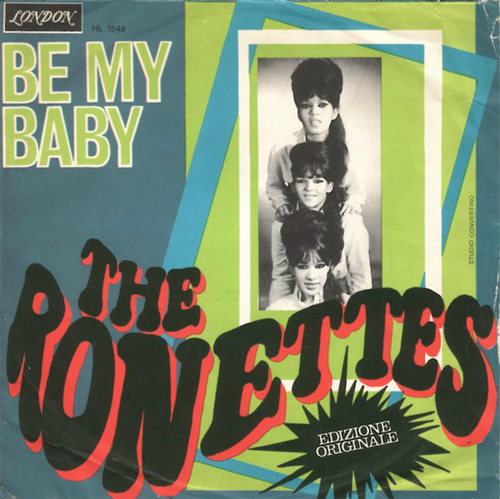
Two major sounds seemed to rule the airwaves, both born from a distinctly American, youthful energy. From the West Coast came the sun-drenched anthems of surf rock. The Beach Boys offered a national invitation with “Surfin’ U.S.A.,” while their friendly rivals Jan & Dean created the idyllic “Surf City.” This wasn’t just a vocal trend; the raw, driving energy of instrumental hits like The Surfaris’ “Wipe Out” and The Chantays’ “Pipeline” provided a visceral, drum-and-guitar-heavy soundtrack for a generation. Complementing this was the sound of the girl groups, often channeling teenage drama through the ambitious production of Phil Spector’s “Wall of Sound” on tracks like The Ronettes’ “Be My Baby” and The Crystals’ “Da Doo Ron Ron.” From the defiant fun of Lesley Gore’s “It’s My Party” to the tough-girl stance of The Angels’ “My Boyfriend’s Back,” these songs were miniature soap operas set to a 4/4 beat.
At the same time, a different kind of sound was solidifying its place at the heart of American music, broadcasting from Detroit and other soul music hubs. Motown was hitting its stride, producing hits that were both commercially successful and artistically sophisticated. You could feel the undeniable energy of Martha Reeves & The Vandellas on “(Love Is Like A) Heat Wave” or get lost in the smooth, clever plea of Smokey Robinson & the Miracles’ “You’ve Really Got a Hold on Me.” A teenage prodigy named Stevie Wonder even captured the explosive energy of his live performances on “Fingertips, Pts. 1 & 2.” It wasn’t just Motown, either. The soulful storytelling of groups like The Drifters on “Up on the Roof” and the raw, emotional performance of Garnet Mimms on “Cry Baby” showed the depth and variety within R&B and soul music.
Beyond these dominant movements, the Top 40 of 1963 was remarkably eclectic. The folk revival crashed onto the pop charts with Peter, Paul and Mary’s earnest version of Bob Dylan’s “Blowin’ In The Wind,” introducing a new layer of social consciousness to mainstream radio. Unclassifiable artists with singular visions also found massive success. Roy Orbison’s haunting, operatic ballad “In Dreams” and Johnny Cash’s iconic, mariachi-inflected “Ring of Fire” were worlds unto themselves. The charts even made room for the wonderfully unexpected: Kyu Sakamoto’s “Sukiyaki,” a beautiful Japanese-language ballad that became a number-one hit, and “Dominique” by The Singing Nun, also a number-one hit, proved that a great melody could transcend any language barrier. And in a class all its own was the wonderfully raw and raucous “Louie, Louie” by The Kingsmen, a garage-rock precursor that parents hated and kids loved.
Looking back, the collection of hits from 1963 represents a high point for a certain kind of American-made pop music. It was a world of surf guitars, dramatic girl-group harmonies, sophisticated soul, and a surprising number of unique one-offs. Every song on the radio, from Andy Williams’ smooth crooning to the gritty simplicity of “Louie, Louie,” was part of the same popular conversation. It was a vibrant and diverse scene, but one operating on its own terms. It had no idea that four young men from Liverpool were about to board a plane, bringing with them a sound that would change the rules for everyone.
Follow Tunes Du Jour on Facebook
Follow me on Bluesky
Follow me on Instagram
Paul McCartney’s genius as a songwriter extends far beyond his work with The Beatles, revealing itself most clearly in how other artists have transformed his compositions across genres and generations. This remarkable collection of covers demonstrates McCartney’s rare ability to write songs that function as both complete artistic statements and flexible frameworks for reinterpretation. When Joe Cocker turned “With A Little Help From My Friends” into a soulful anthem, or when Guns N’ Roses gave “Live and Let Die” a hard rock edge, they weren’t just covering songs—they were unlocking different emotional possibilities that McCartney had embedded in the original compositions. The breadth of artists drawn to his work, from Aretha Franklin’s gospel-tinged “Eleanor Rigby” to Beyoncé’s contemporary reimagining of “Blackbird,” speaks to the universal resonance of his melodic and lyrical craftsmanship.
What makes McCartney particularly fascinating as a songwriter is his willingness to write specifically for other artists’ strengths while maintaining his distinctive voice. Songs like “A World Without Love” for Peter & Gordon and “Come And Get It” for Badfinger weren’t Beatles cast-offs but carefully crafted compositions that suited those acts perfectly. His collaboration with Elvis Costello on “Veronica” and his work with Michael Jackson on “Girlfriend” show an artist constantly evolving and adapting his approach to different musical contexts. Even when writing for others, McCartney’s melodic sensibility—that ability to find the hook that sticks in your mind—remains unmistakably present, whether it’s the yearning quality of “Yesterday” that En Vogue brought to R&B or the infectious rhythm of “Ob-La-Di, Ob-La-Da” that Celia Cruz infused with Latin flavor.
The lasting power of McCartney’s songwriting becomes evident when artists as diverse as Ray Charles, Stevie Wonder, and Andre 3000 find something meaningful in his catalog. These aren’t novelty covers or tribute performances—they’re genuine artistic connections where musicians recognize something in McCartney’s work that speaks to their own creative vision. From Little Richard’s rock and roll interpretation of “I Saw Her Standing There” to k.d. lang’s haunting take on “Golden Slumbers,” each cover reveals new layers in songs that seemed perfectly complete in their original form. This ongoing dialogue between McCartney’s compositions and successive generations of artists suggests something profound about his approach to songwriting: he creates musical spaces that invite inhabitation rather than mere imitation, proving that truly great songs don’t just endure—they continue to grow.
Follow Tunes Du Jour on Facebook
Follow me on Bluesky
Follow me on Instagram
By 1966, rock and pop music had reached a critical turning point. The early, relatively simple sounds of rock and roll were giving way to a more experimental, ambitious approach, yet the airwaves were still filled with instantly memorable melodies. The year saw the release of songs that would go on to define entire careers—The Beach Boys’ “Good Vibrations” took pop production to new heights, The Four Tops’ “Reach Out (I’ll Be There)” solidified Motown’s dominance, and The Rolling Stones’ “Paint It Black” pushed rock into darker, more dramatic territory. Meanwhile, The Monkees burst onto the scene with “I’m a Believer,” adding a dose of manufactured but undeniably catchy charm to the mix.
Psychedelia was creeping into mainstream music, foreshadowing the sonic explorations that would fully take hold in the coming years. The Byrds’ “Eight Miles High” and The 13th Floor Elevators’ “You’re Gonna Miss Me” hinted at a new, mind-expanding direction for rock, while The Beatles’ “Paperback Writer” and its B-side, “Rain,” found the band toying with the limits of studio technology. The Who’s “My Generation,” released in late 1965 but peaking on the US charts in ’66, captured the rebellious energy of youth culture, while ? and the Mysterians’ “96 Tears” gave garage rock one of its most enduring anthems.
Soul music was also in full bloom, delivering some of its most powerful and enduring records. Percy Sledge’s “When a Man Loves a Woman” became an instant classic, dripping with raw emotion. Jimmy Ruffin’s “What Becomes of the Brokenhearted” and The Supremes’ “You Can’t Hurry Love” showcased Motown’s knack for blending heartache and joy in equal measure. Meanwhile, James Brown’s “It’s a Man’s Man’s Man’s World” was a testament to his singular ability to infuse deep soul with commentary. Over in the R&B realm, Ike & Tina Turner’s “River Deep – Mountain High”—though not a hit in the U.S. at the time—demonstrated producer Phil Spector’s bombastic “Wall of Sound” approach at its most overwhelming.
The year also had its share of songs that were simply too infectious to ignore. The Lovin’ Spoonful’s “Summer in the City” painted a sweltering urban landscape with its mix of laid-back verses and explosive choruses. Nancy Sinatra’s “These Boots Are Made for Walkin’” turned a simple, stomping beat into a statement of defiant cool. The Walker Brothers’ “The Sun Ain’t Gonna Shine Anymore” and The Left Banke’s “Walk Away Renée” delivered lush, baroque pop melancholy, while Eddie Floyd’s “Knock on Wood” became one of the defining records of Stax-style Southern soul.
Perhaps what’s most striking about 1966 in retrospect is just how many of these songs have endured. Whether through original recordings, countless covers, or their presence in film and television, these records still resonate. From the garage rock sneer of The Bobby Fuller Four’s “I Fought the Law” to the hypnotic stomp of The Troggs’ “Wild Thing,” the music of 1966 wasn’t just a snapshot of its time—it was the foundation for what was to come.
Follow Tunes Du Jour on Facebook
Follow me on Bluesky
Follow me on Instagram
The music of 1974 proved that the pop charts could be both wildly fun and profoundly moving. It was a year where novelty songs like Carl Douglas’s “Kung Fu Fighting” and Ray Stevens’ “The Streak” shared space with deeply resonant tracks like Stevie Wonder’s “Living for the City” and Aretha Franklin’s “Until You Come Back to Me (That’s What I’m Gonna Do).” While it’s easy to dismiss the year as a playground for lighthearted hits, a closer listen reveals a wealth of outstanding singles that still resonate today.
Take “Rock Your Baby” by George McCrae, for example. Often credited as one of the earliest disco hits, its smooth groove helped usher in a new musical era. Meanwhile, Paul McCartney & Wings offered rock escapism with “Band on the Run,” a mini-suite that felt cinematic in scope. Dolly Parton’s “Jolene,” with its pleading urgency and timeless melody, has become a cultural touchstone, while David Bowie’s “Rebel Rebel” gave glam rock an anthem for the ages.
It was also a year of musical storytelling. Terry Jacks’ “Seasons in the Sun” might be remembered as saccharine by some, but its tale of farewell struck a chord with listeners. In a completely different vein, Stevie Wonder’s “Living for the City” painted a vivid picture of systemic inequality, blending sharp social commentary with impeccable musicianship. These songs showcased the versatility of 1974’s music, capable of being both personal and political.
Of course, 1974 also gave us unabashedly joyful hits that simply aimed to make us feel good. The Hues Corporation’s “Rock the Boat” was an irresistible call to the dance floor, while ABBA’s “Waterloo” introduced the Swedish group’s knack for crafting pop perfection. On the romantic front, Barry White’s “Can’t Get Enough of Your Love, Babe” and The Stylistics’ “You Make Me Feel Brand New” showcased lush, heartfelt soul.
For every “The Streak,” there was a “Help Me” by Joni Mitchell—a song of intricate vulnerability. For every “Kung Fu Fighting,” there was a “Rikki Don’t Lose That Number” by Steely Dan—an effortlessly cool fusion of jazz and rock. The pop charts of 1974 reflected a fascinating duality, where silly and sublime coexisted, creating a year of music that remains as memorable as it was diverse.
Follow Tunes Du Jour on Facebook
Follow me on Bluesky
Follow me on Instagram