Tunes Du Jour Presents 1963

If you could travel back in time and turn on a car radio in 1963, what would you hear? It was a year poised on the brink of profound change, both culturally and musically. Listening to the pop charts from that year is like opening a time capsule of a specific American moment, one just before the British Invasion, led by The Beatles, would arrive on our shores in January 1964 and rearrange the entire landscape. Using a playlist of the year’s biggest hits, we can get a clear picture of the sounds that defined the last year of this particular pop era.

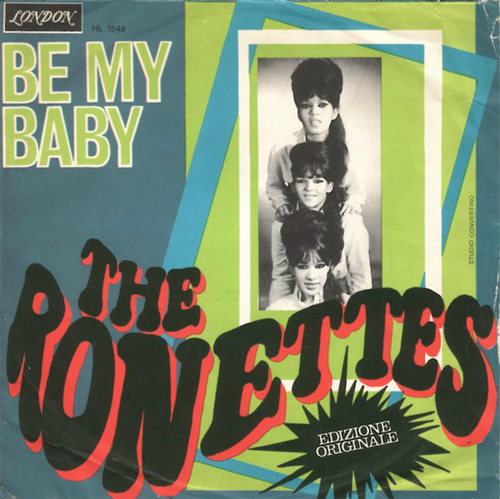
Two major sounds seemed to rule the airwaves, both born from a distinctly American, youthful energy. From the West Coast came the sun-drenched anthems of surf rock. The Beach Boys offered a national invitation with “Surfin’ U.S.A.,” while their friendly rivals Jan & Dean created the idyllic “Surf City.” This wasn’t just a vocal trend; the raw, driving energy of instrumental hits like The Surfaris’ “Wipe Out” and The Chantays’ “Pipeline” provided a visceral, drum-and-guitar-heavy soundtrack for a generation. Complementing this was the sound of the girl groups, often channeling teenage drama through the ambitious production of Phil Spector’s “Wall of Sound” on tracks like The Ronettes’ “Be My Baby” and The Crystals’ “Da Doo Ron Ron.” From the defiant fun of Lesley Gore’s “It’s My Party” to the tough-girl stance of The Angels’ “My Boyfriend’s Back,” these songs were miniature soap operas set to a 4/4 beat.

At the same time, a different kind of sound was solidifying its place at the heart of American music, broadcasting from Detroit and other soul music hubs. Motown was hitting its stride, producing hits that were both commercially successful and artistically sophisticated. You could feel the undeniable energy of Martha Reeves & The Vandellas on “(Love Is Like A) Heat Wave” or get lost in the smooth, clever plea of Smokey Robinson & the Miracles’ “You’ve Really Got a Hold on Me.” A teenage prodigy named Stevie Wonder even captured the explosive energy of his live performances on “Fingertips, Pts. 1 & 2.” It wasn’t just Motown, either. The soulful storytelling of groups like The Drifters on “Up on the Roof” and the raw, emotional performance of Garnet Mimms on “Cry Baby” showed the depth and variety within R&B and soul music.

Beyond these dominant movements, the Top 40 of 1963 was remarkably eclectic. The folk revival crashed onto the pop charts with Peter, Paul and Mary’s earnest version of Bob Dylan’s “Blowin’ In The Wind,” introducing a new layer of social consciousness to mainstream radio. Unclassifiable artists with singular visions also found massive success. Roy Orbison’s haunting, operatic ballad “In Dreams” and Johnny Cash’s iconic, mariachi-inflected “Ring of Fire” were worlds unto themselves. The charts even made room for the wonderfully unexpected: Kyu Sakamoto’s “Sukiyaki,” a beautiful Japanese-language ballad that became a number-one hit, and “Dominique” by The Singing Nun, also a number-one hit, proved that a great melody could transcend any language barrier. And in a class all its own was the wonderfully raw and raucous “Louie, Louie” by The Kingsmen, a garage-rock precursor that parents hated and kids loved.

Looking back, the collection of hits from 1963 represents a high point for a certain kind of American-made pop music. It was a world of surf guitars, dramatic girl-group harmonies, sophisticated soul, and a surprising number of unique one-offs. Every song on the radio, from Andy Williams’ smooth crooning to the gritty simplicity of “Louie, Louie,” was part of the same popular conversation. It was a vibrant and diverse scene, but one operating on its own terms. It had no idea that four young men from Liverpool were about to board a plane, bringing with them a sound that would change the rules for everyone.

Follow Tunes Du Jour on Facebook

Follow me on Bluesky

Follow me on Instagram
Tunes Du Jour Presents The Original Versions

Many of us grow up assuming the hit version of a song is the original. This playlist celebrates those surprising musical genealogies: well-known songs that were originally recorded by someone else, often with little fanfare. Here are the stories behind the transformations—where they started, and how they became iconic.


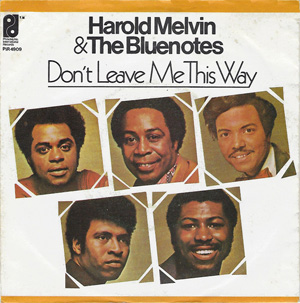
“Don’t Leave Me This Way” – Thelma Houston / Originally by Harold Melvin & the Blue Notes (1975)
Houston’s disco anthem actually began life as a Philly soul track sung by Teddy Pendergrass. Thelma took it to the dancefloor—and to #1.

“War” – Edwin Starr / Originally by The Temptations (1970)
This protest song started as an album cut by The Temptations. Starr’s rawer, angrier take made it a searing hit during the Vietnam era.

“Strawberry Letter 23” – The Brothers Johnson / Originally by Shuggie Otis (1971)
Otis’ dreamy, psychedelic original flew under the radar until producer Quincy Jones supercharged it with funk for The Brothers Johnson.

“I Feel for You” – Chaka Khan / Originally by Prince (1979)
Prince wrote it, recorded it, and released it on his 1979 self-titled album. Chaka Khan added Stevie Wonder’s harmonica and Melle Mel’s rap, creating a genre-blurring smash that gave the song a second life—and a much bigger audience.

“Louie Louie” – The Kingsmen / Originally by Richard Berry (1957)
Berry’s calypso-tinged rhythm & blues song became an unintelligible rock ‘n’ roll classic in the hands of teenage garage rockers.

“Pass The Koutchie” – Musical Youth as “Pass the Dutchie” / Originally by Mighty Diamonds (1981)
Musical Youth’s version cleaned up the ganja references but kept the groove. A British reggae hit born from a roots original.

“Tainted Love” – Soft Cell / Originally by Gloria Jones (1964)
This Northern Soul favorite was ignored in the U.S. until Soft Cell’s chilly synth-pop cover turned it into an international sensation.

“You Are So Beautiful” – Joe Cocker / Originally by Billy Preston (1974)
Preston’s gospel-inflected original was co-written with Dennis Wilson of the Beach Boys. Cocker slowed it down into a tearjerking ballad.

“The First Cut Is The Deepest” – Rod Stewart / Originally by P.P. Arnold (1967)
Before Cat Stevens, the song’s writer, sang it himself, P.P. Arnold delivered a powerful version. Stewart’s cover gave it global traction.

“Red, Red Wine” – UB40 / Originally by Neil Diamond (1967)
Diamond’s mournful original was a slow ballad. UB40’s reggae version confused even him—he didn’t recognize his own song on the radio.

“Brand New Cadillac” – The Clash / Originally by Vince Taylor and His Playboys (1959)
This rockabilly obscurity became a snarling punk track on London Calling. Vince Taylor later served as an inspiration for David Bowie’s Ziggy Stardust persona.

“Take Me To The River” – Talking Heads / Originally by Al Green (1974)
Green’s swampy soul gave way to Talking Heads’ jittery art-funk. An old-school spiritual reborn in new wave style.

“The Tide Is High” – Blondie / Originally by The Paragons (1967)
Jamaican rocksteady meets NYC cool. Blondie took this mellow gem and gave it a global pop sheen.

“Brandy” – Barry Manilow as “Mandy” / Originally by Scott English (1971)
English’s sad and simple original got a new name and new polish. Manilow’s grand version topped the charts.

“Don’t Let Me Be Misunderstood” – The Animals / Originally by Nina Simone (1964)
Simone’s pleading ballad became a snarling British Invasion hit. Her nuanced sorrow gave way to the raw edge of rock.

“Bette Davis Eyes” – Kim Carnes / Originally by Jackie DeShannon (1974)
The original was breezy and piano-driven. Carnes and her producer Val Garay turned it into new wave noir.

“Heaven Must Have Sent You” – Bonnie Pointer / Originally by The Elgins (1966)
Pointer’s disco version revived a Motown deep cut and put it back on the charts over a decade later.

“Love Buzz” – Nirvana / Originally by Shocking Blue (1969)
Nirvana turned this obscure Dutch psych-rock tune into a distorted grunge landmark. Their debut single.

“Piece Of My Heart” – Big Brother & The Holding Company / Originally by Erma Franklin (1967)
Aretha’s sister recorded it first, but Janis Joplin made it a fiery centerpiece of her legend.

“It’s Oh So Quiet” – Björk / Originally by Betty Hutton (1951)
A novelty big-band number revived by Björk into a theatrical showstopper. Old Hollywood meets Icelandic art-pop.

“China Girl” – David Bowie / Originally by Iggy Pop (1977)
Co-written with Bowie, Iggy’s version was skeletal and raw. Bowie’s version added synth gloss and MTV appeal.

“Good Lovin'” – The Young Rascals / Originally by The Olympics (1965)
The Olympics had the groove, but The Rascals turned it into a garage-rock rave-up and a #1 hit.

“Valerie” – Mark Ronson featuring Amy Winehouse / Originally by The Zutons (2006)
The Zutons wrote it as a bluesy rock song. Winehouse made it retro-soul perfection.

“Police On My Back” – The Clash / Originally by The Equals (1967)
A stomping, paranoid track from Eddy Grant’s first band. The Clash turned it into a punk fugitive anthem.

“After Midnight” – Eric Clapton / Originally by J.J. Cale (1966)
Cale’s laid-back shuffle was juiced up with guitar licks by Clapton, who kept the songwriter’s cool intact.

“On Broadway” – The Drifters / Originally by The Cookies (1962)
Songwriters Barry Mann & Cynthia Weil gave this to a girl group first, but The Drifters made it a city-slick R&B classic.

“Love Hurts” – Nazareth / Originally by The Everly Brothers (1960)
Gentle heartbreak became hard rock agony. Nazareth’s arena wail made the song a power ballad staple.

“I Love Rock ‘n’ Roll” – Joan Jett & the Blackhearts / Originally by The Arrows (1975)
Jett saw it on UK TV and recorded a fiercer, snarling version that girls (and boys) everywhere could scream along to.

“Without You” – Nilsson / Originally by Badfinger (1970)
Badfinger’s version was plaintive; Nilsson’s was operatic. He didn’t just sing it—he wailed it.

“Superman” – R.E.M. / Originally by The Clique (1969)
A psychedelic pop obscurity turned indie-rock cult classic. One of R.E.M.’s rare early tracks not written by the band.


These songs remind us that inspiration doesn’t always strike where the spotlight shines. Sometimes greatness is borrowed—and reinvented.


Follow Tunes Du Jour on Facebook

Follow me on Bluesky

Follow me on Instagram
Tunes Du Jour Presents 1960

The year 1960 often gets passed over in rock history—a transitional time between the first burst of rock and roll and the cultural and musical revolutions just a few years away. But to call it sleepy is to miss the point. In fact, many of the year’s hits still reverberate today, not just as nostalgic touchstones but as enduring standards. “The Twist” by Chubby Checker launched a dance phenomenon that would ripple through pop culture for years. And “Save the Last Dance for Me” by the Drifters remains a masterclass in balancing heartbreak and sweetness—still played at weddings and in soundtracks, still finding new generations of listeners.

Ballads carried a lot of weight in 1960, and few did it better than Elvis Presley’s aching “Are You Lonesome Tonight?” or Roy Orbison’s “Only the Lonely,” which showcased his operatic vulnerability. Country narratives crossed into the mainstream with Marty Robbins’ “El Paso,” a story song that unspooled like a Western in miniature. At the other end of the spectrum, Maurice Williams & the Zodiacs’ “Stay” packed teenage yearning into a lean, irresistible one minute thirty-five seconds. And “Wonderful World” by Sam Cooke, though modest in ambition compared to some of his later work, remains a model of warmth and accessibility—a song that’s managed to feel timeless for more than six decades.

The sense of genre boundaries being tested is another hallmark of the year. Ray Charles brought gospel, blues, and pop together on his definitive reading of “Georgia on My Mind,” while Barrett Strong’s “Money (That’s What I Want)” helped lay the foundation for Motown’s impending ascent. Fats Domino’s “Walking to New Orleans” fused New Orleans rhythm with a subtle orchestral flourish, and Bobby Darin’s “Beyond the Sea” added a cosmopolitan swagger to the charts. These weren’t experiments for their own sake—they were evolutions of form, often rooted in deep tradition.

Rock’s wilder edges were still alive, though not always in the spotlight. Ike and Tina Turner’s “A Fool in Love” marked Tina’s explosive debut on the national stage—raw, commanding, and impossible to ignore. Instrumentals also carved out real estate, from the cinematic calm of Percy Faith’s “Theme From ‘A Summer Place’” to the proto-surf energy of The Ventures’ “Walk Don’t Run.” And in the novelty corner, “Itsy Bitsy Teeny Weeny Yellow Polka Dot Bikini” and “Alley Oop” proved that humor and absurdity had a place in the pop ecosystem.

So while 1960 may not have produced a defining movement, it certainly produced defining songs. These weren’t just placeholders between rock and roll’s rise and the British Invasion—they were records that resonated, sometimes quietly at first, but with a staying power that’s hard to deny. Whether filtered through covers, samples, soundtracks, or simple endurance, many of these tracks are still with us. It wasn’t a year of reinvention—but it was a year of remarkable staying power.


Follow Tunes Du Jour on Facebook

Follow me on Bluesky

Follow me on Instagram
Tunes Du Jour Presents The Drifters

The Drifters, known for their timeless hits, were more than just a vocal group—they were a revolving door of talent, innovation, and influence. Their manager, George Treadwell, famously owned the rights to the group’s name, allowing him to replace members as he saw fit. This created a unique dynamic in which the lineup of The Drifters was constantly evolving, but the sound remained consistent, thanks to brilliant vocalists like Clyde McPhatter, Ben E. King, and later, Johnny Moore. The shifting roster didn’t diminish the group’s success; rather, it seemed to fuel their ability to adapt to the changing music landscape of the late 1950s and early 1960s.

Before joining The Drifters, Clyde McPhatter was the usual lead singer for Billy Ward and the Dominoes, contributing to their early success with his distinctive, gospel-infused voice. Songs like “Have Mercy Baby” and “The Bells” highlighted his emotional delivery and vocal range, setting the stage for what would come next in his career. His time with the Dominoes laid the foundation for the innovative sound he would help bring to The Drifters, marking a pivotal moment in his development as one of R&B’s greatest vocalists.

The Drifters were trailblazers in many respects. Songs like “There Goes My Baby” brought orchestration into the realm of rhythm and blues, breaking new ground by blending classical strings with a soulful vocal performance. Similarly, “On Broadway” and “Up on the Roof” captured urban life’s glamour and grit, weaving storytelling with lush, intricate harmonies. The songs’ productions were often grand and ambitious, thanks in part to producers like Jerry Leiber and Mike Stoller, who knew how to balance pop accessibility with artistic flair.

The influence of The Drifters extended beyond their chart success. Ben E. King’s solo work, such as the universally beloved “Stand By Me” and “Spanish Harlem,” grew from the soulful foundation he helped build with The Drifters. Clyde McPhatter’s solo career also flourished with hits like “A Lover’s Question” and “Without Love (There Is Nothing),” which showcased his soaring voice. Their work as both individuals and part of the group helped shape the sound of R&B and soul music for years to come.

Another fascinating aspect of The Drifters was the way they handled romantic themes. Hits like “Save the Last Dance for Me” and “This Magic Moment” masterfully conveyed the highs and lows of love, set to irresistible melodies that have since become part of the Great American Songbook. The group’s ability to evoke deep emotion, whether it was longing, joy, or heartache, made their music resonate across generations. The universal appeal of songs like “Under the Boardwalk” further solidified their legacy.

The Drifters’ story is a testament to the power of adaptability. Though they were often a group in flux, the quality of their music never wavered. By blending innovation with a revolving door of vocal talent, they left an indelible mark on popular music. Whether you’re drawn to the lush productions, the heartfelt lyrics, or the seamless harmonies, The Drifters’ catalog remains a treasure trove of R&B brilliance.

Tunes Du Jour Presents 1964

In 1964, the musical landscape was undergoing a seismic shift. From the electrifying British Invasion to the soulful sounds of Motown, 1964 was a year that truly had something for everyone.

One cannot discuss the music of 1964 without acknowledging the unparalleled influence of The Beatles. With their chart-topping hit “I Want To Hold Your Hand,” the Fab Four ignited a phenomenon that would forever alter the course of popular music. Their harmonious blend of catchy melodies and innovative arrangements captivated audiences worldwide, laying the groundwork for the British Invasion that would dominate the airwaves in the years to come.

The UK also brought us The Animals, whose “House Of The Rising Sun” captivated audiences with its electrifying intensity, while The Kinks offered a more garage-band, raw sound with “You Really Got Me.”

But 1964 was not just about the British Invasion; it was also a time of soulful sounds and Motown magic. Artists like Martha & The Vandellas, The Supremes, and The Four Tops delivered soul-stirring performances on classic hits.

The surf rock craze was in full swing, with The Beach Boys’ “I Get Around” capturing the carefree California lifestyle. And for those who preferred a more melancholic sound, there were ballads like Dionne Warwick’s “Walk On By.”

Beyond the well-known names associated with 1964, this playlist unearths other soundtracks of the year, like “My Boy Lollipop” by Millie Small, a ska track that became a surprise summer hit, and “The Girl From Ipanema” by Stan Getz & Astrud Gilberto, a bossa nova masterpiece that brought a touch of Brazilian cool to the airwaves.

This playlist is just a taste of the incredible music that 1964 had to offer, though even a brief exploration of 1964’s music reveals a year brimming with creativity and cultural impact. From the infectious melodies of pop anthems to the raw energy of rock and roll, these songs continue to resonate with listeners today, reminding us of the enduring power of music to capture a moment in time and transport us back. It was a year that changed the landscape of popular music forever, leaving behind a legacy that continues to inspire and entertain generations of listeners.

Follow Tunes Du Jour on Facebook

Follow Tunes Du Jour on Twitter

Follow me on Instagram

Your (Almost) Daily Playlist: 8-2-23

Though Shirley Owens usually sang lead on recordings by The Shirelles, on the group’s cover of The 5 Royales’ “Dedicated to the One I Love,” member Doris Coley sings the lead vocals. Though Cass Elliot is the Mama that usually sang lead on recordings by The Mamas and the Papas, on the group’s cover of The Shirelles’ cover of The 5 Royales’ “Dedicated to the One I Love,” member Michelle Phillips sings the lead vocals. Something about this song….

The late Doris Coley was born on this date in 1941. On today’s playlist are several hits from The Shirelles that feature Coley’s lead vocals.

Follow Tunes du Jour on Facebook

Follow Tunes du Jour on X

Follow me on Instagram

Your (Almost) Daily Playlist: 12-15-22

Today’s playlist celebrates the December 15 birthdays of The Drifters’ Johnny Moore, The Clash’s Paul Simonon, The Supremes’ Cindy Birdsong, HAIM’s Alana Haim, The Pharcyde’s Imani, Dave Clark, Jesse Belvin, George Kranz, and Rammellzee; and the December 16 birthdays of ABBA’s Benny Andersson, ZZ Top’s Billy Gibbons, Dismemberment Plan’s Travis Morrison, Zara Larsson, Ying Yang Twins’ Kaine, Flo Rida, Glenda Collins, and Ludwig van Beethoven.

https://open.spotify.com/playlist/2wkHsqTSsRjJYxCJ4OG8Wt?si=12d99d0e674e45f5

Follow Tunes du Jour on Facebook

Follow Tunes du Jour on Twitter

Follow me on Instagram