Per HolidayInsights.com, today is Compliment Day, created in 1998 by Kathy Chamberlin, of Hopkinton, NH, and Debby Hoffman, of Concord, NH. Offer compliments to people you know and meet. If you need help thinking of some, today’s playlist has you covered:
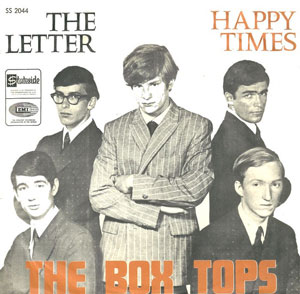
The second week of January is Letter Writing Week. I’m celebrating, not by writing a letter, as that would be too obvious. I observe the occasion by creating a playlist of 30 great songs that involve writing a letter.
Welcome to a journey through rhythm. November is International Drum Month, and this collection honors the masters of the drum kit, the players whose feel, power, and ingenuity define the songs we love. From the tightest pockets to the most explosive solos, these are the heartbeats of modern music. Let’s give the drummers some.
Good Vibrations – The Beach Boys The legendary session musician Hal Blaine provides the sharp, inventive percussion, using everything from sleigh bells to a detached kick drum to build the song’s complex and sunny atmosphere.
Cissy Strut – The Meters Joseph “Zigaboo” Modeliste, the architect of New Orleans funk, creates a syncopated, greasy, and endlessly influential groove that has been the blueprint for funk drummers ever since.
Smells Like Teen Spirit – Nirvana Dave Grohl’s performance is a masterclass in quiet-loud dynamics, with his simple, powerful groove in the verse exploding into a torrent of raw energy for the iconic chorus.
One – Metallica Lars Ulrich’s machine-gun double bass drumming on the intro is one of metal’s most defining moments, perfectly mimicking the sound of battlefield artillery.
Superstition – Stevie Wonder The irresistible funk pattern that drives this track was played by none other than Stevie Wonder himself, who laid down the clavinet, bass, and drum parts to create a perfect storm of groove.
The Glamorous Life – Sheila E. A tour de force from the legendary percussionist and drummer Sheila E., this track is a showcase of her technical virtuosity and incredible funk sensibilities.
In The Air Tonight – Phil Collins For three minutes, Phil Collins builds unbearable tension before unleashing the most famous drum fill in history, a thunderous burst of gated reverb toms that everyone has air-drummed to.
Rosanna – Toto The late, great Jeff Porcaro gives a masterclass in the half-time shuffle, creating a feel so iconic and difficult to replicate that it’s now simply known as the “Rosanna shuffle.”
Come Together – The Beatles Ringo Starr’s signature swampy, tea-towel-dampened tom groove is the unmistakable foundation of this track, proving that feel and creativity are more important than flash.
Brick House – The Commodores Walter “Clyde” Orange not only provides the lead vocals but also lays down a funk groove so solid and deep you could build a house on it, proving that sometimes the simplest beat is the most effective.
Rock With You – Michael Jackson Session giant John “JR” Robinson creates a beat that is smooth, sophisticated, and impossibly deep in the pocket, providing the perfect shimmering pulse for dancing.
Sing, Sing, Sing (With A Swing) – Benny Goodman & His Orchestra Gene Krupa became music’s first superstar drummer with this performance, his primal, floor-tom-driven solo setting the standard for all drum features to come.
Voodoo Child (Slight Return) – The Jimi Hendrix Experience Mitch Mitchell’s jazz-influenced, wildly improvisational drumming is the perfect foil for Hendrix’s guitar, a chaotic and conversational force of nature.
When The Levee Breaks – Led Zeppelin Recorded in a stairwell with two microphones, John Bonham’s colossal, booming groove is arguably the most recognizable and revered drum sound ever committed to tape.
Message in a Bottle – The Police Showcasing his unique, reggae-infused style, Stewart Copeland’s intricate hi-hat work and signature use of the splash cymbal give this song its nervous, driving energy.
Funky Drummer – James Brown Here, Clyde Stubblefield plays what is perhaps the most-sampled drum break in history, a 20-second piece of rhythmic perfection that became a cornerstone of hip-hop.
Gimme Shelter – The Rolling Stones The picture of restraint and taste, Charlie Watts enters the song with a deceptively simple beat that carries all the dread and swing the track demands.
I’ve Seen All Good People – Yes Bill Bruford’s crisp, creative, and complex drumming is on full display, navigating the song’s shifting sections with technical precision and musical grace.
50 Ways to Leave Your Lover – Paul Simon Steve Gadd lays down one of the most recognizable and clever marching-band-inspired beats in popular music, a sophisticated and instantly memorable pattern.
Think (About It) – Lyn Collins Another gift to hip-hop from the James Brown band, this track features John “Jabo” Starks’s impossibly tight groove and a legendary drum break that keeps on giving.
White Room – Cream The inimitable Ginger Baker announces this psychedelic classic with a powerful 5/4 tom-tom intro, setting the stage with his heavy, melodic, and groundbreaking style.
Hot For Teacher – Van Halen Alex Van Halen’s frantic, shuffling intro sounds like a barely-contained engine, kicking off one of the most exhilarating double-bass-fueled drum tracks in rock history.
Sunday Bloody Sunday – U2 Larry Mullen Jr.’s militaristic, unrelenting snare drum pattern, recorded in a reverberant stairwell, serves as the song’s defiant and unwavering backbone.
Schism – Tool A master of complexity, Danny Carey navigates the song’s dizzying array of shifting time signatures with a tribal power and mathematical precision that is simply breathtaking.
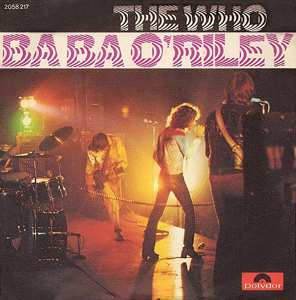
Baba O’Riley – The Who The untamable Keith Moon crashes and tumbles through this rock anthem, playing with a frenetic energy that threatens to send the song flying off the rails at any moment.
Dig Me Out – Sleater-Kinney Janet Weiss is the roaring engine of this track, playing with a ferocious power, impeccable timing, and creative fills that drive the song forward relentlessly.
I Heard It Through the Grapevine – Gladys Knight & the Pips Funk Brothers drummers Uriel Jones and the great Benny Benjamin create a powerhouse rhythm section, delivering a performance full of simmering tension and explosive release that punctuates the song’s raw emotion.
Dancin’ Fool – Frank Zappa Terry Bozzio is the manic force behind this track, navigating Zappa’s absurd rhythmic twists and turns with an explosive combination of power, precision, and theatrical flair.
One Love/People Get Ready – Bob Marley & The Wailers Carlton “Carly” Barrett, the originator of the “One Drop” rhythm, gives this song its iconic reggae heartbeat, where the accent is on the third beat of the measure.
Footprints – The Miles Davis Quintet At just 20 years old, Tony Williams redefined jazz drumming with his explosive and interactive playing, shattering old conventions and pushing the entire band to new heights.
The Police emerged in the late 1970s as a powerful and distinctive voice in the post-punk landscape, quickly carving out a unique space with their blend of reggae-infused rock and pop sensibilities. At the heart of their sound was Gordon Sumner, better known as Sting, who served as the band’s chief singer and songwriter, alongside Andy Summers on guitar and Stewart Copeland on drums. Their early tracks like “Roxanne” and “Can’t Stand Losing You” showcased a raw energy and lyrical introspection that immediately set them apart. This initial spark evolved into a more refined sound, evident in hits like “Message in a Bottle” and “Walking On The Moon,” which propelled them to international stardom.
Sting’s songwriting was a cornerstone of The Police’s success, often exploring themes of love, longing, and social observation. Songs such as “Every Little Thing She Does Is Magic” and “Wrapped Around Your Finger” highlight his knack for crafting catchy melodies imbued with emotional depth. Even within the band’s more upbeat tracks, there was often an underlying complexity, from the narrative tension of “Don’t Stand So Close to Me” to the philosophical undertones of “Invisible Sun” and “Spirits In The Material World.” The Police’s musical approach, while always accessible, rarely shied away from intellectual curiosity.
As The Police’s career progressed, culminating in the critically acclaimed album Synchronicity, Sting’s lyrical prowess continued to mature. Tracks like “Every Breath You Take” demonstrate his ability to turn what seems like a simple love song into something far more nuanced and even unsettling. “King Of Pain” further exemplifies this depth, offering a vivid exploration of personal struggle. The band’s output from this era, including “Synchronicity II,” cemented their status as not just hitmakers, but serious artistic contributors to the music scene.
Following The Police’s incredible run, Sting embarked on a highly successful solo career that allowed him to further explore his diverse musical interests. His solo work, as heard in tracks like “Fields Of Gold” and “Englishman In New York,” retained his signature lyrical sophistication while incorporating elements of jazz, world music, and classical influences. Songs such as “If You Love Somebody Set Them Free” and “If I Ever Lose My Faith In You” showcased a broader sonic palette and a continued commitment to thoughtful songwriting, proving his versatility beyond the band’s iconic sound.
Ultimately, both The Police and Sting’s solo efforts stand as testaments to a significant and enduring musical legacy. The playlist provided offers a clear journey through Sting’s artistic development, from the angular, energetic rock of The Police to the more introspective and varied sound of his individual career. His ability to consistently craft compelling narratives and memorable melodies, whether with a band or on his own, ensures his place as a prominent figure in contemporary music history.
The year 1983 was a vibrant musical landscape, a moment when pop culture was exploding with creativity and technological advancement. It was a year when Michael Jackson’s “Billie Jean” dominated the airwaves, its infectious rhythm and groundbreaking music video revolutionizing how we experienced music. The single was more than just a song; it was a cultural phenomenon that captured the zeitgeist of an era when music was becoming increasingly visual and dynamic.
This was also the year when Prince’s “1999” prophetically danced with apocalyptic themes, and The Police’s “Every Breath You Take” became an anthem of complex emotional surveillance. The diversity of musical styles was remarkable, with artists like Dexys Midnight Runners bringing an unconventional folk-pop energy with “Come on Eileen,” while New Order’s “Blue Monday” pushed the boundaries of electronic music, creating a sound that would influence dance music for decades to come. David Bowie’s “Let’s Dance” marked a vibrant shift in his musical journey, infusing his signature artistic sensibility with an irresistible pop-funk groove.
The single was king in 1983, with an unprecedented number of memorable tracks that seemed to burst from radios and dance floors everywhere. Eurythmics’ “Sweet Dreams (Are Made Of This)” introduced Annie Lennox’s haunting vocals to the world, while Marvin Gaye’s “Sexual Healing” offered a smooth, sensual counterpoint to the era’s more uptempo sounds. Lionel Richie’s “All Night Long” exemplified the period’s sunny, celebratory pop, and Culture Club’s “Do You Really Want to Hurt Me” challenged musical and social conventions with its charismatic lead singer, Boy George.
The year wasn’t just about pop, however. Rock and new wave were thriving, with bands like The Smiths (“This Charming Man”), The Clash (“Rock the Casbah”), and Duran Duran (“Hungry Like The Wolf”) pushing musical boundaries. Hip-hop and early rap were also emerging, with tracks like Melle Mel’s “White Lines” and Herbie Hancock’s groundbreaking “Rockit” signaling a musical revolution that would transform popular culture in the coming decades.
What made 1983 truly special was how it represented a moment of musical transition—a year when synthesizers and drum machines were becoming more prevalent, when music videos were transforming how artists communicated, and when genres were blending in unprecedented ways. From the new romantic sounds of Heaven 17’s “Temptation” to the quirky charm of Men Without Hats’ “The Safety Dance,” the music of 1983 was a testament to creativity, innovation, and the pure joy of sound. It was a year that didn’t just produce hit songs, but created a sonic landscape that would influence musicians for generations to come.
The year 1979 was a vibrant time in popular music, characterized by disco’s stronghold on the charts and a rich variety of emerging and evolving genres. From dancefloor anthems to rock classics, the year’s hits reflected a dynamic musical landscape.
Disco reigned supreme in 1979, dominating the airwaves and nightclubs alike. Gloria Gaynor’s empowering “I Will Survive” became an instant classic, while Chic’s “Good Times” and Sister Sledge’s “We Are Family” kept dance floors packed. The genre’s influence extended far and wide, with Village People’s “Y.M.C.A.” becoming a cultural phenomenon, Donna Summer’s “Hot Stuff” showcasing disco’s enduring appeal, and Amii Stewart’s cover of “Knock on Wood” breathing new life into a soul classic. McFadden & Whitehead’s “Ain’t No Stoppin’ Us Now” and Sylvester’s “You Make Me Feel (Mighty Real)” further exemplified disco’s ability to blend uplifting messages with irresistible rhythms.
While disco flourished, rock music continued to evolve and diversify. AC/DC’s “Highway to Hell” solidified their status as the preeminent heavy metal band of the era, its raw energy and power chords setting a new standard for the genre. Dire Straits’ “Sultans of Swing” showcased a more refined, guitar-driven sound, while The Police emerged with “Message in a Bottle,” signaling the rise of post-punk. The new wave and power pop scenes gained momentum with Elvis Costello & the Attractions’ “Oliver’s Army,” The Jam’s “The Eton Rifles,” and Squeeze’s “Up the Junction” all making their mark. Meanwhile, M’s “Pop Muzik” and Blondie’s “Heart of Glass” demonstrated how disco influences could be merged with new wave sensibilities.
The year also saw the birth of iconic pop hits that would define the era. Michael Jackson’s “Don’t Stop ‘Til You Get Enough” hinted at the superstardom that awaited him, while The Knack’s “My Sharona” became an instant power pop classic. The Buggles’ prophetic “Video Killed the Radio Star” not only topped charts but would later make history as the first music video played on MTV. Earth, Wind & Fire’s “September” continued to showcase the enduring appeal of funk, while R&B ballads like Peaches & Herb’s “Reunited” and The Commodores’ “Still” made significant impacts on the pop charts.
As 1979 drew to a close, the musical landscape was rich and varied. While disco maintained its grip on popular culture, the seeds of change were being sown. The diversity of the year’s hits, from Charlie Daniels Band’s country crossover “The Devil Went Down to Georgia” to Rickie Lee Jones’ jazz-influenced “Chuck E’s In Love,” stood out against the backdrop of disco and straightforward pop tunes. This musical variety, along with emerging studio technologies and evolving artist expressions, set the stage for the significant shifts that would characterize the sound of the coming decade.