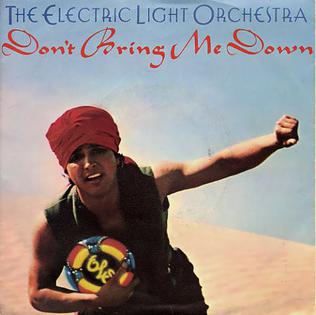
Of all the bands that filled the airwaves in the 1970s, perhaps none had a sound as instantly recognizable as Electric Light Orchestra. You know it the moment you hear it: the soaring strings, the stacked vocal harmonies, the crisp, thumping drum beat, and a rock and roll foundation holding it all together. A glance at a playlist of their work, with hits like “Mr. Blue Sky,” “Livin’ Thing,” and “Don’t Bring Me Down,” reveals a remarkable consistency. This wasn’t the sound of a band finding its way; it was the execution of a singular, ambitious vision. That vision belonged to one man: Jeff Lynne.
To understand ELO is to understand Lynne’s role not just as a songwriter and frontman, but as a master producer and arranger. He aimed to create a band that would, as the initial concept went, “pick up where The Beatles left off.” Listening to early tracks like “10538 Overture” or their grand re-imagining of “Roll Over Beethoven,” you can hear that idea taking shape. The music is a deliberate fusion of rock band energy and classical grandeur. Songs like “Telephone Line” and “Can’t Get It Out of My Head” aren’t just pop tunes with strings layered on top; the orchestral elements are woven directly into the song’s emotional core, as essential as the guitar or bass.
What’s particularly interesting is how this sound evolved while remaining unmistakably “ELO.” The band could deliver a straightforward, string-less rocker like “Don’t Bring Me Down,” then pivot to the disco-infused pulse of “Shine a Little Love” or “Last Train to London.” They could craft elaborate, charming narratives in songs like “The Diary of Horace Wimp” or deliver the operatic flair of “Rockaria!” Through it all, Lynne’s production—those tightly harmonized backing vocals, the precise layering of instruments, and an impeccable sense of melody—acts as the common thread, giving the entire catalog a sense of cohesion.
The true scope of Jeff Lynne’s influence, however, becomes clear when you look at the songs on this playlist that aren’t by ELO. Listen to Roy Orbison’s “You Got It” or Tom Petty’s “I Won’t Back Down.” The sonic fingerprints are all there: the clean acoustic guitars, the punchy rhythm section, and the rich vocal arrangements are pure Lynne. His sound became so respected that when The Beatles needed a producer to help them complete “Free as a Bird” for their Anthology project, they called him. George Harrison not only enlisted him for his own solo work, like the affectionate “When We Was Fab,” but also made him a bandmate.
That brings us to the Traveling Wilburys. Hearing songs like “End Of The Line” alongside ELO tracks feels less like a departure and more like a family reunion. In this supergroup, Jeff Lynne wasn’t just a producer for his heroes—George Harrison, Tom Petty, Roy Orbison, and Bob Dylan—he was their musical partner, an equal architect of their sound. The playlist, taken as a whole, tells a story not just of a great band, but of a distinct musical creator whose unique approach to record-making left a lasting mark on the work of his peers and the sound of popular music itself.
Follow Tunes Du Jour on Facebook
Follow me on Bluesky
Follow me on Instagram