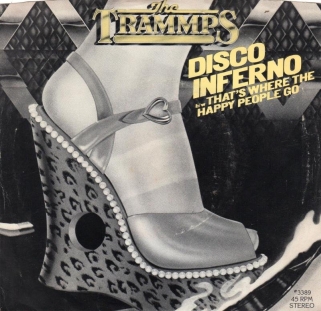
“Disco Inferno” burned up the clubs in 1976 but missed the pop Top 40. A year later, it lit up the Saturday Night Fever soundtrack, leading to a 1978 reissue. This time – huge pop success on its way to becoming a bona fide classic. 🔥
The late Jimmy Ellis of The Trammps was born on this date in 1937. A few of his band’s songs are included on today’s playlist.
Today is World Kindness Day. While every day would be a great day to practice basic human decency, some people are nasty assbags with no regard for others. If you’re one of those walking masterpieces of jackholery, here’s a wild idea: try being kind for ONE WHOLE DAY and see what it does. For example, let’s say you’re the personal assistant to someone who lives in a building with other residents. When you’re walking out of the building’s front door just in front of a neighbor who is holding his 17-year-old blind dog and leading his other pupper on a leash, maybe – and I’m just spitballing here – don’t let the door slam in their face, you self-absorbed piece of human garbage. And if said neighbor thoughtfully moves your precious Tesla charging cable to prevent damage (gasp – the audacity of helping!), perhaps, don’t show up at his door and berate him for protecting your property. Wild concept: Show some gratitude for his thoughtfulness. Consider saying “thank you,” you self-important, unreasonable, entitled, high-handed weenie.
FFS people, be kind! Rewind!
(Any resemblance to persons unfortunately living is purely intentional.)
Distilling Neil Young’s half-century-plus career into a mere 30 songs is, to put it lightly, a tall order. For an artist who’s explored nearly every facet of American and Canadian folk, rock, country, and grunge—not to mention electronic and experimental music—each track here offers just a glimpse of his expansive vision. Yet, even within this condensed selection, Young’s restless creativity and refusal to be pigeonholed shine through, capturing a legacy that continues to grow with each decade.
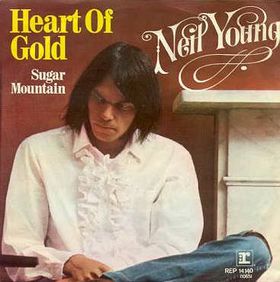
Take “Heart of Gold” and “Old Man,” two of his most well-known songs from the early 1970s. Both tracks reflect Young’s introspective side, a man grappling with aging, relationships, and the very nature of wisdom. These are songs that echo across generations, carrying lyrics that balance tenderness with the weight of lived experience. “Harvest Moon,” recorded over two decades later, feels like a companion piece to these earlier reflections—a seasoned, bittersweet look at enduring love that feels both familiar and fresh.
Young’s power isn’t limited to gentle musings, though; he’s just as revered for his biting social commentary and unflinching political anthems. “Ohio,” recorded with Crosby, Stills, Nash & Young, is a visceral response to the Kent State shootings and remains one of rock’s most searing protest songs. “Rockin’ in the Free World,” with its stark verses and raw energy, reminds listeners of Young’s willingness to confront societal issues head-on, even when they’re uncomfortable. These songs reflect Young’s complex relationship with his North American roots, a deep love for the land tempered by a sharp awareness of its faults.
Then, there’s Young’s bold experimentation—what he once referred to as a desire to avoid becoming a “human jukebox.” Tracks like “Like a Hurricane” showcase his noisy, distorted electric side, tapping into the rawness that inspired later generations of grunge and alternative rock musicians. He’s unafraid to explore darker themes, as seen in “The Needle and the Damage Done,” a haunting portrayal of addiction’s impact. Meanwhile, songs from his Buffalo Springfield days, such as “Mr. Soul” and “Broken Arrow,” highlight his knack for introspective storytelling, even at the beginning of his career.
Whether he’s singing about broken dreams, love, social justice, or life on the open road, Neil Young brings an authenticity that’s hard to match. The tracks on this playlist, though just a small slice of his work, reflect the remarkable range of one of rock’s most fearless and unpredictable artists. For Young, evolution isn’t a phase—it’s his way of life, one that keeps his fans and listeners perpetually guessing and undeniably engaged.
Miranda Lambert has established herself as one of country music’s most compelling storytellers, crafting a career that spans from fiery anthems to heartfelt ballads. Looking at her impressive catalog of songs, you can trace the evolution of an artist who’s never been afraid to be herself, whether that means embracing her small-town roots or challenging country music conventions.
Her breakthrough came with songs like “Kerosene” and “Gunpowder & Lead,” which introduced listeners to her signature blend of bold attitude and masterful storytelling. But it was perhaps “The House That Built Me” that showcased Lambert’s deeper emotional range, earning her widespread critical acclaim and connecting with audiences through its universal themes of home and identity. This ability to balance strength with vulnerability has become a hallmark of her artistic identity.
As her career progressed, Lambert continued to expand her musical palette. Songs like “Bluebird” and “Automatic” reveal a more mature perspective while maintaining her authentic voice. Her work with the Pistol Annies, including tracks like “Hell On Heels,” has allowed her to explore different creative avenues while staying true to her country roots.
Later releases like “It All Comes Out in the Wash” and “Settling Down” show an artist comfortable with both her edge and her evolution. Lambert’s ability to address complex themes – from small-town life to relationships to personal growth – while maintaining her distinctive voice has helped her build a catalog that resonates with both traditional country fans and newer audiences.
Throughout her career, Lambert has proven that success doesn’t require compromising artistic integrity. Her playlist reveals an artist who can deliver everything from boot-stomping anthems to introspective ballads, all while maintaining a clear sense of who she is. Whether she’s collaborating with artists like Little Big Town and Maren Morris or standing solo in the spotlight, Lambert continues to demonstrate why she’s earned her place as one of country music’s most respected voices.
From her folk beginnings to her jazz explorations, Joni Mitchell’s artistic evolution through the 1960s and ’70s showcases one of popular music’s most remarkable transformations. Starting with the pastoral folk of her debut, Mitchell’s journey would take her through deeply personal confessionals, environmental advocacy, and sophisticated jazz fusion – all while maintaining her signature poetic sensibility.
The early Mitchell emerged as part of the folk scene, armed with her acoustic guitar and crystalline soprano. Songs like “Chelsea Morning” and “Both Sides Now” established her as a keen observer of life’s dualities. But it was her 1971 album Blue that marked a turning point, diving into unprecedented emotional depths. The album’s raw honesty and sparse arrangements set a new standard for confessional songwriting, influencing generations of artists to come.
As the ’70s progressed, Mitchell’s musical palette expanded dramatically. Albums like Court and Spark and The Hissing of Summer Lawns saw her embrace more complex harmonies and jazz influences. She moved from straightforward folk structures to sophisticated compositions that defied easy categorization. Her lyrics evolved too, shifting from personal narratives to broader social commentary and abstract character studies. Songs like “Help Me” and “Free Man in Paris” captured the essence of this transition, blending accessibility with artistic ambition.
What sets Mitchell apart is her fierce commitment to artistic growth. While contemporaries often found a successful formula and stuck to it, she constantly pushed boundaries. Her exploration of jazz elements culminated in collaborations with jazz legends, and by the end of the ’70s, albums like Hejira and Don Juan’s Reckless Daughter showed an artist operating at the peak of her powers, completely untethered from commercial constraints.
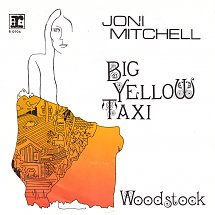
This period of Mitchell’s career represents more than just a collection of songs – it’s a masterclass in artistic evolution. From the young folk singer addressing environmental concerns in “Big Yellow Taxi” to the sophisticated composer crafting complex narratives in “Amelia,” Mitchell’s journey through the ’70s remains one of popular music’s most fascinating trajectories. Her influence continues to resonate today, with each new generation discovering the depth and complexity of her golden era work.
The music of 1969 captures a unique crossroads in cultural history—a year teetering between optimism and cynicism, unity and rebellion. Looking at a playlist from this year reveals a blend of genres and voices, each reflecting a society in flux. The playlist’s tracks encompass themes of love, social change, disillusionment, and raw individualism, echoing the era’s contradictions and bold spirit.
On one end of the spectrum, songs like Elvis Presley’s “Suspicious Minds” and Tammy Wynette’s “Stand By Your Man” echo traditional themes of love, loyalty, and heartbreak, though with a hint of modern skepticism. Presley’s soulful performance marked his return to chart-topping success, while Wynette’s hit became a polarizing anthem, embraced by some for its devotion and questioned by others for its apparent passivity. Meanwhile, Glen Campbell’s “Wichita Lineman” captured a more introspective side of the decade, blending pop and country into a haunting portrayal of loneliness and perseverance.
But 1969 wasn’t all about introspection; it was also a year of unrestrained expression and pushing boundaries. Creedence Clearwater Revival’s “Bad Moon Rising” hinted at a sense of looming danger, with its ominous lyrics striking a nerve during a time of political upheaval. In contrast, “Honky Tonk Women” by The Rolling Stones embraced the gritty allure of rock and roll without aiming for a larger societal message. Jagger’s tales of chance encounters and gin-soaked nights represent the Stones’ unapologetic celebration of indulgence, sidestepping introspection in favor of pure hedonism.
Amidst the wild spirit of rock, 1969 also offered more uplifting messages with a hint of idealism. Sly & The Family Stone’s “Everyday People” and The Youngbloods’ “Get Together” conveyed calls for unity that resonated deeply in an era fraught with political and racial tensions. Sly Stone’s anthem became a rallying cry for acceptance, emphasizing individuality while embracing common ground. Similarly, “Aquarius/Let the Sunshine In” by The 5th Dimension captured the essence of the countercultural movement in all its utopian ambitions, even if the optimism was a bit idealistic in hindsight.
Then there was the music that addressed disillusionment head-on, perhaps best captured by Simon & Garfunkel’s “The Boxer” and Peggy Lee’s “Is That All There Is?” Both songs offer reflective, sometimes jaded perspectives on life’s struggles and the disappointments that can accompany maturity. Where “The Boxer” tells the story of a young man grappling with hardship and loss, Lee’s dry wit in “Is That All There Is?” confronts the emptiness that can lie beneath life’s surface pleasures.
Ultimately, this playlist from 1969 feels like a time capsule of an era balancing between hope and disillusionment. From the raw proto-punk of The Stooges to the tender balladry of Stevie Wonder’s “My Cherie Amour,” the year’s music speaks to a generation grappling with unprecedented social changes. Through these songs, 1969 continues to resonate, reminding us that music often reflects the spirit of its time while challenging listeners to consider where they stand.
Adam Ant was born Stuart Leslie Goddard on this date in 1954. Supposedly, the name “Adam” was inspired by the biblical first man, symbolizing a fresh start after a serious bout of depression and a suicide attempt, while “Ant” reflected his desire for his band to embody industriousness and resilience, akin to ants in nature.
A handful of tracks from Mr. Ant are included on today’s playlist.
Few artists have carved out a career as distinctive and genre-defying as k.d. lang. From her early days performing alternative country music to her evolution into a sophisticated pop vocalist, lang has consistently demonstrated both remarkable vocal prowess and a fearless approach to artistic expression. Her signature song “Constant Craving” serves as just one highlight in a career spanning multiple decades and musical styles.
The versatility in lang’s artistry is evident throughout her discography. Her collaborations range from a memorable duet with Roy Orbison on “Crying” to more recent work with indie darlings Neko Case and Laura Veirs on “Atomic Number.” Her ability to move effortlessly between country classics like “Rose Garden” with The Reclines and sophisticated pop numbers like “Miss Chatelaine” showcases an artist who refuses to be confined by genre expectations.
What sets lang apart is not just her four-octave vocal range, but her ability to infuse every performance with genuine emotional depth. This is particularly evident in her interpretations of classics, including Leonard Cohen’s “Hallelujah” and Cole Porter’s “So in Love.” Her country roots shine through in collaborations like the “Honky Tonk Angels’ Medley” with legends Brenda Lee, Loretta Lynn, and Kitty Wells, while tracks like “Summerfling” and “Sexuality” demonstrate her comfort with more contemporary pop arrangements.
Throughout her career, lang has maintained an unwavering commitment to artistic authenticity. From early country numbers like “Big Boned Gal” and “Trail of Broken Hearts” to more experimental works like “Just Keep Me Moving” and “Lifted By Love,” she has consistently pushed musical boundaries while staying true to her artistic vision. Her cover of The Beatles’ “Golden Slumbers/The End” further illustrates her talent for reinterpreting familiar material through her unique lens.
In examining lang’s body of work, what emerges is a portrait of an artist who has consistently prioritized musical excellence over commercial trends. Whether performing torch songs, country classics, or contemporary pop, she brings a level of sophistication and emotional authenticity that has earned her both critical acclaim and a devoted following. Her influence extends beyond any single genre, cementing her legacy as one of the most versatile and compelling vocalists of her generation.