It’s African American Music Appreciation Month And I Need To Dance!

On May 31, President Obama issued a proclamation declaring June 2016 as African American Music Appreciation Month. The designation has actually been around since 1979, when President Carter commemorated the cultural and financial contributions of music made by African Americans at a reception at the White House. Back then it was Black Music Month, an idea conceived by music industry executive and radio personality Dyana Williams and her husband, Kenny Gamble.

You may not know Gamble’s name, but you know his music. The co-founder of Philadelphia International Records with Leon Huff, Gamble and his music partner have written and produced hits for Diana Ross & the Supremes and the Temptations, Dusty Springfield, the Jacksons, the O’Jays, Harold Melvin & the Blue Notes, Jerry Butler, Archie Bell and the Drells, the Three Degrees, Joe Simon, MFSB, Billy Paul, the Soul Survivors, Teddy Pendergrass, the Intruders, Lou Rawls, People’s Choice and the Jones Girls.

Tunes du Jour’s weekly dance party celebrates African American Music Appreciation Month with twenty dance floor packers, kicking off with a few of Gamble and Huff’s gems.


Click here to like Tunes du Jour on Facebook!
Follow me on Twitter: @TunesDuJour
Follow me on Instagram: @GlennSchwartz
Throwback Thursday – 1963

The girl group sound was hugely popular on the US pop charts in the early 1960s. The Shirelles, The Crystals, The Chiffons, The Angels, Martha and the Vandellas, The Marvelettes, The Exciters, The Orlons, The Cookies, The Murmaids, The Dixie Cups, The Supremes, The Toys, The Shangri-Las, The Jaynetts and others filled the radio with tales of teenage romance, heartbreak and occasionally social commentary. Solo acts such as Lesley Gore and Darlene Love also exemplified the girl group sound.

Described in the Library of Congress’ National Recording Registry as “the quintessence of the ‘girl group’ aesthetic of the early 1960s,” the Ronettes’ “Be My Baby” reached #2 in 1963. The record was produced by Phil Spector, who produced at least 15 top forty girl group songs between 1962 and 1964.

Lead vocals on “Be My Baby” were performed by Ronnie Spector. In fact, the other Ronettes aren’t even on the record. Backup singers included the girlfriend of Phil Spector’s promotion man. That man was Sonny Bono; his girlfriend was Cher. Sonny & Cher would have their first hit as a duo two years later.

This week’s Throwback Thursday playlist spotlights the hits of 1963. Here are twenty of that year’s best, kicking off with the record New Music Express named the second best song of the 1960s (their #1 was The Beatles’ “A Day in the Life”), the Ronettes’ “Be My Baby.”


Click here to like Tunes du Jour on Facebook!
Follow me on Twitter: @TunesDuJour
Follow me on Instagram: @GlennSchwartz

A Hint Of Mint – Volume 56: Pride!

Honoring some of the out performers of the LGBTQ populations who have given us so much great music in the rock era. Artists include Frank Ocean, St. Vincent and the artist formerly known as Antony, plus a bunch of trailblazers who hit it big in the last millennium.

[8tracks width=”300″ height=”250″ playops=”” url=”http://8tracks.com/mixes/8041356″] Click here to like Tunes du Jour on Facebook!
Follow me on Twitter: @TunesDuJour
Follow me on Instagram: @GlennSchwartz
It’s LGBT Pride Month And I Need To Dance!

Because there are millions of people who tell us we shouldn’t be who we are because it doesn’t conform to who they think we should be;

Because this “government of the people, by the people and for the people” often isn’t for all the people;

Because “All men are created equal” doesn’t include those in the LGBT populations per many politicians and their constituents;

Because our Pride parades are attended not only by LGBT peoples are their allies, but by “counter protestors” who shout hateful rhetoric through megaphones in the name of religion, as these self-proclaimed Christians have no place better to be on a Sunday morning;

Because LGBT youth represent 7% of the youth population, while LGBT homeless youth make up 40% of the homeless youth population;

Because LGB and questioning youth are four times more likely to attempt suicide than non-LGB youth;

Because queer youth need to see there are many people like them;

Because if we don’t celebrate who we are, then we tacitly say we are not worthy of celebration and things are fine as they are, neither of which is true;

Because there is strength in numbers;

Because in many parts of the world one is killed for the suspicion of being gay or lesbian;

Because in many parts of the world it is illegal and/or dangerous to show your LGBT pride;

Because nobody should live in fear of expressing their authentic self, including the asshats who attempt to intimidate us from doing so;

Because it is empowering to be able to express one’s sexuality or gender identity in a supportive environment;

Because coming together brings about positive change;

Because while marrying someone of the opposite gender has been legal throughout US history, the right to marry someone of the same gender is coming on just one year;

Because we still have a ways to get to before we reach true equality, and we’ve come too far to stop now;

Because it’s fun!;

Because diversity should be celebrated;

Because pride is respect for yourself and you deserve respect;

Because men in Speedos;

Because despite all of the bull feces, we persevere. That is why

We still need LGBT Pride Month celebrations.

Here is your expanded soundtrack:


Click here to like Tunes du Jour on Facebook!
Follow me on Twitter: @TunesDuJour
Follow me on Instagram: @GlennSchwartz

Throwback Thursday – 1996

Per the site WhoSampled.com, Joe Cocker’s “Woman to Woman” (1972) has been sampled 24 times. Joe Cocker! Twenty-four times! Who knew?

The best-known track to sample “Woman to Woman” is 2Pac’s “California Love,” which utilizes the instrumental riff from the beginning of the Cocker song as one of its hooks. Here is “Woman to Woman:”

“California Love” kicks off this week’s Throwback Thursday playlist, spotlighting the music of 1996.


Click here to like Tunes du Jour on Facebook!
Follow me on Twitter: @TunesDuJour
Follow me on Instagram: GlennSchwartz

Ringo + Gladys

The Gladys Knight-Farrah Fawcett Connection

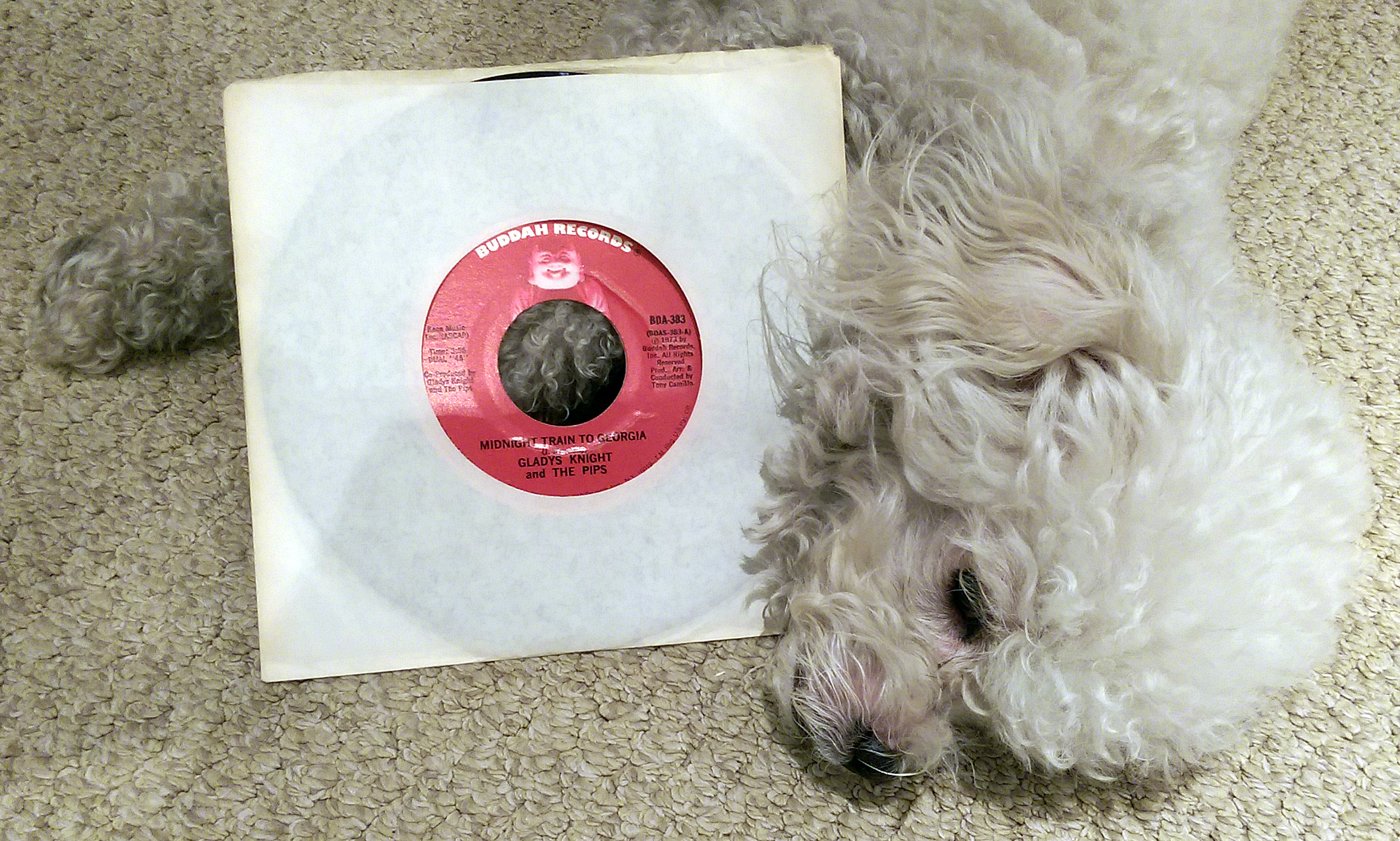
Our story begins in 1970 with a phone call placed by singer-songwriter Jim Weatherly to his friend, actor Lee Majors. Pre-The Six Million Dollar Man Majors was dating pre-Charlie’s Angels actress Farrah Fawcett. Fawcett answered the phone and while chatting with Weatherly, mentioned she was leaving that night to visit her parents in Texas. She told him she was taking the midnight plane to Houston.

That phrase stuck with Weatherly, who immediately upon hanging up the phone, turned it into a song. He recorded “Midnight Plane to Houston” for his 1972 album, Weatherly. Among the album’s other tracks was another song he wrote, entitled “Neither One of Us (Wants to Be the First to Say Goodbye).”

It was the latter song that first made its way to Gladys Knight & the Pips. Their recording of it reached #2 on the Billboard Hot 100, and was their biggest-selling single for Motown. It also turned out to be their last single released on Motown while still signed to the label.

The group had been with Motown since 1966. While “Neither One of Us” was on the charts, negotiations for a better deal with the label fell through, and the group was quickly scooped up by Buddah Records. As songwriter Jim Weatherly just provided them with a huge hit, they looked for more Weatherly compositions to record for their debut album for Buddah. You may see where this is going, but let’s backtrack for a moment.

“Midnight Plane to Houston” found its way to Cissy Houston, r&b/gospel singer and mother to Whitney Houston. Cissy liked the song, but asked Weatherly if she can make some changes. Specifically, her family was from Georgia, so she asked if she could switch Houston to Georgia. Also, her family didn’t fly; they rode trains. Weatherly had no objection to the requested changes, so in 1972, Cissy Houston recorded “Midnite Train to Georgia.”

It was this revised version that made its way to Gladys Knight & the Pips, who also hail from Georgia. The lyrics resonated with Knight. Like the partner about whom the song’s protagonist sings, Knight’s husband at that time was a musician. Perhaps he kept dreaming that someday he’d be a star, a superstar, but he didn’t get far. Unlike the song’s protagonist, Knight didn’t choose to live in his world than live without him in hers. The couple divorced in 1973, the same year that Gladys Knight & the Pips scored their first #1 pop single with “Midnight Train to Georgia,” which knocked the Rolling Stones’ “Angie” from the top slot. “Midnight Train” won the group the Grammy Award for Best R&B Vocal Performance by a Group.

Ringo + Gladys
Twelve years after the group’s first top ten pop hit, 1961’s “Every Beat of My Heart,” Gladys Knight & the Pips went on hit-making roll, following up “Midnight” with three consecutive top ten hits: “I’ve Got to Use My Imagination,” “On and On,” and another Weatherly composition, “Best Thing That Ever Happened to Me.”

Today Gladys Knight turns 72 years old. Tunes du Jour celebrates the occasion with twenty of her group’s finest.


Click here to like Tunes du Jour on Facebook!
Follow me on Twitter: @TunesDuJour
Follow me on Instagram: Glenn.Schwartz99

It’s Siouxsie Sioux’s Birthday And I Need To Dance!

During the 1980s, Siouxsie and the Banshees, led by Susan “Siouxsie” Ballion, had 15 top 40 singles in the UK, where they formed. In the US, they had 15 fewer hits.

That changed in 1991, thanks to a song about a popular Hollywood actress of the 1950s who died in a car accident in 1967.

Vera Palmer, under her screen name Jayne Mansfield, won the Golden Globe Award for New Star of the Year in 1957, beating out Natalie Wood. That was the year she appeared in the film Will Success Spoil Rock Hunter?, based on the Broadway show in which she also starred. She also starred in the hit film The Girl Can’t Help It, which featured appearances from Little Richard, Fats Domino, The Platters, Eddie Cochran and Gene Vincent.

Her career took a turn after these hits, perhaps due to a public backlash against her over-exposure, perhaps due to a decline in popularity of the “blonde bombshell” look, and/or perhaps due to her frequent pregnancies keeping her from accepting roles she was offered.

She did continue to work, however – in films, on television, on stage, and on records. Following a nightclub performance in Biloxi, Mississippi on June 28, 1967, Mansfield was en route to New Orleans where she was scheduled to be part of a radio show the following day. Her car collided with a tractor-trailer, and Mansfield, as well as her boyfriend and the car’s driver, were killed instantly.

The car accident is referenced in the fourth verse of Siouxsie and the Banshees’ “Kiss Them for Me,” named after Mansfield’s 1957 film in which she co-starred with Cary Grant.

“Kiss Them for Me” peaked at #23 on the Billboard Hot 100, nine positions higher than its UK peak. It also went to #1 on the Billboard Modern Rock chart and hit #8 on the Billboard Dance chart.

Today the woman born Susan Ballion turns 59 years old. Tunes du Jour’s weekly dance party kicks off with her ode to the late Jayne Mansfield.


Click here to like Tunes du Jour on Facebook!
Follow me on Twitter: @TunesDuJour
Follow me on Instagram: Glenn.Schwartz99

Ringo + Madonna

Throwback Thursday – 1985

Ringo + Madonna

In 1984, Madonna peaked at #18 on the Billboard Hot 100 with her first charting single, “Holiday.” By the following year, she had established herself as the Queen of the Pop Charts. She followed “Holiday” with three singles that hit the top ten in 1984: “Borderline,” “Lucky Star” and “Like a Virgin,” the latter hitting #1 and remaining there for six weeks. She opened 1985 with the #2 hit “Material Girl,” followed closely by the #1 “Crazy for You.” “Crazy” is from the film Vision Quest, in which Madonna had a small part as a nightclub singer.

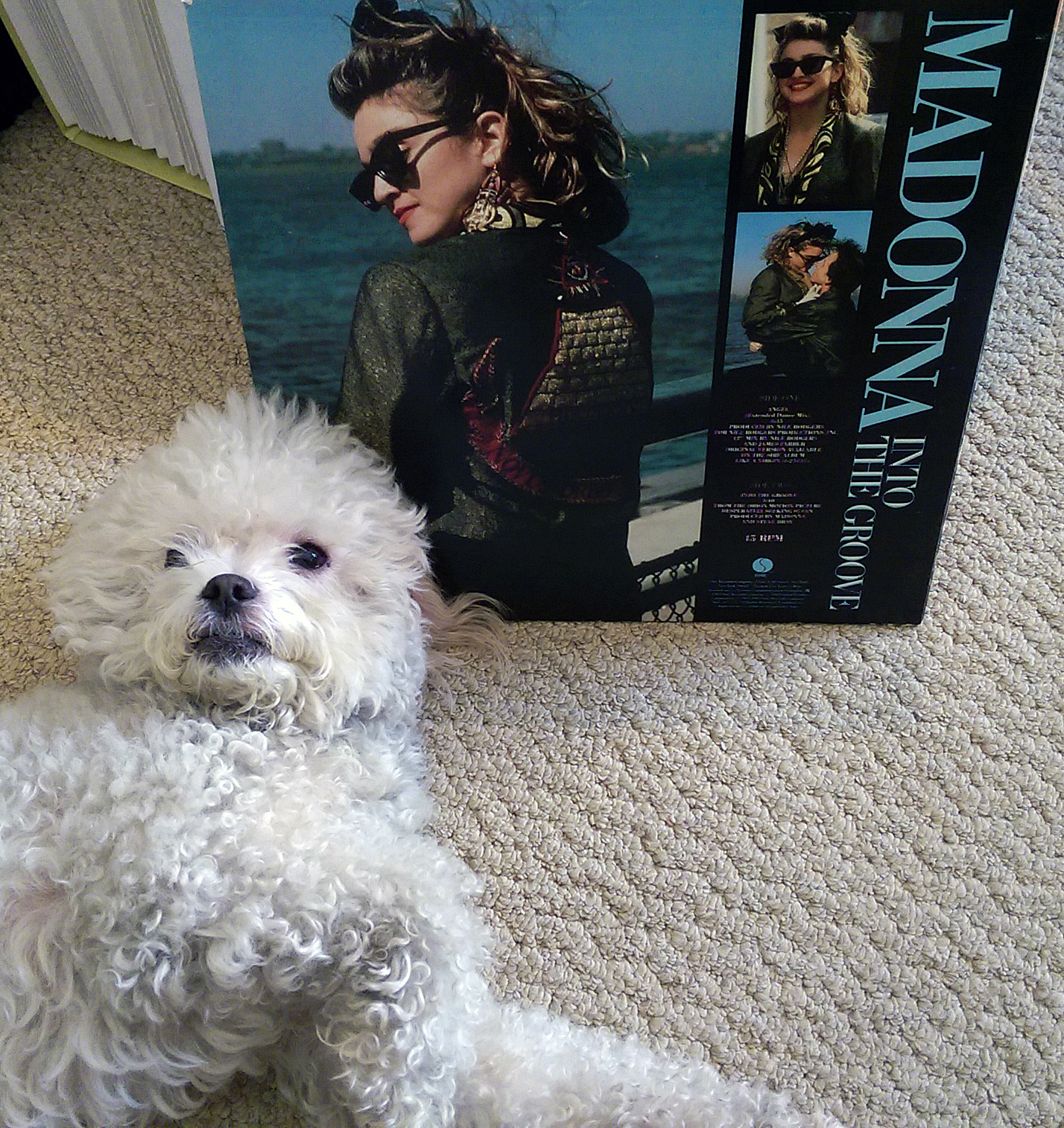
Madonna had a much larger role in the film Desperately Seeking Susan. Released in April 1985, the smash film featured a new track from Madonna, “Into the Groove.” As one might expect when a new superstar has a new song, and a great song at that, the track received lots of radio airplay. “Groove” hit #1 on the Dance Club chart, and the only record on which it appeared, a 12-inch single where it was the b-side of “Angel,” went gold, selling over a million units in the US.

Though it was a big seller with a ton of airplay and club play, “Into the Groove” never hit Billboard’s Hot 100. Though that chart is supposed to accurately reflect a song’s popularity in the US, Billboard imposes rules that hang around longer than they should, throwing off historians looking into a song’s popularity. One of the arcane rules in 1985 was that a song had to be available on a commercial 7-inch vinyl single to be eligible to chart. Commercial availability solely on a 12-inch vinyl single, even one that sold over a million copies, is not enough. Widespread radio play on a variety of formats (the song hit the top twenty on the r&b chart, which for reasons that made sense to Billboard’s chart editors, allowed 12-inch singles to chart) is not enough.

Eventually, Billboard got around to revising these rules. The advent of cassingles (cassette tape singles) and CD singles expanded the formats eligible. The music industry’s decision to hold back the release of singles in any format to force consumers to shell out big bucks for a full-length album to get the one song they liked forced Billboard to make radio airplay without a commercial single good enough for a Hot 100 chart placement, but that change didn’t come into being until December of 1998, thirteen years too late for Madonna and historians.

This week’s Throwback Thursday kicks off with one of the best-known songs to have never charted on Billboard’s Hot 100, Madonna’s “Into the Groove.” It is followed by other music highlights of 1985.


Click here to like Tunes du Jour on Facebook!
Follow me on Twitter: @TunesDuJour
Follow me on Instagram: Glenn.Schwartz99