Throwback Thursday – 1989

During the February 22, 1989 telecast of the Grammy Awards, Pepsi premiered a thirty-second spot that featured a new song by Madonna, “Like a Prayer.” It was the first time a major artist’s new single was used in a television commercial prior to being released to radio or record stores.

The following week, a two-minute version of the commercial aired during The Cosby Show, at the time a highly-rated program starring America’s favorite dad, Bill Cosby. The ad, part of a $5 million endorsement deal Pepsi struck with Madonna that also included tour sponsorship, featured Madonna dancing in the street, in a school hallway, and in a church.

The song’s music video premiered the following day on MTV. In the video, Madonna witnesses the murder of a white girl by white supremacists. A black man gets arrested for the killing. Madonna seeks refuge in a church, where she has a dream that includes stigmata on her hands, kissing a black saint, and dancing in front of burning crosses.

The Vatican and other religions organizations condemned the video and threatened a protest against Pepsi products. Pepsi dropped its sponsorship of Madonna, never again aired the television spot, and let Madonna keep the $5 million they paid her.

“Like a Prayer” became Madonna’s seventh #1 pop hit in the United States. It also topped the charts in the United Kingdom, Australia, Canada, the Netherlands, Sweden, Japan, Italy, Spain, Norway, Denmark, Finland, Ireland, New Zealand, Belgium, and Switzerland.

“Like a Prayer” won the Viewers Choice award at the 1989 MTV Music Video Awards, a program that incidentally was sponsored by Pepsi. In her speech, Madonna said “I would really like to thank Pepsi for causing so much controversy.”

Tunes du Jour’s playlist this Throwback Thursday spotlights the year 1989, and kicks off with Madonna’s “Like a Prayer.”


Click here to like Tunes du Jour on Facebook!
Follow me on Twitter: @TunesDuJour
It’s Michael Hutchence’s Birthday And I Need To Dance!

There’s a dead bird on my balcony. I don’t know the bird. I don’t know how he or she died. I raised the shades on Tuesday morning and saw the bird underneath one of the two lounge chairs I bought at Ikea ten years ago.

I don’t know what to do with the dead bird. I’d like to alert his or her family, who for all I know are keeping a vigil, hoping to see their loved one come home to roost, or whatever non-chicken birds do when they return home. More so, I’d like the dead bird off my balcony, as it makes me sad to see him or her whenever I have the shades up. Dead bird aside, I like to have the shades up.

It would be great if a huge breeze came along and blew the dead bird off of my balcony and into a neighbor’s backyard, where he or she would no longer be my problem, but that seems unlikely. We were promised that El Niño would hit Los Angeles in mid-January and wreak havoc through mid-May, also bringing about some much-needed rain to our drought-ridden state, but our hopes for miserable weather have been dashed. Yesterday was sunny and in the mid-seventies with nary a breeze in sight (in feel?), and today is a mere five degrees cooler.

If I were still living on the east coast, I’d be preparing for a huge blizzard right now, one in which dead birds are blown far away, or at the very least covered in snow, where they can’t be seen when one raises their shades. Count your blessings, east coasters. Each and every morning I’m forced to face a dead bird, and by extension my own mortality, while you get to lock yourselves up inside your tiny apartments, never to again set foot outdoors. Lucky.

You may be wondering what all of this has to do with the late Michael Hutchence, who was born on this date in 1960. I’ll tell you. Michael Hutchence was the original lead singer of INXS, and New York is expecting INXS of ten inches of snow over the next twenty-four or so hours.

If you’re in New York, or elsewhere on the east coast where blizzards are expected, stay inside and dance. If you’re on the west coast, where dead birds mysteriously show up on your balcony beneath one of the two lounge chairs you bought at Ikea ten years ago, stay inside and dance. Everyone else should stay inside and dance. Here is your Michael Hutchence-inspired Friday dance playlist.


Click here to like Tunes du Jour on Facebook!
Follow me on Twitter: @TunesDuJour
Throwback Thursday – 1978

Just how popular were the Bee Gees in 1978? So big that they accounted for two percent of the record industry’s profits that year.

On January 1, 1978, the trio, made up of brothers Barry, Maurice and Robin Gibb, were at #1 with “How Deep is Your Love,” which the three performed, wrote and co-produced. It stayed on top for three weeks. In February they returned to the #1 position with “Stayin’ Alive.” That stayed at #1 for four weeks. It was knocked from the top spot by “(Love Is) Thicker Than Water,” performed by Andy Gibb, younger brother of the Bee Gees. “Thicker Than Water” was co-written and co-produced by Bee Gee Barry Gibb. “Thicker Than Water” was knocked from the top spot after two weeks by “Night Fever,” performed, written and co-produced by the Bee Gees. That song remained at #1 for eight weeks, only to be knocked from the top by “If I Can’t Have You,” performed by Yvonne Elliman and written and co-produced by the Bee Gees. Starting in mid-June, “Shadow Dancing,” written by the Bee Gees and Andy Gibb, co-produced by Barry Gibb, and performed by Andy Gibb went to #1 and stayed there for seven weeks. In late August Frankie Valli had his first #1 single in three years with “Grease,” written and co-produced by Barry Gibb.

Not everything they touched hit #1 that year. “Emotion,” written by Barry and Robin Gibb, co-produced by Barry Gibb and performed by Samantha Sang, peaked at #3 in March 1978. It was kept from #1 by “Night Fever” and “Stayin’ Alive.”

The album from which “Night Fever,” “Stayin’ Alive,” “How Deep is Your Love” and “If I Can’t Have You” were taken is the soundtrack to the film Saturday Night Fever, which spent 24 weeks at #1 and became the largest-selling album in history at that time. It remains the only soundtrack to have spawned four #1 singles. It could have been five if the Bee Gees’ version of their composition “More Than a Woman” had been released as a commercial single. Instead, the Tavares version of the song, which also appears on the soundtrack, was the single and became a top forty hit. Saturday Night Fever became the first soundtrack album to win the Grammy Award for Album of the Year. The Bee Gees also won Grammy Awards for Best Pop Performance by a Duo or Group with Vocals (both “How Deep is Your Love” and “Stayin’ Alive”) and Best Vocal Arrangement for Two or More Voices (for “Stayin’ Alive”), and Barry Gibb, along with Albhy Galuten and Karl Richardson, won Producer of the Year.

In 1978 the Bee Gees were connected with another high-profile movie project: Sgt. Pepper’s Lonely Hearts Club Band, in which they starred and performed on the soundtrack. Though Robin Gibb hit #15 with the film’s “Oh! Darling”, the album and film were considered flops.

The relative failure of Sgt. Pepper’s notwithstanding, the Bee Gees remained huge throughout 1978. Their blend of pop, soul, and dance music gave them mass appeal. Besides hitting #1 on the pop charts, “Stayin’ Alive” and “Night Fever” were top ten hits on the r&b and disco charts.

Tunes du Jour celebrates Throwback Thursday this week with the music of 1978. The Bee Gees may have dominated the mainstream, but as you’ll hear, rumblings of new and exciting permutations of rock & roll were rumbling under the surface.

We’ll kick off today’s playlist with the song that went to #1 in the UK, Canada, Australia, the Netherlands, Italy, Mexico, New Zealand, South Africa and the US.


Click here to like Tunes du Jour on Facebook!
Follow me on Twitter: @TunesDuJour

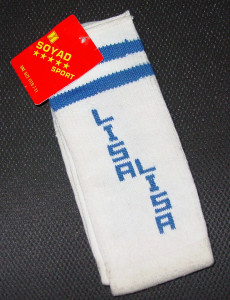
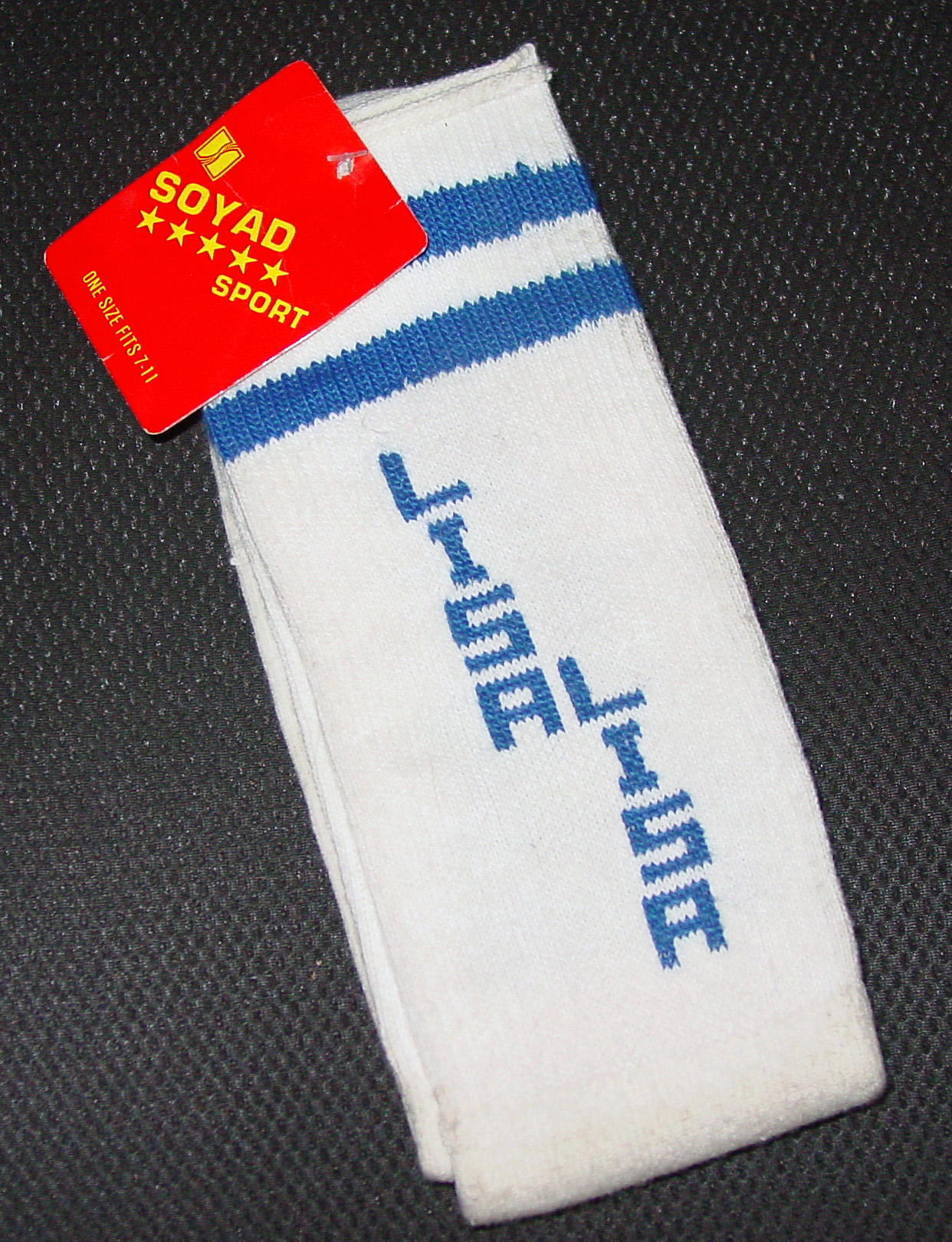
Lisa Lisa socks

It’s Lisa Lisa’s Birthday And I Need To Dance!

Today is National Hat Day. I was unable to find the origins of this holiday online, though to be honest, I didn’t research it very hard. Frankly, I don’t care. I don’t care from where this holiday sprang. For that matter, I don’t care much about hats.

I don’t look good in hats. Some people look great in hats, such as Pharrell Lanscilo Williams. Some people look great without hats, such as Pharrell Lanscilo Williams.

When I lived in New York, I wore a hat when the temperature fell below zero. Saving my ears trumped vanity. (Sorry about the use of a verb form of the word trump.) Now I live in Los Angeles. No hats.

Moving to the other end of my body, I always wear shoes when outside. Sneakers, actually. I’ll wear flip-flops on the beach, but not when I’m off the sand. I also always wear socks, except when I’m wearing flip-flops. On the beach. And I’ll confess to you, my readers, that I’m judgmental toward those who wear flip-flops in public off the beach or wear shoes with no socks. And don’t get me started on people who wear flip-flops in public off the beach WITH SOCKS! I’d love to hear their therapist explain the root cause of that sociopathic behavior.

As I’ve gone from head to toe, I know I should tell you that not only is today National Hat Day, but it is also the 50th birthday of Lisa Lisa Velez.

Lisa Lisa socks
Friday is dance day at Tunes du Jour. Put on your dancing shoes (no flip-flops) with socks and party down to this twenty-track playlist, kicking off with Lisa Lisa & Cult Jam’s “Let the Beat Hit ‘Em.”


Click here to like Tunes du Jour on Facebook!
Follow me on Twitter: @TunesDuJour
me - 1966001

Throwback Thursday – 1966

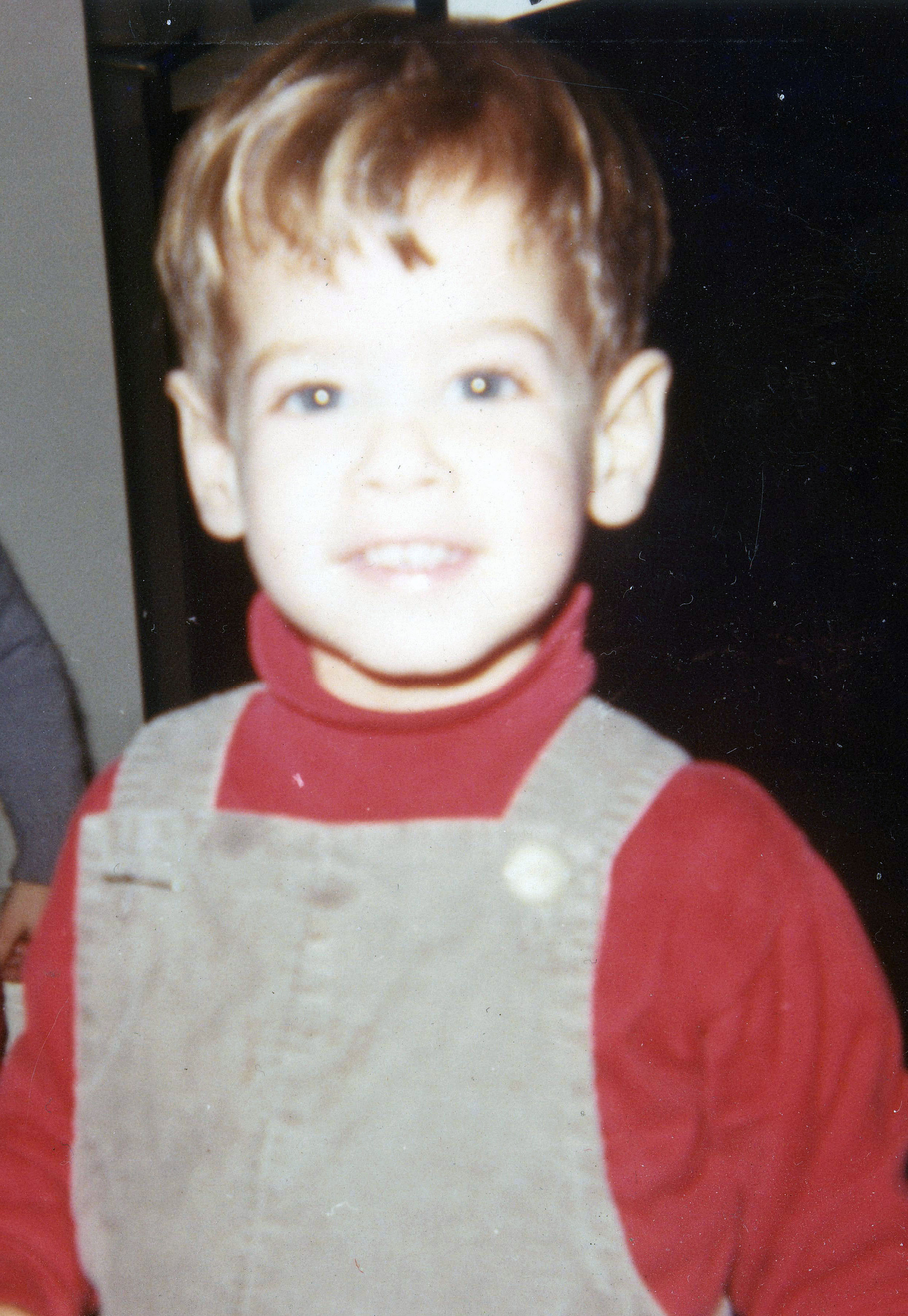
me - 1966001The blogger in 1966

“My mother used to tell me about vibrations. I didn’t really understand too much of what she meant when I was a boy. It scared me, the word ‘vibrations’ – to think that invisible feelings existed. She also told me about dogs that would bark at some people, but wouldn’t bark at others, and so it came to pass that we talked about good vibrations.”
– The Beach Boys’ Brian Wilson, Rolling Stone magazine

“The concept of spreading goodwill, good thoughts and happiness is nothing new, but it is our hope. The ideas are there in ‘Good Vibrations,’ ‘God Only Knows,’ ‘Heroes and Villains,’ and it is why the new LP is called Smile.”
– The Beach Boys’ Carl Wilson

According to Brian Wilson, Capitol Records didn’t want to release “Good Vibrations” as a single because of its duration: three and a half minutes. Reportedly, executives at the label were also concerned about the psychedelic overtones of the lyrics. Wilson pleaded with Capitol to release the 45.

The song went to #1 and earned the Beach Boys a Grammy nomination in the category of Best Contemporary Group Performance, in which they were pitted against three fine recordings plus “Guantanamera” by the Sandpipers. The Beach Boys lost, thankfully not to the Sandpipers but to the Mamas & the Papas for “Monday, Monday.” Mojo magazine placed “Good Vibrations” at #1 on their Top 100 Records of All Time list, and Rolling Stone magazine had it at #6 on their 500 Greatest Songs of All Time survey.

The crowning achievement of “Good Vibrations” by the Beach Boys was followed by an abrupt reversal of fortune for the group. While “Vibrations” was their 14th top ten single in just over four years, they would have to wait another ten years before cracking the top ten again, with their not-that-great remake of Chuck Berry’s “Rock and Roll Music” in 1976. It would be twenty-two years after “Good Vibrations” that the group hit #1 again, with the classic bad song “Kokomo.” The Smile album Carl Wilson referred to in the quote above went unfinished. Instead, the group released an album entitled Smiley Smile in 1967. Between 1963 and 1966 the group scored nine top ten albums; Smiley Smile peaked at #41. The following year’s Friends album only got as high as #126.

On this Throwback Thursday, Tunes du Jour listens to twenty of the finest singles from 1966, kicking off with the classic “Good Vibrations.”


Click here to like Tunes du Jour on Facebook!
Follow me on Twitter: @TunesDuJour

A Hint Of Mint – Volume 36: The Gay Seventies

Compared to today, there were fewer out performers and fewer outlets for performers in the 1970s. Still, some queer acts broke through, and queer songs showed up in unexpected places. This playlist consist of twenty highlights of 1970s LGBT music from a diverse group of genres.

[8tracks width=”300″ height=”250″ playops=”” url=”http://8tracks.com/mixes/7507136″] Click here to like Tunes du Jour on Facebook!
Follow me on Twitter: @TunesDuJour

It’s David Bowie’s Birthday And I Need To Dance!

Our weekly dance playlist kicks off with a track that was inspired by a song from the 1952 film Hans Christian Andersen. In the movie, Danny Kaye performs the Frank Loesser’s “Inchworm.” While schoolchildren sing “Two and two are four / Four and four are eight” etc., Kaye sings to the titular worm “You and your arithmetic/ You’ll probably go far,” and asking “Could it be you’d stop and see
how beautiful they are?” Singer-songwriter David Bowie told Performing Songwriter magazine “You wouldn’t believe the amount of my songs that have sort of spun off that one song. Not that you’d really recognize it. Something like ‘Ashes to Ashes’ wouldn’t have happened if it hadn’t have been for ‘Inchworm.’ There’s a child’s nursery rhyme element in it, and there’s something so sad and mournful and poignant about it. It kept bringing me back to the feelings of those pure thoughts of sadness that you have as a child, and how they’re so identifiable even when you’re an adult. There’s a connection that can be made between being a somewhat lost five-year old and feeling a little abandoned and having the same feeling when you’re in your twenties. And it was that song that did that for me.”

Today is David Bowie’s 69th birthday. Put on your red shoes and dance the blues with this playlist of club tunes.


Click here to like Tunes du Jour on Facebook!
Follow me on Twitter: @TunesDuJour