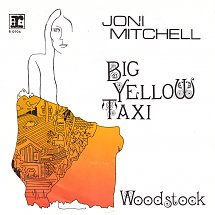
Tunes Du Jour Presents Joni Mitchell

From her folk beginnings to her jazz explorations, Joni Mitchell’s artistic evolution through the 1960s and ’70s showcases one of popular music’s most remarkable transformations. Starting with the pastoral folk of her debut, Mitchell’s journey would take her through deeply personal confessionals, environmental advocacy, and sophisticated jazz fusion – all while maintaining her signature poetic sensibility.

The early Mitchell emerged as part of the folk scene, armed with her acoustic guitar and crystalline soprano. Songs like “Chelsea Morning” and “Both Sides Now” established her as a keen observer of life’s dualities. But it was her 1971 album Blue that marked a turning point, diving into unprecedented emotional depths. The album’s raw honesty and sparse arrangements set a new standard for confessional songwriting, influencing generations of artists to come.

As the ’70s progressed, Mitchell’s musical palette expanded dramatically. Albums like Court and Spark and The Hissing of Summer Lawns saw her embrace more complex harmonies and jazz influences. She moved from straightforward folk structures to sophisticated compositions that defied easy categorization. Her lyrics evolved too, shifting from personal narratives to broader social commentary and abstract character studies. Songs like “Help Me” and “Free Man in Paris” captured the essence of this transition, blending accessibility with artistic ambition.

What sets Mitchell apart is her fierce commitment to artistic growth. While contemporaries often found a successful formula and stuck to it, she constantly pushed boundaries. Her exploration of jazz elements culminated in collaborations with jazz legends, and by the end of the ’70s, albums like Hejira and Don Juan’s Reckless Daughter showed an artist operating at the peak of her powers, completely untethered from commercial constraints.

This period of Mitchell’s career represents more than just a collection of songs – it’s a masterclass in artistic evolution. From the young folk singer addressing environmental concerns in “Big Yellow Taxi” to the sophisticated composer crafting complex narratives in “Amelia,” Mitchell’s journey through the ’70s remains one of popular music’s most fascinating trajectories. Her influence continues to resonate today, with each new generation discovering the depth and complexity of her golden era work.

Follow Tunes Du Jour on Facebook

Follow Tunes Du Jour on Twitter

Follow me on Instagram

Tunes Du Jour Presents 1969

The music of 1969 captures a unique crossroads in cultural history—a year teetering between optimism and cynicism, unity and rebellion. Looking at a playlist from this year reveals a blend of genres and voices, each reflecting a society in flux. The playlist’s tracks encompass themes of love, social change, disillusionment, and raw individualism, echoing the era’s contradictions and bold spirit.

On one end of the spectrum, songs like Elvis Presley’s “Suspicious Minds” and Tammy Wynette’s “Stand By Your Man” echo traditional themes of love, loyalty, and heartbreak, though with a hint of modern skepticism. Presley’s soulful performance marked his return to chart-topping success, while Wynette’s hit became a polarizing anthem, embraced by some for its devotion and questioned by others for its apparent passivity. Meanwhile, Glen Campbell’s “Wichita Lineman” captured a more introspective side of the decade, blending pop and country into a haunting portrayal of loneliness and perseverance.

But 1969 wasn’t all about introspection; it was also a year of unrestrained expression and pushing boundaries. Creedence Clearwater Revival’s “Bad Moon Rising” hinted at a sense of looming danger, with its ominous lyrics striking a nerve during a time of political upheaval. In contrast, “Honky Tonk Women” by The Rolling Stones embraced the gritty allure of rock and roll without aiming for a larger societal message. Jagger’s tales of chance encounters and gin-soaked nights represent the Stones’ unapologetic celebration of indulgence, sidestepping introspection in favor of pure hedonism.

Amidst the wild spirit of rock, 1969 also offered more uplifting messages with a hint of idealism. Sly & The Family Stone’s “Everyday People” and The Youngbloods’ “Get Together” conveyed calls for unity that resonated deeply in an era fraught with political and racial tensions. Sly Stone’s anthem became a rallying cry for acceptance, emphasizing individuality while embracing common ground. Similarly, “Aquarius/Let the Sunshine In” by The 5th Dimension captured the essence of the countercultural movement in all its utopian ambitions, even if the optimism was a bit idealistic in hindsight.

Then there was the music that addressed disillusionment head-on, perhaps best captured by Simon & Garfunkel’s “The Boxer” and Peggy Lee’s “Is That All There Is?” Both songs offer reflective, sometimes jaded perspectives on life’s struggles and the disappointments that can accompany maturity. Where “The Boxer” tells the story of a young man grappling with hardship and loss, Lee’s dry wit in “Is That All There Is?” confronts the emptiness that can lie beneath life’s surface pleasures.

Ultimately, this playlist from 1969 feels like a time capsule of an era balancing between hope and disillusionment. From the raw proto-punk of The Stooges to the tender balladry of Stevie Wonder’s “My Cherie Amour,” the year’s music speaks to a generation grappling with unprecedented social changes. Through these songs, 1969 continues to resonate, reminding us that music often reflects the spirit of its time while challenging listeners to consider where they stand.

Follow Tunes Du Jour on Facebook

Follow Tunes Du Jour on Twitter

Follow me on Instagram
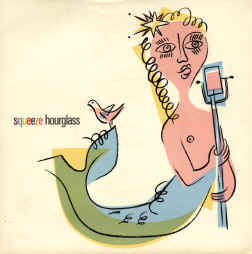
Your (Almost) Daily Playlist: 11-3-24

Adam Ant was born Stuart Leslie Goddard on this date in 1954. Supposedly, the name “Adam” was inspired by the biblical first man, symbolizing a fresh start after a serious bout of depression and a suicide attempt, while “Ant” reflected his desire for his band to embody industriousness and resilience, akin to ants in nature.

A handful of tracks from Mr. Ant are included on today’s playlist.

Follow Tunes du Jour on Facebook

Follow Tunes du Jour on Twitter

Follow me on Instagram
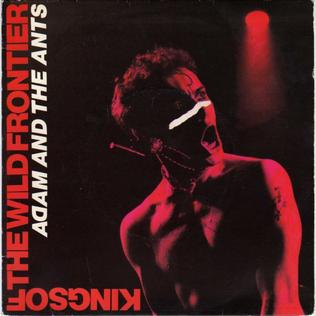
Tunes Du Jour Presents k.d. lang

Few artists have carved out a career as distinctive and genre-defying as k.d. lang. From her early days performing alternative country music to her evolution into a sophisticated pop vocalist, lang has consistently demonstrated both remarkable vocal prowess and a fearless approach to artistic expression. Her signature song “Constant Craving” serves as just one highlight in a career spanning multiple decades and musical styles.

The versatility in lang’s artistry is evident throughout her discography. Her collaborations range from a memorable duet with Roy Orbison on “Crying” to more recent work with indie darlings Neko Case and Laura Veirs on “Atomic Number.” Her ability to move effortlessly between country classics like “Rose Garden” with The Reclines and sophisticated pop numbers like “Miss Chatelaine” showcases an artist who refuses to be confined by genre expectations.

What sets lang apart is not just her four-octave vocal range, but her ability to infuse every performance with genuine emotional depth. This is particularly evident in her interpretations of classics, including Leonard Cohen’s “Hallelujah” and Cole Porter’s “So in Love.” Her country roots shine through in collaborations like the “Honky Tonk Angels’ Medley” with legends Brenda Lee, Loretta Lynn, and Kitty Wells, while tracks like “Summerfling” and “Sexuality” demonstrate her comfort with more contemporary pop arrangements.

Throughout her career, lang has maintained an unwavering commitment to artistic authenticity. From early country numbers like “Big Boned Gal” and “Trail of Broken Hearts” to more experimental works like “Just Keep Me Moving” and “Lifted By Love,” she has consistently pushed musical boundaries while staying true to her artistic vision. Her cover of The Beatles’ “Golden Slumbers/The End” further illustrates her talent for reinterpreting familiar material through her unique lens.

In examining lang’s body of work, what emerges is a portrait of an artist who has consistently prioritized musical excellence over commercial trends. Whether performing torch songs, country classics, or contemporary pop, she brings a level of sophistication and emotional authenticity that has earned her both critical acclaim and a devoted following. Her influence extends beyond any single genre, cementing her legacy as one of the most versatile and compelling vocalists of her generation.

Follow Tunes du Jour on Facebook

Follow Tunes du Jour on Twitter

Follow me on Instagram
Tunes Du Jour Presents Holland-Dozier-Holland

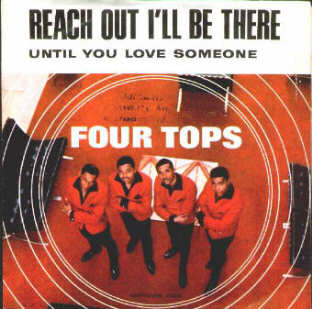
Brian Holland, Lamont Dozier, and Eddie Holland, collectively known as Holland-Dozier-Holland (H-D-H), are synonymous with the sound of Motown. Their string of hits in the 1960s and beyond fueled the success of the record label, shaping popular music and paving the way for R&B to dominate the airwaves. Each song on this playlist, from The Four Tops’ powerful “Reach Out (I’ll Be There)” to The Supremes’ iconic “Where Did Our Love Go,” credits one or more members of H-D-H. With a blend of melody, rhythm, and hooks that remain timeless, the team’s work redefined what hit songwriting could accomplish.

This songwriting trio didn’t merely write songs—they crafted narratives of love, heartbreak, and resilience that resonated with audiences across generations. Tracks like “This Old Heart of Mine (Is Weak for You)” by The Isley Brothers and Marvin Gaye’s “Can I Get a Witness” reveal the emotional depth in their compositions, supported by rhythms and production styles that have endured decades of cover versions. Their songs often feel instantly recognizable, whether it’s the infectious chorus of Chairmen of the Board’s “Give Me Just a Little More Time” or the stomping beat of Junior Walker & the All-Stars’ “(I’m A) Road Runner.”

The irony, however, is that Eddie Holland, despite being a key member of the team, had only one top 40 pop single as a solo artist, “Jamie”—and it wasn’t written by any member of Holland-Dozier-Holland. Instead, it was penned by Barrett Strong and William “Mickey” Stevenson, fellow Motown talents who contributed in their own right to the label’s powerhouse status. Though Eddie found his calling behind the scenes rather than as a performer, his experience as an artist gave him unique insight into the singer’s perspective, a quality that helped make H-D-H’s songs vocally compelling and relatable.

Beyond Motown, the trio’s influence stretched into rock, pop, and soul genres, as evident from covers and reinterpretations by artists like The Rolling Stones, Rod Stewart, and Bananarama. These renditions, like Linda Ronstadt’s cover of “Heat Wave” or James Taylor’s soulful take on “How Sweet It Is (To Be Loved by You),” show how their music transcended genre boundaries. Each version emphasizes the versatility of H-D-H’s songwriting, capable of adapting to various musical expressions while retaining its core appeal.

Ultimately, the legacy of Holland-Dozier-Holland isn’t just in their impressive catalog but in their contributions to the very essence of popular music. They captured the spirit of a generation through music that continues to find new audiences, sounding as fresh today as it did over half a century ago. Their work endures, a testament to their genius, and is rightly celebrated by the many artists who’ve covered and revived their timeless songs.

Follow Tunes Du Jour on Facebook

Follow Tunes Du Jour on Twitter

Follow me on Instagram