Pretenders are a band that has defied easy categorization while consistently delivering music that resonates with listeners across generations. Led by the indomitable Chrissie Hynde, their catalog is a testament to both resilience and innovation. Whether it’s the raw energy of “Tattooed Love Boys” or the introspective melancholy of “2000 Miles,” the Pretenders have a knack for balancing punk grit with pop sensibility, making their music both accessible and thought-provoking.
One of the band’s enduring qualities is its ability to blend vulnerability with strength. Tracks like “Back on the Chain Gang” and “I’ll Stand By You” showcase Hynde’s lyrical depth, where personal loss and steadfast loyalty coalesce into powerful anthems. Even a lighter, upbeat track like “Don’t Get Me Wrong” subtly hints at the complexity of relationships, never reducing them to mere surface-level emotions. This duality—at once tough and tender—is a hallmark of Hynde’s songwriting, giving their music a timeless appeal.
Collaborations further highlight Hynde’s versatility. Her work with UB40 on “I Got You Babe” and with Cher and Neneh Cherry on “Love Can Build A Bridge” demonstrates her ability to seamlessly move between genres, lending her distinct voice to reggae and pop singles with equal flair. These collaborations also underscore Hynde’s adaptability, as she continued to evolve without losing her core identity.
Songs like “Brass in Pocket” and “Precious” capture the raw defiance of the Pretenders’ early days, marked by punk influences and a DIY spirit. Yet, as the years went on, tracks like “Hymn to Her” and “Night in My Veins” show a maturation, both musically and lyrically, as the band embraced more layered compositions and reflective themes. Even amidst the evolving musical landscape, the Pretenders maintained their unique voice, never pandering to trends but instead carving out their own distinct path.
Ultimately, the Pretenders’ body of work is a reflection of Chrissie Hynde’s singular vision—fearlessly honest, emotionally nuanced, and always grounded in the realities of life. From punk-infused tracks to poignant ballads, they have built a legacy that remains as relevant today as it was in their early days. It’s this combination of sincerity and musical innovation that keeps their music fresh and vital.
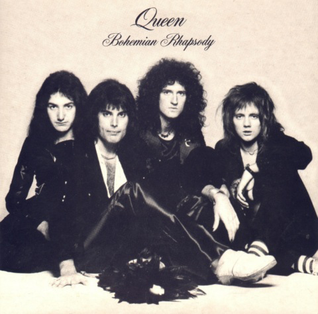
Queen, the British rock band formed in London in 1970, left an indelible mark on the music industry with their innovative sound, theatrical performances, and enduring hits. Over their two-decade run with their original lineup, Queen produced a vast array of songs that continue to resonate with audiences worldwide.
At the heart of Queen’s success was their ability to blend various musical styles into a unique sound. From the operatic rock of “Bohemian Rhapsody” to the funk-inspired “Another One Bites the Dust,” the band refused to be confined to a single genre. This versatility is evident in tracks like “Crazy Little Thing Called Love,” which pays homage to 1950s rock and roll, and “Under Pressure,” a collaboration with David Bowie that seamlessly merges two iconic musical forces. Songs like “We Will Rock You” and “We Are the Champions” became anthems at sporting events, their simple yet powerful choruses designed for audience participation.
The individual talents within Queen were exceptional. Freddie Mercury’s four-octave vocal range and flamboyant stage presence made him one of rock’s greatest frontmen. Brian May’s distinctive guitar work, often created using his homemade “Red Special” guitar, can be heard on tracks like “Tie Your Mother Down” and “Brighton Rock.” Roger Taylor’s powerful drumming and high vocal harmonies feature prominently in songs like “I’m In Love With My Car,” while John Deacon’s bass lines form the backbone of hits like “Another One Bites the Dust” and “You’re My Best Friend.”
Queen’s legacy extends far beyond their chart-topping hits. Their willingness to experiment with unconventional song structures is evident in epic tracks like “The March of the Black Queen” and the sci-fi-inspired “39.” Even in their later years, facing Mercury’s declining health, the band produced powerful, introspective works like “These Are the Days of Our Lives” and “The Show Must Go On.” Today, Queen’s music continues to inspire new generations of listeners, a testament to their enduring impact on rock music.
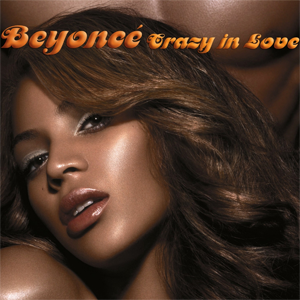
Beyoncé’s impact on music is undeniable, her influence spanning over two decades as she continually reinvents herself and her sound. From her early days as the lead singer of Destiny’s Child to her illustrious solo career, Beyoncé has pushed the boundaries of pop, R&B, and hip-hop, creating a catalog that resonates across generations. The playlist below showcases some of her most iconic tracks, such as “Crazy in Love” and “Single Ladies (Put a Ring on It),” both of which exemplify her ability to craft anthems that become cultural landmarks.
Beyond the music, Beyoncé’s contributions to social issues are equally significant. Her 2016 hit “Formation” is more than just a song—it’s a statement on Black identity and resilience, with a music video that touches on themes of police brutality and the aftermath of Hurricane Katrina. Beyoncé uses her platform not just to entertain, but to educate and inspire. The inclusion of Chimamanda Ngozi Adichie’s feminist speech in “***Flawless” is another example of how she seamlessly weaves activism into her art, promoting messages of female empowerment and equality.
Philanthropy is another area where Beyoncé has made her mark. She has consistently used her influence to support a range of causes. In 2017, she launched the Formation Scholars program to support young women in college, specifically those studying creative arts, music, literature, or African American studies. This initiative is a testament to her commitment to uplifting marginalized communities and promoting diversity in education.
Moreover, Beyoncé’s involvement in the Black Lives Matter movement further cements her role as an advocate for social justice. Her contributions have included financial donations, raising awareness, and dedicating performances to victims of racial violence. The song “BLACK PARADE,” released on Juneteenth in 2020, is a celebration of Black culture and a call to action, with proceeds from the song going to support Black-owned small businesses.
In a career filled with accolades and achievements, what sets Beyoncé apart is her ability to use her platform for the greater good. Her music continues to evolve, and with it, her commitment to social change. Beyoncé’s legacy is one of both artistic brilliance and a deep-seated dedication to making the world a more just and inclusive place.
Van Morrison’s musical journey is a testament to his ability to blend poetic lyricism with a distinct musical style that is both soulful and introspective. Emerging from the gritty streets of Belfast with the band Them, Morrison quickly made his mark with raw, energetic tracks like “Gloria” and “Baby, Please Don’t Go.” These early recordings, characterized by their driving rhythms and Morrison’s unmistakable vocal delivery, hinted at the artistic depth that would later define his solo career.
When Morrison struck out on his own, he embraced a more nuanced sound, blending jazz, blues, and folk into a style that defied easy categorization. “Moondance” and “Into the Mystic” are prime examples, showcasing his ability to create atmospheres that are both intimate and expansive. These songs, marked by lush arrangements and Morrison’s soulful voice, invite listeners into a world where the lines between the spiritual and the earthly blur, a recurring theme in his work.
Albums like Astral Weeks and Tupelo Honey solidified Morrison’s reputation as a master of mood and narrative. Tracks like “Sweet Thing” and “Cyprus Avenue” weave vivid, almost cinematic imagery with deeply personal reflections. Morrison’s songwriting during this period is marked by a keen sense of place, with frequent references to the streets of Belfast and the rural landscapes of Ireland, grounding his often ethereal music in real-world experiences.
Morrison’s work is also notable for its celebration of love and spirituality. Songs like “Have I Told You Lately?” and “Crazy Love” are heartfelt tributes to the power of human connection, while “Listen to the Lion” and “In the Garden” delve into more mystical themes. His ability to convey deep emotion without veering into sentimentality is one of the hallmarks of his songwriting, making these tracks resonate on a profound level.
Even as Morrison explored different genres and themes throughout his career, his music has remained rooted in a sense of authenticity. Whether it’s the upbeat groove of “Wild Night” or the reflective tone of “Coney Island,” his work continues to captivate listeners with its honesty and depth. Van Morrison’s legacy is one of artistic integrity, a rare quality that has kept his music relevant and influential across generations.
This fall marks fifty years since Billboard magazine began publishing its disco chart, an acknowledgment of a genre that danced its way into the hearts of millions. Disco music, with its infectious rhythms and vibrant energy, was more than just a soundtrack for nightlife; it was a cultural phenomenon rooted in the experiences of Black, Latinx, and gay communities. The genre’s pulsating beats and soulful melodies offered an escape, a place where people could come together and express themselves freely on the dance floor.
Disco’s origins can be traced back to the dance halls of New York City, where marginalized communities created spaces for celebration and expression. Early tracks like The Trammps’ “That’s Where the Happy People Go” and Shirley & Co’s “Shame, Shame, Shame” laid the foundation for what would become a global movement. These songs, along with others from the era, were not just about the beats but also about creating a sense of community and shared experience on the dance floor, where people from all walks of life could come together and express themselves freely.
Black artists played a central role in shaping disco’s sound and message. Chic’s “Le Freak” and Sister Sledge’s “He’s the Greatest Dancer” brought sophisticated grooves that transcended race, while Marvin Gaye’s “Got to Give It Up” and Diana Ross’s “Upside Down” combined soul with danceable rhythms, pushing the genre into mainstream consciousness. The smooth yet dynamic production styles and vocals showcased a depth that went beyond the glittering surface often associated with disco.
Latinx influences also left an indelible mark on the genre. Songs like “Turn The Beat Around” by Vicki Sue Robinson and “Cherchez La Femme” by Dr. Buzzard’s Original Savannah Band infused Latin rhythms with disco beats, creating a vibrant and eclectic sound. This cross-pollination of cultures on the dance floor reflected the diversity of the communities that embraced disco, making it a genre that celebrated inclusivity long before it became a mainstream value.
As we commemorate fifty years since Billboard recognized disco’s impact, it’s important to remember that disco was more than just a moment in time. It was a movement that broke down social barriers and created a space where joy and liberation could thrive. Whether it’s the enduring appeal of “Stayin’ Alive” by the Bee Gees or the timeless groove of KC & the Sunshine Band’s “That’s the Way (I Like It),” disco’s legacy lives on, reminding us of the power of music to unite and uplift.
Michael Jackson’s legacy in music is undeniably profound, with a career spanning several decades and an influence that is still felt today. From his early days with The Jackson 5 to his solo career that redefined the boundaries of pop music, Jackson’s contributions have left an indelible mark on the industry.
Jackson’s work with The Jackson 5 introduced the world to a young talent capable of captivating audiences with his voice and energy. Hits like “I Want You Back” and “ABC” showcased his ability to bring a unique sense of rhythm and soul, even as a child. As he transitioned into his solo career, Jackson’s music evolved, blending elements of pop, rock, and R&B to craft a distinctive sound that set him apart. Songs like “Don’t Stop ‘Til You Get Enough” and “Rock With You” from his Off the Wall album laid the groundwork for what would become his signature style—catchy melodies, intricate rhythms, and an infectious energy.
The release of Thriller in 1982 was a watershed moment, not just for Jackson but for the entire music industry. With tracks like “Billie Jean,” “Beat It,” and the title track, Jackson broke records and set new standards. The music video for “Thriller” itself became a cultural phenomenon, pioneering the concept of the music video as an art form and cementing Jackson’s reputation as a creative visionary. His music during this period was not just entertainment; it was a catalyst for change, influencing countless artists and shaping the future of pop music.
Beyond his musical achievements, Jackson was also known for his philanthropic efforts. His involvement in the creation of “We Are the World,” a charity single aimed at raising funds for famine relief in Africa, demonstrated his commitment to using his platform for good. Jackson supported numerous charities throughout his life, including the Make-A-Wish Foundation, the Elizabeth Taylor AIDS Foundation, and his own Heal the World Foundation, which focused on improving the lives of children around the globe.
However, Jackson’s legacy is also marred by credible criminal allegations of child abuse, which have cast a long shadow over his career. These allegations have led to ongoing debates about how to reconcile his artistic contributions with his personal life. While the legal battles and media scrutiny that followed these accusations are part of his story, they do not erase the impact of his work on music and culture.
In the end, Michael Jackson’s legacy is a complex one, marked by both extraordinary musical achievements and troubling personal controversies. His influence on the music industry is undeniable, as is his role in philanthropy. The challenge lies in acknowledging the full scope of his life and career while recognizing the impact he had on both music and society.
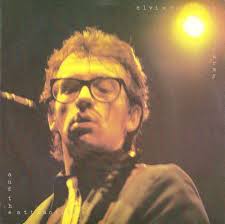
Elvis Costello’s music is often seen as a masterclass in genre-blending, lyrical prowess, and sharp social commentary. Emerging from the punk and new wave scenes of the late 1970s, Costello quickly established himself as a unique voice, one that could channel the anger and energy of punk while weaving in elements of pop, rock, and even country. His work is often characterized by its wit, intelligence, and a willingness to tackle difficult subjects, making him a critical darling and a beloved figure among fans who appreciate substance in their music.
Songs like “Oliver’s Army” and “Radio, Radio” showcase Costello’s knack for combining catchy melodies with biting lyrics. “Oliver’s Army,” with its bright piano riff, masks a critique of British imperialism and the exploitation of young soldiers, while “Radio, Radio” takes aim at the commercialization of the airwaves, a theme that still resonates today. These tracks demonstrate Costello’s ability to wrap complex, often uncomfortable truths in tunes that stick in your head, proving that pop music can be as thought-provoking as it is entertaining.
Costello’s versatility is evident in the range of styles he has explored over the years. From the punk energy of “Pump It Up” and “(I Don’t Want to Go to) Chelsea” to the soulful “I Can’t Stand Up for Falling Down” and the lush, orchestral “God Give Me Strength,” Costello has never been content to stay in one musical lane. His collaboration with Burt Bacharach on “God Give Me Strength” is particularly noteworthy, as it highlights his ability to work with other artists and step outside his comfort zone, resulting in something entirely new and emotionally resonant.
The emotional depth of Costello’s songwriting is perhaps most evident in tracks like “Alison” and “I Want You.” “Alison” is a tender, yet haunting ballad that captures the pain of unrequited love, while “I Want You” is a raw, almost voyeuristic exploration of obsession and desire. These songs reveal a vulnerability that contrasts with the often sardonic tone of his more political work, adding layers to his persona as both a performer and a songwriter.
Elvis Costello’s influence on music is undeniable, with a career that spans over four decades and includes a vast array of songs that continue to resonate with listeners. Whether he’s making a statement on societal issues, experimenting with different genres, or delving into the complexities of human emotion, Costello’s music remains as relevant and compelling as ever. His ability to craft songs that are both intellectually stimulating and emotionally impactful is a testament to his enduring talent and his place as one of the most important artists of his generation.
Throughout the next however many months I’ll be counting down my 100 favorite albums, because why not. I’m up to number seventy-four.
“Am I straight or gay?” – Prince, “Controversy”
From my earliest memory, I was heterosexual. But it was not until I started sleepaway camp at nine years old that I realized just how heterosexual I was. As straight as a stick of spaghetti before it’s cooked.
Most of the activities we did at sleepaway camp struck me as weird, as they were all-boy activities. I had to play softball with the boys, soccer with the boys, volleyball with the boys, eat with the boys, sleep with the boys.
While the other boys my age were happy to be with other boys, I enjoyed the company of girls. I loved girls. Girls were easier to get along with, they were more interesting to talk to, and they did not place undue emphasis on my ability to throw a ball.
The only place where you would see the boys and girls together was in the camp shows. After viewing the summer’s first production, I knew I had to pursue the theater. Performing awakened something in me. I get to put on a costume and pretend I’m someone I’m not. My giving Oscar-worthy performances in my day-to-day life started there and then! Plus acting in shows was the best way to meet girls, and I loved girls. I might even have a better shot at hooking up with one of the girls if I were someone other than who I was.
When I was twelve, one of my few male friends, Frances, invited me to sleep over at his house. After we put on our pajamas, we got into our sleeping bags on Frances’ floor. Frances said “Let’s play a game. Let’s pretend we’re both locked up in jail, and I’m a homo.” I thought a homo was the same thing as a hobo. I remember Frances pulling my mouth to his and kissing me. With his tongue. Clearly he knew a bit more about Boxcar Willie than I. Then he took my hand and thrust it down the front of his pajama bottoms. I went along with all of this – I was into theater and acting, and I enjoyed games that involved role-playing. I threw myself into my character.
I slept over Frances’ house every chance I got over the next couple of years, just so I could further my skills. We would pretend we were doctor and patient, or husband and wife. I was convinced that all of these games would make me a much better actor. I was sure that similar games were played by some of Hollywood’s biggest stars.
Every year at camp, we put on a musical. Something about the stage, the costumes, and those songs called out to me like a siren to a sailor who’d never seen the ocean but was certain he belonged there. “Glenn,” they whispered, “come here. Sports aren’t for someone like you – someone intelligent, sensitive, and so interested in the opposite sex that you’re too intimidated to ask them out.” The theater beckoned with promises of spotlights and standing ovations, a world where my inability to throw a ball is forgotten once the audience sees my Fosse walk, hears my vibrato, and is awestruck by my mastery of the dramatic pause. Check me out, boys – this is what being a man is. I impress the boys, but more importantly, I impress the girls, which is what I wanted to do. Definitely. Without a doubt. Fosse walks and all. Nothing impresses a girl more than a perfectly-executed Fosse walk. What girl wouldn’t swoon over a guy who could belt out “Aquarius” or “Beauty School Dropout” or “I Feel Pretty” while accomplishing a flawless pivot turn? All that time spent rehearsing with the female cast members was sure to spark some romance. Any day now.
Through the next nine summers at camp, my love for girls increased, as did my love for musical theater. One summer at camp, I met Steven Rabinowitz, who also loved musical theater, and was as actively heterosexual as I was. Steven had a girlfriend back home. One day during our rest hour after lunch, Steven told me what he and his girlfriend did when they made out, which was more than just kissing and touching each other. My response was something like “Ewww. Gross,” which compelled Steven to lead me to the back of the bunk, pull me into the closet, and show me how wrong I was. He proved his case. Over the course of the summer, Steven showed me several more things that hopefully, one day, I could convince a girl to do to me. None of the other boys in our bunk knew what we were doing during out “rest” hour, which was good – they wouldn’t understand, as they were not into girls as Steven and I were.
Just before my last summer at sleepaway camp, while shopping with my mom for camp clothes, we stumbled upon a rack of bathing suits made by a company called Speedo. I grabbed a pair to try on, unaware of the transformative effect it would have on my sexuality.
It took me an eternity to emerge from the dressing room, convinced I hadn’t pulled them up all the way. Turns out, I had – they were just designed to save on excess fabric. The Speedo made me feel, oh, I don’t know – sexy, I guess. No, more than sexy. Invincible, the way a superhero feels when donning their cape, though in reverse.
The Speedos were flattering to my legs, and elsewhere. While I was mortified at the thought of my mother seeing me in this state of undress, I couldn’t wait for all the girls at camp to feast their eyes on my confidence. In my mind, I was a teenage Adonis, ready to strut my stuff and leave a trail of swooning females in my wake.
It turns out the only person at camp who noticed me in my Speedos was Mitch, a college student who worked in the drama department and who wore Speedos during afternoon swim time. Man, if I look even half as good in my Speedos as Mitch does in his I’ll be drowning in girls.
“If you ever need someone to talk to, you can come to me. I understand,” Mitch said to me with a wink.
“Um, okay.” What on earth was that about? Am I now part of a secret society of guys who wear Speedos?
I was such a horny heterosexual teenager. My bedroom was plastered with posters of the girls I loved. Diana Ross, Bette Midler, Joan Collins, Joan Rivers, Olivia Newton-John, Donna Summer, Miss Piggy. Girls, girls, girls. Olivia was my favorite. I had a MAJOR crush on her. I was in her fan club. I even invited her to my bar mitzvah. On her invitation I wrote “They named a country after you called Bolivia. The ‘b’ is for beautiful.”
She didn’t come.
Shortly after, Olivia married Matt Lattanzi, a muscular dancer eleven years younger than she. By chance at the newsstand I noticed that Matt was mentioned in Playgirl, a women’s magazine. It was an article about up-and-coming actors. There was a photo of him leaning against a tree in jeans, no shirt. Nice looking guy. Good for you, Olivia. Good for you! Out of my devotion to my favorite female singer, I had to buy a copy of this issue. Sure, since I had the magazine, I did browse through it a handful of times. There were some interesting articles that gave me insight into how females think (“Mate Swapping: It’s Not For Everyone – But Is It For You?”). Also, I thought the guys were nice-looking, objectively speaking – I can see why girls would like this magazine.
One day I asked Mitch, the drama counselor who noticed my bathing suit, to go into town and buy me a porno magazine (he was of age, I was not). And not Playboy or one of those magazines that just showed women lying around naked. I wanted to see the real hardcore stuff. I wanted to see men and women together, the way nature intended, with the men showing the women what they’ve got and what it’s for. I knew that other guys may not want to see men in their porn, but not me. I was not intimidated by their presence. I was comfortable with my heterosexuality, and had no problem seeing guys naked and aroused.
At a family circle thrown by my parents toward the end of my high school years, a relative asked me where I planned on going to college. When I told him Brandeis, he said “There are a lot of gays there.” “Oh, whatever,” was my reply. “What will you major in?” “Theater.” Though he did not say another word, I knew what his look meant. “You’re a gay.” I knew I wasn’t. I had never messed around with other boys, except for France and Steven, but they didn’t count. I knew that I absolutely, definitely was not a gay.
But what if I was? There were many times in gym class when I would find myself staring at Michael Gray’s incredibly well-chiseled body – such a muscular chest, and big arms, and washboard abs.
As if to provide an answer to my questioning, I came across an article in People magazine about how many skinny boys think they are homosexual because they look at non-skinny boys’ bodies. What a relief! I’m not gay – I’m skinny! That explains why I would look at Michael Gray’s body in the locker room and think about him the rest of the day, even when I went to bed at night. I found myself daydreaming about running my hands across his chest and biceps, which I now knew was a purely heterosexual impulse. However, out of concern for my safety, I could not tell him that, as there was a good chance he did not read People magazine.
In twelfth grade I heard my friend Laura and her friend Jackie raving about a book called Buns, which consisted entirely of photographs of men’s butts. I couldn’t understand how an entire book with photos of men’s butts could hold one’s attention; however, I decided that if that is what girls are interested in, I owe it to myself to check out this book. I went to the Barnes & Noble in the Paramus Park Mall, and found the book in the Photography section. I browsed through it, but I wasn’t able to give the book a fair assessment. After all, I was in a store in a popular mall, where anyone might notice me. Seeing me looking through a book called Buns, they might not realize I’m just being skinny. I knew I had to study each page in more detail, so I decided to buy the book. I also bought another Photography book called Up Front, which had close-ups of men’s crotches. If the cashier asked, I would tell her I’m into photography. Over the course of the next year I spent over $500 on books on photography.
Though I continued my interest in portrait photography, developing an aesthetic criteria regarding lighting and angles and how to best showcase a man’s assets, music remained my main passion. It was in 1981 that I began my weekly tradition of maintaining a list of my favorite current songs. During my freshman year of college, on November 14, 1981 to be exact, “Controversy” by Prince entered Glenn’s Ten, landing between Diana Ross’s “Why Do Fools Fall in Love” and Olivia Newton-John’s “Physical,” with The J. Geils Band’s “Centerfold” holding the #1 spot that week. Beautiful women Diana and Livvy and a song about a centerfold – the only way I could be straighter would be if I spent more time at the gym and had a girlfriend.
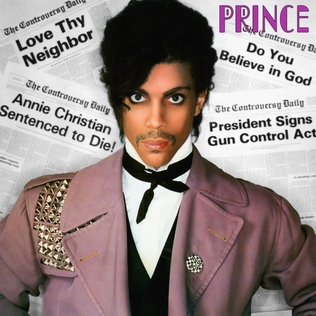
I was aware of Prince before then. I knew his 1980 hit song “I Wanna Be Your Lover.” I knew that he tried to crossbreed his cat and dog and that his favorite food was Bubble Yum bubblegum, according to what VJ, my friend and 33.3% of my high school’s Black population, read in Right On magazine. Starting in the fall of 1980, each time I visited the Harmony Hut in the Paramus Park Mall, I considered buying Prince’s then-new album Dirty Mind. Despite never hearing any song from it (“I Wanna Be Your Lover” was on his prior album), the album’s striking cover photo—featuring Prince wearing only a jacket, a kerchief, and black bikini underwear—always caught my attention. I appreciated the masterful use of minimalist composition and provocative imagery, employing high-contrast lighting to accentuate the artist’s silhouette and physique and the cut of his undergarment. I didn’t end up buying the album until a year later, after the release of Controversy. If I were to run into someone I know at the mall while holding a book of photographs called Man Bulges and an album called Dirty Mind with a bikini-clad male singer on the cover and NO HIT SONGS they would totally get the wrong impression. Heck, I would get the wrong impression if I didn’t know myself better.
The song “Controversy” opens with Prince singing “I just can’t believe all the things people say / Am I black or white, am I straight or gay?” “Am I straight or gay?” He’s asking us? I’m puzzled. How could someone not know if they are straight or gay? In regards to myself, the answer was crystal clear, but I hadn’t yet realized the process of self-discovery that others might face.
I snagged the 45 first, then the album. The LP version of “Controversy” stretched on for an extra three and a half minutes. When it comes to dance tracks, I like ’em long. I’ve always preferred a 12-inch to a 7-inch. Feel free to call that foreshadowing.
Prince captivated me, though I couldn’t quite put my finger on why. Maybe it was because I avoided drawing attention to myself, yet here was this man, boldly rocking eyeliner and high heels, defying gender norms without a care for what anyone thought. I’d never seen someone challenge societal expectations so openly and confidently.
(For my younger readers, this was pre-Boy George. Who’s Boy George, you ask? He was the flamboyant androgynous lead singer of Culture Club. What’s Culture Club? A massively successful pop group. Look, there are plenty of books you can read about this. What’s a book? A book is a bunch of paper containing tons of words, glued together so…you know what? Just Google it! Now where was I? Oh, yes.)
Was shy, awkward me in awe of Prince’s unapologetic self-expression? As someone who always felt “different,” did I find inspiration in his celebration of uniqueness? Perhaps Prince showed that it was possible to be true to oneself and still be accepted – a revelation for a college student rejected for not being interested in sports, abstaining from the alcohol and the marijuana, and preferring pop and dance music over much so-called classic rock.
While his presentation intrigued me, it was the music that drew me in. On the album version of the song “Controversy,” Prince recites “People call me rude / I wish we all were nude / I wish there was no black and white / I wish there were no rules.” Was there an anarchist living inside me who was drawn to the idea of “no rules?” Did these lyrics awaken a deep, unacknowledged desire to be free from societal expectations and labels? Did the boldness of these words make me feel both uncomfortable (due to internalized norms) and excited (for reasons I couldn’t explain)? Did I feel liberated hearing someone express these thoughts openly? Did I admire Prince’s boldness and freedom of expression, hoping to one day feel as comfortable in my own skin? Did the lyrics instill hope for a world where everyone could be fully accepted?
Then there’s “Do Me, Baby.” Why did I find this song so… hot? Prince seducing a woman with such directness – did I wish I could be like him? On further listens I noticed that Prince never specifies the partner’s gender. And yet I still found it alluring. Not even my future wife Olivia N-J suggesting we get physical had that effect on me. I concluded that it was his falsetto. Made him sound like a girl. That must be it.
The song “Sexuality” preached a message of sexual liberation as a path to freedom and enlightenment, railing against “a bunch of double drags who teach their kids that love is bad.” Embrace your sexuality without shame or restriction, Prince advised. That was easy enough for some of us, but what of those in society who were maligned for who they love, the homosexuals, for instance? I’m with Prince – let the homosexuals love who they love. That has nothing to do with me, of course. Live and let live, right?
The album ends with the song “Jack U Off,” a provocative meditation on carnal desire, exploring the primal aspects of human connection, pleasure, and the physical manifestation of libidinal energy – ah, screw that. It’s Prince offering to jack u off, specifying the u is a woman. U r so confusing to me, Prince.
Sandwiched between the revolutionary Dirty Mind and the widely successful 1999, Controversy is the crucial link that transformed Prince from a brash newcomer into a musical legend. It signifies a notable progression in his creativity, fusing rock, funk, disco, soul, and pop, and anticipating the boundary-pushing sound that would define his career. This album marks when Prince began to expand his lyrical horizons beyond love and sex, delving into broader themes such as politics (“Ronnie Talk To Russia”) and morality and society’s lack thereof (“Annie Christian”). It should be more celebrated than it usually is. It’s a crucial part of Prince’s legacy and deserves reconsideration and honor.
The answer to many of my questions came later in the ’80s, when after some, ahem, “experimentation” with both genders (except women) and indulging my interest in photography via magazines with names like Blueboy, Honcho and Inches, I had an epiphany: turns out one can be skinny AND gay. Apparently, People magazine wasn’t the oracle of sexual identity I’d thought it was. My subscription to Inches proved far more enlightening. I wish I had come to that realization sooner. If only there were some clues.
On the last weekend in June 1992 I was manning a booth at New York City’s Gay Pride Festival. Coincidentally, working at the neighboring booth was someone I hadn’t seen or spoken with in 15 years – Steven Rabinowitz. In the ensuing years he also must have been listening to Prince albums such as Controversy and reading psychological journals like Inches. I didn’t say hello, though I privately reminisced about our time at summer camp and how to this day, no girl has done to me what Steven Rabinowitz did to me when we were both in the closet.