
On today’s playlist we’re celebrating the birthday of The xx’s Romy.
On today’s playlist we’re celebrating the birthday of The xx’s Romy.

Today is the birthday of The Go-Go’s’ Belinda Carlisle. Hear a few of her hits on today’s playlist.

Madonna’s career spans decades, evolving alongside the landscape of pop music and culture. From her early days as a dance-pop sensation to her later role as a global philanthropist, Madonna has consistently pushed boundaries and redefined what it means to be a pop star.
Her musical journey began in the 1980s with infectious hits like “Holiday” and “Like a Virgin,” which quickly established her as a pop icon. As her career progressed, Madonna’s music tackled more serious subjects, as evidenced by songs like “Papa Don’t Preach” and “Live to Tell.” Her ability to reinvent herself musically is exemplified by tracks such as “Vogue,” which brought underground ballroom culture into the mainstream, and “Frozen,” which showcased a more ethereal side to her artistry.
But Madonna’s impact extends far beyond the realm of music. She has been a vocal advocate for various social causes throughout her career. In the 1980s, she was one of the first mainstream artists to speak out about the HIV/AIDS epidemic, using her platform to raise awareness and funds for research. Her commitment to social justice also encompasses support for LGBTQ+ rights, gender equality, and education for girls.
In 1998, Madonna established the Ray of Light Foundation to promote peace, equality, and education worldwide. Her philanthropic efforts expanded further in 2006 with the founding of Raising Malawi, a nonprofit organization dedicated to supporting orphans and vulnerable children in Malawi. This initiative focuses on providing essential resources and emphasizing the importance of education and empowerment for young girls.
Madonna’s work in Malawi also includes partnering with BuildOn to fund the construction of several schools, ensuring that children from underprivileged backgrounds have access to quality education. Her efforts in global health, particularly in areas such as maternal health, orphan care, and HIV/AIDS prevention, demonstrate a deep-rooted concern for marginalized communities.
Throughout her career, Madonna has used her music and public persona to challenge societal norms and advocate for diversity and inclusion. Songs like “Express Yourself” and “Vogue” are not just pop anthems but cultural statements that celebrate self-expression in its most authentic form.
While her artistic choices and outspoken nature have sometimes been met with criticism, there’s no denying Madonna’s impact on popular culture. Her music has empowered generations, and her philanthropic work has inspired countless individuals to become agents of change.
As Madonna continues to evolve as an artist and humanitarian, her legacy as a cultural icon who has used her influence to create positive change and support marginalized communities remains undeniable. Her journey through music and philanthropy serves as a powerful example of how artists can use their platform to make a tangible difference in the world.
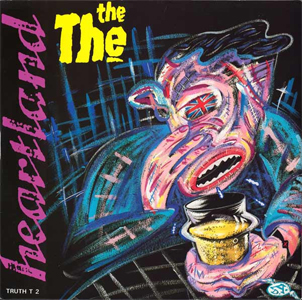
Today is the birthday of the leader of The The, Matt Johnson, who clearly didn’t foresee Internet searches when he named his band. A handful of their songs are included on today’s playlist.
Happy International Left-Handers Day! 🖐
Did you know that in the 1600s, lefties were suspected of witchcraft? Fast forward to today, and we’re still navigating a world designed for righties. From scissors to can openers, life’s full of little challenges for the left-handed among us.
Even language hasn’t been kind – check a thesaurus and you might find some surprisingly negative synonyms for “left-handed.” (Have you ever been accused of giving a left-handed compliment?) But lefties in good company! Some of the world’s most creative minds have been southpaws.
To celebrate this most important of holidays, I’ve put together a playlist featuring 30 incredible left-handed musicians. From rock legends to pop icons, these artists have left their mark on music history.

Ben Gibbard of Death Cab For Cutie and The Postal Service was born on this date in 1976. You’ll hear a lot of his music on today’s playlist.

Lots of Whitney Houston on the playlist today, the 61st anniversary of her birth.
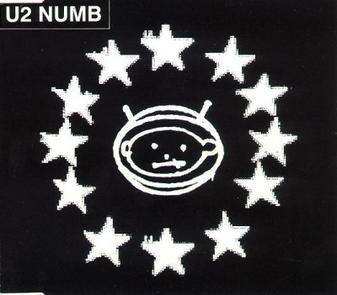
Lots of songs by U2 on today’s playlist, as group member The Edge celebrates a birthday today.
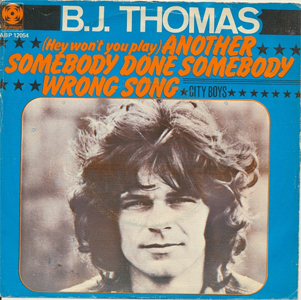
The late B.J. Thomas was born on this date in 1942. A few of his hits are included on today’s playlist.
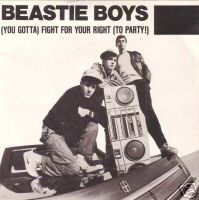
From the raucous “(You Gotta) Fight for Your Right (To Party!!!)” to the genre-bending “Intergalactic,” Beastie Boys left an indelible mark on popular music. This New York trio revolutionized hip-hop by infusing it with punk rock energy, witty lyricism, and an eclectic sampling technique. Their discography, spanning tracks like the adrenaline-fueled “Sabotage” and the old-school flavored “Paul Revere,” showcases their ability to evolve while maintaining their signature sound.
The group’s musical journey is a testament to their versatility. Early hits like “No Sleep Till Brooklyn” and “Brass Monkey” established them as party-starting provocateurs. However, albums like Check Your Head and Ill Communication saw them integrating live instrumentation, as evidenced in tracks such as “So What’cha Want” and “Root Down.” This willingness to experiment kept their sound fresh and unpredictable, earning them critical acclaim and a devoted fan base.
Beyond their musical innovations, Beastie Boys also used their platform for social good. The group became increasingly socially conscious over time, addressing issues of diversity and inclusion in their work. “Sure Shot” famously features the line “I want to say a little something that’s long overdue / The disrespect to women has got to be through,” signaling a shift from their earlier, more problematic lyrics. They also supported various charitable causes, including the efforts to rebuild New York City after 9/11. They were vocal supporters of the Milarepa Fund, which worked to promote awareness and activism concerning the Tibetan independence movement. The group organized and headlined the Tibetan Freedom Concert series, which ran from 1996 to 2001, raising both funds and awareness for the cause. This dedication to using their influence for positive change became a defining aspect of their later career. As we look back on their legacy, tracks like “Make Some Noise” and “Don’t Play No Game That I Can’t Win” remind us of the Beastie Boys’ enduring relevance. Their journey from bratty rappers to socially conscious artists mirrors the growth many of their fans experienced alongside them. By consistently pushing boundaries in their music and their activism, Beastie Boys proved that it’s possible to evolve, entertain, and educate all at once.