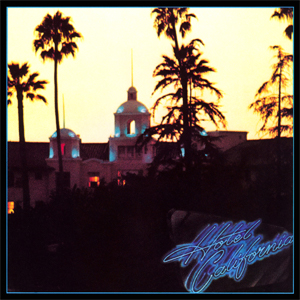
You know the songs. Whether it’s the opening guitar strum of “Hotel California” echoing through a retail store or the effortless cool of “Take It Easy” on the radio, the music of the Eagles is woven into the very fabric of popular culture. They are, for many, the definitive sound of 1970s California rock. But when you look at a playlist that pulls not just from the band’s iconic catalog but also from the solo careers of its members, a more complex and interesting story begins to unfold. It’s the story of a band, yes, but also of the powerful creative forces that defined it.
In their early days, the Eagles perfected a blend of country-inflected rock that felt both revolutionary and deeply familiar. With Bernie Leadon’s string-bending authenticity providing a crucial link to traditional country, songs like “Peaceful Easy Feeling” established a sound built on gentle acoustic guitars and those famously pristine vocal harmonies. Yet, the band’s ambition was clear from the start. On a single album like 1973’s Desperado, they demonstrated a remarkable range, offering both the sepia-toned storytelling of “Tequila Sunrise” and the sweeping, cinematic sadness of the title track. Their evolution continued with hits like “One of These Nights,” which pushed their sound forward with a taut, R&B-influenced groove, and the soaring ballad “Take It to the Limit,” a track defined by the unforgettable high-note heroics of bassist Randy Meisner.
The band’s musical expansion went into overdrive in the late 70s with key changes in personnel. First, the arrival of guitarist Joe Walsh injected a new energy, which you can hear clearly on his solo track “Rocky Mountain Way.” He brought a rawer, grittier guitar attitude that made a snarling, high-octane track like “Life in the Fast Lane” possible. But the band’s later sound wasn’t just about getting heavier; it also grew smoother. The addition of bassist Timothy B. Schmit, who brought another key flavor to the group, is perfectly captured in his soulful, impeccable lead vocal on “I Can’t Tell You Why.” It gave the Eagles one of their most enduring and elegant hits, proving they could master polished balladry as effectively as they could rock.
To fully appreciate the band’s dynamic, one also has to listen to what happened when its members went their separate ways in the 1980s. The solo material reveals the individual artistic identities that were often blended within the group. Don Henley, in particular, stepped out from behind the drum kit to become a formidable solo artist, showcasing a cynical and poetic voice on tracks like “The Boys of Summer” and “Dirty Laundry.” At the same time, Glenn Frey delivered pure 80s pop-rock adrenaline with “The Heat Is On,” a sound quite distinct from the band’s collective work. These solo ventures highlight the specific creative impulses each member brought to the table.
Ultimately, a playlist like this offers a richer understanding of the band’s legacy. It shows that the Eagles weren’t a monolith, but a convergence of remarkable talents. You had the foundational country-rock instincts, the powerhouse vocalists who could each take the lead, the gritty guitar hero, and the polished, often pointed, songwriting of Henley and Frey. Listening to the haunting live harmonies of “Seven Bridges Road,” you can hear all those individual voices coming together to create something powerful and lasting. It’s a sound that is much more than any single hit song—it’s the enduring result of a rare and potent combination of artists.
If you could travel back in time and turn on a car radio in 1963, what would you hear? It was a year poised on the brink of profound change, both culturally and musically. Listening to the pop charts from that year is like opening a time capsule of a specific American moment, one just before the British Invasion, led by The Beatles, would arrive on our shores in January 1964 and rearrange the entire landscape. Using a playlist of the year’s biggest hits, we can get a clear picture of the sounds that defined the last year of this particular pop era.
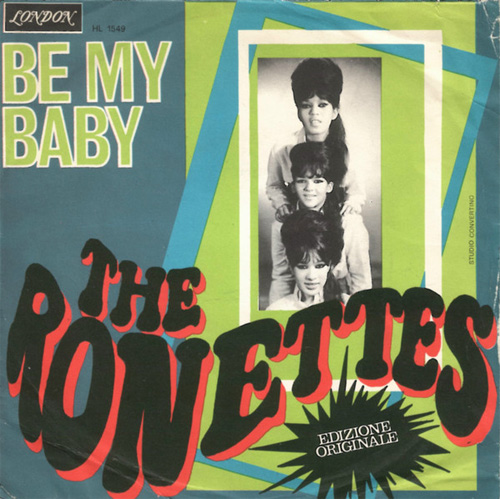
Two major sounds seemed to rule the airwaves, both born from a distinctly American, youthful energy. From the West Coast came the sun-drenched anthems of surf rock. The Beach Boys offered a national invitation with “Surfin’ U.S.A.,” while their friendly rivals Jan & Dean created the idyllic “Surf City.” This wasn’t just a vocal trend; the raw, driving energy of instrumental hits like The Surfaris’ “Wipe Out” and The Chantays’ “Pipeline” provided a visceral, drum-and-guitar-heavy soundtrack for a generation. Complementing this was the sound of the girl groups, often channeling teenage drama through the ambitious production of Phil Spector’s “Wall of Sound” on tracks like The Ronettes’ “Be My Baby” and The Crystals’ “Da Doo Ron Ron.” From the defiant fun of Lesley Gore’s “It’s My Party” to the tough-girl stance of The Angels’ “My Boyfriend’s Back,” these songs were miniature soap operas set to a 4/4 beat.
At the same time, a different kind of sound was solidifying its place at the heart of American music, broadcasting from Detroit and other soul music hubs. Motown was hitting its stride, producing hits that were both commercially successful and artistically sophisticated. You could feel the undeniable energy of Martha Reeves & The Vandellas on “(Love Is Like A) Heat Wave” or get lost in the smooth, clever plea of Smokey Robinson & the Miracles’ “You’ve Really Got a Hold on Me.” A teenage prodigy named Stevie Wonder even captured the explosive energy of his live performances on “Fingertips, Pts. 1 & 2.” It wasn’t just Motown, either. The soulful storytelling of groups like The Drifters on “Up on the Roof” and the raw, emotional performance of Garnet Mimms on “Cry Baby” showed the depth and variety within R&B and soul music.
Beyond these dominant movements, the Top 40 of 1963 was remarkably eclectic. The folk revival crashed onto the pop charts with Peter, Paul and Mary’s earnest version of Bob Dylan’s “Blowin’ In The Wind,” introducing a new layer of social consciousness to mainstream radio. Unclassifiable artists with singular visions also found massive success. Roy Orbison’s haunting, operatic ballad “In Dreams” and Johnny Cash’s iconic, mariachi-inflected “Ring of Fire” were worlds unto themselves. The charts even made room for the wonderfully unexpected: Kyu Sakamoto’s “Sukiyaki,” a beautiful Japanese-language ballad that became a number-one hit, and “Dominique” by The Singing Nun, also a number-one hit, proved that a great melody could transcend any language barrier. And in a class all its own was the wonderfully raw and raucous “Louie, Louie” by The Kingsmen, a garage-rock precursor that parents hated and kids loved.
Looking back, the collection of hits from 1963 represents a high point for a certain kind of American-made pop music. It was a world of surf guitars, dramatic girl-group harmonies, sophisticated soul, and a surprising number of unique one-offs. Every song on the radio, from Andy Williams’ smooth crooning to the gritty simplicity of “Louie, Louie,” was part of the same popular conversation. It was a vibrant and diverse scene, but one operating on its own terms. It had no idea that four young men from Liverpool were about to board a plane, bringing with them a sound that would change the rules for everyone.
On this date in 1789, the French people stormed the Bastille Prison in Paris to shout “No More Kings!” They probably shouted that in French. I can’t say for sure as I wasn’t there that day. Anyhoo, it worked! How’ bout that? This uprising ultimately led to the birth of democracy in France.
To celebrate, I compiled a Bastille Day playlist. I’ll be the first to tell you that there are far more accurate Bastille Day playlists out there. I’m using the holiday as an excuse to compile tracks from French artists, songs sung in French, songs with French titles, and one song by Chicago-born 60s song parodist Allan Sherman. I learned more from that three-minute record, baby, than I ever learned in school about the French Revolution.
Call me old-fashioned, but I operate on a twelve-month calendar. That might be a controversial take, considering that outlets like Rolling Stone dropped their “Best of the Year So Far” lists back in June, apparently under the impression that 2025 is only ten months long. I thought I’d wait for half of the year to pass before I declare that half of the year has passed. For those of us who believe in a twelve-month cycle—not a ten-month one—here are 30 songs that have made my year in music great so far.
Throughout the next however many months I’ll be counting down my 100 favorite albums, because why not. I’m up to number seventy-one.
New York City is full of woke, stuck up, superficial, opinionated, sarcastic, cooler-than-thou, smarter-than-thou, righter-than-thou coastal elites who are always in a rush to get somewhere, and yet I still had trouble finding my tribe there. You’d think it would be easy in a city of 8 million residents, exactly 55% of whom self-identify as queer, another 12.5 % I’VE identified as queer, 32% are queer-adjacent, and .5% should just fucking relocate. Like, yesterday.
Why is meeting like-minded people such a challenge for me? I know I’m not at the top of the gay man hierarchy, among the buff Adonisi whose bodies would’ve made Michelangelo throw in the chisel. Nor am I at the bottom, which is shared by former New York congressman George Santos and the late Roy Cohn, may he rot in hell. I know I shouldn’t speak ill of the dead, but I’m sure even Satan was like “Yuck. I gotta let this asshole in? He’ll bring down my property value!”
Surely there are others who, like me, exist between the two poles. Bendix, the Thai diner on Eighth Avenue, wasn’t Le Bernardin nor was it Domino’s Pizza. It was a perfectly fine place to eat where one could easily find something yummy on the menu. That’s who us inbetweeners are. We’re the Spicy Noodles of the LGBTQ+ buffet. And while part of me wants to be recognized, worshiped, exalted – to be in with the in crowd, to go where the in crowd goes, I’d gladly settle for a smidgen of companionship with those who also inhabit that unremarkable, yet presumably populated, territory between the Herculean ideal and the spectacularly flawed. I don’t need a ticker-tape parade of dancers and balloons and a float carrying the reunited cast of Absolutely Fabulous; just an understanding nod that says, “Yes, you. The one in the Olivia Newton-John concert t-shirt from 1982. We see you.” That’s not so easy to find in Manhattan, where I was just another New Yorker trying not to spontaneously combust when a tourist decides the entirety of the sidewalk is the perfect spot to unfurl a goddamn map the size of a small throw rug. Vamoose!
I don’t remember how I found it, but the biweekly storytelling workshop I attended in the early 2000s filled this void the way I fit in my Olivia Newton-John 1982 concert t-shirt, which is to say perfectly! Queer Stories for Boys was where gay men, most of whom were in their thirties and forties, shared real stories from their lives – some heartbreaking, some hilarious, some of which would be inappropriate for me to repeat here but I will anyway. I don’t think any of us “boys” considered ourselves kings of the gay hill, top of the gay heap, gay-number-ones. We were more an island of misfit toys, where those of us who don’t fit in fit in.
Every other Saturday, we’d meet at the LGBT Center in Greenwich Village. Fittingly, the room was pretty generic – not spectacular, but not the George Santos of rooms either. Its white ceiling and walls were clean, as was its simple tiled floor. We sat on metal folding chairs showing years of wear by windows overlooking bustling city streets. Outside, the usual New York soundtrack played on: sirens wailing, impatient drivers leaning on their horns, jackhammers hammering, drummers drumming, pipers piping, pigeons engaged in knife fights. Inside, a dozen or so spicy noodles repeated “I remember” to see where it led. With open minds and no expectations, we let our memories surface freely.
One person’s “I remember” may inspire another’s. Robin may say “I remember I remember I remember being a kid trick or treating and hoping that instead of Razzles or candy corn all the neighbors would give me sunflower seeds” which would lead to Harry saying “I remember I had a summer job at Camp Johnny Appleseed as an archery instructor, which kept me on my toes” which would lead to me saying “I remember the first time someone sucked my toes,” at which time I observed Gregg laughing and squirming in his seat, which is ASL for “Been there, done that.” I’m not going to relate that story to you, reader. Sorry. Nope. Not gonna happen. You best move on.
La la la.
Fine. You win. I can’t take any more of your badgering. At this point I honestly can’t recall the first time or the last time some big piggy took my little piggies into their mouth. There may have been only one time. Who was it? When was it? Were they intentionally looking for some foot-based intimacy? Or did I, in a wacky Lucille Ball moment of supreme clumsiness, accidentally, while clambering into bed, plunge my big toe into a mouth that was as open as Macaulay Culkin’s on the Home Alone poster? Was it with Já, with whom I had a brief vacationship in Provincetown in my early thirties? He did seem overly enthusiastic about shrimp. (Note to self: delete that corny joke on the next draft.) Or perhaps it was that hottie from the record store, who, while we sat on my bed watching Mary Poppins (I know how to set the mood!), kept inexplicably yelling “WHORE!” at the screen every time the character of Mary Poppins appeared. No clue why. It’s not like they showed Bert sweeping her chimney. (Note to self: delete that corny joke on the next draft.) Now that I think about it, a guy I dated a few years later did the same thing. Clearly, I have a type. And apparently, it’s men whose pasts include Edwardian nanny-induced trauma that has given them emotional baggage large enough to hold a hat stand, a large floor mirror and a floor lamp.
In any case, I’m trusting you with this deeply personal, embarrassing, and somewhat murky memory. I’d be mortified if anyone I know – friends, family, co-workers, those who work in the shoe department at Bloomingdale’s – finds out. So after reading this, please do me a little favor and set your laptop on fire. And the laptops of everyone you know. And everyone you don’t. Spit spot. I keep my lurid tales of debauchery buried under a Snuggie of shame, shared with nobody except a roomful of passing acquaintances in Greenwich Village.
So, who were these queerbos with whom I confided my private tales of podophilia?
There was Doug, a screenwriter and the facilitator of the storytelling workshop, who, like me, shared a deep appreciation for Rufus Wainwright, though while I was an I-have-the-CDs-and-I-saw-him-in-concert-downtown-and-said-hello-to-him-when-I-saw-him-on-Eighth-Avenue-for-he-lived-in-the-neighborhood kind of fan, Doug was to Rufus what Deadheads were to Jerry Garcia, seeing his concerts in venues across these United States. That’s passion. That’s dedication. That’s not happening with my lazy ass. My motto is “If I can’t walk there, I ain’t going there.” My motto could us some work.
At QSFB, Doug told us of the plays he scripted as a child, stories of dinosaurs and monsters and mutants from outer space. In hindsight, he viewed his creations as metaphors for his feeling “different,” and telling his stories became a way to embrace that identity and liberate himself from societal expectations and any lingering internalized homophobia. Omnes nos ab exterior spatio mutants, which is Latin for “We are all mutants from outer space.” My mottos are getting better.
A couple of years after I joined QSFB, Doug, who was in his early fifties, started bringing his new boyfriend to our meetings — a tall 19-year-old dancer with curly blond hair who would unironically share stories about tall 19-year-old curly blond dancer things, like hanging out with his classmates watching Teletubbies. Doug would roll his eyes and let out an Oscar-worthy sighsuggesting a suffering more profound than what Meryl Streep’s character in Sophie’s Choice underwent. “See what I have to put up with?” We all nodded in commiseration, and passed around a collection plate to help Doug pay for the years of therapy he’ll undoubtedly need to recover from this trauma. That’s my New York way of saying “Get over yourself, Doug!” Famous victims in history: Julius Caesar, knifed by dozens of Roman senators; Aeschylus of Eleusis, killed by a tortoise that fell from the sky (look it up—it’s a crazy story); Doug, crucified daily by mentions of Tinky Winky from a tormentor who possessed rock hard buttocks.
That’s not to suggest I thought little of Doug. Quite the contrary. He was the group member with whom I grew closest, and the one with whom I grabbed lunch at Bendix a couple of days after the 9/11 attacks on our city. Saying I was a wreck is like saying Brad Pitt is nice-looking. No, he’s GOURG, and I was a MESS. Each news report was a fresh assault, and I’d spent the better part of the week sitting on my bed crying. Sitting with Doug I attempted to articulate the enormity of what happened. “I just can’t wrap my head around this much hate! The loss! The absolute, unadulterated evil. How does one even process it?” Doug nodded, adding “What really disturbs me and pushes me over the edge is Bush’s pronunciation of ‘nuclear.’ ‘New-cue-lar.’ This is our leader?? We’re so screwed.” Looking back, I think Doug, like the rest of us, grappled with the collapse of civilization and couldn’t make sense of it. However, a misplaced vowel was an offense he felt more equipped to tackle.
***
Brad wore eyeglasses with lenses so thick even coke bottles were like “whoa.” He was legally blind, and his stories from the land of the visually impaired elicited from me reactions that were a mix of “OMG, I don’t know how you persevere” and “I may end up in hell with Satan and Roy Cohn for saying this, but your horror stories are friggin’ hilarious!” He recounted the time he went to the dimly lit bar Barracuda on 21st Street in the Chelsea gayborhood. There Brad spotted a guy, and this guy was looking at him. Every time Brad peeked, the guy was staring right back. A smile from Brad elicited a reciprocal smile – the universal language of “maybe.” Buoyed by this silent encouragement, Brad made his move. He started walking over. Meanwhile, the other man, equally bold, was walking towards him! Destiny! It was a beautiful, silent ballet of burgeoning attraction. They’re getting closer… closer… and BAM! Brad walked face-first into a mirror. It’s a classic love story: boy meets boy, boy is actually boy’s own reflection, boy gets a slight concussion. Romance is tricky, y’all.
***
Robin was slender and wore his hair in a ponytail—though his look was not of the Steven Seagal quiet man with mysterious past assassin variety. He looked like he should be living on a commune where the primary currency was positive affirmations, teaching yoga and eating tree bark, but somehow was here in Manhattan, perhaps as part of an exchange program. Somewhere in upstate New York at a vegan spiritual retreat was some poor, chain-smoking cynic from the East Village engaged in a silent meditation, asking his version of god “da fuck am I doing here?” In actuality, Robin worked as a writing professor at NYU. And I’m guessing he was great at it, as I was always engrossed in his stories of his world travels, his revelations from talking to himself while walking (side note: if you see people walking around Manhattan talking to themselves, they’re not mentally ill or unhoused; they’re NYU professors. Mentally ill, unhoused NYU professors), and poignant musings on his mother’s hidden history (quiet woman, mysterious past). I was genuinely thrown for a loop when he asked me on a date, as he didn’t strike me as one who would call Mary Poppins a whore. He was intelligent and thoughtful—a far cry from my usual partners, so I rebuffed him. Still, I did look forward to his perfectly delivered anecdotes on just about anything. His range was much, much wider than Steven Seagal’s.
***
Ronnie was an 80-something British expat who loved to share stories of his travels throughout Southeast Asia and the young men there who, according to Ronnie, were OBSESSED with him. Each anecdote would commence with a pronouncement of such startling improbability, a jaw-dropping premise concerning his irresistible allure, followed by a super dramatic “Well, I” and a long pause, as if he was as shocked by his story as we were. Actually, not a pause. The story ended with a cliffhanger, and we never found out who shot J.R. “I once found myself being serenaded by a trio of love-struck boys in a Bangkok nightclub,” he’d begin, his eyes twinkling. “Naturally, I selected one to accompany me back to my hotel room. This, regrettably, sparked some jealousy amongst the others. A scuffle broke out, and before you knew it, a knife was produced. Well, I…” And scene!
***
Nick was a longtime group member who’d mysteriously vanished before I joined and then reappeared with the story that he’d been hospitalized after hearing Spanish-speaking birds instructing him to kill. “Mata! Mata!” they’d chirp. Now medicated and serene, he was warmly welcomed back and enthusiastic to share, sprinkling nearly every story he told with references to the Greek Orthodox Church. He was genuinely kind, soft-spoken and eager to connect. One meeting, he shared with quiet excitement that his doctor had cleared him to stop his medication. It was the last time any of us saw Nick.
***
There was that high school student who attended twice. His contribution to the “I remember” segment was “I remember one time I found a quarter in the hallway at school, but then I saw it was Canadian.” There was a pause. We waited. Nothing further was forthcoming. Not even a “Well, I….” I give this kid props. When I was his age I wouldn’t have sought out a group of older gay men and shared that. Of course, when I was his age, I wasn’t yet gay, as evidenced by my crush on Olivia Newton-John. This kid knew who he was, and didn’t feel pressure to embellish his—calling it a story doesn’t seem fair to other stories. His unvarnished statement of fact.
While I admired this kid’s pluck, Doug’s puss was channeling Roger Ebert sitting through the 2001 cinematic non-classic that was Crocodile Dundee In Los Angeles. (From Ebert’s review: “I’ve seen audits that were more thrilling.”) Maybe it was his lifelong dedication to the craft of storytelling that caused Doug’s reaction, or maybe he looked at that kid and saw his own awkward not-fitting-in past, and his brain was just like, “Nuh uh. This is not the show Friends. I’m not here for you.” I wanted to say “Doug, find some compassion. Plus, if you treat this kid to a few dance lessons, in three or four years he could be the next boyfriend you complain about.”
***
Then there was George. A truck driver by trade, George was friendly, unpretentious, and often funny in a way that felt entirely unintentional. I wouldn’t describe him as “straight-acting,” as that implies internalized homophobia, feeling a need to conform to heteronormative expectations, and a lousy kisser. HOWEVER, George didn’t dress like a homo; he didn’t live in a gayborhood; he almost certainly didn’t drink cocktails that came with tiny umbrellas. Possibly the straightest thing about George is he was married to a woman. I know there are many gay men who marry women—I’m not going to get into the history of Liza Minnelli’s husbands right now, but in the case of George, I truly believe on his wedding day he was heterosexual, just as I was in my years worshipping Olivia Newton-John.
He shared his coming out story with us. He was sitting across from his wife at the kitchen table, both of them reading the newspaper over breakfast. She read aloud some innocuous, possibly even supportive, tidbit about gay people. George looked up, smiled, and said, “I’m gay,” and then “Pass the OJ, would you?” George’s wife didn’t react to that news by setting his clothes on fire like my favorite of Charlie’s Angels from my heterosexual days—Kate Jackson (the smart one)—did in the 1982 movie Making Love (from Roger Ebert’s review: “People have described the movie to me in one sentence as ‘Kate Jackson finds out her husband is homosexual,’ and they haven’t left out much.”), which until George’s story was my only reference point for wifely reactions to gay husbands. But there was no arson at George’s home. He and his wife just… kept reading. Kept eating. Kept sipping their OJ. Kept on being Mr. and Mrs. It’s a classic love story: boy meets girl. Boy and girl wed. Boy tells girl he’s gay. Girl passes the OJ and keeps reading the paper.
Another story George told involved him becoming obsessed with a song he heard on his truck radio, a tune that burrowed into his brain like RFK Jr’s worms (look it up—it’s a crazy story) and haunted him for days on end. He needed to own a copy, but the DJ failed to identify it. George would hum the melody for friends to zero recognition. Then one day, in the grocery store, the song came on over the sound system. George, as excited as a contestant who heard “Come on down!” on The Price Is Right, ran up to the nearest person in the detergent aisle, got in her face and yelled “What is this???” Confused and frightened, the woman stammered “Downy Fabric Softener.” “No, the song playing!!!” The reply: “‘Ray of Light’ by Madonna.”
Now, this is where George’s narrative collided with my understanding of basic reality. “Ray of Light?” I’m using the word “literally” correctly when I say literally everyone on Planet Earth, and possibly several adjacent dimensions, knew that song in 1998. Young, old, gay, straight, bourgeoisie, rebel, house pet, sentient dust mite, Teletubbies—all were humming it. Madonna was basically empress of the known universe then. We’re talking 16 million Ray Of Light albums sold. The “Ray Of Light” single went top ten in the U.S., the U.K., Italy, Spain, Canada, Australia, Greece, Hungary, Finland, New Zealand, Iceland, and Scotland (which is part of the U.K., but has its own charts. Go figure.). It even went to #1 in Croatia, which is literally the only thing I know about Croatia.
The image of George, mid-bite of English muffin, casually informing his wife he was gay, only for both to resume the quiet rustle of newspaper pages? I’m on board. I’ll file that under “stranger things have happened at breakfast.” But a gay man, in the late nineties, not knowing Madonna’s “Ray of Light?” That’s not just improbable; it’s a statistical impossibility, like being killed by a falling tortoise. Yet it was precisely tales like this – spectacularly suspect if from someone else yet oddly believable coming from one of our group – that made our QSFB meetings utterly unmissable.
***
I used to think “I live in Chelsea, the queerest of the queer of Manhattan’s gayborhoods, where the Pride parade is just another day on Eighth Avenue. My people are HERE!” All I had to do was walk out my door and I’d have my own guy versions of Charlotte, Samantha, and Miranda (Charlie, Sam, and Miroslav) to brunch with. To which the universe replied “Sorry Charlie…and Sam and Miroslav.” It turned out that geographical proximity to other ‘mosexuals did not, in fact, magically cure one’s inability to initiate conversation. Lots of fairies but no magical pixie dust. (Insert cocaine joke here.)
As Liza with a “z” commanded (back me up on this, Chelsea boys), you’ve got to ring them bells. For those of you afflicted with what my dermatologist refers to as the 3D Complex—Definitive Diva Deficiency (my dermatologist is as gay as the day is long), an explanation: in the song “Ring Them Bells,” Liza with a “z” tells the truly terrific, absolutely true story of a New Yawker named Shirley Devore, who, in a quest to haul her home a hus’, travelled to various places across the globe, as sitting in her apartment expecting a suitor to find her was…I don’t want to say dumb. Let’s go with stupid. She had to ring them bells. I had to ring them bells. And while Shirley went as far as Yugoslavia, I only needed to walk three blocks to 13th Street, the intersection of Liza, my loneliness, and my laziness.
In any given room I feel like the Creature from the Black Lagoon at a pool party. In the QSFB meeting room the plot twist wasn’t that I stopped being a swamp monster; it was that I’d finally found my swamp, full of weirdos with sharp claws, webbed hands, and iridescent, full-body fish scales. It may as well have been the Met Gala. If I may drop some very very deep knowledge for you to stick on your Pinterest vision board, it’s this: in a room full of monsters, you don’t have to pretend you’re not one. MIC DROP! Let me repeat that. In a room…oh, you can re-read it. I’ll wait.
La la la.
To just say your crazy out loud and have it met not with silence but with a nod is so powerful I’m gon’ call it Constantine the Great. (Constantine, by the way? Not a looker. He was the Creature of the Black Lagoon of fourth century Rome, but he made his mark.) And hearing someone else’s equally strange story was like gently unfastening that invisible yet ultimately isolating Snuggie of shame so many of us have been bundled in, smelling faintly of old regrets and takeout.
***
Light salmon. That’s the color I decided to paint my co-op’s walls, which from the moment I moved in 13 years earlier were jailhouse grey, my least favorite of the 50 shades. A fresh vibrant color would cheerify my 200 square foot abode. Sadly, with only weekends free, for one Saturday I was forced to trade my folding chair at QSFB for a paint roller, which led to my greatest, unrealized billion-dollar business idea: an interior decorating business for the Rapture-ready crowd, whose slogan would be “Jesus is coming. Repaint! Repaint!” He wouldn’t come all that way for beige. But before I could file the LLC, I got THE CALL. A Warner Music exec asked what it would take for me to move to Los Angeles to run their Licensing department.
My immediate thought: LA is a garbage city populated by stuck up, superficial, opinionated, sarcastic coastal elites who think they’re cooler-than-thou, smarter-than-thou, and righter-than-thou. Not my kind of people. And then, a lyric from my former neighbor Rufus Wainwright: “Life is the longest death in California.”
So, in an attempt to derail my career and get off the phone, I spat out a number I was certain would cause him to laugh like Vincent Price at the end of “Thriller” and hang up without so much as a “goodbye” or “thank you” or “enjoy your shitty weather”: I demanded a salary that was 80% higher than my current one. Then, because my mind was temporarily taken over by un hombre con cojones muy grande, I added, “And a car allowance.”
He said yes.
So, guess who was suddenly an LA-bound, stuck up, superficial, opinionated, sarcastic, cooler-than-thou coastal elite with a company-funded Audi convertible? I was happy with my new salary and proud of my negotiation skills, but at the same time I was sad about leaving New York and bummed that the workshop was over for me. My last four weekends in the city were no longer about community and sharing stories with my fellow freaks; they were about cardboard boxes and packing tape and selling old International Male catalogues on eBay. One man’s junk showing another man’s junk is yet another man’s treasure trails treasure.
Doug treated my departure as a personal betrayal. Think Julius Caesar recognizing Brutus as one of his assassins, or the Captain when Tennille served him with divorce papers. (Anybody else still shook about that? Love will keep us together? Whatever.) I went to say hello and goodbye to the group one weeknight, when a member was performing in a music recital. I sat right behind Doug, eager to say hello and catch up on the mirth and merriment I missed in May. He turned around and fired off a “Hihowareyougood,” and before the “d” even landed his back was to me and he was talking to his companion. I’m the Captain now. We never spoke again.
Writing this essay, some of the details were fuzzy. My brain, which is mostly full of Captain & Tennille trivia and anxiety, couldn’t remember, couldn’t remember, couldn’t remember things like if the group met weekly or monthly, so I did what any 21st century amnesiac does: I turned to the Google. I typed in “Queer Stories for Boys” and Doug’s name. I discovered he had a Wikipedia page, on account he wrote and directed a horror film in 1983. Wow. Our very own director of cinematic monsters, immortalized. The page mentioned our workshop. It also informed me that Doug had died in 2022.
When the pain from that punch to the gut subsided a tad, I looked up Robin. And there it was, an online memorial. He died last September. And on that page, someone had posted something that essentially was the raison d’etre of Queer Stories for Boys, why we all kept showing up in that room every other Saturday, even when the weather outside was beautiful: “Do you have a magic spell to return someone to life?” she asked. “No.” said the witch. “But, why don’t you tell me about them?” “Will that bring him back?” “For us. For a little while. Stories are a different kind of magic.” -Anonymous
And then, a quote from Margaret Atwood that said everything else: “In the end, we’ll all become stories.”
***
When you’re lonely in a big city, you think you’re looking for your “forever people,” the ones who will sit on your metaphorical couch—because who has a real couch in a 200-square-foot Manhattan apartment?—for the next forty years. The truth is, most people we encounter don’t become permanent fixtures in our lives. In the grand scheme of things they’re flashes. Some are just sparks, but if you’re lucky, some are golden rays of light that burst in and, for a too-short-but-you-wouldn’t-trade-it-for-the-world time, brighten your existence and make everything brilliant.
That was QSFB.
And I’ve felt those rays of light elsewhere: at my Toastmasters clubs, in my writers group, in improv classes, at office jobs, and on that on that one vacation with the guy whose enthusiasm for my feet was both unexpected and, cards-on-the-table, a little flattering. The goal, I’ve learned, isn’t to try and bottle the light as if it’s perfume, but to be awake and aware enough to see it and feel its warmth. The rays may not stay, but the stories do. The stories are the souvenirs, the trinkets, the snow globes I shake now and then as proof that on more occasions than I realize, my weird, lonely world was dazzlingly bright.
Naturally, this insight led me to do what any modern gay man of a certain age and too much time on his hands does when experiencing an Aha! moment of such profundity and clarity: I developed a detailed academic thesis connecting my life to Madonna’s Ray Of Light album. The evidence, I submit, overwhelmingly demonstrates that she and I are two peas of a podcast. Behold, the Queer Stories for Boys experience, as foretold by Her Madgesty:
In the song “Ray of Light,” Madonna sings of someone who “got herself a little piece of heaven.” For us it was our meeting room at New York’s LGBT Center, though calling it heaven might be overselling it. I can’t believe people would live so righteously, behave so saintly, and love their asshole neighbors while part of this mortal coil only to arrive at a place with uncomfortable metal chairs and no danish. Still, it was our free and happy place, away from a world that often isn’t kind to people or amphibious sea creatures like us.
In the album’s opening song, “Drowned World/Substitute for Love,” Madonna sings of how memories resurface and shift with time. Trés QSFB! She takes accountability for her choices, her fame, and the adoration she once craved, only to discover that what really mattered was human connection. That very discovery by me is what made me give up fame and mass adoration before they were unwillingly foisted upon me like QR code menus at every other goddamn restaurant in L.A. I guess I succeeded where Madonna failed. She’s so jealous of me. Stop trying to be me, Madonna!
“Frozen” asks us to global warm our icy cold hearts and allow for vulnerability and openness, letting go of regret, revenge, retaliation and radishes. (I added that last one. I loathe radishes.) Here’s some trivia for your next cocktail party: Like disposable vapes, hunting trophies, and the display of tobacco products, “Frozen” was illegal in Belgium, banned from airplay after a plagiarism claim in 2005. The ban was lifted in 2014. I guess you can say the Belgians waffled. (Note to self: don’t delete that joke. It’s comedy gold.)
While most hear “The Power of Good-Bye” as being about a romance gone kaput, its core idea — that goodbyes can be painful yet necessary — makes it apparent that Madonna is really singing about my leaving New York and my departure from the workshop. Stop obsessing over me and get a life, Madonna!
Both “Sky Fits Heaven” and “Nothing Really Matters” speak to the big, scary journey inward —choosing personal paths, trying to duct tape over old wounds, and attempting to “live in the present,” which, frankly, could stand to improve its Uber rating.
“Little Star” includes the line “Never forget who you are, Little Star,” a cosmic Post-It note that reminds me that even when my job changes, my home city changes, and my dogs are silently judging me, my core weirdo, with his anxieties and quirky traditions and Captain and Tennille trivia, is still there, shining.
***
I used to think belonging meant being welcomed everywhere with open arms, but I’ve learned that it’s not a choice between belonging or not belonging. Some of us belong with those who don’t belong, which means we do belong, and those others who don’t belong also belong, which means belonging is belonging and not belonging is belonging. It’s a profound thought that calls for Excedrin.
Before attending the workshop I associated storytelling with tragic actors turning their pain into a one-man show at a black box theater on Manhattan’s Lower East Side, ideally taped for HBO, which would then launch them into a form of superstardom only recognized in New York. But a story doesn’t need an HBO special to matter. It just needs to be told. Stories can help us find validation. Stories strengthen bonds between people. Stories expose us to different cultures and perspectives. Of course, stories can also be weapons of mass boredom and make listeners want to jab pencils into their eardrums, like Alan’s ten-minute saga at Toastmasters about seeing Katy Perry at a county fair. Nobody cares, Alan! You’re in Los Angeles! We’ve all seen “Katy Perry” at “a county fair.” Come back when you find a Canadian quarter.
In that room on 13th Street, I learned to hold my quirks with less shame and more affection. Upon reflection, scratch what I wrote earlier about my adventure with digitophilic behavior. If Alan can take pride in and feel no embarrassment about his Katy Perry at a county fair story (and kudos to him, for if I saw Katy Perry at a county fair I’d take that story with me to the grave), then I shouldn’t feel at all uncomfortable sharing my toe-sucking chronicle. The laughter of recognition I heard the day I related that at QSFB demonstrated that stories don’t just reflect us back to ourselves; they let someone else see themselves in you. And the fact that the back cover of Madonna’s 1992 album Erotica is a photo of her with a foot in her mouth is proof positive she’s a Glenn stan. (Older folks, ask your younger dancer boyfriend what that means. I need to wrap this up.)
I’ve also become more adept at navigating loneliness. Not erasing it, but, to some extent, accepting it, and often finding joy in my alone time. These days, I’m not concerned with getting into the club where the A-gays go. I put on my headphones and dance my ass off at home to… what’s the name of that song again, George?
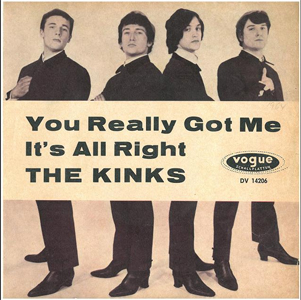
Let’s dive into the world of The Kinks, a band whose journey through the 60s, 70s, and beyond offers such a rich collection of sounds and stories. When you look at a playlist like this, it’s immediately apparent that they weren’t a one-trick pony. They exploded onto the scene with the raw, undeniable energy of tracks like “You Really Got Me” and “All Day and All of the Night.” These weren’t just catchy tunes; their distorted guitar riffs were groundbreaking, laying some early groundwork for hard rock and punk even, establishing Ray and Dave Davies as formidable musical forces. Songs like “Till the End of the Day” and “Set Me Free” from the same era show this potent, direct approach.
But to only focus on their early rock anthems would be to miss a huge part of what makes The Kinks so enduring. Ray Davies, as principal songwriter, quickly developed a keen observational eye, turning his gaze to the quirks and nuances of British life. This is where you get sharply drawn character sketches like “A Well Respected Man” and “Dedicated Follower of Fashion,” both dissecting social types with wit and a touch of cynicism. “Sunny Afternoon” masterfully combines a deceptively jaunty tune with lyrics about a fallen aristocrat, while tracks like “Dead End Street” and “Shangri-La” paint vivid, often poignant, pictures of working-class struggles and aspirations. This knack for social commentary, for finding the extraordinary in the ordinary, became a hallmark.
As they progressed, The Kinks also embraced a more introspective and wistful style. Think of the timeless beauty of “Waterloo Sunset,” a song that captures a fleeting moment of peace and urban romance with such elegance. Or “Days,” a simple yet profound reflection on gratitude and lost love. “Autumn Almanac” and “The Village Green Preservation Society” (the song) are wonderful examples of their ability to evoke nostalgia and a yearning for a simpler, perhaps idealized, past. Dave Davies also contributed distinct gems, with “Death Of A Clown” and the heartfelt “Strangers” showcasing his own songwriting talents.
Through changing musical landscapes, The Kinks continued to evolve while retaining that unique Davies perspective. “Lola” became an international hit with its then-controversial subject matter handled with characteristic charm and storytelling flair. Later tunes like “Come Dancing” looked back with affection, while “Celluloid Heroes” offered a more melancholic take on fame. From the almost pastoral “Muswell Hillbilly” to the defiant “I’m Not Like Everybody Else” or the hopeful “This Time Tomorrow,” their catalogue is a fascinating exploration of human experience, all delivered with a distinctively British voice. It’s quite the collection, isn’t it?
Paul McCartney’s genius as a songwriter extends far beyond his work with The Beatles, revealing itself most clearly in how other artists have transformed his compositions across genres and generations. This remarkable collection of covers demonstrates McCartney’s rare ability to write songs that function as both complete artistic statements and flexible frameworks for reinterpretation. When Joe Cocker turned “With A Little Help From My Friends” into a soulful anthem, or when Guns N’ Roses gave “Live and Let Die” a hard rock edge, they weren’t just covering songs—they were unlocking different emotional possibilities that McCartney had embedded in the original compositions. The breadth of artists drawn to his work, from Aretha Franklin’s gospel-tinged “Eleanor Rigby” to Beyoncé’s contemporary reimagining of “Blackbird,” speaks to the universal resonance of his melodic and lyrical craftsmanship.
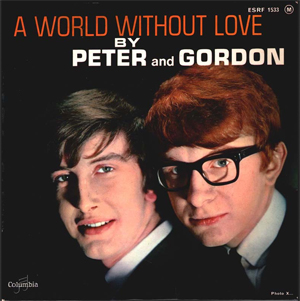
What makes McCartney particularly fascinating as a songwriter is his willingness to write specifically for other artists’ strengths while maintaining his distinctive voice. Songs like “A World Without Love” for Peter & Gordon and “Come And Get It” for Badfinger weren’t Beatles cast-offs but carefully crafted compositions that suited those acts perfectly. His collaboration with Elvis Costello on “Veronica” and his work with Michael Jackson on “Girlfriend” show an artist constantly evolving and adapting his approach to different musical contexts. Even when writing for others, McCartney’s melodic sensibility—that ability to find the hook that sticks in your mind—remains unmistakably present, whether it’s the yearning quality of “Yesterday” that En Vogue brought to R&B or the infectious rhythm of “Ob-La-Di, Ob-La-Da” that Celia Cruz infused with Latin flavor.
The lasting power of McCartney’s songwriting becomes evident when artists as diverse as Ray Charles, Stevie Wonder, and Andre 3000 find something meaningful in his catalog. These aren’t novelty covers or tribute performances—they’re genuine artistic connections where musicians recognize something in McCartney’s work that speaks to their own creative vision. From Little Richard’s rock and roll interpretation of “I Saw Her Standing There” to k.d. lang’s haunting take on “Golden Slumbers,” each cover reveals new layers in songs that seemed perfectly complete in their original form. This ongoing dialogue between McCartney’s compositions and successive generations of artists suggests something profound about his approach to songwriting: he creates musical spaces that invite inhabitation rather than mere imitation, proving that truly great songs don’t just endure—they continue to grow.