Tunes Du Jour Presents Olivia Newton-John

When you think of Olivia Newton-John, what’s the first image that comes to mind? For millions, it’s the transformation at the end of Grease—the leather jacket, the confident stride, the electrifying duet with John Travolta. But as a quick journey through her song catalog reveals, that iconic moment is just one chapter in a much broader and more fascinating story. Her career wasn’t a single note, but a series of distinct, evolving sounds, all held together by one of the most recognizable and endearing voices in pop music.

Listening to her early work, you can hear an artist with a clear, gentle sensibility rooted in the folk and country music of the era. Songs like her cover of Bob Dylan’s “If Not For You” and the narrative-driven “Banks of the Ohio” established her as a gifted interpreter. This was soon followed by a wave of soft-rock hits that defined the sound of mid-70s radio. With the earnest plea of “If You Love Me (Let Me Know)” and the gentle reassurance of “Have You Never Been Mellow,” she carved out a niche as a vocalist of immense warmth and sincerity. This period culminated in her signature ballad, “I Honestly Love You,” a masterclass in quiet vulnerability that became her first number-one hit in the U.S.

Then, of course, came Grease. The 1978 film wasn’t just a career boost; it was a global phenomenon that showcased her versatility. She effortlessly handled the sock-hop fun of “Summer Nights” and the plaintive, heart-on-her-sleeve performance of “Hopelessly Devoted to You.” But it was the film’s finale, with “You’re the One That I Want” and “We Go Together,” that signaled a change. The energy was bigger, the attitude was bolder, and it set the stage for a musical pivot that would redefine her image for a new decade.

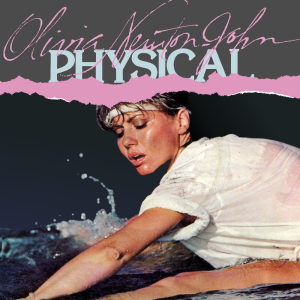
She didn’t wait long to capitalize on that new energy. Her very next album, 1978’s Totally Hot, continued the transformation, trading in the gentle ballads for a tougher, more pop-rock sensibility. A track like “A Little More Love,” with its driving guitar riff and assertive vocal, made it clear that the leather-clad Sandy was here to stay. This embrace of a more contemporary pop sound continued into projects like the soundtrack for Xanadu, which gave us the dreamy, roller-rink-ready perfection of “Magic.” Her most definitive transformation, however, arrived with the 1981 album Physical. The title track, with its pulsing beat and cheeky lyrics, was a world away from her past, and this era gave us energetic, synth-driven tracks like “Make a Move On Me” and “Heart Attack.”

What’s remarkable, looking back at this collection of songs, is not just the stylistic shifts but how natural each one felt. The common thread through the country-folk beginnings, the blockbuster duets, and the slick pop productions is the voice itself—pure, emotive, and instantly recognizable. Whether she was collaborating with Andy Gibb on “I Can’t Help It” or delivering the confident, rhythmic pulse of “A Little More Love,” Olivia Newton-John possessed a rare ability to connect. This playlist isn’t just a random assortment of hits; it’s a document of an artist’s graceful evolution and a reminder of the enduring appeal of a truly great singer.

Follow Tunes Du Jour on Facebook

Follow me on Bluesky

Follow me on Instagram
Tunes Du Jour Presents 1978

The year 1978 was a pivotal moment in music history, showcasing a striking contrast between the mainstream hits dominating the airwaves and the underground sounds bubbling beneath the surface. This year offered a rich assortment of genres, from disco and pop ruling the charts to punk and new wave carving out their own rebellious niches.

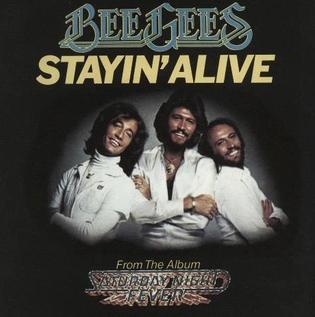
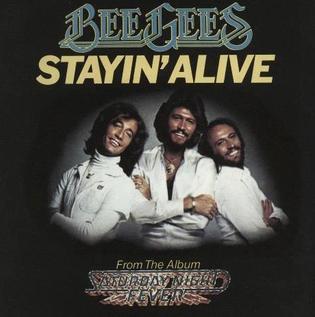
Disco was undoubtedly the dominant force in popular music. The Bee Gees’ “Stayin’ Alive” became an anthem of the era, while Chic’s “Le Freak,” A Taste of Honey’s “Boogie Oogie Oogie,” Donna Summer’s “Last Dance,” and Alicia Bridges’ “I Love the Nightlife (Disco ‘Round)” kept the dance floors packed. Even rock legends like the Rolling Stones couldn’t resist disco’s pull oor, as evidenced by their hit “Miss You.”

But 1978 wasn’t all about disco. Pop music thrived with ABBA’s timeless “Take a Chance on Me” and Electric Light Orchestra’s upbeat “Mr. Blue Sky.” Queen’s anthemic “We Are the Champions” became a staple at sporting events worldwide. In R&B, the Commodores’ soulful ballad “Three Times a Lady,” Funkadelic’s anthemic “One Nation Under a Groove,” and Chaka Khan’s empowering “I’m Every Woman” showcased the genre’s range. The soundtrack to Grease, featuring John Travolta and Olivia Newton-John’s “You’re the One That I Want,” dominated both radio and cinema.

While mainstream pop and disco ruled the charts, a counter-cultural revolution was taking place in underground venues. The Clash’s “(White Man) In Hammersmith Palais” blended social commentary with irresistible hooks, while the Buzzcocks’ “Ever Fallen in Love (With Someone You Shouldn’t’ve)” captured the essence of punk’s raw emotional energy. The Undertones’ “Teenage Kicks” embodied the unbridled spirit of youth, and Siouxsie & the Banshees’ “Hong Kong Garden” showcased the emerging goth-punk sound. Public Image Ltd.’s self-titled track “Public Image” signaled the evolution of post-punk.

1978 also saw the emergence of artists who defied easy categorization. Kate Bush’s haunting “Wuthering Heights” introduced a unique voice to the pop landscape, blending literary references with art-rock sensibilities. Kraftwerk’s “The Model” pushed the boundaries of electronic music, influencing countless genres in the decades to come. Patti Smith’s “Because the Night” (co-written with Bruce Springsteen) bridged the gap between punk poetry and mainstream rock. The year also saw reggae making inroads with Althea & Donna’s “Uptown Top Ranking,” while Randy Newman’s misunderstood “Short People” showcased his brilliance in crafting satirical, thought-provoking pop.

Looking back, it’s clear that 1978 was more than just a year of disco balls and safety pins. It was a time of musical diversity and innovation, where chart-toppers and underground icons coexisted, each pushing the boundaries of their respective genres. From the dancefloor anthems to punk’s raw energy, from synth-pop’s early days to reggae’s growing influence, 1978 offered a rich and varied soundtrack that continues to resonate today. This dynamic interplay between mainstream and alternative sounds would continue to shape the musical landscape for years to come, making 1978 a truly unforgettable year in music history.

Follow Tunes Du Jour on Facebook

Follow Tunes Du Jour on Twitter

Follow me on Instagram

Your (Almost) Daily Playlist: 12-22-23

The first of nine US number one singles for The Bee Gees was “How Can You Mend a Broken Heart,” written for Andy Williams by the group’s three brothers (credited to Barry and Robin Gibb on its initial release but later amended to include brother Maurice). The song is from their album Trafalgar, named after where in London they stayed during the recording sessions; however, the single failed to chart in the UK. 

The Bee Gees’ twins Maurice and Robin Gibb were born on this date in 1949. Lots of Bee Gees on today’s playlist.

Follow Tunes du Jour on Facebook

Follow Tunes du Jour on Twitter

Follow me on Instagram

Your (Almost) Daily Playlist: 10-25-23

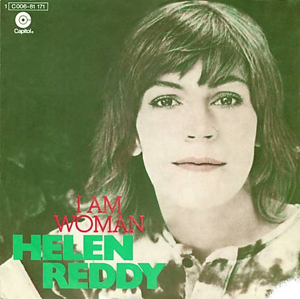
Released as a single in 1971, Helen Reddy’s “I Am Woman” tanked. She rerecorded the song. The new version was released as a single the following year, debuting on the Hot 100 at number 99. Two weeks later it was number 97. Then it fell off the chart. Lots of television appearances and many phone calls from Reddy’s husband to radio stations across the US led to the song re-entering the Hot 100, eventually becoming the first of three US number one singles for Reddy and winning her the very first American Music Award for Favorite Pop/Rock Female Vocalist.

The late Helen Reddy was born on this date in 1941. Several of her recordings are included on today’s playlist.

Follow Tunes du Jour on Facebook

Follow Tunes du Jour on Twitter

Follow me on Instagram

Your (Almost) Daily Playlist: 9-1-23

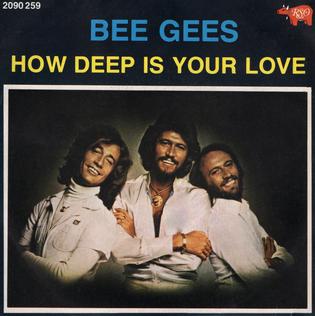
The Bee Gees wrote “How Deep Is Your Love” at the Château d’Hérouville in France, where Chopin had stayed and played piano, though Chopin wasn’t involved in the recording of the song, as he was busy being dead. The song was intended for Yvonne Elliman, but Robert Stigwood, the producer of Saturday Night Fever, said “No, no way. Uh uh. Forget it.” The Gibb brothers took their song to number one, the first of 7034 number one hits (give or take) from the Saturday Night Fever soundtrack. HDIYL spent 17 weeks in the top ten of the Billboard Hot 100, a record at that time.

Bee Gee Barry Gibb was born on this date in 1946. A half dozen of his group’s hits are included on today’s playlist.

Follow Tunes du Jour on Facebook

Follow Tunes du Jour on Twitter

Follow me on Instagram

Your (Almost) Daily Playlist: 8-27-23

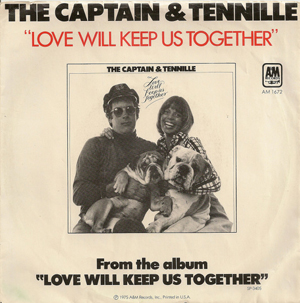
The Captain & Tennille’s “Love Will Keep Us Together” was a huge hit in 1975, but not everyone agreed with its message. Ian Curtis, the leader of Joy Division and a newlywed in 1975, was one of them. His composition “Love Will Tear Us Apart” could be seen as a response to the cheerful song, expressing his disillusionment with love and life. He took his own life in 1980, a month before his song was released as a single, on its way to becoming a classic.

Daryl Dragon, better known as The Captain, a nickname given to him by The Beach Boys’ Mike Love, was born on this date in 1942. A few of his duo’s hits are included on today’s playlist.

Follow Tunes du Jour on Facebook

Follow Tunes du Jour on Twitter

Follow me on Instagram

A Bee Gees Playlist

Back when I handled the licensing for the Bee Gees, they turned down requests to be included on disco compilations. They rejected the disco label, as it limited them. Fair enough. As performers the trio placed 42 entries on the Billboard Hot 100. Do you know how many entries they placed on Billboard’s Disco chart? Three. “You Should Be Dancing” went to number one on that chart, “Tragedy” peaked at number 22, and the three new uptempo songs they recorded for the Saturday Night Fever soundtrack – “Stayin’ Alive,” “Night Fever” and “More Than a Woman” – constituted one entry, which peaked at number three. It’s the association with Saturday Night Fever,a movie where much of the action takes place at a disco, that saddled them with the disco label. That said, those five disco songs are nothing to be ashamed of. All are great. Today’s playlist spotlights their work in and outside of the disco genre, and it includes extracurricular production and songwriting activities one or more of the guys did for other acts.

Follow Tunes du Jour on Facebook

Follow Tunes du Jour on Twitter

Follow me on Instagram