Tunes Du Jour Presents Covers Of The Rolling Stones

One of the best ways to understand a song’s true strength is to hear it played by someone else. When a song can be lifted from its original context, performed by a different artist in a new style, and still resonate, you know the writers built it on a solid foundation. Looking at the sheer breadth of artists who have successfully interpreted the songs of Mick Jagger and Keith Richards, it becomes clear that their songwriting partnership created something remarkably durable. While their own recordings as The Rolling Stones are iconic, it’s the cover versions that reveal the fundamental power of the compositions themselves.

The playlist immediately highlights how deeply their writing is rooted in the American soul and R&B they revered. It’s one thing to be influenced by a genre; it’s another to write songs that the masters of that genre can inhabit as their own. When you hear Aretha Franklin transform “Jumpin’ Jack Flash” into a gospel-fueled force of nature, or Ike & Tina Turner inject “Honky Tonk Women” with their signature high-octane energy, you realize the songs contain an authentic rhythmic and emotional core. This goes even deeper with Solomon Burke’s take on “I Got the Blues” or Bettye LaVette’s searing, world-weary version of “Salt of the Earth.” These aren’t just covers; they are reclamations, demonstrating that the blueprints Jagger and Richards created were so solid that they could hold the weight of the most powerful voices in soul music.

What’s also remarkable is the structural flexibility of their work. A great Jagger/Richards song often has a distinct personality, yet its core components—melody, lyrical theme, and chordal movement—are adaptable enough to thrive in entirely new environments. The post-punk angularity of Devo’s “(I Can’t Get No) Satisfaction” strips away the blues swagger to expose the lyric’s timeless complaint of modern alienation. The Sundays reimagine the country-tinged “Wild Horses” as a piece of shimmering, ethereal dream pop, proving the song’s beautiful melody is its true anchor. Even more extreme, the Ramones boil “Out of Time” down to its raw essentials, recasting the shuffling pop song as a driving, three-chord punk declaration, while Ituana finds a relaxed, bossa nova groove in the epic “You Can’t Always Get What You Want.” The songs don’t just survive these transformations; they reveal different facets of their character.

Ultimately, this collection of performances underscores that the Jagger/Richards catalog is more than a collection of iconic riffs and rock and roll attitude. These are fundamentally well-crafted songs. They can be country laments in the hands of Johnny Cash (“No Expectations”) or Steve Earle (“Dead Flowers”). They can be theatrical pop statements for David Bowie (“Let’s Spend The Night Together”) or Bryan Ferry (“Sympathy for the Devil”). They can even be played for laughs by “Weird Al” and The Folksmen precisely because the source material is so instantly recognizable. The Rolling Stones’ versions will always be definitive, but these interpretations from other artists give us a clearer view of the writers’ craft, proving the songs stand on their own, ready for anyone to find a piece of their own story within them.

Follow Tunes Du Jour on Facebook

Follow me on Bluesky

Follow me on Instagram
Your (Almost) Daily Playlist: 11-15-24

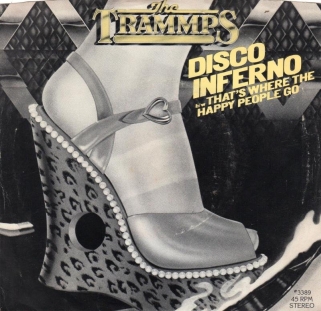
The Trammps – “Disco Inferno” (1978)

“Disco Inferno” burned up the clubs in 1976 but missed the pop Top 40. A year later, it lit up the Saturday Night Fever soundtrack, leading to a 1978 reissue. This time – huge pop success on its way to becoming a bona fide classic. 🔥

The late Jimmy Ellis of The Trammps was born on this date in 1937. A few of his band’s songs are included on today’s playlist.

Follow Tunes Du Jour on Facebook

Follow Tunes Du Jour on Twitter

Follow me on Instagram

Your (Almost) Daily Playlist: 4-20-24

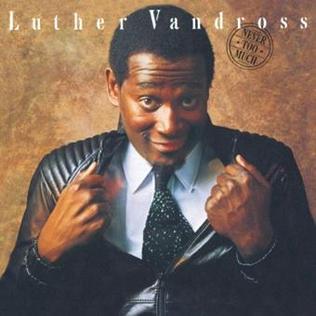
If you’re looking for a smooth soundtrack to unwind with, Luther Vandross has you covered. His smooth vocals and captivating stage presence made him a beloved and influential figure in R&B and soul music.

Early in his career, Vandross honed his skills not just as a singer, but as a songwriter and producer. He penned the uplifting “Everybody Rejoice/A Brand New Day” for the Broadway musical The Wiz, showcasing his talent for crafting memorable melodies. This period also saw him become a sought-after background vocalist, lending his voice to the recordings of icons like David Bowie, Stevie Wonder, Donna Summer, Todd Rundgren, Diana Ross, Ben E. King, Sister Sledge, Roberta Flack, Chaka Khan, Judy Collins, the J. Geils Band, Irene Cara, and Bette Midler. Not only did Vandross sing on Bowie’s “Fascination,” but they wrote the song together. This experience further solidified Vandross’ own artistic vision, which he would soon unleash on the world.

Before embarking on his solo journey, Vandross dipped his toes into the world of lead vocals. He fronted the disco group Change, belting out their hit “The Glow of Love.” He also sang lead for Bionic Boogie on their track “Hot Butterfly,” and even fronted a short-lived band simply called Luther.

Quincy Jones’ “Takin’ It To the Streets,” featuring Vandross as a lead vocalist alongside Gwen Guthrie, demonstrated his ability to shine even before his solo breakout. Later in his career, Vandross would seamlessly slip back into the role of collaborator, creating magic on duets with artists like Janet Jackson (“The Best Things in Life Are Free”) and Dionne Warwick (“How Many Times Can We Say Goodbye”).

The 1980s marked Vandross’ rise to stardom as a solo artist. Tracks like “Never Too Much” and “Here and Now” became instant classics, showcasing his ability to blend vulnerability with pure soulful power.

Throughout his career, Vandross racked up accolades. He’s a Grammy Award winner with eight statues to his name, and countless other awards solidify his place as a musical giant. But beyond the trophies, his true impact lies in the way his music continues to connect with listeners. Whether it’s a slow dance ballad or a roof-raising anthem, Vandross’ music offers a timeless blend of emotion and artistry. So next time you hear that velvety voice, take a moment to appreciate the work of a true musical great, who not only delivered unforgettable solo performances but also left his mark through songwriting, production, and collaborations across genres. Today’s playlist isn’t just a collection of Luther Vandross’ greatest hits – it’s a mix of some of those tracks alongside other gems that reveal the breadth of Vandross’ musical contributions. Prepare to be surprised at where he turns up. For example, those unforgettable “ba ba”s that open Stevie Wonder’s “Part-Time Lover?” That’s Luther!

Follow Tunes Du Jour on Facebook

Follow Tunes du Jour on Twitter

Follow me on Instagram

Your (Almost) Daily Playlist: 12-12-23

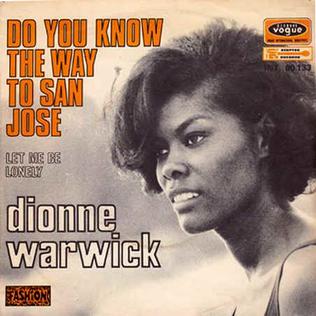
Is technology ruining music? I’ll answer that with another question: If we had GPS in the 1960s, would we have gotten “Do You Know The Way To San José?” If you request Alexa to play “Do You Know The Way To San José” by merely stating its title, would Alexa play it or ramble on about making a left here and bearing right there, which would make for a real crap song? When presented with “Do You Know The Way To San José” by its writers, Burt Bacharach and Hal David, Dionne Warwick was not taken by it. “What is this whoa whoa whoa whoa whoa whoa whoa whoa whoa crap?” she asked. I’m paraphrasing. She eventually came around, for decades later she said that winning the Grammy Award for Best Female Pop Vocal Performance for her recording of that song was the highlight of her career. 

Dionne Warwick was born on this date in 1940. Lots of songs performed by her are included on today’s playlist.

Follow Tunes du Jour on Facebook

Follow Tunes du Jour on Twitter

Follow me on Instagram