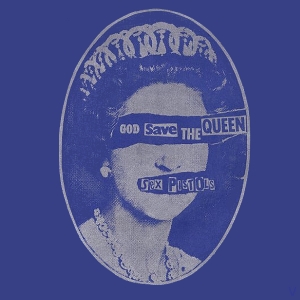
Tunes Du Jour Presents Punk

Ask ten people to define punk rock, and you’re likely to get at least fifteen answers. That’s part of its charm—and its challenge. Punk has always been more than a style of music; it’s a way of questioning the status quo, pushing back against complacency, and refusing to color inside the lines. The 30 songs in this playlist represent the genre’s many branches: from the snarling minimalism of the Sex Pistols’ “God Save the Queen” to the tightly coiled fury of Black Flag’s “Rise Above,” from Patti Smith’s poetic incantations to the danceable paranoia of Talking Heads’ “Psycho Killer.”

The roots of punk go deep, even before the term existed. “I’m Waiting for the Man” by The Velvet Underground and “Kick Out the Jams” by MC5 helped pave the way with their raw sound and confrontational lyrics. By the mid-1970s, punk had taken recognizable form in both New York and London. The Ramones stripped rock to its bare essentials with “Sheena Is a Punk Rocker,” while The Clash’s London Calling album pointed to punk’s potential to absorb and reflect broader influences—including reggae, ska, and politics.

Acts like Gang of Four and Television took the energy of punk and redirected it into jagged rhythms and angular guitars. The B-52’s “Rock Lobster” and Talking Heads introduced eccentricity and art-school sensibilities, while the Dead Kennedys and Sham 69 channeled punk into direct political protest. Meanwhile, bands like The Jam and Buzzcocks added a melodic urgency, and Iggy Pop and the New York Dolls injected glam and danger into the proceedings.

In the decades that followed, punk fragmented and flourished. Rancid’s “Time Bomb” leaned into ska-punk; Blink-182’s “Dammit” helped define a generation’s version of pop-punk adolescence. Bikini Kill’s “Rebel Girl” roared from the riot grrrl movement with feminist fire, and Billy Bragg brought punk’s commitment to social critique to a solo singer-songwriter context. Even grunge touchstones like Mudhoney carried punk’s DNA—loud, unpolished, and emotionally direct.

This playlist doesn’t claim to be definitive—if anything, it’s a conversation starter. It suggests that punk isn’t a sound so much as a stance. Whether it’s The Replacements thumbing their nose at success in “Bastards of Young,” or Green Day channeling disillusionment into “American Idiot,” punk continues to reinvent itself. It may shift forms, but it never goes quietly.

Follow Tunes du Jour on Facebook

Follow me on Bluesky

Follow me on Instagram
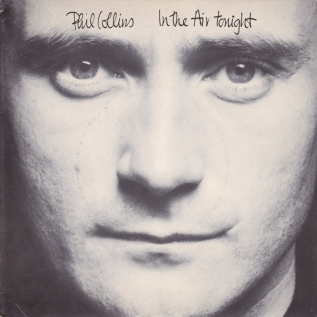
Tunes Du Jour Presents 1981

As the new decade dawned, 1981 emerged as a year of significant musical transformation. The eclectic mix of songs that defined this period reflected a music industry in flux, with established genres evolving and new sounds emerging to captivate listeners across the globe.

Rock music continued to hold its ground, adapting to the changing times. The Rolling Stones proved their enduring relevance with the gritty “Start Me Up,” while Journey’s “Don’t Stop Believin'” became an arena rock anthem that would stand the test of time. Bruce Springsteen’s “The River” showcased his storytelling prowess, and Phil Collins’ “In The Air Tonight” introduced a new dimension of atmospheric rock with its iconic drum break. George Harrison’s “All Those Years Ago,” a touching tribute to John Lennon, marked Harrison’s first U.S. top ten single in eight years, demonstrating the lasting appeal of the former Beatles.

New Wave and post-punk sounds flourished in 1981, pushing boundaries and incorporating electronic elements. Talking Heads’ “Once in a Lifetime” demonstrated the genre’s art-rock leanings, while The Go-Go’s brought a pop sensibility to new wave with “Our Lips Are Sealed.” Duran Duran’s “Girls on Film” hinted at the new romantic movement that was gaining traction. The Psychedelic Furs’ “Pretty in Pink,” with its blend of post-punk edge and pop accessibility, showcased Richard Butler’s distinctive vocals and would later inspire and lend its name to a defining film of the ’80s.

The year also saw the emergence of hip-hop as a force in popular music. Blondie’s “Rapture” became the first song featuring rap vocals to reach number one on the U.S. Billboard Hot 100, fusing new wave with hip-hop influences. Meanwhile, Grandmaster Flash’s innovative “The Adventures of Grandmaster Flash on the Wheels of Steel” was one of the first records to extensively use sampling, laying the groundwork for hip-hop’s future.

Dance music was evolving beyond disco into new, exciting forms. Grace Jones’ “Pull Up to the Bumper” blended funk, new wave, and reggae influences, pointing towards a more eclectic and experimental future for club music. Taana Gardner’s “Heartbeat” helped define the emerging genre of garage house with its stripped-down beat and soulful vocals. Kool & the Gang’s “Celebration” remains a party staple, bridging the gap between disco and contemporary R&B.

In the realm of R&B and funk, Luther Vandross’ “Never Too Much” marked the acclaimed background vocalist’s first hit under his own name, showcasing his smooth, sophisticated style. Rick James pushed funk to new heights with “Super Freak,” incorporating rock elements and a memorable synth line that would be sampled for years to come. The Pointer Sisters’ “Slow Hand” kept R&B smooth and soulful.

1981 also witnessed the continued rise of synth-pop and electronic music. Heaven 17’s politically charged “(We Don’t Need This) Fascist Groove Thang” and New Order’s “Ceremony” showcased the genre’s range from danceable pop to moody post-punk.

As some artists embraced new sounds, others used music to comment on social issues. The Specials’ “Ghost Town” reflected the urban decay and racial tensions in Britain, while Black Flag’s hardcore punk anthem “Rise Above” railed against societal norms. Prince’s “Controversy” challenged listeners both musically and lyrically, blending funk, rock, and new wave while tackling taboo subjects and questioning social norms, hinting at the boundary-pushing artist he would become.

From the chart-topping pop of Kim Carnes’ “Bette Davis Eyes” and Olivia Newton-John’s “Physical” to ABBA’s emotionally charged ballad “The Winner Takes It All,” 1981 was a year of contrasts and transitions. It was a time when established stars adapted to new trends, emerging artists made their mark, and genres blended in exciting ways. This rich musical landscape set the stage for the diverse and innovative sounds that would define the rest of the decade, making 1981 a pivotal year in the evolution of popular music.

Follow Tunes Du Jour on Facebook

Follow Tunes Du Jour on Twitter

Follow me on Instagram

Your (Almost) Daily Playlist: 6-26-23

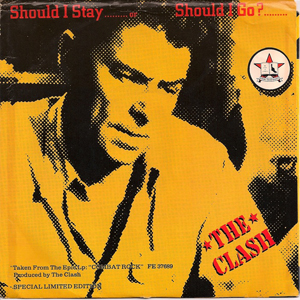
Upon its initial release, The Clash’s “Should I Stay Or Should I Go” reached number 17 on the UK singles chart. Following the song’s inclusion in a Levi’s commercial, the single was reissued in 1991 and this time went to number one on the UK singles chart, knocking out Bart Simpson’s “Do The Bartman.” That in a nutshell is the UK singles chart.

The Clash’s Mick Jones turns 68 today. Showing him some love on today’s playlist.

Follow Tunes du Jour on Facebook

Follow Tunes du Jour on Twitter

Follow me on Instagram

Your (Almost) Daily Playlist (2-13-20)

Inspired by the February 13 birthdays of New Order’s Peter Hook, Peter Gabriel, Robbie Williams, Feist, Black Flag’s Henry Rollins, Freedom Williams, the Monkees’ Peter Tork, Tennessee Ernie Ford, and songwriter Boudleaux Bryant, who, sometimes with his wife Felice, composed many of the Everly Brothers hits, including “Bye Bye Love,” “All I Have to Do Is Dream,” “Wake Up Little Susie,” “Bird Dog,” “Devoted To You,” and “Love Hurts.”