Tunes Du Jour Celebrates Sisters Day

Happy Sisters Day! There’s a unique, almost telepathic bond between sisters, and nowhere is that connection more audible than in music. When sisters sing together, they create a blend that often is simply magical—a harmony that’s been practiced over a lifetime.

In celebration of this incredible bond, I’ve curated a playlist of songs from groups that feature at least one pair of sisters. From the tough-girl cool of the ’60s girl groups to ’80s rock goddesses, ’90s pop sensations, and modern indie darlings, this playlist is a testament to the power of sisterhood in harmony. So grab your sister (or your chosen sister!), turn up the volume, and let’s dive in.


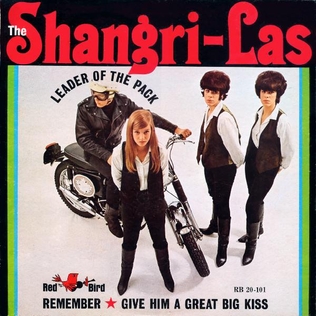
Leader of the Pack – The Shangri-Las
The Sisters: Mary and Elizabeth “Betty” Weiss were the heart of this legendary girl group, alongside the identical twins Marge and Mary Ann Ganser. With their dramatic, soap-opera-in-a-song storytelling and a “tougher than the boys” attitude, the Shangri-Las stood out. “Leader of the Pack” is their definitive mini-masterpiece of teenage tragedy.

Emmylou – First Aid Kit
The Sisters: Swedish folk duo Klara and Johanna Söderberg are revered for their breathtaking, otherworldly harmonies. On “Emmylou,” they pay beautiful tribute to their country music heroes (Emmylou Harris, Gram Parsons, June Carter, and Johnny Cash), creating a modern folk classic that feels utterly timeless.

Be My Baby – The Ronettes
The Sisters: The iconic lead vocals of Veronica “Ronnie” Bennett (later Spector) were backed by the harmonies of her older sister, Estelle Bennett, and their cousin Nedra Talley. This song, with its legendary drum intro and Phil Spector’s Wall of Sound production, is pure pop perfection and a benchmark for the girl group era.

C’est la Vie – B*Witched
The Sisters: This infectiously cheerful Irish pop group featured identical twin sisters Edele and Keavy Lynch (whose brother, Shane, was in the boy band Boyzone). “C’est la Vie,” with its jig-dancing, double-denim aesthetic, and suggestive lyrics, is a pure shot of late-’90s bubblegum pop nostalgia.

We Are Family – Sister Sledge
The Sisters: It’s right there in the name! Debbie, Joni, Kim, and Kathy Sledge are the four sisters who became a global phenomenon with this timeless anthem. Written and produced by Nile Rodgers and Bernard Edwards of Chic, the song wasn’t just a disco smash; it became a universal hymn for families, teams, and communities everywhere.

Move Ya Body – Nina Sky
The Sisters: Identical twin sisters Nicole and Natalie Albino make up the duo Nina Sky. This dancehall-infused debut single was a massive summer smash in 2004, and its infectious “Diwali Riddim” beat still fills dancefloors today.

Walk Like an Egyptian – Bangles
The Sisters: Vicki and Debbi Peterson (guitar and drums, respectively) were the sibling core of the Bangles. While Susanna Hoffs often took the lead, the Petersons’ rock-solid rhythm and harmonies were essential to the band’s sound. This quirky, chart-topping hit became one of the most memorable songs of the ’80s.

Closer – Tegan And Sara
The Sisters: Canadian identical twin sisters Tegan and Sara Quin have been indie-rock mainstays for years. “Closer” marked their brilliant pivot into synth-pop, a shimmering, exhilarating track about the thrill of a crush before a relationship even begins. It’s a masterclass in pop songwriting.

I’ll Take You There – The Staple Singers
The Sisters: Gospel and soul royalty, The Staple Singers were a true family affair led by patriarch “Pops” Staples. His daughters Mavis, Cleotha, and Yvonne Staples provided the heavenly, soul-stirring harmonies. This song, with its iconic bassline borrowed from a reggae track, is a blissful invitation to a better place.

I Love How You Love Me – The Paris Sisters
The Sisters: Albeth, Sherrell, and Priscilla Paris were known for their incredibly tight, close-miked, whispery harmonies. Produced by Phil Spector before his Wall of Sound days, this dreamy, delicate ballad perfectly captures the sweet innocence of young love.

Best of My Love – The Emotions
The Sisters: Wanda, Sheila, and Pamela Hutchinson are the Chicago-born sisters behind The Emotions. This joyous, soaring disco-soul classic was co-written and produced by Earth, Wind & Fire’s Maurice White, and it showcases their absolutely flawless, exuberant harmonies. It’s impossible not to smile while listening.

Hippychick – Soho
The Sisters: This one-hit wonder from 1990 was fronted by twin sisters Jacqueline “Jacqui” and Pauline Cuff. The song’s laid-back groove is built around a genius sample of The Smiths’ “How Soon Is Now?,” creating a track that’s instantly recognizable and quintessentially of its era.

Never Ever – All Saints
The Sisters: The ’90s British girl group All Saints, known for their cooler, more casual style, included sisters Natalie and Nicole Appleton. “Never Ever” was their biggest hit, a soulful, melancholic R&B ballad that became one of the best-selling singles by a girl group in the UK.

Nothing But A Heartache – The Flirtations
The Sisters: Though their lineup shifted, this American vocal group (who found fame in the UK) was founded by sisters Shirley and Pearly Pearce. “Nothing But a Heartache” is a prime cut of Northern Soul—up-tempo, dramatic, and deeply soulful, it’s a crate-digger’s treasure.

The Sign – Ace Of Base
The Sisters: This Swedish pop group that dominated the airwaves in the ’90s was fronted by sisters Jenny and Linn Berggren. Their distinct voices—Jenny’s powerful and clear, Linn’s ethereal and soft—were the perfect vehicle for this insanely catchy reggae-pop confection that took over the world.

Popsicles and Icicles – The Murmaids
The Sisters: Sisters Carol and Terry Fischer were two-thirds of The Murmaids. This sweet, dreamy tune, written by a young David Gates (who would later form the band Bread), became a surprise hit in 1963 and remains a perfect example of the innocent charm of the era.

Chapel of Love – Dixie Cups
The Sisters: New Orleans trio The Dixie Cups featured sisters Barbara Ann and Rosa Lee Hawkins, along with their cousin Joan Marie Johnson. Their version of “Chapel of Love” knocked The Beatles out of the #1 spot in 1964.

Boogie Fever – The Sylvers
The Sisters: The Sylvers were a large family band, similar to the Jacksons. On their biggest hit, “Boogie Fever,” the lead vocals are handled by Edmund Sylvers, but the shimmering, essential background harmonies come courtesy of sisters Olympia and Charmaine Sylvers.

My Boyfriend’s Back – The Angels
The Sisters: This sassy girl-group classic was powered by sisters Barbara “Bibs” and Phyllis “Jiggs” Allbut. The song is a perfect slice of early ’60s pop, a warning to a would-be suitor that her boyfriend is back in town and “gonna save my reputation.”

Eres Tu (Touch the Wind) – Mocedades
The Sisters: This Spanish group featured three sisters in its classic lineup: Amaya, Izaskun, and Estíbaliz Uranga. “Eres Tú” was Spain’s entry in the 1973 Eurovision Song Contest. It didn’t win, but it became a massive global hit, showcasing the group’s lush, soaring vocal arrangements.

Cannonball – The Breeders
The Sisters: A cornerstone of ’90s alternative rock, The Breeders were formed by Kim Deal (of the Pixies) and her identical twin sister, Kelley Deal. “Cannonball,” with its iconic slithering bassline, nonsensical lyrics, and explosive chorus, is a blast of pure, raw, and effortlessly cool rock and roll.

The Ketchup Song (Aserejé) – Las Ketchup
The Sisters: Say it out loud: The Ketchup sisters! This one is wonderfully literal. Spanish sisters Lola, Pilar, and Lucía Muñoz are the daughters of a flamenco guitarist known as “El Tomate” (The Tomato). Their nonsensical smash hit, complete with a viral dance, was inescapable throughout Europe in the summer of 2002.

The Wire – HAIM
The Sisters: Este, Danielle, and Alana Haim are the quintessential modern sister act. The multi-instrumentalist siblings from California burst onto the scene with a sound that blended ’70s soft rock with ’80s pop. “The Wire” is a perfect introduction to their intricate rhythms and impeccable harmonies.

Hammond Song – The Roches
The Sisters: Maggie, Terre, and Suzzy Roche were a trio of sisters from New York known for their astonishingly complex, intricate, and often quirky folk harmonies. “Hammond Song,” from their debut album produced by King Crimson’s Robert Fripp, is a haunting and beautiful display of their unique vocal chemistry.

Not Ready To Make Nice –The Chicks
The Sisters: Martie Maguire (fiddle) and Emily Strayer (banjo, dobro) are the instrumental powerhouses and harmony singers of this trailblazing country trio. This fiery, defiant anthem was their response to the backlash they faced for speaking out against the Iraq War, and it earned them three Grammy Awards, including Song of the Year.

Respectable – Mel & Kim
The Sisters: British sisters Melanie and Kim Appleby were a vibrant pop duo who worked with the hitmaking team of Stock Aitken Waterman. “Respectable” is a sassy, high-energy dance-pop track that champions self-respect and fun. Tragically, Mel passed away from cancer in 1990 at the peak of their fame.

Alone – Heart
The Sisters: Ann and Nancy Wilson are rock and roll royalty. With Ann’s powerhouse vocals and Nancy’s virtuosic, dynamic guitar work, they have been the unwavering core of Heart for decades. While “Alone” is a cover, their rendition transformed it into one of the greatest power ballads of all time.

Mr. Lee – The Bobbettes
The Sisters: This groundbreaking group included sisters Jannie and Emma Pought. In 1957, The Bobbettes became the first all-female group to write their own #1 R&B hit. “Mr. Lee,” a song originally written to tease a teacher they disliked, is a fun, foundational piece of rock and roll history.

Automatic – The Pointer Sisters
The Sisters: Anita, June, Ruth, and Bonnie Pointer began by singing a mix of jazz, soul, and country before reinventing themselves as sleek, synth-pop superstars following Bonnie’s departure from the group. This ’80s classic is a prime example of their funky, high-tech sound, driven by Ruth Pointer’s incredibly deep and sultry lead vocal.

I Wanna Love Him So Bad – The Jelly Beans
The Sisters: This gem from the golden age of girl groups featured the powerful harmonies of sisters Maxine and Betty Smith. Discovered while still in high school, The Jelly Beans were teamed with legendary songwriters Jeff Barry and Ellie Greenwich. The result was this classic expression of teenage devotion, a perfect slice of 1964 pop.


I hope you enjoyed this journey through the history of sister acts in music. Share this playlist with your sister and have a wonderful, music-filled Sisters Day!

Follow Tunes Du Jour on Facebook

Follow me on Bluesky

Follow me on Instagram
Tunes Du Jour Presents The Original Versions

Many of us grow up assuming the hit version of a song is the original. This playlist celebrates those surprising musical genealogies: well-known songs that were originally recorded by someone else, often with little fanfare. Here are the stories behind the transformations—where they started, and how they became iconic.


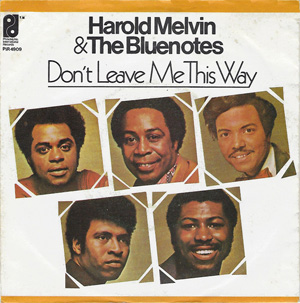
“Don’t Leave Me This Way” – Thelma Houston / Originally by Harold Melvin & the Blue Notes (1975)
Houston’s disco anthem actually began life as a Philly soul track sung by Teddy Pendergrass. Thelma took it to the dancefloor—and to #1.

“War” – Edwin Starr / Originally by The Temptations (1970)
This protest song started as an album cut by The Temptations. Starr’s rawer, angrier take made it a searing hit during the Vietnam era.

“Strawberry Letter 23” – The Brothers Johnson / Originally by Shuggie Otis (1971)
Otis’ dreamy, psychedelic original flew under the radar until producer Quincy Jones supercharged it with funk for The Brothers Johnson.

“I Feel for You” – Chaka Khan / Originally by Prince (1979)
Prince wrote it, recorded it, and released it on his 1979 self-titled album. Chaka Khan added Stevie Wonder’s harmonica and Melle Mel’s rap, creating a genre-blurring smash that gave the song a second life—and a much bigger audience.

“Louie Louie” – The Kingsmen / Originally by Richard Berry (1957)
Berry’s calypso-tinged rhythm & blues song became an unintelligible rock ‘n’ roll classic in the hands of teenage garage rockers.

“Pass The Koutchie” – Musical Youth as “Pass the Dutchie” / Originally by Mighty Diamonds (1981)
Musical Youth’s version cleaned up the ganja references but kept the groove. A British reggae hit born from a roots original.

“Tainted Love” – Soft Cell / Originally by Gloria Jones (1964)
This Northern Soul favorite was ignored in the U.S. until Soft Cell’s chilly synth-pop cover turned it into an international sensation.

“You Are So Beautiful” – Joe Cocker / Originally by Billy Preston (1974)
Preston’s gospel-inflected original was co-written with Dennis Wilson of the Beach Boys. Cocker slowed it down into a tearjerking ballad.

“The First Cut Is The Deepest” – Rod Stewart / Originally by P.P. Arnold (1967)
Before Cat Stevens, the song’s writer, sang it himself, P.P. Arnold delivered a powerful version. Stewart’s cover gave it global traction.

“Red, Red Wine” – UB40 / Originally by Neil Diamond (1967)
Diamond’s mournful original was a slow ballad. UB40’s reggae version confused even him—he didn’t recognize his own song on the radio.

“Brand New Cadillac” – The Clash / Originally by Vince Taylor and His Playboys (1959)
This rockabilly obscurity became a snarling punk track on London Calling. Vince Taylor later served as an inspiration for David Bowie’s Ziggy Stardust persona.

“Take Me To The River” – Talking Heads / Originally by Al Green (1974)
Green’s swampy soul gave way to Talking Heads’ jittery art-funk. An old-school spiritual reborn in new wave style.

“The Tide Is High” – Blondie / Originally by The Paragons (1967)
Jamaican rocksteady meets NYC cool. Blondie took this mellow gem and gave it a global pop sheen.

“Brandy” – Barry Manilow as “Mandy” / Originally by Scott English (1971)
English’s sad and simple original got a new name and new polish. Manilow’s grand version topped the charts.

“Don’t Let Me Be Misunderstood” – The Animals / Originally by Nina Simone (1964)
Simone’s pleading ballad became a snarling British Invasion hit. Her nuanced sorrow gave way to the raw edge of rock.

“Bette Davis Eyes” – Kim Carnes / Originally by Jackie DeShannon (1974)
The original was breezy and piano-driven. Carnes and her producer Val Garay turned it into new wave noir.

“Heaven Must Have Sent You” – Bonnie Pointer / Originally by The Elgins (1966)
Pointer’s disco version revived a Motown deep cut and put it back on the charts over a decade later.

“Love Buzz” – Nirvana / Originally by Shocking Blue (1969)
Nirvana turned this obscure Dutch psych-rock tune into a distorted grunge landmark. Their debut single.

“Piece Of My Heart” – Big Brother & The Holding Company / Originally by Erma Franklin (1967)
Aretha’s sister recorded it first, but Janis Joplin made it a fiery centerpiece of her legend.

“It’s Oh So Quiet” – Björk / Originally by Betty Hutton (1951)
A novelty big-band number revived by Björk into a theatrical showstopper. Old Hollywood meets Icelandic art-pop.

“China Girl” – David Bowie / Originally by Iggy Pop (1977)
Co-written with Bowie, Iggy’s version was skeletal and raw. Bowie’s version added synth gloss and MTV appeal.

“Good Lovin'” – The Young Rascals / Originally by The Olympics (1965)
The Olympics had the groove, but The Rascals turned it into a garage-rock rave-up and a #1 hit.

“Valerie” – Mark Ronson featuring Amy Winehouse / Originally by The Zutons (2006)
The Zutons wrote it as a bluesy rock song. Winehouse made it retro-soul perfection.

“Police On My Back” – The Clash / Originally by The Equals (1967)
A stomping, paranoid track from Eddy Grant’s first band. The Clash turned it into a punk fugitive anthem.

“After Midnight” – Eric Clapton / Originally by J.J. Cale (1966)
Cale’s laid-back shuffle was juiced up with guitar licks by Clapton, who kept the songwriter’s cool intact.

“On Broadway” – The Drifters / Originally by The Cookies (1962)
Songwriters Barry Mann & Cynthia Weil gave this to a girl group first, but The Drifters made it a city-slick R&B classic.

“Love Hurts” – Nazareth / Originally by The Everly Brothers (1960)
Gentle heartbreak became hard rock agony. Nazareth’s arena wail made the song a power ballad staple.

“I Love Rock ‘n’ Roll” – Joan Jett & the Blackhearts / Originally by The Arrows (1975)
Jett saw it on UK TV and recorded a fiercer, snarling version that girls (and boys) everywhere could scream along to.

“Without You” – Nilsson / Originally by Badfinger (1970)
Badfinger’s version was plaintive; Nilsson’s was operatic. He didn’t just sing it—he wailed it.

“Superman” – R.E.M. / Originally by The Clique (1969)
A psychedelic pop obscurity turned indie-rock cult classic. One of R.E.M.’s rare early tracks not written by the band.


These songs remind us that inspiration doesn’t always strike where the spotlight shines. Sometimes greatness is borrowed—and reinvented.


Follow Tunes Du Jour on Facebook

Follow me on Bluesky

Follow me on Instagram

Tunes Du Jour Presents The Pointer Sisters

The Pointer Sisters carved out their space in popular music with a sound that effortlessly blended genres, defied easy categorization, and showcased the group’s remarkable versatility. Tracks like “Yes We Can Can” and “How Long (Betcha Got a Chick on the Side)” highlight their early embrace of funk and socially conscious themes, while later hits such as “Jump (For My Love)” and “I’m So Excited” cemented their place in the pop mainstream.

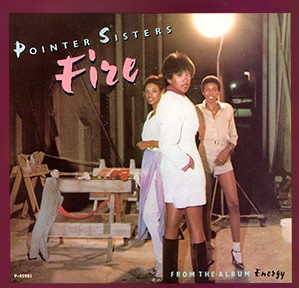
One of the defining characteristics of The Pointer Sisters was their ability to adapt to changing musical landscapes without losing their identity. Their 1978 hit “Fire,” penned by Bruce Springsteen, brought a smoldering blend of pop and R&B to the charts, while “Fairytale” earned them a Grammy Award for Best Country Vocal Performance by a Duo or Group and showcased their genre-spanning abilities. They placed over a dozen songs on the Billboard dance chart, with Bonnie Pointer’s solo effort, “Heaven Must Have Sent You,” embracing disco with infectious energy.

The 1980s marked a particularly successful period for the group, with a string of high-energy hits that became anthems of the decade. “Neutron Dance,” featured in the film Beverly Hills Cop, captured the era’s kinetic energy, while “Dare Me” and “Automatic” offered a sophisticated take on dance music that resonated with both pop and R&B audiences. Their music often balanced exuberance with emotional depth, as seen in the tender ballad “I Need You” and the sultry “Slow Hand.”

Beyond their chart success, The Pointer Sisters brought a dynamic presence to their live performances. Songs like “Wang Dang Doodle” and “Bangin’ on the Pipes/Steam Heat” highlighted their theatrical flair and deep connection to jazz and blues traditions. Whether delivering energetic pop hits or intricate vocal harmonies, the group maintained a distinct charisma that set them apart in an era dominated by emerging pop stars and shifting musical trends.

The Pointer Sisters’ legacy endures as a testament to their adaptability and enduring appeal. Their ability to cross genres and generations, from funk and jazz to pop and dance, speaks to their artistry and resilience. Whether rediscovering their classics or hearing them in films and commercials, their music continues to bring joy and excitement to audiences worldwide.

Follow Tunes Du Jour on Facebook

Follow me on Bluesky

Follow me on Instagram

Your (Almost) Daily Playlist: 11-19-23

Inspired by an unhoused woman who would sing gospel songs in front of a Washington, DC hotel, the familiar refrain of “la da dee la da da” in Crystal Waters’ “Gypsy Woman (She’s Homeless)” was meant as a temporary placeholder until the real lyrics were written. Here’s to writers block!                                                                                                                                                                           Crystal Waters was born on this date in 1961. A couple of her tracks are included on today’s playlist.

Follow Tunes du Jour on Facebook

Follow Tunes du Jour on Twitter

Follow me on Instagram

A Pointer Sisters Playlist

Today Tunes du Jour celebrates the birthday of Anita Pointer, born January 23, 1948. Along with her sisters Ruth and June and, in their early years of making records, Bonnie, The Pointer Sisters racked up more hits than you may name off the top of your head. Check out today’s playlist and see how many songs you recognize. It kicks off with their version of Bruce Springsteen’s “Fire,” featuring Anita on lead vocals.

Follow Tunes du Jour on Facebook.

Follow Tunes du Jour on Twitter.

Follow me on Instagram.

Your (Almost) Daily Playlist (7-11-20)

Inspired by the July 11 birthdays of Suzanne Vega, Lil’ Kim, The Paragons’ John Holt, The Nitty Gritty Dirt Band’s Jeff Hanna, Peter Brown, Red Peters, Bonnie Pointer, Thurston Harris, Peter Murphy, Andrew Bird, the Murmurs’ Leisha Hailey, and Mel & Kim’s Mel Appleby; and the July 10 birthdays of Pet Shop Boys’ Neil Tennant, Mavis Staples, Arlo Guthrie, John Whitehead and Eileen Rodgers.

Winston + Irene Cara

It’s Irene Cara’s Birthday And I Need To Dance!

Winston + Irene Cara

Fame! I’m gonna live forever! Baby, remember my name!

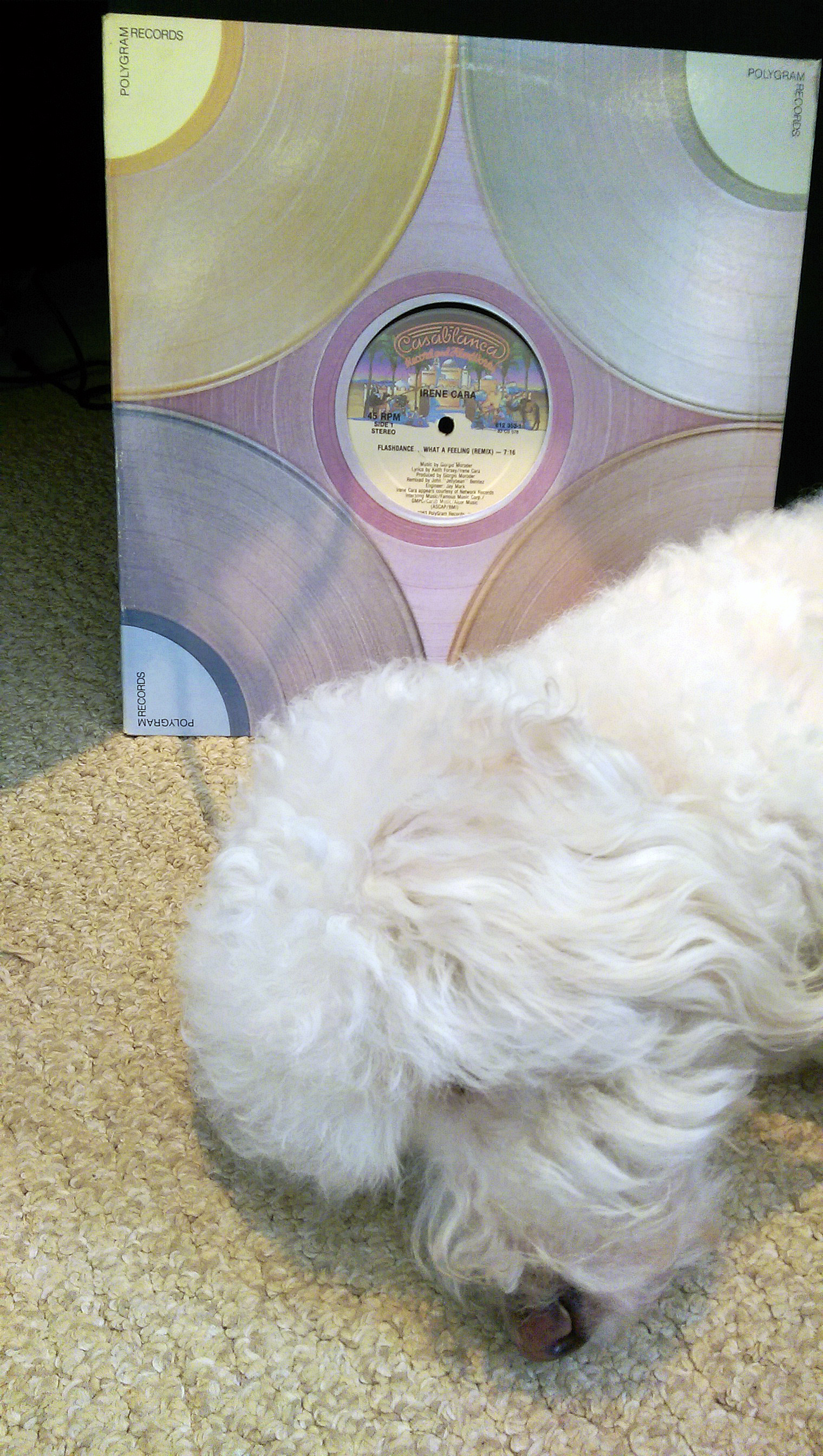
Though she hasn’t had a hit song in more than thirty years, people still remember Irene Cara’s name. Between 1980 and 1984, she had more hit songs than the two you can name off the top of your head.

First came the song “Fame,” taken from the movie Fame, in which Cara played Coco Hernandez. “Fame,” written by Dean Pitchford and Michael Gore and featuring backing vocals from Luther Vandross and Vicki Sue Robinson, hit #4, and won the Academy Award and Golden Globe Award for Best Original Song. In addition, Cara’s performance in the film earned her a Golden Globe nomination for Best Actress.

Also vying for the Academy Award for Best Original Song that year was “Out Here on My Own,” written by Michael Gore and his sister Lesley. Also performed by Cara in the film, it became her second consecutive top 40 single.

She didn’t appear in the movie Flashdance, but her theme song, “Flashdance…What a Feeling!,” was #1 in the US for six weeks, and won Cara, one of its writers, the Oscar for Best Original Song. “What a Feeling” also won Cara the Grammy for Best Pop Vocal Performance – Female and a nomination for Record of the Year, which she lost to Michael Jackson’s “Beat It” (fair enough!). The single topped charts around the world.

Given the song’s massive success, Cara found it odd that per her record label, her royalties from sales of the record amounted to $183. In 1985, following a few more hit songs (“The Dream,” from the movie D.C. Cab, in which she played Irene Cara; “Why Me?,” and “”Breakdance”), she sued the head of that label (which had since gone under) for $10 million for breach of contract. Eight years later, a jury awarded her $1.5 million. By then, her time in the spotlight was long over. She never hit the charts again after filing her lawsuit.

Take your passion and make it happen, but make sure you have people you trust looking after your affairs.

Today, Irene Cara turns 57 years old. Tunes du Jour’s weekly dance party kicks off with “Flashdance…What a Feeling!”


Click here to like Tunes du Jour on Facebook!
Follow me on Twitter: @TunesDuJour

Babs + Winston

It’s Barbra Streisand’s Birthday And I Need To Dance!

Around ten years ago I took up boxing. Not as a career, but as a form of exercise. I’d never watched a match on TV – too violent for my tastes. The idea to give it a try came from my trainer at Crunch Gym. Not my first trainer – he seldom showed up for our appointments. Not my second trainer, an asshole who ignored Crunch’s slogan “No judgments” and mocked my appearance throughout our sessions, while bragging about how he once made a female client of his cry. It was the idea of my third trainer at Crunch, the actor who often called me as I was five minutes from the gym to tell me he won’t make our session as he was still at an audition. Yes, that trainer. He showed up for our appointments around 60% of the time, which was better than my first Crunch trainer. He introduced me to boxing. I learned the upper cut, the cross, the jab, the duck, some other thing that involved me not getting punched in the face, and kicks. It was great exercise, especially on those days when I came to Crunch after a frustrating day at work. I’d punch that bag like I was seeing the face of one of the assholes with whom I worked. It got out the tension and got me into great physical shape.

I dumped that trainer once I decided a 60% show-up-for-your-job rate was inadequate for my aggression-releasing needs. I continued sparring with the fourth trainer Crunch assigned me, that is when he wasn’t flirting with the female clientele or taking weights from the floor and stuffing them in his duffle bag so as to build up his home gym.

When it came renewal time I left Crunch and their lot of unprofessional trainers and signed up at 24-Hour Fitness. Though it is literally a few steps from my home, I didn’t go to the location in West Hollywood, whose equipment, like its clientele, was old and decrepit. I went to the Hollywood location, where I was assigned a trainer who was so good, we worked out together for a few years. He introduced me to that hot actor who I later saw as a defendant on Judge Judy. He won his case. A few years later the West Hollywood location of 24-Hour Fitness closed for three and a half months. It reopened with fresh new equipment and fresh new customers, though oddly, it still was not open 24 hours, at least not in a single day.

Unfortunately, there was no boxing at 24-Hour Fitness. While at a local smoothie ship I saw a business card for a boxing coach who did private training at his home. He converted his unattached garage (is that the right word – unattached? I mean detached, right? Either way, you get my drift – his garage was not attached to his house.) into a boxing ring. He used to be a professional boxer and was a model as well. Our sessions were great, and not just because he’d say goodbye to me each week with a kiss on the lips, his heterosexuality be damned. Once he kissed me on the neck. Why did I stop seeing him? No recuerdo. Maybe it had something to do with a mental ward.

I’ve had one or two trainers and taken some boxing classes since then, but they weren’t as much fun. Something was missing, besides the kisses. Still, if one were to put me in a boxing ring today with Barbra Streisand, I think I could take her down. It’s not that I have a desire to punch Barbra Streisand, nor do we have a bout on the books. I’m saying this as a poor segue into mentioning her 1979 film The Main Event, in which she portrayed a boxer manager/perfume magnate.

The film re-teamed Barbra Streisand with Ryan O’Neal, seven years after their film What’s Up, Doc? What’s Up, Doc? is a great movie. If you haven’t seen it, I strongly suggest you do, even if you’re not a fan of Barbra Streisand. Especially if you’re not a fan of Barbra Streisand. You’ll see a whole other side of her in this movie. Ryan O’Neal is great. Madeline Kahn made her feature film debut in this movie. How can you go wrong with Madeline Kahn? Austin Pendleton is in it. Kenneth Mars is in it. A lot of people are in it. I think I’ll host a viewing of it at my condo. Let me know if you’re around and interested. You should be interested.

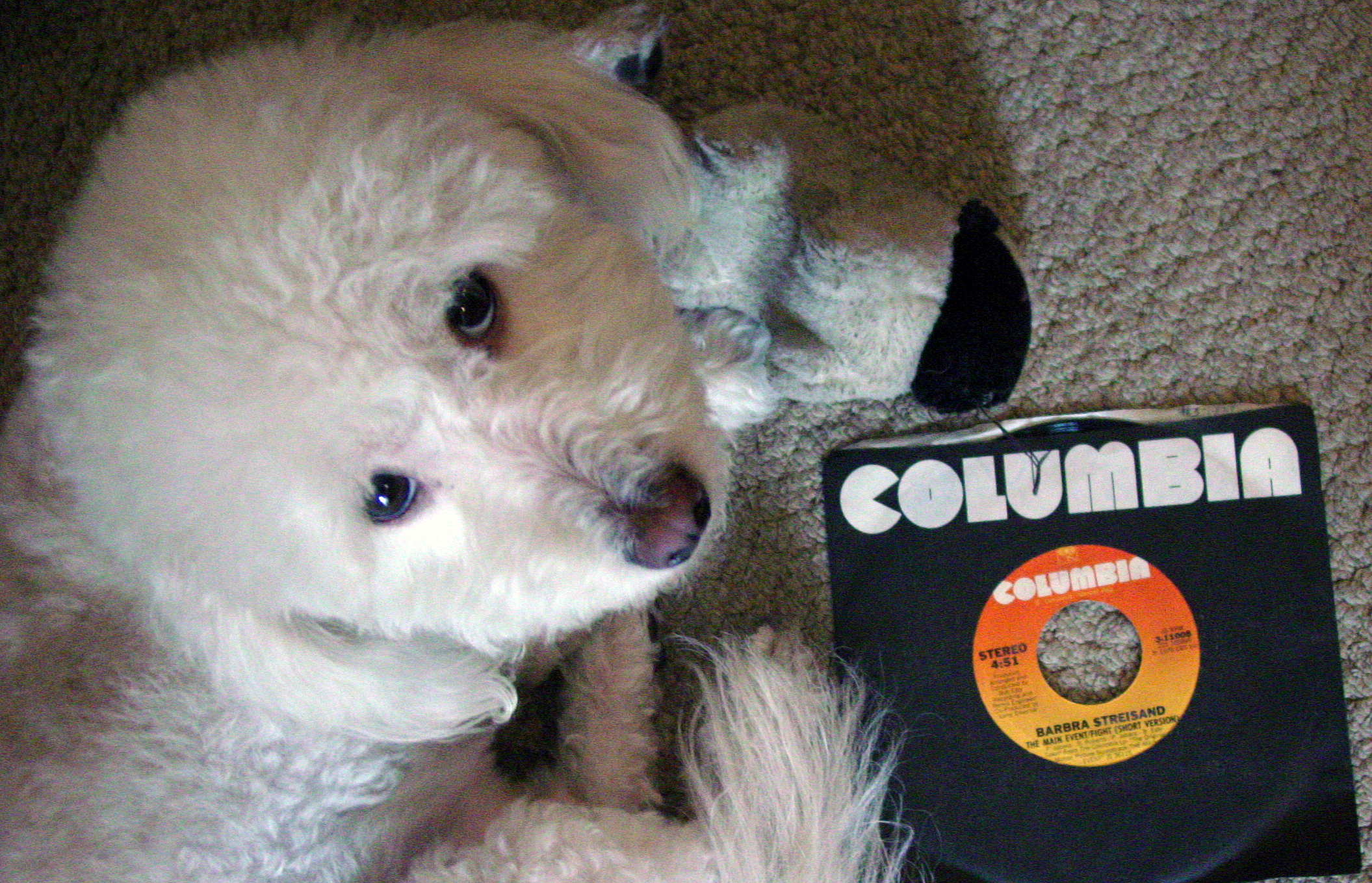
I never saw The Main Event. Critics panned it, but the public enjoyed it. I have the soundtrack album, which includes the hit single “The Main Event/Fight.” Three times – the 45 mix, the 12-inch mix, and as a ballad. The latter is solely the song “The Main Event.” “The Main Event/Fight” is a medley. “The Main Event” was written by Paul Jabara, whose writing credits also include Donna Summer’s “Last Dance” and The Weather Girls’ “It’s Raining Men” (on a side note, does anybody know if Chaka Khan is okay?) and Bruce Roberts, whose writing credits also include Laura Branigan’s “The Lucky One” and that Jeffrey Osborne song that goes “Can you woo woo woo?”. “Fight” was written by Jabara and Bob Esty. Esty’s writing credits also include Cher’s “Take Me Home.”

Babs + Winston

“The Main Event/Fight” is, with the Donna Summer duet “No More Tears (Enough is Enough),” my favorite Barbra Streisand single. I like my boxing coaches kissy and my Barbra Streisand songs peppy.

Today Barbra Streisand turns 73 years old. “The Main Event/Fight” kicks off Tunes du Jour’s weekly dance party.

Click here to like Tunes du Jour on Facebook.
Follow me on Twitter: @TunesDuJour

Winston + Gaynor

It’s Friday And I Need To Dance!

Billboard magazine’s first disco chart was published in October of 1974. Its #1 song was “Never Can Say Goodbye” performed by Gloria Gaynor. That record stayed on top for four weeks, soon crossing over to the pop chart, where it peaked at #9.

An eighteen-plus minute medley of “Honey Bee,” “Never Can Say Goodbye” and “Reach Out, I’ll Be There” reached #2 on the Disco chart in early 1975, leading to Gaynor being named “Queen of the Discos” by the National Association of Discotheque Disc Jockeys in March of that year.

Six more top ten disco hits followed in 1975 and 1976, but then her fortunes dried up. Her sole entry on the Disco chart in 1977 reached only #38. Her next charted disco single was over a year later, and peaked at #24. By this point, Donna Summer was the new Queen of Disco. Summer was also crossing over onto the pop chart, while Gaynor’s sole top 40 pop single was “Never Can Say Goodbye.” She failed to crack the Hot 100 in 1976 and 1977.

Her record company, Polydor, reached out to producer Dino Fekaris and asked him to produce for Gaynor a cover of the Righteous Brothers track “Substitute,” then a recent hit overseas for a group called Clout.

Fekaris was a staff songwriter at Motown Record for almost seven years before the company let him go. Determined not to let that career setback derail him, Fekaris got together with his songwriter and production partner Freddie Perren, who also had a stint at Motown, and wrote a song about getting over the fear of the unknown and surviving what life throws at you. They wanted a woman to record the track, but didn’t have anybody in mind. They decided to give the song to the next diva they work with. That’s when Polydor called with the Gaynor gig.

As requested by her label boss, Gaynor recorded “Substitute” to be the A-side of her next single, but the song about survival, which she recorded to be the record’s B-side, really resonated with her. Besides her career troubles, she recently lost her mother and fell on stage while performing, which required her to undergo spinal surgery and spend six months in the hospital. She recorded the tracks wearing a back brace.

“Substitute” was released in the fall of 1978. It failed to make the Hot 100.

One night around that time, Studio 54 DJ Ritchie Kaczor flipped over “Substitute” and played its B-side. The patrons ignored it that first time, but Kaczor kept playing it. Eventually, it became the club’s most popular cut. Soon, all New York City clubs were playing the track.

In November 1978 Vince Aletti wrote in Record World magazine that this song “is Gaynor’s very best work in years…delivered with such relish that one can’t help but get caught up in the emotion.”

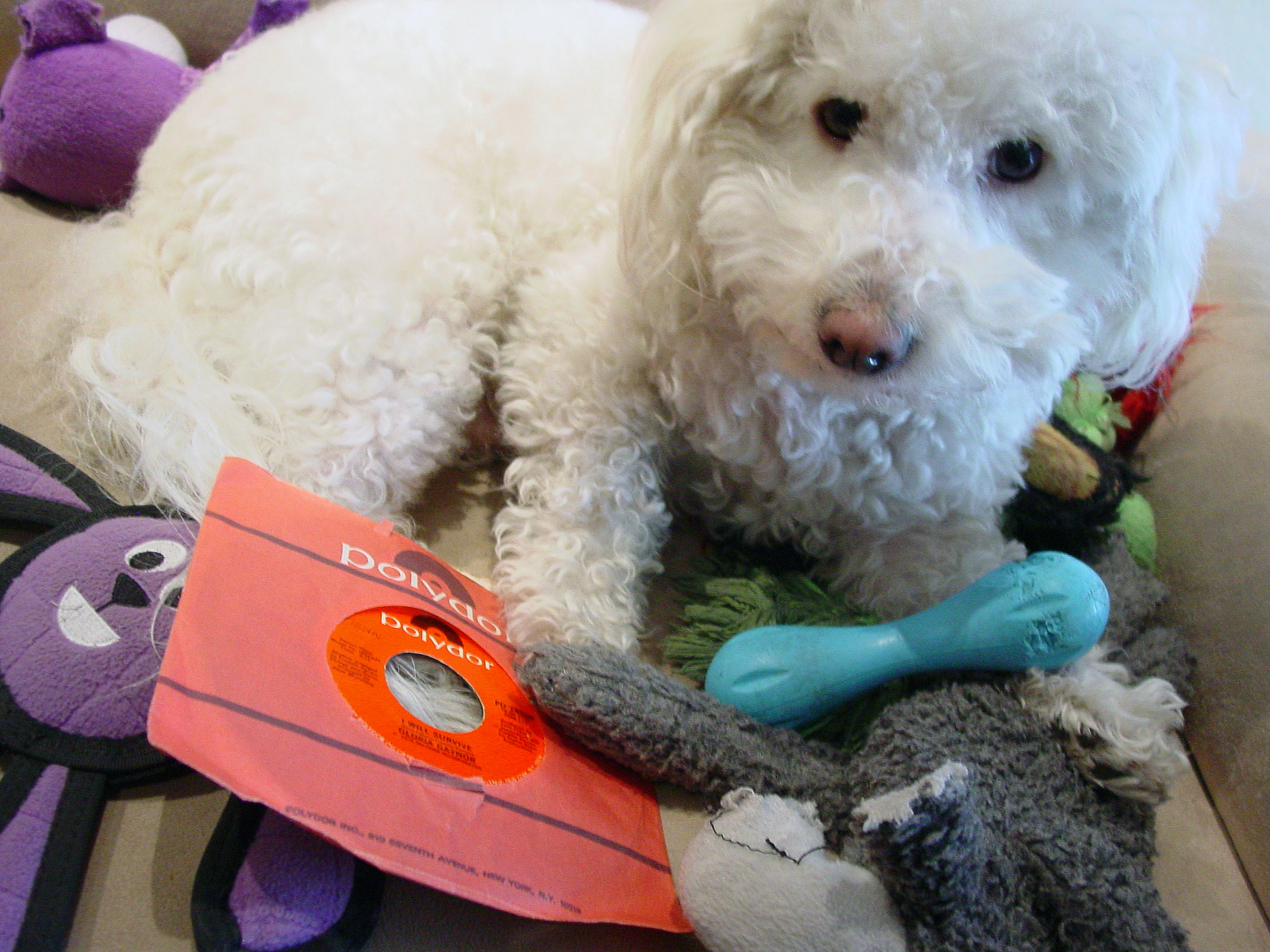
In Boston, disco radio DJ Jack King played the single’s B-side and reported that “my listeners went nuts!” Seeing the response this song was getting, Polydor reissued the single with “Substitute” as the B-side. The A-side was now the anthem “I Will Survive.”

Winston + Gaynor
In January 1979, “I Will Survive” returned Gloria Gaynor to #1 on the Disco chart, where she remained for three weeks. In March of that year the record hit #1 on the Hot 100, where it also stayed for three weeks. It went on to become a smash around the world.

At the 22nd Annual Grammy Awards ceremony on February 27, 1980, Gloria Gaynor’s “I Will Survive” won for Best Disco Recording, the only time that award has ever been given, over Michael Jackson’s “Don’t Stop ‘Til You Get Enough,” Rod Stewart’s “Da Ya Think I’m Sexy?,” Earth Wind & Fire with The Emotions’ “Boogie Wonderland,” and then Queen of Disco Donna Summer’s Bad Girls.

“I Will Survive” kicks off Tunes du Jour’s weekly dance party.

Click here to like Tunes du Jour on Facebook.
Follow me on Twitter: @TunesDuJour