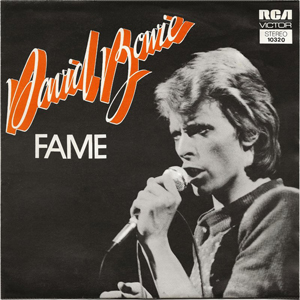
Tunes Du Jour Presents 1975

Fifty years ago, radio dials and turntables were spinning an uncommonly diverse mix of sounds. The charts of 1975 didn’t follow a single storyline—instead, they captured a moment when multiple musical currents were flowing with equal strength. Disco was gaining momentum but hadn’t yet dominated everything in its path. Rock was simultaneously reaching for arena-sized ambition and stripping down to raw emotion. Soul and funk were evolving into more sophisticated forms, while pop continued doing what it does best: making people hum along whether they meant to or not.

The year belonged, in many ways, to artists who understood that hooks and ambition weren’t mutually exclusive. Bruce Springsteen’s “Born to Run” arrived like a desperate prayer wrapped in Phil Spector production, while Queen’s “Killer Queen” proved that flamboyance and precision could coexist in three minutes of glam-rock perfection. Led Zeppelin stretched “Kashmir” across nearly nine minutes of Eastern-influenced grandeur, and Pink Floyd’s “Wish You Were Here” turned melancholy into an art form. Even Bob Dylan, never one to stand still, was crafting the narrative complexity of “Tangled Up in Blue.” These weren’t just songs—they were statements about how far popular music could reach while still connecting with listeners.

Meanwhile, dance floors were becoming cultural epicenters. KC and the Sunshine Band’s “That’s the Way (I Like It)” and Gloria Gaynor’s “Never Can Say Goodbye” helped establish disco as something more than a passing trend. The Bee Gees’ “Jive Talkin'” showed that the brothers Gibb could pivot from balladeers to funk-influenced hitmakers. Labelle’s “Lady Marmalade” brought New Orleans sass and unapologetic sexuality to the mainstream, while Earth, Wind & Fire’s “Shining Star” blended funk, soul, and jazz into something that felt both cosmic and grounded. The groove wasn’t just a rhythm—it was becoming a philosophy.

What’s striking about 1975 is how much sonic territory gets covered without any single approach dominating. 10cc’s “I’m Not in Love” used studio technology to create something hauntingly atmospheric, while Kraftwerk’s “Autobahn” was quietly suggesting what electronic music might become. Barry White continued orchestrating romantic opulence, Minnie Riperton’s five-octave range soared through “Lovin’ You,” and Linda Ronstadt’s “You’re No Good” proved that straightforward rock could still pack a punch. David Bowie’s “Fame,” co-written with John Lennon, showed him already moving past glam into funk-inflected territory. Glen Campbell brought “Rhinestone Cowboy” to country-pop crossover success, while Average White Band demonstrated that Scottish musicians could master American funk with “Pick Up the Pieces.”

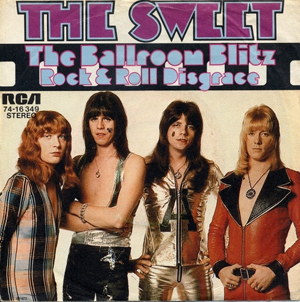
Listening to these songs now, what emerges isn’t just nostalgia but a reminder of a particular kind of creative confidence. These artists weren’t afraid to be big or vulnerable, funky or introspective, polished or raw—sometimes all within the same track. The year didn’t belong to any single movement or sound, and that might be exactly what made it memorable. It was a time when the radio could take you from the Staple Singers’ gospel-infused soul to Sweet’s glitter-rock crunch to ABBA’s pristine pop architecture without anyone thinking twice about the journey. That kind of range feels worth celebrating.

Follow Tunes Du Jour on Facebook

Follow me on Bluesky

Follow me on Instagram

Tunes Du Jour Presents The Smokey Robinson Songbook

ABC wasn’t wrong—when Smokey sings, everything is wonderful. But just as impressive as his voice is his pen. Smokey Robinson didn’t just write hit songs; he crafted narratives, emotions, and melodies so timeless that they continue to be recorded and reinterpreted decades later. His songwriting, marked by poetic lyricism and effortless hooks, helped define the Motown sound and set a gold standard for pop and R&B composition.

His songs weren’t just catchy; they were masterclasses in storytelling. “My Girl” gave The Temptations a signature hit with a lyric so simple yet evocative that it remains a cultural touchstone. “My Guy” did the same for Mary Wells, its playful devotion making it an anthem of unwavering love. Whether it was the swagger of “Get Ready,” the tenderness of “Ooh Baby Baby,” or the clever metaphor of “The Hunter Gets Captured by the Game,” Smokey knew how to tap into universal feelings and dress them in melodies that lingered.

His influence extended far beyond Motown, as shown by the sheer range of artists who have covered his work. The Beatles took on “You Really Got a Hold on Me,” Elvis Costello recorded “From Head to Toe,” The Rolling Stones tackled “Going to a Go-Go,” D’Angelo put his own spin on “Cruisin’,” and Peter Tosh reimagined “(You Gotta Walk And) Don’t Look Back.” Whether through his own performances or the countless reinterpretations of his songs, Smokey Robinson’s writing continues to resonate, proving that while it’s great when Smokey sings, it’s just as magical when Smokey writes.

Follow Tunes du Jour on Facebook

Follow me on Bluesky

Follow me on Instagram
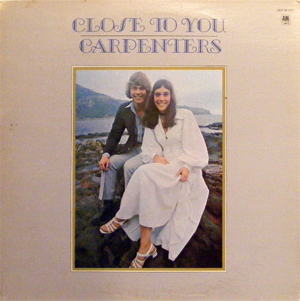
Your (Almost) Daily Playlist: 10-25-23

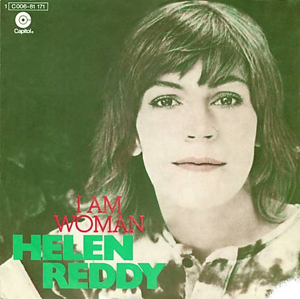
Released as a single in 1971, Helen Reddy’s “I Am Woman” tanked. She rerecorded the song. The new version was released as a single the following year, debuting on the Hot 100 at number 99. Two weeks later it was number 97. Then it fell off the chart. Lots of television appearances and many phone calls from Reddy’s husband to radio stations across the US led to the song re-entering the Hot 100, eventually becoming the first of three US number one singles for Reddy and winning her the very first American Music Award for Favorite Pop/Rock Female Vocalist.

The late Helen Reddy was born on this date in 1941. Several of her recordings are included on today’s playlist.

Follow Tunes du Jour on Facebook

Follow Tunes du Jour on Twitter

Follow me on Instagram

Your (Almost) Daily Playlist: 8-27-23

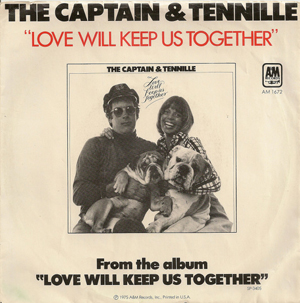
The Captain & Tennille’s “Love Will Keep Us Together” was a huge hit in 1975, but not everyone agreed with its message. Ian Curtis, the leader of Joy Division and a newlywed in 1975, was one of them. His composition “Love Will Tear Us Apart” could be seen as a response to the cheerful song, expressing his disillusionment with love and life. He took his own life in 1980, a month before his song was released as a single, on its way to becoming a classic.

Daryl Dragon, better known as The Captain, a nickname given to him by The Beach Boys’ Mike Love, was born on this date in 1942. A few of his duo’s hits are included on today’s playlist.

Follow Tunes du Jour on Facebook

Follow Tunes du Jour on Twitter

Follow me on Instagram

Your (Almost) Daily Playlist: 6-4-23

In seventh grade Spanish class I did an oral presentation about Freddy Fender. During it I played his number one hit “Before the Next Teardrop Falls.” I wanted to play his follow-up hit, “Wasted Days and Wasted Nights,” but Señora Gluck stopped me. “Don’t play that song. I hate that song.” What’s her problema? It’s a perfectly fine single.

If you were at my presentation you’d know that the late Freddy Fender was born Baldemar G. Huerta on this date in 1937. That won’t be on the test. His two biggest hits are included on today’s playlist. That will be.

Follow Tunes du Jour on Facebook

Follow Tunes du Jour on Twitter

Follow me on Instagram

Your (Almost) Daily Playlist: 8-26-22

Today’s playlist celebrates the August 26 birthdays of Garbage’s Shirley Manson, The Velvet Underground’s Moe Tucker, Cassie, Ashford & Simpson’s Valerie Simpson, The Treacherous Three’s Special K, and The Cowsills’ Bob Cowsill; the August 27 birthdays of The Stanley Brothers’ Carter Stanley, Ma$e, The Captain & Tennille’s Daryl Dragon, and The Bloodhound Gang’s Jimmy Pop; and the August 28 birthdays of The Velvet Underground’s Sterling Morrison, The Stranglers’ Hugh Cornwell, Florence + The Machine’s Florence Welch, Shania Twain, David Soul, The Crew Cuts’ John Perkins, The Olympics’ Walter Ward, Phranc, and Mel & Kim’s Kim Appleby.

Follow Tunes du Jour on Facebook

Follow Tunes du Jour on Twitter

Follow me on Instagram