Tunes Du Jour Presents 1961

The year 1961 didn’t roar in with a musical revolution—but in hindsight, that’s part of its charm. Instead, it offered a series of small but significant steps toward what would become a much louder, wilder, and more politically charged musical landscape. If the ’50s laid the foundation for rock and R&B, then ’61 felt like a transitional hallway: not quite out of the doo-wop era, but inching toward soul, girl groups, and the unmistakable rise of youth-driven pop. Listen closely, and you can hear a generation beginning to test its voice.

The playlist for this year paints a picture of variety and crossover. Ben E. King’s “Stand by Me” combines gospel roots with a pop sensibility, creating a timeless anthem of emotional resilience. Meanwhile, The Marcels inject a doo-wop jolt into “Blue Moon,” turning a Rodgers and Hart chestnut into something utterly of the moment. And “Shop Around” by The Miracles helps define the early Motown sound—polished, melodic, and unmistakably urban—hinting at the empire Berry Gordy was quietly building in Detroit.

Pop and R&B weren’t the only sounds of 1961. The jazz world was still vibrant, and John Coltrane’s take on “My Favorite Things” stretched the familiar into something exploratory and modal, giving the Broadway tune a hypnotic new dimension. Similarly, Art Blakey’s “A Night in Tunisia” offered a fiery reminder that hard bop was far from finished. This year wasn’t just about three-minute singles on AM radio; it also made room for longer-form musical statements that spoke to listeners seeking complexity.

And then there were the voices—so many distinct, unforgettable voices. Roy Orbison’s near-operatic Crying and Patsy Cline’s aching “Crazy” each showed that vulnerability could be commercially viable. The same went for Etta James, whose rendition of “At Last” remains one of the most iconic vocal performances ever recorded. Elsewhere, the lighter side of pop was thriving with Neil Sedaka’s “Calendar Girl” and Bobby Vee’s “Take Good Care of My Baby,” songs built for teenagers who were beginning to see themselves as a cultural force.

Taken together, the music of 1961 reflects a moment in flux: the last glimmers of the 1950s still lingered, but the seeds of what would define the 1960s were clearly being planted. Whether it was Ray Charles fusing gospel and R&B on “Hit the Road Jack,” or the early stirrings of girl-group grandeur from The Marvelettes and The Shirelles, this was a year where nothing yet dominated—but everything seemed possible.

Follow Tunes Du Jour on Facebook

Follow me on Bluesky

Follow me on Instagram
Tunes Du Jour Presents 1957

The year 1957 stands as a pivotal moment in the evolution of popular music, where rock ‘n’ roll, rhythm and blues, and even a touch of jazz converged to create a soundtrack that would resonate for decades. The hits of the year showcase not only the diverse range of genres but also the rise of some of the most influential voices in music history. A prime example is The Crickets’ “That’ll Be the Day,” a track that embodies the early rock ‘n’ roll spirit, blending Buddy Holly’s unmistakable vocal delivery with a catchy, driving beat. It’s a song that helped shape the sound of the era.

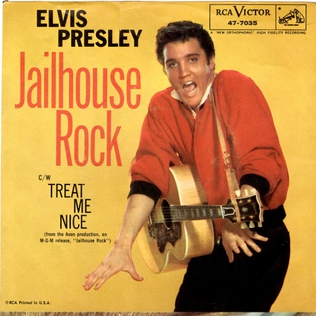
Elvis Presley’s “Jailhouse Rock” is another cornerstone of 1957, with its infectious energy and rebellious attitude. Presley was at the height of his powers, blending rock, blues, and a hint of swagger that would influence generations of performers. Meanwhile, Fats Domino’s “Blueberry Hill” offered a smoother, more melodic contrast. Domino’s effortless combination of rhythm and blues with pop sensibility helped bridge the gap between different audiences, securing his place as one of the genre’s pioneers.

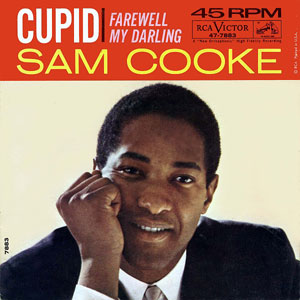
But 1957 wasn’t just about rock ‘n’ roll—it was a year that embraced the full spectrum of American music. Take Harry Belafonte’s “Day-O (Banana Boat Song),” a calypso tune that brought Caribbean sounds to mainstream audiences. Similarly, the soulful ballad “You Send Me” by Sam Cooke introduced a voice that would soon come to define soul music. Cooke’s ability to combine gospel roots with pop elegance opened the doors for future R&B artists.

The variety of sounds continued with tracks like “Whole Lotta Shakin’ Goin’ On” by Jerry Lee Lewis and “Lucille” by Little Richard, both of which pushed the boundaries of what rock music could be with their raw energy and wild performances. On the other end of the spectrum, Ella Fitzgerald and Louis Armstrong’s rendition of “Summertime” added a jazzy sophistication to the year’s musical offerings, reminding listeners that timeless standards still had a place in the changing musical landscape.

Ninety fifty-seven was a year when rock ‘n’ roll solidified its place in popular culture, while artists from various genres continued to innovate and inspire. Whether through the heartfelt croon of Johnny Mathis on “Chances Are” or the rough-edged blues of Muddy Waters’ “Got My Mojo Working,” the music of this year still echoes today as a testament to a time when creativity flourished across musical boundaries.

Throwback Thursday: 1961

The years between 1958 and 1963 are often thought of as a sleepy time for rock and roll, a quiet time between the genre’s initial burst onto the charts and the onslaught of the British Invasion. However, lots of great records were charting during those years. Check out this playlist of thirty hits from 1961 for proof.

Follow Tunes du Jour on Facebook.

Follow Tunes du Jour on Twitter.

Follow me on Instagram.

Throwback Thursday – 1961

From 1958 to 1960, Ben E. King was the lead singer of The Drifters, scoring hits with “There Goes My Baby,” “Save the Last Dance for Me,” “This Magic Moment” and “I Count the Tears.” He suggested to the group’s manager, George Treadwell, that they record the spiritual tune “Stand by Me Father,” but Treadwell turned him down. King also asked Treadwell for a greater share of the group’s royalties. Again, Treadwell turned him down. King said goodbye.

King left the group after recording just thirteen songs with them. He soon made the top ten as a solo act with 1961’s “Spanish Harlem.”

Around that time, King was working on a song based on “Stand by Me Father.” He had some lyrics and a melody. He finished the lyrics with his producer, Jerry Leiber. Leiber’s songwriting/production partner, Mike Stoller, added some chords behind the melody, as well as a bass line.

Per Leiber, it’s that last addition that makes Ben E. King’s “Stand By Me” a classic. “The lyrics are good, King’s vocal is great. But Mike’s bass line pushed the song into the land of immortality. Believe me – it’s the bass line.”

“Stand By Me” kicks off this week’s Throwback Thursday playlist, spotlighting hits from 1961.


Click here to like Tunes du Jour on Facebook!
Follow me on Twitter: @TunesDuJour

Ruth Brown 327410_1258221698098_full

Ruth Brown And 1950s Rhythm And Blues

So successful was Ruth Brown in the 1950s that her label, Atlantic Records, which started in 1947, was nicknamed The House the Ruth Built.

Her first single for the label, “So Long,” reached #4 on the Rhythm & Blues chart in 1949. Her next hit, “Teardrops from My Eyes,” spent 11 weeks at #1 on that chart. She earned the nickname the Queen of R&B, and over the next ten years scored an additional nineteen r&b top ten singles, including four more number ones. In total she spent thirty-two weeks at #1 on the r&b singles chart. In 1953, Brown crossed over to the pop top 40 with “(Mama) He Treats Your Daughter Mean.”

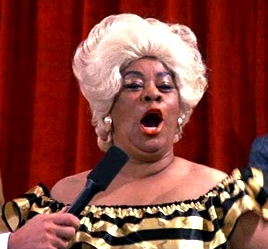
In the 1960s Brown focused on her family life. She returned to music the following decade, and added acting gigs to her resume. In 1979 she was a regular character on the sitcom Hello, Larry, and she famously portrayed Motormouth Maybelle in the original 1988 movie version of Hairspray, a role which had echoes of her life performing at segregated dances in the sixties. She won the 1989 Tony Award for Best Performance by a Leading Actress in a Musical for her performance in the Broadway show Black and Blue. Her companion album, Blues on Broadway, won Brown the Grammy Award for Best Jazz Performance, Female.

Ruth Brown 327410_1258221698098_full
Brown was also influential in the creation of the Rhythm and Blues Foundation, founded in 1988. Per the nonprofit’s mission statement, the Rhythm and Blues Foundation is “dedicated to the historical and cultural preservation of Rhythm & Blues music and recognition of participants in its community by providing services and programs to Rhythm & Blues artists and their fans.”

In 1993, Ruth Brown was inducted into the Rock and Roll Hall of Fame.

She died in 2006 from complications resulting from a heart attack and stroke.

Inspired by Ruth Brown, who was born on January 12*, 1928, today’s playlist presents twenty of the best rhythm and blues recordings from the 1950s.


(*I initially prepared this entry to be posted on January 12. However, once I was about to post it, I read in a few places that the information I had was incorrect, and that Brown’s birth date was January 30, so I saved it for today. Just after I finished re-editing it this afternoon, I looked on Wikipedia and see they (now) list her birthday as January 12, which some other sites confirmed.)

Click here to like Tunes du Jour on Facebook.
Follow me on Twitter: @TunesDuJour