Tunes Du Jour Presents 1962

The music of 1962 wasn’t so much at a crossroads as it was following several lively paths at once. What captivated the public ranged from soul ballads to novelty records to stirrings of folk activism. Instrumentals, dance crazes, and heartfelt pop all found room on the charts. It’s this eclecticism — rather than any one dominant trend — that best characterizes the year. Yet in small ways, a few songs hinted at larger shifts to come. For example, The Tornados’ “Telstar,” the first U.S. number one by a British group, captured a sense of futuristic possibility that would soon manifest more dramatically with the Beatles and the British Invasion.

Instrumentals found their way into the spotlight in very different forms. While “Telstar” beamed into space with its shimmering, otherworldly sound, Booker T. & the MG’s grounded listeners with the earthy groove of “Green Onions.” Meanwhile, Stan Getz and Charlie Byrd’s “Desafinado” introduced many American listeners to the smoother, jazz-inflected rhythms of bossa nova — a style that would quietly influence pop and jazz recordings throughout the decade. Taken together, these instrumentals showed how musical expression could take new forms without abandoning broad popular appeal, and how lyrics weren’t always necessary to convey strong emotion.

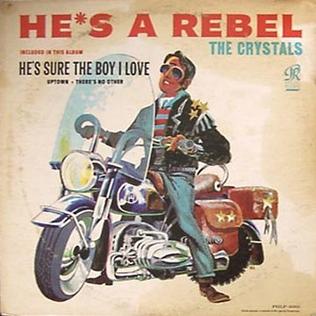
Soul music also solidified its foundation. Sam Cooke’s “Bring It on Home to Me” and Solomon Burke’s “Cry to Me” mixed gospel roots with secular longing in ways that would help define soul music itself. Girl groups and doo-wop continued to resonate, with The Crystals’ “He’s a Rebel” and The Shirelles’ “Soldier Boy” offering different takes on devotion and defiance. Dion’s “The Wanderer” carried forward some of doo-wop’s spirit, while Gene Chandler’s “Duke of Earl” stood proudly as a bridge from doo-wop’s earlier heyday into a new era of soul and R&B. Even novelty records had staying power — Bobby “Boris” Pickett’s “Monster Mash” reached number one and, thanks to perennial Hallowe’en airplay, remains a cultural touchstone.

Folk music, too, gained traction. Peter, Paul & Mary’s debut album, featuring “If I Had a Hammer,” became one of the year’s bestsellers, spending over a month at number one. Its clean harmonies and calls for justice would help set the stage for the socially conscious folk boom led by artists like Bob Dylan, whose own debut — mostly overlooked in 1962 — was just the beginning of a rapid ascent. Meanwhile, outside the U.S., Françoise Hardy’s “Tous Les Garçons Et Les Filles” offered a moody, introspective style that would come to influence the understated emotionality of later French pop and, indirectly, certain strands of indie pop decades later.

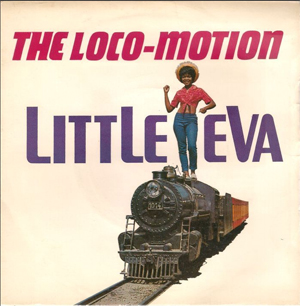
Some of 1962’s biggest hits have proven remarkably enduring. Elvis Presley’s “Can’t Help Falling in Love,” originally from the Blue Hawaii soundtrack, has since become one of his most covered and beloved songs. The Contours’ raucous “Do You Love Me” found new life decades later with Dirty Dancing, while Carole King, years before Tapestry, scored her first chart hit as a performer with “It Might as Well Rain Until September” — even as she continued to dominate as a songwriter, co-writing Little Eva’s infectious “The Loco-Motion.” These songs from 1962 don’t just capture a moment in time; they reveal a popular music scene that was broadening and diversifying while quietly laying the groundwork for upcoming revolutions, capturing both the fleeting spirit of its moment and the lasting power of pop at its best in a year where no single trend reigned supreme.

Follow Tunes Du Jour on Facebook

Follow me on Bluesky

Follow me on Instagram

Your (Almost) Daily Playlist: 9-19-23

Producer Phil Spector had Righteous Brother Bill Medley sing the first verse of “You’ve Lost That Lovin’ Feelin’.” When his righteous brother Bobby Hatfield (they’re not brothers in the familial sense, see) asked what he was supposed to do during that verse, Spector told him “You can go directly to the bank.” To the bank he went, as YLTLF became one of the biggest US hits of 1965.

Bill Medley turns 83 today. A couple of his duo’s hits are included on today’s playlist.

Follow Tunes du Jour on Facebook

Follow Tunes du Jour on Twitter

Follow me on Instagram

Throwback Thursday: 1962

A popular misconception that I sometimes fall into is that the years after The Day The Music Died (early 1959) and before The Beatles hit in America (early 1964) the pop chart was pretty dull. Sure, there was a lot of schmaltz on the Hot 100 – there always is – but there was a lot of exciting stuff, too, as today’s Throwback Thursday playlist will attest. Girl groups, Motown, Ray Charles, James Brown, Frankie Valli, Sam Cooke, The Beach Boys and lots of other good stuff made the top 40. Have a listen to thirty of 1962’s best.

Follow Tunes du Jour on Facebook.

Follow Tunes du Jour on Twitter.

Follow me on Instagram.

Girl Power! Forty Of The Best Girl Group Songs

The girl group sound was a genre of pop music that flourished on the charts between 1958 and 1966. Most records that fall into this category were made by all-female trios or quartets. However, some girl group hits were performed by solo women, and some by groups that featured a cisgender male. Per girl-groups.com, more than 750 girl groups cracked the US or UK charts between 1960 and 1966.

Tunes du Jour commemorates International Women’s Day with a playlist of forty of the best examples of the girl group sound.


Click here to like Tunes du Jour on Facebook!
Follow me on Twitter: @tunesdujour
Follow me on Instagram: @glenschwartz

Throwback Thursday – 1962

Some time in my teen years I feel in love with the girl group sound. My favorite was The Crystals’ “He’s a Rebel.” The music and the vocals hooked me. The singer tells of how others don’t approve of the boy she loves as he’s a non-conformist, but he treats her well and that’s all that matters.

The story behind the record is as interesting as the record itself. The song was written by Gene Pitney, who had several hits of his own, including “Town Without Pity” and “(The Man Who Shot) Liberty Valence.” “He’s a Rebel” was slated to be the debut single for Vikki Carr, but when Spector heard Pitney’s demo he knew he wanted it for one of his acts, The Crystals.

He needed to record it quickly in order to challenge Carr’s version at the stores. The Crystals, however, were on the road in New York and unable to make the recording sessions in Los Angeles. No problem. Spector hired a local group called The Blossoms, led by Darlene Wright, to record the song. Wright was paid $3000 for the session. Spector released the record under the name The Crystals, as his label owned the name. The actual Crystals first learned of their new hit song when they heard it on the radio. It became their first #1 single, meaning The Crystals had to learn this song so they could perform it at their shows. The group’s lead singer, Barbara Alston, could not match Wright’s vocal performance, so fellow Crystal LaLa Brooks moved into the lead vocalist slot. Coincidentally, the week The Crystals’ “He’s a Rebel” was #1, Gene Pitney was #2 as a singer with “Only Love Can Break a Heart,” a song he didn’t write.

As “He’s a Rebel” was so successful, Spector needed to get a follow-up single out quickly. Again, he turned to The Blossoms to record “He’s Sure the Boy I Love.” Wright, however, was angry that her name was not on “He’s a Rebel” and told Spector she would only do this song if she were singed to a recording agreement and was properly credited for her vocals on the track. Spector agreed, changing her name in the agreement to Darlene Love. He released “He’s Sure the Boy I Love.” It was credited to The Crystals.

Spector used the money he made from “He’s a Rebel” to buy out his business partners in the Philles Records label. In addition to the financial settlement, Spector had to give his two ex-partners a share of the royalties of the next Philles single release, so Spector got the real Crystals into the studio and recorded “(Let’s Dance) The Screw,” a silly number clearly not intended to be a hit. A copy was sent to one of the ex-partners. No royalties were generated.

Tunes du Jour celebrates Throwback Thursday with twenty great hits from 1962, kicking off with “He’s a Rebel” by “The Crystals.”


Click here to like Tunes du Jour on Facebook!
Follow me on Twitter: @TunesDuJour

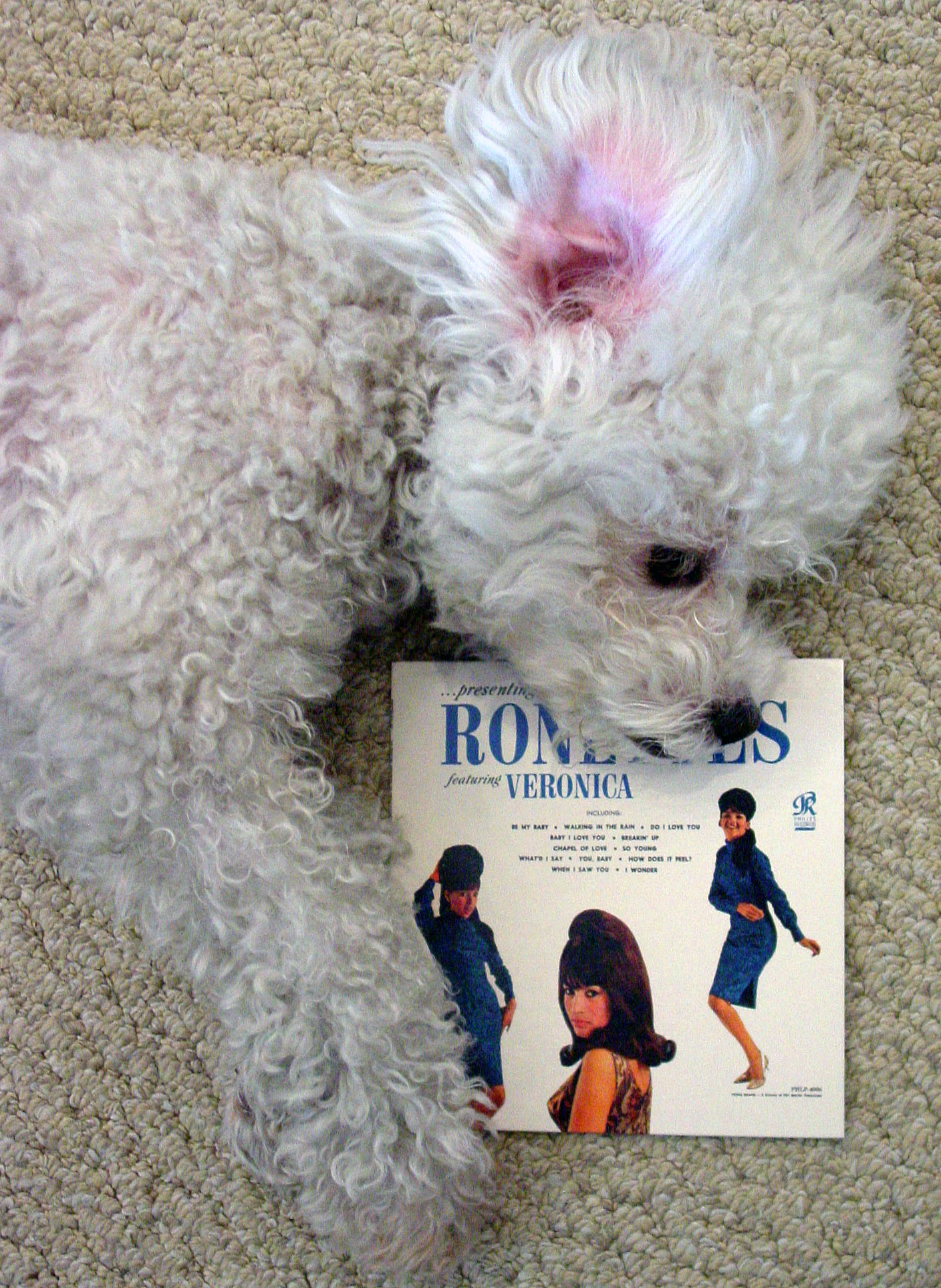
Ringo + Ronnie 2014-08-10 12.19

The Ronettes – “Be My Baby”

Ringo + Ronnie 2014-08-10 12.19

Ronnie Spector turns 71 years old today. Along with her sister Estelle and cousin Nedra, Ronnie, then Veronica “Ronnie” Bennett, formed The Ronettes, one of the classic girl groups of the sixties.

The trio was signed to Colpix Records, but none of their singles performed well. Then they met Phil Spector, who signed them to his label, Philles.

The first track Spector recorded with the trio was “Why Don’t They Let Us Fall in Love?,” which, though the girls liked it, Spector held from release.

With Jeff Barry and Ellie Greenwich, Phil Spector wrote “Be My Baby,” with the intention of having Ronnie Bennett, the woman he wanted to be his baby, record it.

The resulting record had a classic Spector wall of sound production and Phil recorded more than 40 takes. It took Ronnie three days to get the lead vocal down.

The other Ronettes don’t sing on “Be My Baby.” Background vocals were provided by Darlene Love, Nino Tempo, Sonny Bono, who did promotion for Phil Spector, and Bono’s girlfriend, Cher.

In 1963, The Ronettes’ “Be My Baby” rose to #2 on Billboard’s Hot 100. Since that time it has made many lists of the greatest recordings. Among its biggest fans is Brian Wilson of The Beach Boys, who named it is favorite single of all-time, saying “This is a special one for me. What a great sound, the Wall of Sound. Boy, first heard this on the car radio and I had to pull off the road, I couldn’t believe it. The choruses blew me away; the strings are the melody of love. It has the promise to make the world better.”

Ronnie Bennett married Phil Spector in 1968. They divorced in 1974.

Today’s playlist consists of twenty tracks embodying the classic girl groups sound, with an emphasis on The Ronettes.