Tunes Du Jour Presents 1984

It’s hard to overstate how culturally dominant pop music was in 1984—or how much the year reshaped the landscape. Many of the songs on this playlist weren’t just hits; they were defining moments, launching or solidifying the careers of artists whose names still carry weight today. The sheer number of songs from 1984 that are still instantly recognizable points to a moment when creativity, commerce, and cultural change aligned. The presence of “Thriller”—Michael Jackson’s seventh single from the album of the same name—reminds us that the music business had never seen anything quite like this before. And yet, he wasn’t the only artist making history.

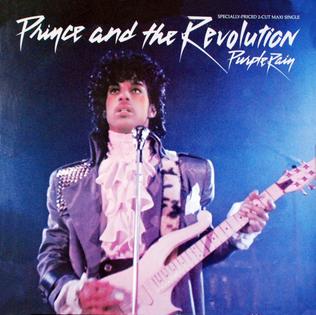
Prince’s “Purple Rain” marked not just a commercial breakthrough, but a creative one. It’s a song, an album, and a film—each enhancing the other’s mythology. Similarly, “Like a Virgin” signaled Madonna’s arrival as more than a pop star; she became a cultural force. Tina Turner, with “What’s Love Got to Do with It,” pulled off one of the most celebrated comebacks in music history. And Cyndi Lauper’s “Girls Just Want to Have Fun” brought an infectious blend of new wave and punky playfulness to the mainstream, reshaping ideas about femininity and pop performance.

Meanwhile, the rock world was hardly on pause. “Jump” became Van Halen’s biggest hit, thanks to its synth hook and anthemic chorus, while Bruce Springsteen’s “Dancing in the Dark” pushed his career into stadium territory. Across the Atlantic, U2’s “Pride (In the Name of Love)” began their transformation from college radio favorites to global headliners. The Replacements’ “I Will Dare,” from Let It Be, captured the heart of American indie rock—irreverent, emotionally raw, and just tuneful enough to hint at wider possibilities. And among the post-punk and alternative set, songs like “The Killing Moon” by Echo & the Bunnymen and “Heaven Knows I’m Miserable Now” by The Smiths gave moody introspection a lasting soundtrack.

What also stands out in 1984 is the range of genres that made a mainstream impact. Shannon’s “Let the Music Play” helped lay groundwork for freestyle, and Chaka Khan’s “I Feel for You” was a pivotal crossover moment, bringing together R&B, pop, and hip-hop. Run-D.M.C.’s “Rock Box” did something similar, blending rap and rock before it was fashionable. The Pointer Sisters’ “Automatic” was one of several hits that proved they could thrive in an electronic pop era without losing their vocal identity. Even novelty songs like “Ghostbusters” or the cheerful “Wake Me Up Before You Go-Go” helped shape the sound of the time.

Beyond chart success, 1984’s songs carried messages—sometimes playful, sometimes political. “Free Nelson Mandela” by The Special A.K.A. was a global anthem of protest. Depeche Mode’s “Blasphemous Rumours” examined faith and fate with a dark electronic edge. And “Somebody’s Watching Me,” a paranoid slice of synth-pop, foreshadowed a media culture on the verge of explosion. Whether on the dancefloor, in dorm rooms, or through the television set, 1984’s music didn’t just reflect its era—it helped define it.

Follow Tunes Du Jour on Facebook

Follow me on Bluesky

Follow me on Instagram
Tunes Du Jour Celebrates Pride 2025

Every June, Pride Month invites us to honor the LGBTQ+ community—not just its triumphs and ongoing struggles, but its wildly varied voices. This playlist, drawn from over six decades of music, is less a neat collection than a vibrant mix of statements, emotions, and identities. From Sylvester’s ecstatic disco classic “You Make Me Feel (Mighty Real)” to Billie Eilish’s “LUNCH,” the selections aren’t organized by genre, time period, or even theme. That’s fitting. The LGBTQ+ experience is too broad and multifaceted to be summed up by any single sound.

Some tracks speak directly to queerness, like Lou Reed’s “Walk on the Wild Side,” which namechecks drag queens and trans women, or Bronski Beat’s spiritual descendants, the Scissor Sisters, with their cheeky, loving anthem “Take Your Mama.” Others, like “Rocket Man” or “Do You Really Want to Hurt Me,” resonated with queer audiences before the artists behind them publicly came out—or even if they never did. There’s a history of coded expression here, of lyrics that offered solace to those reading between the lines.

Then there are the songs that became anthems of empowerment by sheer force of feeling: Christina Aguilera’s “Beautiful” offered a lifeline to LGBTQ+ youth when it first aired on MTV, while Madonna’s “Vogue” gave a global spotlight to a ballroom culture that had long gone ignored by the mainstream. Judy Garland’s “Over the Rainbow” might seem quaint next to Chappell Roan’s “Good Luck, Babe!,” but both songs capture longing, whether for love, acceptance, or the audacity to want more.

What unites these artists isn’t a single identity but a shared defiance—sometimes quiet, sometimes flamboyant—against what’s expected. Whether it’s the punkish ache of Buzzcocks’ “Ever Fallen in Love (With Someone You Shouldn’t’ve)” or the glossy Pet Shop Boys cover of “Go West,” the throughline is the refusal to shrink. Pride, in this sense, isn’t about perfection or performance. It’s about visibility, honesty, and a community that keeps evolving, note by note.

So, while this playlist won’t tell a single story, that’s exactly the point. Pride has never been about uniformity. It’s about claiming your truth, however it sounds—and blasting it through the speakers so someone else knows they’re not alone.

Hear last year’s Pride playlist here.

Follow Tunes du Jour on Facebook

Follow me on Bluesky

Follow me on Instagram
Tunes Du Jour Presents The David Bowie Songbook

David Bowie’s songwriting genius extends far beyond his own performances, as evidenced by this eclectic collection of covers spanning five decades. From punk pioneers to country legends, pop icons to elementary school choirs, artists across the musical spectrum have found fresh ways to interpret Bowie’s compositions. Iggy Pop’s raw, proto-punk “Lust for Life” shares space with Willie Nelson and Karen O’s unlikely but touching duet on “Under Pressure,” while Barbra Streisand’s take on “Life on Mars” contrasts with Ibibio Sound Machine’s Afrofuturistic reimagining of “Heroes.”

What’s particularly fascinating is how these songs illuminate different facets of Bowie’s writing. Some artists stay relatively faithful to the originals, while others take bold creative liberties. Together, these versions demonstrate not only Bowie’s versatility as a songwriter but also the enduring adaptability of his work across genres, generations, and cultures.

Follow Tunes Du Jour on Facebook

Follow me on Bluesky

Follow me on Instagram
Tunes Du Jour Presents 1983

The year 1983 was a vibrant musical landscape, a moment when pop culture was exploding with creativity and technological advancement. It was a year when Michael Jackson’s “Billie Jean” dominated the airwaves, its infectious rhythm and groundbreaking music video revolutionizing how we experienced music. The single was more than just a song; it was a cultural phenomenon that captured the zeitgeist of an era when music was becoming increasingly visual and dynamic.

This was also the year when Prince’s “1999” prophetically danced with apocalyptic themes, and The Police’s “Every Breath You Take” became an anthem of complex emotional surveillance. The diversity of musical styles was remarkable, with artists like Dexys Midnight Runners bringing an unconventional folk-pop energy with “Come on Eileen,” while New Order’s “Blue Monday” pushed the boundaries of electronic music, creating a sound that would influence dance music for decades to come. David Bowie’s “Let’s Dance” marked a vibrant shift in his musical journey, infusing his signature artistic sensibility with an irresistible pop-funk groove.

The single was king in 1983, with an unprecedented number of memorable tracks that seemed to burst from radios and dance floors everywhere. Eurythmics’ “Sweet Dreams (Are Made Of This)” introduced Annie Lennox’s haunting vocals to the world, while Marvin Gaye’s “Sexual Healing” offered a smooth, sensual counterpoint to the era’s more uptempo sounds. Lionel Richie’s “All Night Long” exemplified the period’s sunny, celebratory pop, and Culture Club’s “Do You Really Want to Hurt Me” challenged musical and social conventions with its charismatic lead singer, Boy George.

The year wasn’t just about pop, however. Rock and new wave were thriving, with bands like The Smiths (“This Charming Man”), The Clash (“Rock the Casbah”), and Duran Duran (“Hungry Like The Wolf”) pushing musical boundaries. Hip-hop and early rap were also emerging, with tracks like Melle Mel’s “White Lines” and Herbie Hancock’s groundbreaking “Rockit” signaling a musical revolution that would transform popular culture in the coming decades.

What made 1983 truly special was how it represented a moment of musical transition—a year when synthesizers and drum machines were becoming more prevalent, when music videos were transforming how artists communicated, and when genres were blending in unprecedented ways. From the new romantic sounds of Heaven 17’s “Temptation” to the quirky charm of Men Without Hats’ “The Safety Dance,” the music of 1983 was a testament to creativity, innovation, and the pure joy of sound. It was a year that didn’t just produce hit songs, but created a sonic landscape that would influence musicians for generations to come.

Follow Tunes du Jour on Facebook

Follow me on Bluesky

Follow me on Instagram

Your (Almost) Daily Playlist: 6-14-23

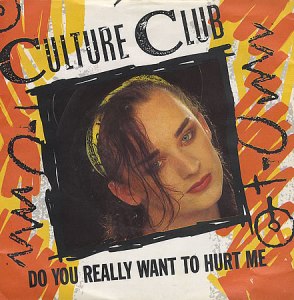
Culture Club’s “Do You Really Want to Hurt Me“ takes me back to Newbury Comics in Cambridge, Massachusetts in late 1982. There was a TV in the shop that showed music videos. That was my first exposure to this song and to Boy George. I was transfixed, partly because the song is so good, and partly because I couldn’t figure out the singer’s gender. We only knew of two genders back then. Though I had not yet been recruited into the homosexual lifestyle, I became fascinated with Boy George. It helped that his band’s music was so good, for a while anyway. His solo catalogue has some worthwhile numbers as well.

Boy George was born on this date in 1961.

Follow Tunes du Jour on Facebook

Follow Tunes du Jour on Twitter

Follow me on Instagram