Tunes Du Jour Presents 2000

The year 2000 arrived with a collective sigh of relief. The much-hyped Y2K bug turned out to be a non-event, and the new millennium stretched out before us, feeling both futuristic and strangely familiar. Looking back at the music from that year, you can hear a similar dynamic at play. It wasn’t a time of radical genre fusion or crossover; instead, it felt like several distinct musical movements were all cresting at the exact same time, each one confident and fully-formed. It was a year where you could switch the radio station and feel like you were jumping between entirely different worlds—from the polished pop of Britney Spears to the raw energy of DMX.

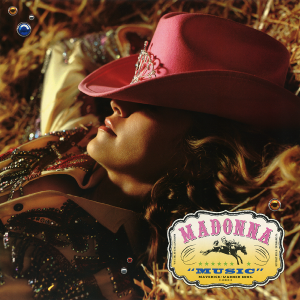
On one hand, pop and R&B were operating at peak performance, dominating the charts with precision-engineered hits. This was the era of the blockbuster music video, and artists delivered. Madonna reinvented herself yet again with the electro-thump of “Music,” while Britney Spears’s “Oops!…I Did It Again” perfected the formula she had established just a year prior. At the same time, R&B was in a period of remarkable innovation. You had the staccato, futuristic production of Timbaland on Aaliyah’s “Try Again,” the iconic, conversational flow of Destiny’s Child on “Say My Name,” and the deep, simmering soul of D’Angelo’s “Untitled (How Does It Feel).” These weren’t just great songs; they were statements of intent from artists at the top of their game.

Meanwhile, rock music was pulling in several different directions at once. Pop-punk had fully broken through to the mainstream, and blink-182’s “All the Small Things” was its endlessly catchy, stadium-sized anthem. More established acts like Foo Fighters and Red Hot Chili Peppers were delivering some of their most memorable melodic rock with “Learn to Fly” and “Californication,” respectively. Yet, on the fringes, things were getting much stranger and more interesting. Radiohead completely abandoned guitar-rock expectations with the anxious, electronic pulse of “Idioteque,” while Queens of the Stone Age offered a taste of heavy, hypnotic desert rock with “Feel Good Hit Of The Summer.” There was no single, unified “sound of rock” in 2000; there were several.

Hip-hop was arguably the most creatively vibrant and commercially powerful force of the year. The genre’s expansion was on full display, from the confrontational wit of Eminem’s “The Real Slim Shady” to the pure, unbridled velocity of OutKast’s “B.O.B.” which still sounds like it was beamed in from the future. The clubs were fueled by the aggression of DMX’s “Party Up (Up in Here)” and M.O.P.’s “Ante Up,” while Jay-Z’s “Big Pimpin’” projected an image of untouchable cool. And of course, you can’t talk about 2000 without acknowledging the songs that were simply inescapable. The unabashedly goofy charm of Sisqó’s “Thong Song” and the perhaps baffling, universal appeal of “Who Let the Dogs Out” added a unique and memorable flavor to the year’s sonic identity.

Listening back to this collection of songs now, what’s most striking is how separate but equal everything feels. This was one of the last moments before the digital revolution would completely flatten the music landscape, encouraging artists to borrow from everywhere at once. The year 2000 wasn’t about blending; it was a snapshot of distinct scenes, each with its own definitive soundtrack. From the raw scream of Kelis on “Caught Out There” to the quiet contemplation of Moby’s “Porcelain,” it was a year of powerful, parallel streams, a final, confident roar from the 20th-century music industry before everything changed.

Follow Tunes Du Jour on Facebook

Follow me on Bluesky

Follow me on Instagram
Tunes Du Jour Presents Beyoncé

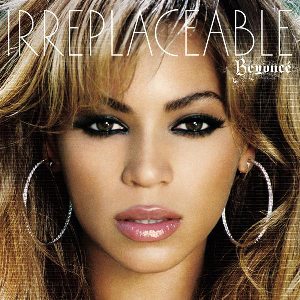
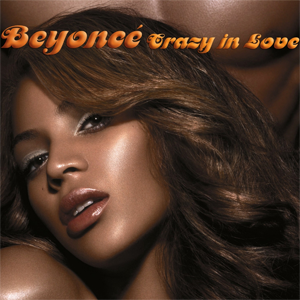
Beyoncé’s impact on music is undeniable, her influence spanning over two decades as she continually reinvents herself and her sound. From her early days as the lead singer of Destiny’s Child to her illustrious solo career, Beyoncé has pushed the boundaries of pop, R&B, and hip-hop, creating a catalog that resonates across generations. The playlist below showcases some of her most iconic tracks, such as “Crazy in Love” and “Single Ladies (Put a Ring on It),” both of which exemplify her ability to craft anthems that become cultural landmarks.

Beyond the music, Beyoncé’s contributions to social issues are equally significant. Her 2016 hit “Formation” is more than just a song—it’s a statement on Black identity and resilience, with a music video that touches on themes of police brutality and the aftermath of Hurricane Katrina. Beyoncé uses her platform not just to entertain, but to educate and inspire. The inclusion of Chimamanda Ngozi Adichie’s feminist speech in “***Flawless” is another example of how she seamlessly weaves activism into her art, promoting messages of female empowerment and equality.

Philanthropy is another area where Beyoncé has made her mark. She has consistently used her influence to support a range of causes. In 2017, she launched the Formation Scholars program to support young women in college, specifically those studying creative arts, music, literature, or African American studies. This initiative is a testament to her commitment to uplifting marginalized communities and promoting diversity in education.

Moreover, Beyoncé’s involvement in the Black Lives Matter movement further cements her role as an advocate for social justice. Her contributions have included financial donations, raising awareness, and dedicating performances to victims of racial violence. The song “BLACK PARADE,” released on Juneteenth in 2020, is a celebration of Black culture and a call to action, with proceeds from the song going to support Black-owned small businesses.

In a career filled with accolades and achievements, what sets Beyoncé apart is her ability to use her platform for the greater good. Her music continues to evolve, and with it, her commitment to social change. Beyoncé’s legacy is one of both artistic brilliance and a deep-seated dedication to making the world a more just and inclusive place.

Tunes Du Jour Presents 2004

While 2004 may not be remembered as a revolutionary year in music history, it certainly left its mark with a diverse range of sounds that reflected the changing trends of the early 2000s. From catchy pop anthems to rock revival and emerging indie scenes, the year offered a solid foundation for the musical directions that would unfold in the years to come.

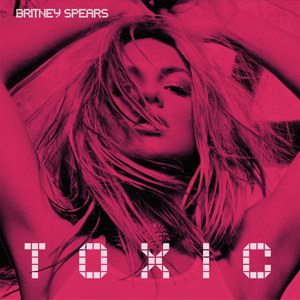
In the realm of pop and R&B, established stars and newcomers alike dominated the charts. Britney Spears continued her reign with the provocative “Toxic,” while Usher’s infectious club anthem “Yeah!” featuring Ludacris and Lil’ Jon became a dance-floor staple. Gwen Stefani made a successful foray into solo artistry with “What You Waiting For?”, blending pop with a hint of electronic edge. These tracks, along with hits from Destiny’s Child and Ciara, exemplified the slick production and catchy hooks that defined mainstream music of the era.

Hip-hop saw significant releases from both veterans and newcomers, showcasing the genre’s versatility. Snoop Dogg teamed up with Pharrell Williams for the minimalist masterpiece “Drop It Like It’s Hot,” while Kanye West’s “Jesus Walks” stood out for its bold lyrics and gospel influences, hinting at his future influence on the genre. In the UK, The Streets and Dizzee Rascal pushed the boundaries of British hip-hop with “Dry Your Eyes” and “Fix Up, Look Sharp” respectively, bringing grime to a wider audience.

Rock music in 2004 was marked by a resurgence of garage rock and post-punk influences. Green Day found renewed relevance with their politically charged “American Idiot,” perfectly capturing the frustrations of the early 2000s. Franz Ferdinand’s “Take Me Out” and The Killers’ “Somebody Told Me” brought angular guitar riffs and danceable rhythms to the forefront, becoming surprise radio hits. The Libertines’ “Can’t Stand Me Now” and The Darkness’ “I Believe in a Thing Called Love” added to the garage rock revival energy. Meanwhile, indie rock had its moment with Arcade Fire’s debut album “Funeral,” offering sprawling, emotional soundscapes with tracks like “Neighborhood #1 (Tunnels).”

Beyond the mainstream, 2004 offered glimpses of what was to come in the music world. Tracks like “Slow Hands” by Interpol and “The Rat” by The Walkmen showcased the growing popularity of darker, moodier sounds that would define the latter part of the decade. Modest Mouse gained mainstream attention with “Float On,” while Yeah Yeah Yeahs pushed the boundaries of alternative rock.

In retrospect, 2004 wasn’t a year that rewrote the rulebook of music, but it was a period that gave us a diverse range of memorable tracks. From pop to hip-hop, rock to indie, the year’s music scene was a reflection of a time when genres were both distinct and increasingly willing to blur their boundaries. It provided a soundtrack rich in diversity and creativity, setting the stage for the musical evolution that would follow in subsequent years.

Follow Tunes Du Jour on Facebook

Follow Tunes Du Jour on Twitter

Follow me on Instagram

Your (Almost) Daily Playlist: 7-1-23

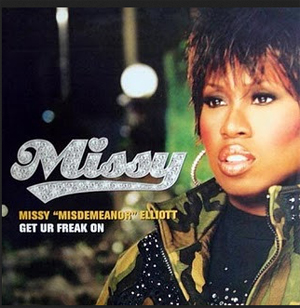
Missy Elliott and her producer, Timbaland, recorded enough songs to make up Missy’s third album, Miss E…So Addictive. They decided the album could use one more song, so they came up with a little something called “Get Ur Freak On.”

Missy Elliott turns 52 today. Honor the occasion by getting ur freak on with help from today’s playlist.

Follow Tunes du Jour on Facebook

Follow Tunes du Jour on Twitter

Follow me on Instagram

Your (Almost) Daily Playlist: 9-3-22

Today’s playlist celebrates the September 3 birthdays of The Beach Boys’ Al Jardine, Grand Funk Railroad’s Don Brewer, Freddie King, The Melodians’ Tony Brevett, Taana Gardner, The Creation’s Kenny Pickett, Jessy Lanza, Mantronix’s MC Tee, BG, Majical Cloudz’s Devon Welsh, and Jennifer Paige; and the September 4 birthdays of Destiny’s Child’s Beyoncé, The Byrds’ Gene Parsons, Soundgarden’s Kim Thayil, Mark Ronson, Mantronix’s Kurtis Mantronix, W.A.S.P.’s Blackie Lawless, and Sonny Charles.

Follow Tunes du Jour on Facebook

Follow Tunes du Jour on Twitter

Follow me on Instagram