Tunes Du Jour Presents Covers Of The Rolling Stones

One of the best ways to understand a song’s true strength is to hear it played by someone else. When a song can be lifted from its original context, performed by a different artist in a new style, and still resonate, you know the writers built it on a solid foundation. Looking at the sheer breadth of artists who have successfully interpreted the songs of Mick Jagger and Keith Richards, it becomes clear that their songwriting partnership created something remarkably durable. While their own recordings as The Rolling Stones are iconic, it’s the cover versions that reveal the fundamental power of the compositions themselves.

The playlist immediately highlights how deeply their writing is rooted in the American soul and R&B they revered. It’s one thing to be influenced by a genre; it’s another to write songs that the masters of that genre can inhabit as their own. When you hear Aretha Franklin transform “Jumpin’ Jack Flash” into a gospel-fueled force of nature, or Ike & Tina Turner inject “Honky Tonk Women” with their signature high-octane energy, you realize the songs contain an authentic rhythmic and emotional core. This goes even deeper with Solomon Burke’s take on “I Got the Blues” or Bettye LaVette’s searing, world-weary version of “Salt of the Earth.” These aren’t just covers; they are reclamations, demonstrating that the blueprints Jagger and Richards created were so solid that they could hold the weight of the most powerful voices in soul music.

What’s also remarkable is the structural flexibility of their work. A great Jagger/Richards song often has a distinct personality, yet its core components—melody, lyrical theme, and chordal movement—are adaptable enough to thrive in entirely new environments. The post-punk angularity of Devo’s “(I Can’t Get No) Satisfaction” strips away the blues swagger to expose the lyric’s timeless complaint of modern alienation. The Sundays reimagine the country-tinged “Wild Horses” as a piece of shimmering, ethereal dream pop, proving the song’s beautiful melody is its true anchor. Even more extreme, the Ramones boil “Out of Time” down to its raw essentials, recasting the shuffling pop song as a driving, three-chord punk declaration, while Ituana finds a relaxed, bossa nova groove in the epic “You Can’t Always Get What You Want.” The songs don’t just survive these transformations; they reveal different facets of their character.

Ultimately, this collection of performances underscores that the Jagger/Richards catalog is more than a collection of iconic riffs and rock and roll attitude. These are fundamentally well-crafted songs. They can be country laments in the hands of Johnny Cash (“No Expectations”) or Steve Earle (“Dead Flowers”). They can be theatrical pop statements for David Bowie (“Let’s Spend The Night Together”) or Bryan Ferry (“Sympathy for the Devil”). They can even be played for laughs by “Weird Al” and The Folksmen precisely because the source material is so instantly recognizable. The Rolling Stones’ versions will always be definitive, but these interpretations from other artists give us a clearer view of the writers’ craft, proving the songs stand on their own, ready for anyone to find a piece of their own story within them.

Follow Tunes Du Jour on Facebook

Follow me on Bluesky

Follow me on Instagram
Tunes Du Jour Presents 1980

As the calendar turned to 1980, the music world stood at a fascinating crossroads. The year marked not just the dawn of a new decade, but also a pivotal moment in popular music, where established genres evolved and new sounds emerged to captivate listeners.

The influence of disco could still be felt, though its dominance was waning. Michael Jackson’s “Rock With You” showcased his exceptional vocal talents and danceable rhythms, while Diana Ross’s “Upside Down” demonstrated the sophisticated production techniques that defined the era. These tracks, along with hits like Lipps, Inc.’s “Funkytown” and The Brothers Johnson’s “Stomp!”, proved that disco’s infectious energy still had the power to fill dance floors.

Stevie Wonder’s “Master Blaster (Jammin’)” further exemplified how established artists were adapting to the changing musical landscape, infusing reggae influences into his signature soulful sound.

However, 1980 also heralded the rise of new wave and synth-pop, genres that would come to define much of the decade’s sound. Gary Numan’s “Cars” introduced many listeners to the futuristic possibilities of synthesizer-driven music, creating an atmospheric soundscape that was both innovative and influential. Blondie’s “Call Me” further exemplified the genre’s versatility, blending punk aesthetics with disco beats to create a chart-topping hit that appealed to a broad audience. Pretenders established themselves with “Brass in Pocket,” a song that showcased Chrissie Hynde’s distinctive vocals and the band’s unique blend of punk energy and pop sensibility.

Rock and punk maintained a strong presence throughout the year. Pink Floyd’s “Another Brick in the Wall, Pt. 2” dominated charts worldwide, its memorable chorus and biting social commentary resonating with listeners. The Clash’s “London Calling” and AC/DC’s “You Shook Me All Night Long” brought raw energy and rebellious spirit to the airwaves. These tracks, along with Motörhead’s aggressive “Ace of Spades,” spoke to listeners seeking music that channeled their frustrations and aspirations. In contrast, Joy Division’s haunting “Love Will Tear Us Apart” showcased a more introspective side of post-punk, its emotional depth influencing countless artists in the years to come. The Cure’s “A Forest” further expanded the boundaries of post-punk, its atmospheric sound and introspective lyrics pointing towards the gothic rock movement that would flourish in the coming years.

The year was also marked by significant releases that left an indelible mark on popular culture. John Lennon’s “(Just Like) Starting Over” served as a poignant reminder of his enduring legacy, released shortly before his untimely death. Queen’s “Another One Bites the Dust” demonstrated the band’s ability to blend rock with funk, creating an anthem that remains popular decades later. David Bowie’s “Ashes to Ashes” continued his tradition of pushing musical boundaries, seamlessly merging art rock with electronic elements.

Oh, a guy named Prince had his breakthrough hit “I Wanna Be Your Lover.” We’d hear more from him throughout the 1980s.

As the year closed, it was clear that 1980 had set the stage for the decade to come. The eclectic mix of sounds reflected a world in transition. It was a year where artists embraced both the past and the future, creating music that was as much a reflection of its time as it was a precursor to the trends that would define the 1980s.

Your (Almost) Daily Playlist: 7-28-23

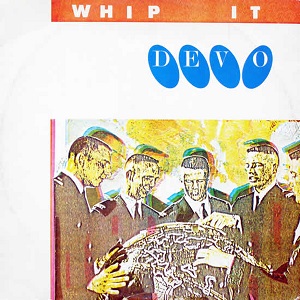
Devo’s “Whip It” was inspired by a magazine article about how to be a better wife. The song’s cowriter and bassist for the band, Gerald Casale, said he’d found that story in a 1962 issue of The Family Handyman and thought it was funny. He decided to write a song that parodied the idea of whipping your problems away. Casale also drew from communist propaganda posters and a 1973 novel by Thomas Pynchon called Gravity’s Rainbow, which mocks capitalist slogans with satirical limericks.He wrote lyrics that taken out of context sound like motivational clichés: When a good time turns around, you must whip it. Give the past a slip. Whip it into shape. Get straight. Go forward. Move ahead. And my personal favorite: Before the cream sits out too long, you must whip it.

Jerry Casale turns 75 today. A couple of Devo tracks, including their biggest hit, “Whip It,” are included on today’s playlist.

Follow Tunes du Jour on Facebook

Follow Tunes du Jour on the artist formerly known as Twitter

Follow me on Instagram

Your (Almost) Daily Playlist: 7-8-23

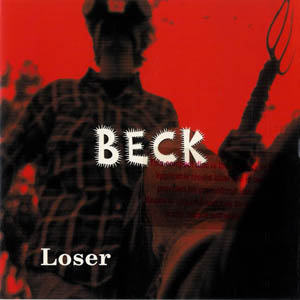
Beck Hansen came up with a nifty guitar lick, to which a friend of a friend added beats. The beats inspired Beck to recite an improvised poem, on which he attempted to sound like Chuck D of rap group Public Enemy. Listening to the playback, Beck thought “Man, I’m the worst rapper in the world. I’m just a loser.” He started singing “I’m a loser, baby, so why don’t you kill me?” That became the chorus of his song “Loser,” along with “Soy un perdedor” – “I’m a loser” in Spanish.

Today is Beck’s birthday. A smattering of his work is included on today’s playlist.

Follow Tunes du Jour on Facebook

Follow Tunes du Jour on Twitter

Follow me on Instagram