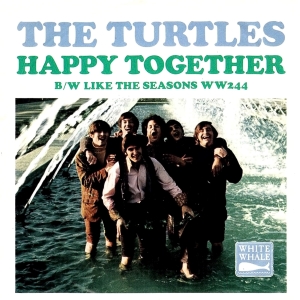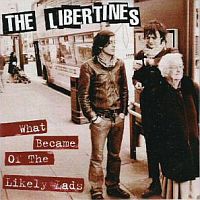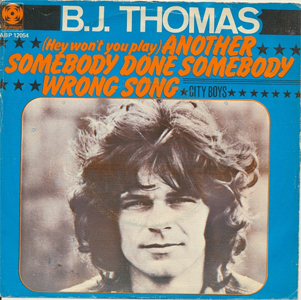
I’m celebrating National Smile Week. To soundtrack my festivities, a playlist of 30 songs with the word “smile” or a variation thereof in the title:
Follow Tunes Du Jour on Facebook
Follow me on Bluesky
Follow me on Instagram
In 1988, hip-hop didn’t just make noise; it made history. Rob Base & DJ E-Z Rock’s “It Takes Two” lit up clubs and car stereos alike, while Eric B. & Rakim’s “Paid in Full (Seven Minutes of Madness)” remix turned the genre into a playground for sonic experimentation. Public Enemy’s “Bring the Noise” brought urgent political commentary to the mix, and LL Cool J’s “Going Back to Cali” offered a sleek, stylized West Coast daydream. Among them, Salt-N-Pepa’s “Push It” stood as a genuine milestone—a breakthrough for women in rap and, at the time, the biggest-selling hip-hop single to date. Though not on the playlist due to its hit version being unavailable on Spotify, its absence in no way reflects its cultural weight.
Elsewhere, 1988 was rich in songs that combined sincerity with staying power. Tracy Chapman’s “Fast Car” offered social commentary through intimate storytelling, and Michael Jackson’s “Man in the Mirror” turned self-reflection into an anthem. “Wishing Well,” performed by the artist then known as Terence Trent D’Arby, brought soul swagger to the top of the charts, while Prince’s “Alphabet St.” reminded listeners he was still capable of keeping them on their toes. Songs like Kylie Minogue’s “I Should Be So Lucky” and Rick Astley’s “Never Gonna Give You Up,” both produced by the UK’s Stock Aitken Waterman, were pure pop that have endured far beyond their original chart runs, largely due to their catchiness and an occasional boost from internet-era rediscovery.
Dance floors were equally alive with invention. M/A/R/R/S’s “Pump Up the Volume” and S’Express’s “Theme from S’Express,” the latter missing from the playlist due to its unavailability on Spotify, helped define a new frontier of UK club music that was steeped in sampling and shaped by emerging house and techno scenes.
INXS’s “Need You Tonight” merged rock and funk with a modern sheen, while The Cure’s “Just Like Heaven” and Morrissey’s “Everyday Is Like Sunday” balanced emotion with pop craftsmanship. The Pixies’ “Where Is My Mind?” and Dinosaur Jr.’s “Freak Scene” would prove even more influential in hindsight, while Mudhoney’s “Touch Me I’m Sick” gave an early signal of what would soon be called grunge.
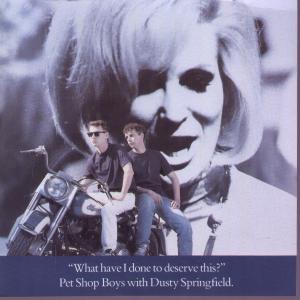
Both the UK and Australia contributed standout tracks that reflected their national scenes’ strength. From the UK, Depeche Mode’s “Never Let Me Down Again” and Erasure’s “Chains of Love” explored emotional depth through electronic textures, while Pet Shop Boys teamed with Dusty Springfield on “What Have I Done to Deserve This?” to bridge classic and contemporary pop. Australia’s Midnight Oil brought urgency and political purpose with “Beds Are Burning,” The Church crafted dreamlike melancholy in “Under the Milky Way,” and Nick Cave & The Bad Seeds delivered stark intensity with “The Mercy Seat.” All three pointed to a vibrant and diverse Australian presence in global music that year.
The year also held room for collaboration, reinvention, and the unexpected. Traveling Wilburys’ “Handle With Care” saw rock legends joining forces without sounding self-indulgent. my bloody valentine’s “You Made Me Realise” hinted at the hazy swirl of shoegaze to come. The Bangles’ cover of “Hazy Shade of Winter” showed that ‘60s source material could thrive in a late-’80s rock context, and Anita Baker’s “Giving You the Best That I Got” offered polished, grown-up soul amid the noisier trends. Nineteen wighty-eight wasn’t about any one genre dominating the conversation; it was about cross-pollination, with club tracks rubbing shoulders with indie rock, hip-hop expanding its reach, and pop songs finding new ways to stick.
Follow Tunes Du Jour on Facebook
Follow me on Bluesky
Follow me on Instagram
Thom Bell, one of the primary architects of the Philadelphia soul sound of the 1970s, transformed popular music through his sophisticated approach to arrangement, production, and songwriting. As a producer, Bell crafted numerous classics with The Stylistics (“You Make Me Feel Brand New,” “Betcha by Golly, Wow”), Spinners (“I’ll Be Around,” “Could It Be I’m Falling In Love”), and The Delfonics (“La-La (Means I Love You),” “Didn’t I (Blow Your Mind This Time)”). His signature style combined lush orchestration with tight rhythm sections, creating a smooth yet emotionally resonant backdrop for the distinctive vocal harmonies of these groups.
Beyond his production work, Bell’s talents as an arranger and songwriter were equally significant to his legacy. His intricate string and horn arrangements elevated songs like “People Make the World Go Round” by The Stylistics and “The Rubberband Man” by The Spinners into something far more sophisticated than typical pop fare. As a songwriter, often collaborating with Linda Creed, he penned enduring hits including “You Are Everything” and “Break Up to Make Up.” While this playlist highlights his work as a producer, Bell’s arranging skills also enhanced recordings by artists he didn’t produce, including Archie Bell & The Drells, Dusty Springfield, Jerry Butler, and many others, extending his musical influence far beyond his core production credits.
What distinguished Bell’s work was his classical training combined with deep soul sensibilities—creating arrangements that balanced complexity with accessibility. Unlike many producers of his era who relied on formula, Bell approached each artist uniquely, tailoring his sound to complement specific vocal qualities. This musical versatility allowed him to help shape not just the Philadelphia soul sound but to influence broader pop music trends throughout the 1970s and beyond. His productions maintain their artistic integrity and emotional impact decades later, testament to a visionary who understood that the most profound musical innovations often happen in the mainstream, where artistry and accessibility converge.
Follow Tunes Du Jour on Facebook
Follow me on Bluesky
Follow me on Instagram
Thirty duets for your listening/singing-along-with pleasure!
Follow Tunes Du Jour on Facebhttp://www.facebook.com/tunesdujourook
Follow me on Bluesky
Follow me on Instagram
In the 1970s, Kenneth Gamble and Leon Huff shaped the sound of a generation with their signature brand of sophisticated, richly orchestrated soul music. As the architects of what became known as Philly soul, the duo crafted anthems that balanced deep emotional resonance with tight, danceable grooves. Their work as producers at Philadelphia International Records (PIR) established a sonic identity that was as polished as it was powerful, laying the foundation for later developments in R&B and disco.
Philly soul stood apart from other regional styles of the time, thanks in large part to Gamble and Huff’s emphasis on lush string arrangements, driving rhythm sections, and socially conscious lyrics. With a stable of top-tier session musicians—collectively known as MFSB—they created an expansive sound that was both cinematic and immediate. Songs like “Back Stabbers” by The O’Jays and “The Love I Lost” by Harold Melvin & The Blue Notes turned heartbreak and betrayal into dramatic musical statements, while dancefloor favorites like “Do It Any Way You Wanna” by People’s Choice showcased their ability to craft irresistibly propulsive rhythms.
As producers, Gamble and Huff had a particular talent for pairing the right voices with the right material. Lou Rawls’ baritone found a new dimension on “You’ll Never Find Another Love Like Mine,” and Billy Paul’s jazz-influenced phrasing made “Me and Mrs. Jones” a timeless tale of illicit romance. They also helped usher in the rise of Teddy Pendergrass, whose raw, commanding delivery gave Harold Melvin & The Blue Notes a distinct edge on tracks like “Wake Up Everybody” and “Don’t Leave Me This Way” before his successful solo career under their guidance.
Beyond crafting individual hits, Gamble and Huff understood the power of music as a cultural force. Songs like “Love Train” promoted unity and optimism, while “For the Love of Money” took a hard look at greed and materialism. Their productions weren’t just about making records—they were about shaping the mood of the era. Even their instrumental work, such as MFSB’s “T.S.O.P. (The Sound of Philadelphia),” became anthemic, doubling as the theme for Soul Train and solidifying Philly soul’s influence on popular culture.
The legacy of Gamble and Huff’s production work is undeniable. Their seamless blend of elegance and groove paved the way for the disco explosion, influenced generations of R&B artists, and remains a touchstone for contemporary soul revivalists. Whether through the soaring harmonies of The Three Degrees, the anthemic hooks of The Jacksons, or the velvet-toned storytelling of Jerry Butler, their music continues to resonate—proof that the sound of Philadelphia was more than just a moment in time. It was, and still is, a movement.
Follow Tunes Du Jour on Facebook
Follow me on Bluesky
Follow me on Instagram
Today is World Kindness Day. While every day would be a great day to practice basic human decency, some people are nasty assbags with no regard for others. If you’re one of those walking masterpieces of jackholery, here’s a wild idea: try being kind for ONE WHOLE DAY and see what it does. For example, let’s say you’re the personal assistant to someone who lives in a building with other residents. When you’re walking out of the building’s front door just in front of a neighbor who is holding his 17-year-old blind dog and leading his other pupper on a leash, maybe – and I’m just spitballing here – don’t let the door slam in their face, you self-absorbed piece of human garbage. And if said neighbor thoughtfully moves your precious Tesla charging cable to prevent damage (gasp – the audacity of helping!), perhaps, don’t show up at his door and berate him for protecting your property. Wild concept: Show some gratitude for his thoughtfulness. Consider saying “thank you,” you self-important, unreasonable, entitled, high-handed weenie.
FFS people, be kind! Rewind!
(Any resemblance to persons unfortunately living is purely intentional.)
Follow Tunes Du Jour on Facebook
Follow Tunes Du Jour on Twitter
Follow me on Instagram
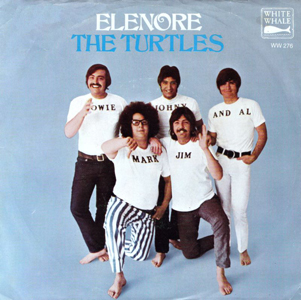
The music of 1969 captures a unique crossroads in cultural history—a year teetering between optimism and cynicism, unity and rebellion. Looking at a playlist from this year reveals a blend of genres and voices, each reflecting a society in flux. The playlist’s tracks encompass themes of love, social change, disillusionment, and raw individualism, echoing the era’s contradictions and bold spirit.
On one end of the spectrum, songs like Elvis Presley’s “Suspicious Minds” and Tammy Wynette’s “Stand By Your Man” echo traditional themes of love, loyalty, and heartbreak, though with a hint of modern skepticism. Presley’s soulful performance marked his return to chart-topping success, while Wynette’s hit became a polarizing anthem, embraced by some for its devotion and questioned by others for its apparent passivity. Meanwhile, Glen Campbell’s “Wichita Lineman” captured a more introspective side of the decade, blending pop and country into a haunting portrayal of loneliness and perseverance.
But 1969 wasn’t all about introspection; it was also a year of unrestrained expression and pushing boundaries. Creedence Clearwater Revival’s “Bad Moon Rising” hinted at a sense of looming danger, with its ominous lyrics striking a nerve during a time of political upheaval. In contrast, “Honky Tonk Women” by The Rolling Stones embraced the gritty allure of rock and roll without aiming for a larger societal message. Jagger’s tales of chance encounters and gin-soaked nights represent the Stones’ unapologetic celebration of indulgence, sidestepping introspection in favor of pure hedonism.
Amidst the wild spirit of rock, 1969 also offered more uplifting messages with a hint of idealism. Sly & The Family Stone’s “Everyday People” and The Youngbloods’ “Get Together” conveyed calls for unity that resonated deeply in an era fraught with political and racial tensions. Sly Stone’s anthem became a rallying cry for acceptance, emphasizing individuality while embracing common ground. Similarly, “Aquarius/Let the Sunshine In” by The 5th Dimension captured the essence of the countercultural movement in all its utopian ambitions, even if the optimism was a bit idealistic in hindsight.
Then there was the music that addressed disillusionment head-on, perhaps best captured by Simon & Garfunkel’s “The Boxer” and Peggy Lee’s “Is That All There Is?” Both songs offer reflective, sometimes jaded perspectives on life’s struggles and the disappointments that can accompany maturity. Where “The Boxer” tells the story of a young man grappling with hardship and loss, Lee’s dry wit in “Is That All There Is?” confronts the emptiness that can lie beneath life’s surface pleasures.
Ultimately, this playlist from 1969 feels like a time capsule of an era balancing between hope and disillusionment. From the raw proto-punk of The Stooges to the tender balladry of Stevie Wonder’s “My Cherie Amour,” the year’s music speaks to a generation grappling with unprecedented social changes. Through these songs, 1969 continues to resonate, reminding us that music often reflects the spirit of its time while challenging listeners to consider where they stand.
Follow Tunes Du Jour on Facebook
Follow Tunes Du Jour on Twitter
Follow me on Instagram
Pet Shop Boys, the iconic English synth-pop duo formed in London in 1981, have left an indelible mark on popular music. Comprising primary vocalist Neil Tennant and keyboardist Chris Lowe, they’ve been a consistent and influential presence since the mid-1980s. Known for their catchy synth-pop sound and incisive lyrics, they have built a remarkable career that spans decades, selling over 100 million records worldwide and earning their place as the most successful duo in UK music history according to The Guinness Book of Records.
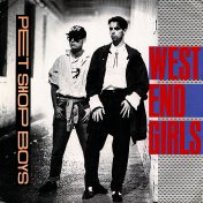
Their breakthrough came with “West End Girls” in 1985, a song that deftly captured the urban angst of the time and shot to the top of the charts in both the UK and the US. This track, along with hits like “It’s a Sin” and “What Have I Done to Deserve This?”, defined the synth-pop sound of the 80s with infectious synth lines and Tennant’s distinctive vocals. “It’s a Sin,” in particular, resonated with many due to its raw exploration of guilt and personal struggle, themes that were uncommon in pop music at the time.
Throughout their career, Pet Shop Boys have consistently pushed the boundaries of pop music with intelligent lyrics, catchy melodies, and innovative soundscapes. They’ve explored themes of sexuality, identity, and social issues with wit and sophistication, often weaving them into dancefloor-ready tracks. Songs like “Opportunities (Let’s Make Lots Of Money)” and “Suburbia” offered a satirical look at consumerism and social constructs, showcasing their sharp social commentary.
The duo’s accolades are numerous and impressive. They’ve achieved 42 Top 30 singles in the UK, including four number-one hits. Pet Shop Boys have received multiple Grammy nominations, Brit Awards (winning “Best British Group” three times), and MTV Video Music Awards. In 2009, they received the Outstanding Contribution to Music award at the Brit Awards. Their influence on the genre is also recognized by their peers, with the duo being awarded the Godlike Genius Award at the NME Awards in 2017. Additionally, they’ve won three Ivor Novello Awards, highlighting their songwriting prowess. Billboard named them the number one dance duo/group over the 40 years since the chart’s inception in 1976.
As we journey through their expansive discography, from early hits to later tracks such as “The Pop Kids,” it’s clear that Pet Shop Boys have maintained a remarkable level of creativity and relevance throughout their career. Their ability to evolve while staying true to their unique sound has solidified their place as icons in the world of pop music. Whether through their chart-topping hits, boundary-pushing live performances, or their clever fusion of ironic, coolly delivered lyrics and catchy synthesizer-based dance beats, Pet Shop Boys continue to leave an indelible mark on both the music industry and popular culture.
Follow Tunes Du Jour on Facebook
Follow Tunes Du Jour on Twitter
Follow me on Instagram