
Still more holiday music cheer!
Follow Tunes Du Jour on Facebook
Follow me on Bluesky
Follow me on Instagram
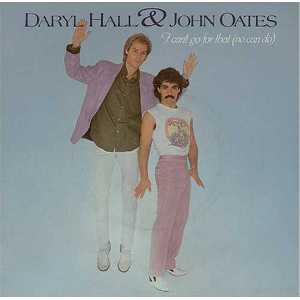
It’s an experience most of us have had. You’re in a grocery store, a coffee shop, or just flipping through the radio, and a song comes on that is instantly, undeniably familiar. It might be the bright piano chords of “You Make My Dreams” or the slinky, ominous bassline of “Maneater.” For decades, the music of Daryl Hall and John Oates has been a steady presence in the background of American life. But if you look closer at a collection of their work, you see more than just a series of catchy singles. You see a clear and compelling story of musical evolution, rooted in a deep appreciation for the artists who came before them.
Their journey began not as pop stars, but as students of Philadelphia soul. Listening to early tracks like the sorrowful, grand ballad “She’s Gone” or the smooth, intimate devotion of “Sara Smile,” you can hear the duo honing their craft. This was music built on classic R&B structures, focused on sharp songwriting and raw vocal emotion. Even their first number-one hit, “Rich Girl,” has a soulful bounce and a narrative sting that feels miles away from the slicker sound they would later develop. Their reverence for this era is made explicit in their faithful cover of “You’ve Lost That Lovin’ Feeling,” a direct acknowledgment of the foundation upon which their entire career was built.
Then, of course, came the 1980s. With the arrival of MTV and new recording technology, Hall & Oates adapted brilliantly, crafting a string of hits that defined the decade. The sound became sharper and more polished, incorporating synthesizers, drum machines, and unforgettable saxophone solos. Tracks like “Private Eyes,” “Out of Touch,” and the minimalist groove of “I Can’t Go For That (No Can Do)” were perfectly engineered for radio and video. Yet, even within this pop framework, the soul never vanished. The propulsive beat of “Maneater” has Motown in its DNA, while the paranoid energy of “Family Man” and the synth-driven narrative of “Adult Education” showed they could blend new wave sensibilities with their signature R&B vocal stylings.
Beyond the chart-toppers, the playlist reveals a fuller picture of their artistry. The duo were masters of the thoughtful ballad, from the tender vulnerability of “One On One” to the pleading heartbreak in “Say It Isn’t So” and “Wait For Me.” Their love for performance and collaboration is on full display in the medley with Temptations legends David Ruffin and Eddie Kendrick, a powerful moment where they weren’t just covering soul music, but sharing a stage with it. Later tracks like “Everything Your Heart Desires” and Daryl Hall’s solo hit “Dreamtime” show a maturation, exploring a more refined, adult contemporary sound without losing the melodic core that made them famous.
Ultimately, what makes the work of Hall & Oates endure is this remarkable balance. They managed to create music that was both incredibly popular and musically substantive. They wrote pop songs with the heart of soul music and infused their R&B influences with a modern, rock-and-roll edge. It’s a body of work that is approachable on the surface but rewards a closer listen, revealing layers of craftsmanship and a genuine love for the power of a well-written song. They didn’t just make our dreams come true; they provided a lasting soundtrack for them.
Follow Tunes Du Jour on Facebook
Follow me on Bluesky
Follow me on Instagram

Few groups have shaped American popular music as profoundly as The Temptations. From their early days of smooth doo-wop harmonies to their ventures into psychedelic soul and funk, the group’s journey mirrors the cultural and musical evolution of the 1960s and ’70s. Starting with the innocent romance of “The Way You Do the Things You Do” and “My Girl,” the Temptations created a template for vocal group harmony that would influence generations of artists.
The group’s ability to adapt and grow became evident as the social climate of America changed. By the late 1960s, they were tackling complex social issues in songs like “Ball of Confusion” and “Cloud Nine,” pushing the boundaries of what soul music could express. Their collaboration with producer Norman Whitfield led to groundbreaking tracks like “Papa Was a Rollin’ Stone” and “Psychedelic Shack,” which incorporated extended instrumental sections, innovative studio techniques, and provocative lyrics that addressed the turbulent times.
What set the Temptations apart was not just their musical versatility but also the distinctive voices within the group. David Ruffin’s gritty lead on “Ain’t Too Proud to Beg” during his tenure with the group, Eddie Kendricks’ falsetto on “Just My Imagination,” and Dennis Edwards’ powerful delivery on “Papa Was a Rollin’ Stone” showcased their individual talents. After leaving the group, these singers found solo success – Ruffin with “My Whole World Ended (The Moment You Left Me),” Kendricks with “Keep On Truckin'” and Edwards with “Don’t Look Any Further” – proving the exceptional talent that had made the group so powerful.
Their influence extended beyond their own recordings. The group’s collaboration with Diana Ross and the Supremes on “I’m Gonna Make You Love Me” demonstrated the creative synergy within Motown Records. Songs like “War” and “Law of the Land” proved their willingness to engage with political themes, with the latter and “Papa Was a Rollin’ Stone” helping establish the extended-play, orchestrated sound that would become a blueprint for disco. Ironically, the disco movement they helped inspire would later contribute to their commercial decline in the mid-1970s.
Looking at their body of work, from the optimistic “Get Ready” to the elaborate “Masterpiece,” the Temptations demonstrated remarkable artistic range. Their evolution wasn’t just about changing with the times – it was about helping to define those times through music that combined technical excellence with genuine emotional depth. The group’s legacy lives on not just in their hits, but in their demonstration that popular music could be both commercially successful and artistically ambitious.
Follow Tunes Du Jour on Facebook
Follow me on Bluesky
Follow me on Instagram
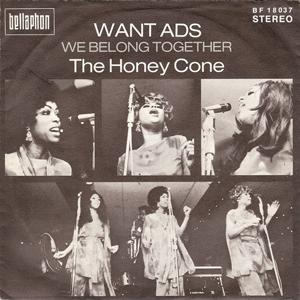
The Honey Cone was the first act signed to Hot Wax Records, a label started in 1968 by Eddie and Brian Holland and Lamont Dozier, who previously were staff writers and producers at Motown Records and in that role wrote twelve number one singles between 1962 and 1967, two performed by The Four Tops and the other ten by The Supremes, with lead vocals by Diana Ross, who would soon leave the trio and be replaced by Jean Terrell in 1970, with Terrell being replaced in 1973 by Scherrie Payne, who before then was the singer in a group called Glass House, also signed to Hot Wax Records, who recorded “Want Ads” prior to The Honey Cone, but neither Scherrie nor the track’s producer, Greg Perry, liked their version, leading Scherrie to re-record the song with her sister Freda, who had a number 3 record in 1970 with “Band of Gold,” a song co-penned by Holland-Dozier-Holland under assumed names, but the sisters’ version of “Want Ads” was also discarded, which then led Scherrie to suggest to Perry that he try the song again with Edna Wright singing, Wright being the lead singer for The Honey Cone and the sister of Darlene Wright, the singer for the group The Blossoms, and while you may not recognize the names Darlene Wright or The Blossoms, you may know their music, for producer Phil Spector renamed Darlene Wright Darlene Love (without her knowledge) and released records by The Blossoms under the name The Crystals, who hit number 1 with “He’s a Rebel,” and should not be but will be confused with another group called The Crystals, also produced by Phil Spector at the same time he was working with Wright/Love and The Blossoms, but let’s get back to Edna Wright, who recorded “Want Ads” with backing vocals by the other two members of The Honey Cone, Shellie Clark, who a couple of years earlier was singing backup for Ike and Tina Turner, and Carolyn Willis, who toured as a member of Bob B. Soxx & the Blue Jeans, a group whose records were produced by Phil Spector and featured vocals from Darlene Wright/Love. In June of 1971 The Honey Cone took “Want Ads” to number 1. (This paragraph is pulled from my long-awaited (by me, anyway) book, which I’m trying to get out this year.)
The late Edna Wright of The Honey Cone was born on this date in 1945. A couple of the group’s best-known songs, including “Want Ads,” are on today’s playlist.
Follow Tunes du Jour on Facebook
Follow Tunes du Jour on Twitter
Follow me on Instagram
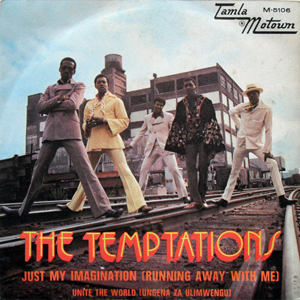
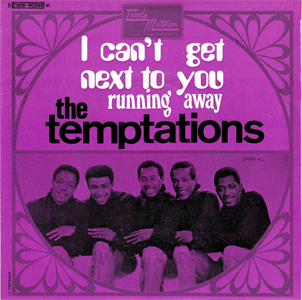
Norman Whitfield and Barrett Strong collaborated to write several hits for The Temptations, among them “Papa Was A Rollin’ Stone,” “I Can’t Get Next To You,” “Psychedelic Shack,” “Ball Of Confusion,” and “Just My Imagination (Running Away With Me).” The latter was inspired by Strong’s crush on a woman who didn’t know he existed. It became The Temptations’ third number one single on the Hot 100.
Lead vocalist on “Just My Imagination,” the late Eddie Kendricks of the Temptations was born on this date in 1939.
Follow Tunes du Jour on Facebook
Follow Tunes du Jour on Twitter
Follow me on Instagram
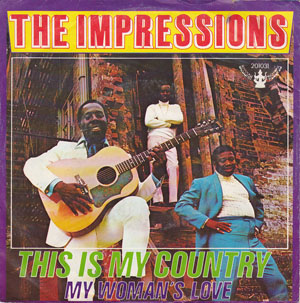
I love me some Curtis Mayfield. “Superfly,” “Freddie’s Dead, “ “People Get Ready,” “This Is My Country,” “Choice of Colors,” “Amen,” “It’s All Right,” “Gypsy Woman,” “Keep On Pushing.” Then there are his songs popularized by other artists: “Let’s Do It Again,” “On and On,” “He Will Break Your Heart,” “Something He Can Feel.” What a great catalogue! I guess you could say he made an IMPRESSION on me. Get it? Boy, I’m good.
The late Curtis Mayfield was born on this date in 1942. Some of his work is included on today’s playlist.
Follow Tunes du Jour on Facebook
Follow Tunes du Jour on Twitter
Follow me on Instagram
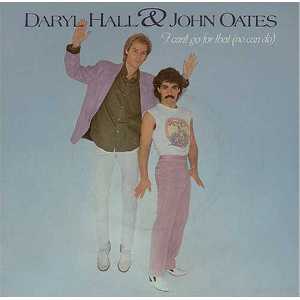
With six number one singles on the Billboard Hot 100, 16 top tens, 29 top fortys and 40 million records sold, the duo consisting of Daryl Hall and John Oates is the most commercially successful music duo of all time. Here are 30 examples of their craft.
Follow Tunes du Jour on Facebook.
Follow Tunes du Jour on Twitter.
Follow me on Instagram.