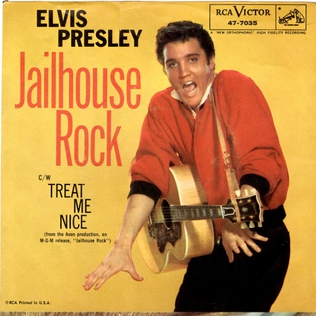
Tunes Du Jour Presents 1961

The year 1961 didn’t roar in with a musical revolution—but in hindsight, that’s part of its charm. Instead, it offered a series of small but significant steps toward what would become a much louder, wilder, and more politically charged musical landscape. If the ’50s laid the foundation for rock and R&B, then ’61 felt like a transitional hallway: not quite out of the doo-wop era, but inching toward soul, girl groups, and the unmistakable rise of youth-driven pop. Listen closely, and you can hear a generation beginning to test its voice.

The playlist for this year paints a picture of variety and crossover. Ben E. King’s “Stand by Me” combines gospel roots with a pop sensibility, creating a timeless anthem of emotional resilience. Meanwhile, The Marcels inject a doo-wop jolt into “Blue Moon,” turning a Rodgers and Hart chestnut into something utterly of the moment. And “Shop Around” by The Miracles helps define the early Motown sound—polished, melodic, and unmistakably urban—hinting at the empire Berry Gordy was quietly building in Detroit.

Pop and R&B weren’t the only sounds of 1961. The jazz world was still vibrant, and John Coltrane’s take on “My Favorite Things” stretched the familiar into something exploratory and modal, giving the Broadway tune a hypnotic new dimension. Similarly, Art Blakey’s “A Night in Tunisia” offered a fiery reminder that hard bop was far from finished. This year wasn’t just about three-minute singles on AM radio; it also made room for longer-form musical statements that spoke to listeners seeking complexity.

And then there were the voices—so many distinct, unforgettable voices. Roy Orbison’s near-operatic Crying and Patsy Cline’s aching “Crazy” each showed that vulnerability could be commercially viable. The same went for Etta James, whose rendition of “At Last” remains one of the most iconic vocal performances ever recorded. Elsewhere, the lighter side of pop was thriving with Neil Sedaka’s “Calendar Girl” and Bobby Vee’s “Take Good Care of My Baby,” songs built for teenagers who were beginning to see themselves as a cultural force.

Taken together, the music of 1961 reflects a moment in flux: the last glimmers of the 1950s still lingered, but the seeds of what would define the 1960s were clearly being planted. Whether it was Ray Charles fusing gospel and R&B on “Hit the Road Jack,” or the early stirrings of girl-group grandeur from The Marvelettes and The Shirelles, this was a year where nothing yet dominated—but everything seemed possible.

Follow Tunes Du Jour on Facebook

Follow me on Bluesky

Follow me on Instagram
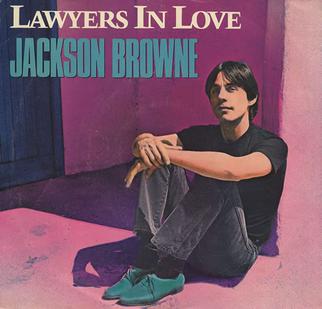
Tunes Du Jour Celebrates International Be Kind To Lawyers Day

It started, as these things often do, with a law.

Or more accurately, with three: “Law of the Land” (Temptations), “The Laws Have Changed” (New Pornographers), and “You Can’t Rule Me” (Lucinda Williams). A trifecta of declarations, all suggesting that whether you’re enforcing the law or dodging it, someone’s about to get into trouble.

This playlist is my musical tribute to International Be Kind To Lawyers Day — a real holiday, celebrated annually on the second Tuesday in April, for reasons that are presumably legal. It’s not just about lawyers, though. This 30-track journey follows the trajectory of a full-blown legal drama: rules are established, rules are broken, crimes are committed, time is served, lawyers are called, and justice is… complicated.

We meet a few Fun Lovin’ Criminals, some Smooth Criminals, and even those who insist they’re just Criminal Minded. The lawbreakers get caught — there’s fighting, testifying, jail time, and at least one unfortunate visit to the Court of the Crimson King (which, I suspect, is not a traffic violation court).

And let’s not forget the lawyers themselves. They’re gun-toting in one song, love-struck in another, and altogether overburdened. But in honor of their service — and in defense of their billable hours — we end on a note of redemption: “Return to Innocence” by Enigma. Because if music has taught us anything, it’s that legal complications can always be resolved in just over four minutes.

So, whether you’re in the mood to break the law, beat the rap, or rap to the beat of the Fat Boys (or Snoop, Freddie Gibbs, Boogie Down Productions…), press play and pass the gavel. And if you happen to know a lawyer, consider saying something nice. After all, they know where all the paperwork is buried.

Follow Tunes du Jour on Facebook

Follow me on Bluesky

Follow me on Instagram
Tunes Du Jour Celebrates World Kindness Day

Today is World Kindness Day. While every day would be a great day to practice basic human decency, some people are nasty assbags with no regard for others. If you’re one of those walking masterpieces of jackholery, here’s a wild idea: try being kind for ONE WHOLE DAY and see what it does. For example, let’s say you’re the personal assistant to someone who lives in a building with other residents. When you’re walking out of the building’s front door just in front of a neighbor who is holding his 17-year-old blind dog and leading his other pupper on a leash, maybe – and I’m just spitballing here – don’t let the door slam in their face, you self-absorbed piece of human garbage. And if said neighbor thoughtfully moves your precious Tesla charging cable to prevent damage (gasp – the audacity of helping!), perhaps, don’t show up at his door and berate him for protecting your property. Wild concept: Show some gratitude for his thoughtfulness. Consider saying “thank you,” you self-important, unreasonable, entitled, high-handed weenie.

FFS people, be kind! Rewind!

(Any resemblance to persons unfortunately living is purely intentional.)

Follow Tunes Du Jour on Facebook

Follow Tunes Du Jour on Twitter

Follow me on Instagram

Tunes Du Jour Presents 1969

The music of 1969 captures a unique crossroads in cultural history—a year teetering between optimism and cynicism, unity and rebellion. Looking at a playlist from this year reveals a blend of genres and voices, each reflecting a society in flux. The playlist’s tracks encompass themes of love, social change, disillusionment, and raw individualism, echoing the era’s contradictions and bold spirit.

On one end of the spectrum, songs like Elvis Presley’s “Suspicious Minds” and Tammy Wynette’s “Stand By Your Man” echo traditional themes of love, loyalty, and heartbreak, though with a hint of modern skepticism. Presley’s soulful performance marked his return to chart-topping success, while Wynette’s hit became a polarizing anthem, embraced by some for its devotion and questioned by others for its apparent passivity. Meanwhile, Glen Campbell’s “Wichita Lineman” captured a more introspective side of the decade, blending pop and country into a haunting portrayal of loneliness and perseverance.

But 1969 wasn’t all about introspection; it was also a year of unrestrained expression and pushing boundaries. Creedence Clearwater Revival’s “Bad Moon Rising” hinted at a sense of looming danger, with its ominous lyrics striking a nerve during a time of political upheaval. In contrast, “Honky Tonk Women” by The Rolling Stones embraced the gritty allure of rock and roll without aiming for a larger societal message. Jagger’s tales of chance encounters and gin-soaked nights represent the Stones’ unapologetic celebration of indulgence, sidestepping introspection in favor of pure hedonism.

Amidst the wild spirit of rock, 1969 also offered more uplifting messages with a hint of idealism. Sly & The Family Stone’s “Everyday People” and The Youngbloods’ “Get Together” conveyed calls for unity that resonated deeply in an era fraught with political and racial tensions. Sly Stone’s anthem became a rallying cry for acceptance, emphasizing individuality while embracing common ground. Similarly, “Aquarius/Let the Sunshine In” by The 5th Dimension captured the essence of the countercultural movement in all its utopian ambitions, even if the optimism was a bit idealistic in hindsight.

Then there was the music that addressed disillusionment head-on, perhaps best captured by Simon & Garfunkel’s “The Boxer” and Peggy Lee’s “Is That All There Is?” Both songs offer reflective, sometimes jaded perspectives on life’s struggles and the disappointments that can accompany maturity. Where “The Boxer” tells the story of a young man grappling with hardship and loss, Lee’s dry wit in “Is That All There Is?” confronts the emptiness that can lie beneath life’s surface pleasures.

Ultimately, this playlist from 1969 feels like a time capsule of an era balancing between hope and disillusionment. From the raw proto-punk of The Stooges to the tender balladry of Stevie Wonder’s “My Cherie Amour,” the year’s music speaks to a generation grappling with unprecedented social changes. Through these songs, 1969 continues to resonate, reminding us that music often reflects the spirit of its time while challenging listeners to consider where they stand.

Follow Tunes Du Jour on Facebook

Follow Tunes Du Jour on Twitter

Follow me on Instagram

Tunes Du Jour Presents 1957

The year 1957 stands as a pivotal moment in the evolution of popular music, where rock ‘n’ roll, rhythm and blues, and even a touch of jazz converged to create a soundtrack that would resonate for decades. The hits of the year showcase not only the diverse range of genres but also the rise of some of the most influential voices in music history. A prime example is The Crickets’ “That’ll Be the Day,” a track that embodies the early rock ‘n’ roll spirit, blending Buddy Holly’s unmistakable vocal delivery with a catchy, driving beat. It’s a song that helped shape the sound of the era.

Elvis Presley’s “Jailhouse Rock” is another cornerstone of 1957, with its infectious energy and rebellious attitude. Presley was at the height of his powers, blending rock, blues, and a hint of swagger that would influence generations of performers. Meanwhile, Fats Domino’s “Blueberry Hill” offered a smoother, more melodic contrast. Domino’s effortless combination of rhythm and blues with pop sensibility helped bridge the gap between different audiences, securing his place as one of the genre’s pioneers.

But 1957 wasn’t just about rock ‘n’ roll—it was a year that embraced the full spectrum of American music. Take Harry Belafonte’s “Day-O (Banana Boat Song),” a calypso tune that brought Caribbean sounds to mainstream audiences. Similarly, the soulful ballad “You Send Me” by Sam Cooke introduced a voice that would soon come to define soul music. Cooke’s ability to combine gospel roots with pop elegance opened the doors for future R&B artists.

The variety of sounds continued with tracks like “Whole Lotta Shakin’ Goin’ On” by Jerry Lee Lewis and “Lucille” by Little Richard, both of which pushed the boundaries of what rock music could be with their raw energy and wild performances. On the other end of the spectrum, Ella Fitzgerald and Louis Armstrong’s rendition of “Summertime” added a jazzy sophistication to the year’s musical offerings, reminding listeners that timeless standards still had a place in the changing musical landscape.

Ninety fifty-seven was a year when rock ‘n’ roll solidified its place in popular culture, while artists from various genres continued to innovate and inspire. Whether through the heartfelt croon of Johnny Mathis on “Chances Are” or the rough-edged blues of Muddy Waters’ “Got My Mojo Working,” the music of this year still echoes today as a testament to a time when creativity flourished across musical boundaries.