
Still even more holiday music!
Follow Tunes du Jour on Facebook
Follow me on Bluesky
Follow me on Instagram
Today is Have A Bad Day Day. Per holidayinsights.com, as a greeting today, you are encouraged people to wish people a lousy or terrible day.
I think wishing a terrible day to someone to their face might put you in danger. Instead, I choose to celebrate with song. If someone were to hear one of the songs on my Have A Bad Day Day playlist, they’d know that somebody out there wants their day to suck.
Follow Tunes Du Jour on Facebook
Follow me on Bluesky
Follow me on Instagram

It’s interesting to start a playlist of John Lennon songs with David Bowie’s “Fame.” It feels like an outlier at first, until you remember Lennon co-wrote the track, contributed guitar, and sang backup vocals. It’s one of just a handful of songs on this list that isn’t a straightforward cover, and its placement at the top serves as a great reminder: one of the best ways to understand a songwriter’s impact is to see how their work thrives in the hands of others. Listening to a collection like this isn’t just about nostalgia; it’s an active exploration of how durable and adaptable Lennon’s compositions truly are, revealing the deep-seated melodic and lyrical strengths that invite constant reinterpretation.
The sheer variety of artists drawn to his work speaks volumes about its fundamental structure. A Lennon song can be a sturdy vessel for almost any style. In its original form, “Help!” was a desperate plea disguised as an upbeat folk-rock hit. But when Tina Turner gets ahold of it, she strips away the disguise, transforming it into a full-throated, soulful cry for salvation. Similarly, Johnny Cash takes “In My Life,” a song of youthful reflection, and imbues it with the profound weight of a long life lived, making each line land with a different, more somber gravity. From the raw R&B groove Otis Redding finds in “Day Tripper” to the cool, atmospheric poise Roxy Music brings to “Jealous Guy,” these songs prove to be exceptionally resilient, their core emotions accessible to any genre.
Beyond musical versatility, the playlist highlights the different facets of Lennon’s lyrical persona. There’s the acerbic political commentator, whose pointed dissatisfaction is channeled perfectly by the punk sneer of Generation X on “Gimme Some Truth” and the world-weary defiance of Marianne Faithfull on “Working Class Hero.” Then there is the deeply vulnerable Lennon, the man wrangling with insecurity and fame. You can hear this in the anxious, propulsive energy The Feelies bring to “Everybody’s Got Something To Hide (Except Me And My Monkey)” or the stark, pleading quality Maxïmo Park finds in the solo track “Isolation.” He could be pointedly political or achingly personal, and both modes have continued to resonate with artists who have their own truths to tell.
Of course, no look at Lennon’s work would be complete without touching on his more surreal and experimental side. These are often the songs that seem most tied to a specific time, yet they possess a dreamlike logic that continues to inspire. Elton John, a friend and collaborator, treats “Lucy in the Sky with Diamonds” not as a museum piece but as a glam-rock epic. R.E.M. leans into the hypnotic, floating quality of “#9 Dream,” while Fiona Apple’s take on “Across the Universe” honors its ethereal nature while grounding it with her distinctive emotional intensity. These artists don’t just copy the psychedelia; they find new ways to access the spirit of imaginative freedom that fueled the original recordings.
Ultimately, listening through these interpretations feels less like a tribute and more like a conversation across decades. We hear Billy J. Kramer’s simple pop charm on “Bad to Me,” a song Lennon wrote for him in 1963, and then Glen Campbell’s posthumous, heart-rending version of “Grow Old With Me,” one of Lennon’s last compositions. The journey between those two points is remarkable. This collection of songs, re-shaped by everyone from The Breeders to Bettye LaVette, demonstrates that the power of Lennon’s work isn’t just in his own iconic recordings. It’s in the bones of the songs themselves—the unforgettable melodies, the honest lyrics, and the restless spirit that others can’t help but be drawn to, again and again.
Follow Tunes Du Jour on Facebook
Follow me on Bluesky
Follow me on Instagram

Fiona Apple’s career reads like a masterclass in artistic evolution, beginning with the raw vulnerability that made “Criminal” a cultural phenomenon in 1996. From her debut album Tidal, tracks like “Sleep to Dream” and “Shadowboxer” established her as an artist unafraid to excavate the messier corners of human emotion. These early songs showcased a young woman wrestling with desire, anger, and self-discovery through piano-driven compositions that felt both intimate and explosive. Apple’s voice, even then, carried a weight that suggested experiences far beyond her years.
The progression from her debut through albums to its follow-ups When the Pawn… and Extraordinary Machine reveals an artist continuously refining her approach without sacrificing intensity. Songs like “Fast as You Can” and “Paper Bag” demonstrate her ability to craft complex emotional narratives that resist easy categorization.
Apple’s later work, particularly evident in tracks like “Every Single Night” from The Idler Wheel… and the entire Fetch the Bolt Cutters era, shows her pushing into increasingly experimental territory. Songs like “Shameika,” “Heavy Balloon,” and the title track “Fetch the Bolt Cutters” reveal an artist who has grown more confident in her willingness to challenge conventional song structures. The percussion-heavy, almost ritualistic quality of these newer compositions suggests someone who has found liberation in embracing chaos rather than fighting it.
What emerges from examining this collection is Apple’s consistent refusal to smooth over the jagged edges of human experience. Whether exploring themes of mental health in “Heavy Balloon,” childhood trauma in “Shameika,” or relationship dynamics in “Hot Knife” and “Valentine,” she approaches each subject with unflinching honesty. Her willingness to sit with discomfort, both musically and lyrically, has created a body of work that feels essential rather than merely entertaining.
While she is fiercely individual, the playlist also highlights her power as a collaborator and interpreter. Hearing her voice alongside Johnny Cash’s on “Bridge over Troubled Water” is a profound meeting of two artists who share a certain gravitas, and her contributions to songs by The Waterboys or Iron & Wine show how her distinct phrasing can elevate another’s work. This respect from her peers is perhaps best illustrated by an invitation from Bob Dylan to play piano on his epic “Murder Most Foul.” Apple later shared that she felt insecure about the task, but Dylan offered the perfect reassurance: “You’re not here to be perfect, you’re here to be you.” That sentiment gets to the heart of her appeal. She is a musician’s musician, valued precisely for the unique, imperfect, and wholly authentic self she brings to the table.
To listen to Fiona Apple, from the defiant teenager of “Sleep to Dream” to the liberated woman of “I Want You To Love Me,” is to witness an artist in a constant state of unfolding. Her music doesn’t offer easy answers or simple sentiments. Instead, it offers something more valuable: companionship in complexity. It’s a body of work that validates the tangled, messy, and often difficult process of knowing yourself and, when necessary, finding the courage to fetch the bolt cutters and set yourself free.
Follow Tunes Du Jour on Facebook
Follow me on Bluesky
Follow me on Instagram
Call me old-fashioned, but I operate on a twelve-month calendar. That might be a controversial take, considering that outlets like Rolling Stone dropped their “Best of the Year So Far” lists back in June, apparently under the impression that 2025 is only ten months long. I thought I’d wait for half of the year to pass before I declare that half of the year has passed. For those of us who believe in a twelve-month cycle—not a ten-month one—here are 30 songs that have made my year in music great so far.
Follow Tunes Du Jour on Facebook
Follow me on Bluesky
Follow me on Instagram
It started, as these things often do, with a law.
Or more accurately, with three: “Law of the Land” (Temptations), “The Laws Have Changed” (New Pornographers), and “You Can’t Rule Me” (Lucinda Williams). A trifecta of declarations, all suggesting that whether you’re enforcing the law or dodging it, someone’s about to get into trouble.
This playlist is my musical tribute to International Be Kind To Lawyers Day — a real holiday, celebrated annually on the second Tuesday in April, for reasons that are presumably legal. It’s not just about lawyers, though. This 30-track journey follows the trajectory of a full-blown legal drama: rules are established, rules are broken, crimes are committed, time is served, lawyers are called, and justice is… complicated.
We meet a few Fun Lovin’ Criminals, some Smooth Criminals, and even those who insist they’re just Criminal Minded. The lawbreakers get caught — there’s fighting, testifying, jail time, and at least one unfortunate visit to the Court of the Crimson King (which, I suspect, is not a traffic violation court).
And let’s not forget the lawyers themselves. They’re gun-toting in one song, love-struck in another, and altogether overburdened. But in honor of their service — and in defense of their billable hours — we end on a note of redemption: “Return to Innocence” by Enigma. Because if music has taught us anything, it’s that legal complications can always be resolved in just over four minutes.
So, whether you’re in the mood to break the law, beat the rap, or rap to the beat of the Fat Boys (or Snoop, Freddie Gibbs, Boogie Down Productions…), press play and pass the gavel. And if you happen to know a lawyer, consider saying something nice. After all, they know where all the paperwork is buried.
Follow Tunes du Jour on Facebook
Follow me on Bluesky
Follow me on Instagram

Follow Tunes Du Jour on Facebook
Follow me on Bluesky
Follow me on Instagram
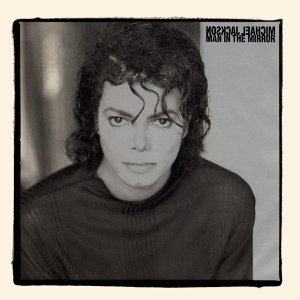
September is Self Improvement Month. Hear are 30 songs to inspire you to become your best self.