Tunes Du Jour Presents 1965

Have you ever looked at a playlist from a single year and felt a sense of disbelief? It’s one thing for a year to produce a few memorable hits, but it’s another for it to feel like a highlight reel of music history. Looking at the charts from 1965 is exactly that kind of experience. It wasn’t just a year of good songs; it was a pivotal moment when popular music seemed to mature in several different directions at once, producing an astonishing collection of classics that still resonate today.

On one hand, 1965 saw the art of the immaculately produced pop song reach a new peak. The Motown machine was in full, glorious swing, giving us the suave romance of The Temptations’ “My Girl” and the intricate heartbreak of Smokey Robinson’s “The Tracks of My Tears.” The Supremes demanded attention with the dramatic plea of “Stop! In the Name of Love,” a perfect example of studio craftsmanship meeting raw emotion. Across the Atlantic, Petula Clark’s “Downtown” offered a sweeping, cinematic vision of city life. These weren’t just catchy tunes; they were impeccably arranged, powerfully sung, and emotionally direct pieces of art that defined a certain kind of pop perfection.

At the very same time, a grittier, more defiant sound was taking hold. The Rolling Stones’ “(I Can’t Get No) Satisfaction” wasn’t just a hit song; it was a statement of intent, built around a fuzzy, unforgettable guitar riff that sounded like pure frustration. This raw energy was a common thread. From the garage-rock howl of Them’s “Gloria” to the stuttering, youthful angst of The Who’s “I Can’t Explain,” rock music was shedding its cleaner-cut image. This wasn’t the polished sound of the studio; it was the restless sound of the rehearsal room, and it was connecting with an entire generation.

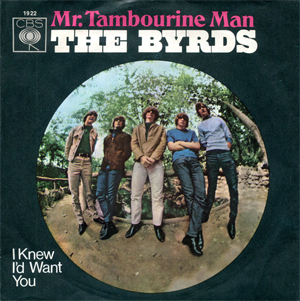
Beyond the evolving sounds, the lyrical substance of popular music was deepening profoundly. Bob Dylan completely rewrote the rules with “Like a Rolling Stone,” a six-minute epic of poetic scorn that proved a hit single could be complex, challenging, and literary. That same year, The Byrds took Dylan’s words and electrified them, creating a new genre overnight with their shimmering version of “Mr. Tambourine Man.” This new lyrical consciousness also carried immense social weight. Sam Cooke’s posthumously released “A Change Is Gonna Come” and The Impressions’ hopeful “People Get Ready” became enduring anthems of the Civil Rights Movement, demonstrating that music could be both a comfort and a powerful call for progress.

What makes 1965 so striking is that none of these developments happened in isolation. It was a year of convergence, where you could hear the sweet soul of Marvin Gaye’s “How Sweet It Is (To Be Loved By You)” on the radio right next to the birth of funk in James Brown’s “Papa’s Got a Brand New Bag.” The carefree optimism of The Beach Boys’ “California Girls” shared the airwaves with the deep, aching soul of Otis Redding’s “I’ve Been Loving You Too Long.” The sheer volume of landmark recordings from this single 12-month period is a testament to a unique moment in time—a year when the boundaries of pop music were expanding in every direction, leaving us with a collection of songs that feel less like relics and more like foundation stones.

Follow Tunes Du Jour on Facebook

Follow me on Bluesky

Follow me on Instagram
Tunes Du Jour Presents 1963

If you could travel back in time and turn on a car radio in 1963, what would you hear? It was a year poised on the brink of profound change, both culturally and musically. Listening to the pop charts from that year is like opening a time capsule of a specific American moment, one just before the British Invasion, led by The Beatles, would arrive on our shores in January 1964 and rearrange the entire landscape. Using a playlist of the year’s biggest hits, we can get a clear picture of the sounds that defined the last year of this particular pop era.

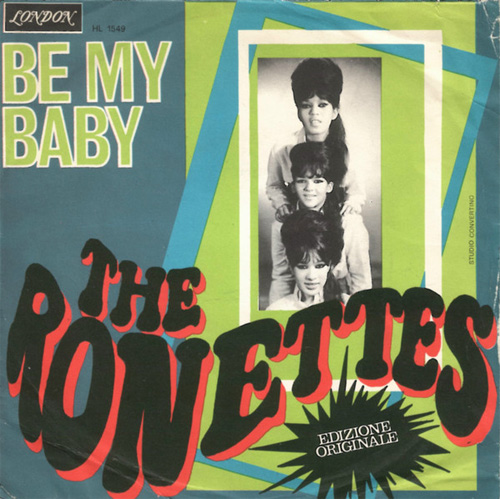
Two major sounds seemed to rule the airwaves, both born from a distinctly American, youthful energy. From the West Coast came the sun-drenched anthems of surf rock. The Beach Boys offered a national invitation with “Surfin’ U.S.A.,” while their friendly rivals Jan & Dean created the idyllic “Surf City.” This wasn’t just a vocal trend; the raw, driving energy of instrumental hits like The Surfaris’ “Wipe Out” and The Chantays’ “Pipeline” provided a visceral, drum-and-guitar-heavy soundtrack for a generation. Complementing this was the sound of the girl groups, often channeling teenage drama through the ambitious production of Phil Spector’s “Wall of Sound” on tracks like The Ronettes’ “Be My Baby” and The Crystals’ “Da Doo Ron Ron.” From the defiant fun of Lesley Gore’s “It’s My Party” to the tough-girl stance of The Angels’ “My Boyfriend’s Back,” these songs were miniature soap operas set to a 4/4 beat.

At the same time, a different kind of sound was solidifying its place at the heart of American music, broadcasting from Detroit and other soul music hubs. Motown was hitting its stride, producing hits that were both commercially successful and artistically sophisticated. You could feel the undeniable energy of Martha Reeves & The Vandellas on “(Love Is Like A) Heat Wave” or get lost in the smooth, clever plea of Smokey Robinson & the Miracles’ “You’ve Really Got a Hold on Me.” A teenage prodigy named Stevie Wonder even captured the explosive energy of his live performances on “Fingertips, Pts. 1 & 2.” It wasn’t just Motown, either. The soulful storytelling of groups like The Drifters on “Up on the Roof” and the raw, emotional performance of Garnet Mimms on “Cry Baby” showed the depth and variety within R&B and soul music.

Beyond these dominant movements, the Top 40 of 1963 was remarkably eclectic. The folk revival crashed onto the pop charts with Peter, Paul and Mary’s earnest version of Bob Dylan’s “Blowin’ In The Wind,” introducing a new layer of social consciousness to mainstream radio. Unclassifiable artists with singular visions also found massive success. Roy Orbison’s haunting, operatic ballad “In Dreams” and Johnny Cash’s iconic, mariachi-inflected “Ring of Fire” were worlds unto themselves. The charts even made room for the wonderfully unexpected: Kyu Sakamoto’s “Sukiyaki,” a beautiful Japanese-language ballad that became a number-one hit, and “Dominique” by The Singing Nun, also a number-one hit, proved that a great melody could transcend any language barrier. And in a class all its own was the wonderfully raw and raucous “Louie, Louie” by The Kingsmen, a garage-rock precursor that parents hated and kids loved.

Looking back, the collection of hits from 1963 represents a high point for a certain kind of American-made pop music. It was a world of surf guitars, dramatic girl-group harmonies, sophisticated soul, and a surprising number of unique one-offs. Every song on the radio, from Andy Williams’ smooth crooning to the gritty simplicity of “Louie, Louie,” was part of the same popular conversation. It was a vibrant and diverse scene, but one operating on its own terms. It had no idea that four young men from Liverpool were about to board a plane, bringing with them a sound that would change the rules for everyone.

Follow Tunes Du Jour on Facebook

Follow me on Bluesky

Follow me on Instagram
Tunes Du Jour Presents The Bob Dylan Songbook

One way to measure a songwriter’s reach is not by how often their work is covered, but how widely. The playlist below spans decades, genres, and sensibilities—from Adele to The Dead Weather, from Johnny Cash to the Neville Brothers—and all roads lead back to Bob Dylan. This is not just a reflection of his prominence; it’s a testament to the adaptability of his writing. Dylan’s lyrics aren’t locked into one style or moment—they hold up when filtered through gospel, punk, glam, folk, or soul. His songs invite reimagining because they’re grounded in strong narrative bones and emotional honesty, not ornamental frills.

Consider the different shades of “All Along the Watchtower.” Dylan’s original version is stark and cryptic; Hendrix turned it into an electrified storm. Likewise, “I Shall Be Released,” rendered with hushed reverence by The Band, has the structure of a gospel hymn but the ambiguity of a fable. “Make You Feel My Love,” one of Dylan’s later compositions, found new life in Adele’s version—proof that his songwriting didn’t peak in the ’60s, but simply evolved. His voice as a writer has always been the constant: a blend of plainspoken wisdom, sly humor, and a deep sense of historical and emotional context.

It’s notable, too, how Dylan’s songs seem to absorb the character of the performer. When Elvis Presley sings “Tomorrow Is a Long Time,” it feels like a Southern ballad. When PJ Harvey takes on “Highway 61 Revisited,” it becomes something raw and jagged. Nina Simone’s version of “Just Like Tom Thumb’s Blues” brings out a haunted intensity not present in Dylan’s own delivery. That elasticity points to a rare kind of craftsmanship—songs written with enough specificity to be meaningful, but enough openness to be inhabited.

Even in unexpected settings, Dylan’s words linger. Tom Petty co-wrote the lyrics to “Jammin’ Me” with him, a pointed pop-rock critique of media saturation. Patti Smith’s “Changing of the Guards” channels the mystical imagery and layered storytelling that Dylan deployed throughout the ’70s. And when The Specials tear into “Maggie’s Farm,” it becomes a statement of punk-era defiance. These aren’t nostalgia pieces—they’re songs that meet each era on its own terms.

Dylan’s catalog isn’t just influential; it’s usable. His songs function as cultural currency, endlessly exchangeable yet retaining value. Whether you hear him through Joan Osborne’s gothic reading of “Man in the Long Black Coat” or the crystalline harmonies of Peter, Paul and Mary’s “Blowin’ in the Wind,” what’s most striking is not just who sings Dylan—but what his songs reveal when they do.

Follow Tunes Du Jour on Facebook

Follow me on Bluesky

Follow me on Instagram
Tunes Du Jour Presents 1962

The music of 1962 wasn’t so much at a crossroads as it was following several lively paths at once. What captivated the public ranged from soul ballads to novelty records to stirrings of folk activism. Instrumentals, dance crazes, and heartfelt pop all found room on the charts. It’s this eclecticism — rather than any one dominant trend — that best characterizes the year. Yet in small ways, a few songs hinted at larger shifts to come. For example, The Tornados’ “Telstar,” the first U.S. number one by a British group, captured a sense of futuristic possibility that would soon manifest more dramatically with the Beatles and the British Invasion.

Instrumentals found their way into the spotlight in very different forms. While “Telstar” beamed into space with its shimmering, otherworldly sound, Booker T. & the MG’s grounded listeners with the earthy groove of “Green Onions.” Meanwhile, Stan Getz and Charlie Byrd’s “Desafinado” introduced many American listeners to the smoother, jazz-inflected rhythms of bossa nova — a style that would quietly influence pop and jazz recordings throughout the decade. Taken together, these instrumentals showed how musical expression could take new forms without abandoning broad popular appeal, and how lyrics weren’t always necessary to convey strong emotion.

Soul music also solidified its foundation. Sam Cooke’s “Bring It on Home to Me” and Solomon Burke’s “Cry to Me” mixed gospel roots with secular longing in ways that would help define soul music itself. Girl groups and doo-wop continued to resonate, with The Crystals’ “He’s a Rebel” and The Shirelles’ “Soldier Boy” offering different takes on devotion and defiance. Dion’s “The Wanderer” carried forward some of doo-wop’s spirit, while Gene Chandler’s “Duke of Earl” stood proudly as a bridge from doo-wop’s earlier heyday into a new era of soul and R&B. Even novelty records had staying power — Bobby “Boris” Pickett’s “Monster Mash” reached number one and, thanks to perennial Hallowe’en airplay, remains a cultural touchstone.

Folk music, too, gained traction. Peter, Paul & Mary’s debut album, featuring “If I Had a Hammer,” became one of the year’s bestsellers, spending over a month at number one. Its clean harmonies and calls for justice would help set the stage for the socially conscious folk boom led by artists like Bob Dylan, whose own debut — mostly overlooked in 1962 — was just the beginning of a rapid ascent. Meanwhile, outside the U.S., Françoise Hardy’s “Tous Les Garçons Et Les Filles” offered a moody, introspective style that would come to influence the understated emotionality of later French pop and, indirectly, certain strands of indie pop decades later.

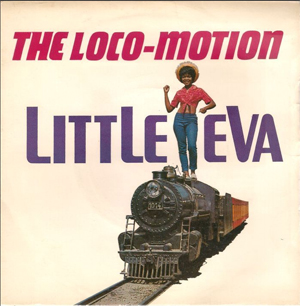
Some of 1962’s biggest hits have proven remarkably enduring. Elvis Presley’s “Can’t Help Falling in Love,” originally from the Blue Hawaii soundtrack, has since become one of his most covered and beloved songs. The Contours’ raucous “Do You Love Me” found new life decades later with Dirty Dancing, while Carole King, years before Tapestry, scored her first chart hit as a performer with “It Might as Well Rain Until September” — even as she continued to dominate as a songwriter, co-writing Little Eva’s infectious “The Loco-Motion.” These songs from 1962 don’t just capture a moment in time; they reveal a popular music scene that was broadening and diversifying while quietly laying the groundwork for upcoming revolutions, capturing both the fleeting spirit of its moment and the lasting power of pop at its best in a year where no single trend reigned supreme.

Follow Tunes Du Jour on Facebook

Follow me on Bluesky

Follow me on Instagram
Tunes Du Jour Presents 1976

By 1976, disco had moved from underground clubs to the top of the charts, and rock music found itself facing challenges from multiple fronts. Donna Summer’s “Love to Love You Baby” and Diana Ross’ “Love Hangover” showcased the genre’s hypnotic groove and sensuality, while Wild Cherry’s “Play That Funky Music” blurred the lines between rock and funk, proving that even guitar-driven bands weren’t immune to disco’s influence. Hits like Andrea True Connection’s “More, More, More” and Candi Staton’s “Young Hearts Run Free” reinforced that this was no passing trend—it was a movement reshaping popular music.

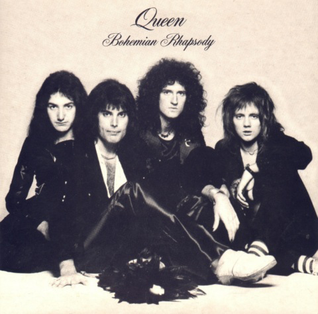
Mainstream rock, meanwhile, leaned into grandeur and melody. Queen’s “Bohemian Rhapsody” became a landmark in songcraft, a multi-part epic that defied conventional structure and solidified the band’s place in rock history. Boston’s “More Than a Feeling” offered a soaring, polished take on arena rock, while Blue Öyster Cult’s “(Don’t Fear) The Reaper” balanced an ethereal mood with a sinister undercurrent. Even David Bowie, ever the shape-shifter, leaned into a sleeker sound with “Golden Years.”

Yet, outside of the glossy productions and layered harmonies, a different kind of energy was brewing. The Sex Pistols’ “Anarchy in the U.K.” was a shot across the bow, rejecting the excesses of rock in favor of raw urgency. While not a punk act, Thin Lizzy’s “The Boys Are Back in Town” carried a swagger and directness that resonated with rock fans who would soon embrace punk’s stripped-down ethos. Punk’s full-blown arrival was just around the corner, but 1976 gave the first clear signs that the dominant sounds of the decade were about to face a reckoning.

Beyond disco and rock, R&B and soul continued to thrive, offering both lush ballads and infectious grooves. The Manhattans’ “Kiss and Say Goodbye” and Lou Rawls’ “You’ll Never Find Another Love Like Mine” showcased rich, emotive vocal performances, while Spinners’ “The Rubberband Man” and Boz Scaggs’ “Lowdown” leaned into rhythmic sophistication. Daryl Hall & John Oates’ “She’s Gone” marked a breakthrough for the duo, setting the stage for their string of hits in the late 1970s and early 1980s, where they refined their blend of blue-eyed soul and pop.

In a year that saw both nostalgia and forward momentum, songs like the Four Seasons’ “December, 1963 (Oh, What a Night)” and Gordon Lightfoot’s “The Wreck of the Edmund Fitzgerald” reminded listeners of storytelling’s power in song. Meanwhile, ABBA’s “Mamma Mia” and Elton John and Kiki Dee’s “Don’t Go Breaking My Heart” offered sheer pop exuberance. The music of 1976 reflected an industry in transition—disco was ascendant, rock was splintering, and a new wave of rebellion was beginning to make itself heard.

Follow Tunes Du Jour on Facebook

Follow me on Bluesky

Follow me on Instagram
Your (Almost) Daily Playlist: 10-21-24

I have to give Manfred Mann credit. If while walking my dogs I encountered someone snapping their fingers, shuffling their feet, and singing “Do wah diddy diddy dum diddy do,” I wouldn’t see wedding bells in our future.

Manfred Mann was born Manfred Lubowitz on this date in 1940. A few of his tracks are included on today’s playlist.

Follow Tunes du Jour on Facebook

Follow Tunes du Jour on Twitter

Follow me on Instagram

Your (Almost) Daily Playlist: 4-19-24

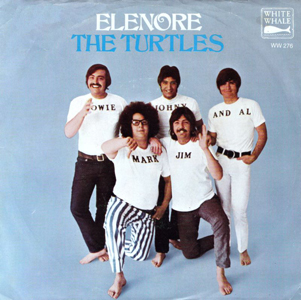
Elenore
Gee, I think you’re swell
And you really do me well 
You’re my pride and joy, et cetera…

After the huge success of their “Happy Together,” The Turtles’ record label asked them for another love song in a similar vein. Jokingly, they turned in “Elenore.” It became their eighth US top 40 hit, reaching number 6 on the Billboard Hot 100.

The Turtles’ Mark Volman was born on this date in 1947. A few songs from his band are included on today’s playlist.

Follow Tunes du Jour on Facebook

Follow Tunes du Jour on Twitter

Follow me on Instagram