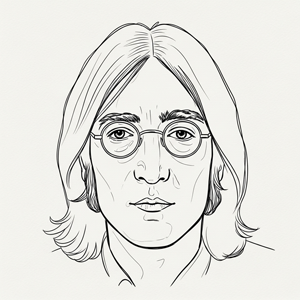
Tunes Du Jour Presents The John Lennon Songbook

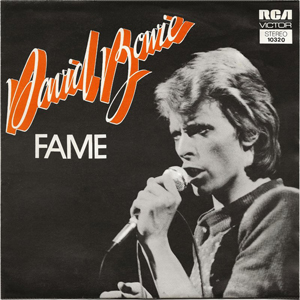
It’s interesting to start a playlist of John Lennon songs with David Bowie’s “Fame.” It feels like an outlier at first, until you remember Lennon co-wrote the track, contributed guitar, and sang backup vocals. It’s one of just a handful of songs on this list that isn’t a straightforward cover, and its placement at the top serves as a great reminder: one of the best ways to understand a songwriter’s impact is to see how their work thrives in the hands of others. Listening to a collection like this isn’t just about nostalgia; it’s an active exploration of how durable and adaptable Lennon’s compositions truly are, revealing the deep-seated melodic and lyrical strengths that invite constant reinterpretation.

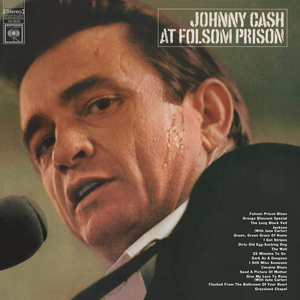
The sheer variety of artists drawn to his work speaks volumes about its fundamental structure. A Lennon song can be a sturdy vessel for almost any style. In its original form, “Help!” was a desperate plea disguised as an upbeat folk-rock hit. But when Tina Turner gets ahold of it, she strips away the disguise, transforming it into a full-throated, soulful cry for salvation. Similarly, Johnny Cash takes “In My Life,” a song of youthful reflection, and imbues it with the profound weight of a long life lived, making each line land with a different, more somber gravity. From the raw R&B groove Otis Redding finds in “Day Tripper” to the cool, atmospheric poise Roxy Music brings to “Jealous Guy,” these songs prove to be exceptionally resilient, their core emotions accessible to any genre.

Beyond musical versatility, the playlist highlights the different facets of Lennon’s lyrical persona. There’s the acerbic political commentator, whose pointed dissatisfaction is channeled perfectly by the punk sneer of Generation X on “Gimme Some Truth” and the world-weary defiance of Marianne Faithfull on “Working Class Hero.” Then there is the deeply vulnerable Lennon, the man wrangling with insecurity and fame. You can hear this in the anxious, propulsive energy The Feelies bring to “Everybody’s Got Something To Hide (Except Me And My Monkey)” or the stark, pleading quality Maxïmo Park finds in the solo track “Isolation.” He could be pointedly political or achingly personal, and both modes have continued to resonate with artists who have their own truths to tell.

Of course, no look at Lennon’s work would be complete without touching on his more surreal and experimental side. These are often the songs that seem most tied to a specific time, yet they possess a dreamlike logic that continues to inspire. Elton John, a friend and collaborator, treats “Lucy in the Sky with Diamonds” not as a museum piece but as a glam-rock epic. R.E.M. leans into the hypnotic, floating quality of “#9 Dream,” while Fiona Apple’s take on “Across the Universe” honors its ethereal nature while grounding it with her distinctive emotional intensity. These artists don’t just copy the psychedelia; they find new ways to access the spirit of imaginative freedom that fueled the original recordings.

Ultimately, listening through these interpretations feels less like a tribute and more like a conversation across decades. We hear Billy J. Kramer’s simple pop charm on “Bad to Me,” a song Lennon wrote for him in 1963, and then Glen Campbell’s posthumous, heart-rending version of “Grow Old With Me,” one of Lennon’s last compositions. The journey between those two points is remarkable. This collection of songs, re-shaped by everyone from The Breeders to Bettye LaVette, demonstrates that the power of Lennon’s work isn’t just in his own iconic recordings. It’s in the bones of the songs themselves—the unforgettable melodies, the honest lyrics, and the restless spirit that others can’t help but be drawn to, again and again.

Follow Tunes Du Jour on Facebook

Follow me on Bluesky

Follow me on Instagram
Tunes Du Jour Presents 1975

Fifty years ago, radio dials and turntables were spinning an uncommonly diverse mix of sounds. The charts of 1975 didn’t follow a single storyline—instead, they captured a moment when multiple musical currents were flowing with equal strength. Disco was gaining momentum but hadn’t yet dominated everything in its path. Rock was simultaneously reaching for arena-sized ambition and stripping down to raw emotion. Soul and funk were evolving into more sophisticated forms, while pop continued doing what it does best: making people hum along whether they meant to or not.

The year belonged, in many ways, to artists who understood that hooks and ambition weren’t mutually exclusive. Bruce Springsteen’s “Born to Run” arrived like a desperate prayer wrapped in Phil Spector production, while Queen’s “Killer Queen” proved that flamboyance and precision could coexist in three minutes of glam-rock perfection. Led Zeppelin stretched “Kashmir” across nearly nine minutes of Eastern-influenced grandeur, and Pink Floyd’s “Wish You Were Here” turned melancholy into an art form. Even Bob Dylan, never one to stand still, was crafting the narrative complexity of “Tangled Up in Blue.” These weren’t just songs—they were statements about how far popular music could reach while still connecting with listeners.

Meanwhile, dance floors were becoming cultural epicenters. KC and the Sunshine Band’s “That’s the Way (I Like It)” and Gloria Gaynor’s “Never Can Say Goodbye” helped establish disco as something more than a passing trend. The Bee Gees’ “Jive Talkin'” showed that the brothers Gibb could pivot from balladeers to funk-influenced hitmakers. Labelle’s “Lady Marmalade” brought New Orleans sass and unapologetic sexuality to the mainstream, while Earth, Wind & Fire’s “Shining Star” blended funk, soul, and jazz into something that felt both cosmic and grounded. The groove wasn’t just a rhythm—it was becoming a philosophy.

What’s striking about 1975 is how much sonic territory gets covered without any single approach dominating. 10cc’s “I’m Not in Love” used studio technology to create something hauntingly atmospheric, while Kraftwerk’s “Autobahn” was quietly suggesting what electronic music might become. Barry White continued orchestrating romantic opulence, Minnie Riperton’s five-octave range soared through “Lovin’ You,” and Linda Ronstadt’s “You’re No Good” proved that straightforward rock could still pack a punch. David Bowie’s “Fame,” co-written with John Lennon, showed him already moving past glam into funk-inflected territory. Glen Campbell brought “Rhinestone Cowboy” to country-pop crossover success, while Average White Band demonstrated that Scottish musicians could master American funk with “Pick Up the Pieces.”

Listening to these songs now, what emerges isn’t just nostalgia but a reminder of a particular kind of creative confidence. These artists weren’t afraid to be big or vulnerable, funky or introspective, polished or raw—sometimes all within the same track. The year didn’t belong to any single movement or sound, and that might be exactly what made it memorable. It was a time when the radio could take you from the Staple Singers’ gospel-infused soul to Sweet’s glitter-rock crunch to ABBA’s pristine pop architecture without anyone thinking twice about the journey. That kind of range feels worth celebrating.

Follow Tunes Du Jour on Facebook

Follow me on Bluesky

Follow me on Instagram

Tunes Du Jour Presents 1969

The music of 1969 captures a unique crossroads in cultural history—a year teetering between optimism and cynicism, unity and rebellion. Looking at a playlist from this year reveals a blend of genres and voices, each reflecting a society in flux. The playlist’s tracks encompass themes of love, social change, disillusionment, and raw individualism, echoing the era’s contradictions and bold spirit.

On one end of the spectrum, songs like Elvis Presley’s “Suspicious Minds” and Tammy Wynette’s “Stand By Your Man” echo traditional themes of love, loyalty, and heartbreak, though with a hint of modern skepticism. Presley’s soulful performance marked his return to chart-topping success, while Wynette’s hit became a polarizing anthem, embraced by some for its devotion and questioned by others for its apparent passivity. Meanwhile, Glen Campbell’s “Wichita Lineman” captured a more introspective side of the decade, blending pop and country into a haunting portrayal of loneliness and perseverance.

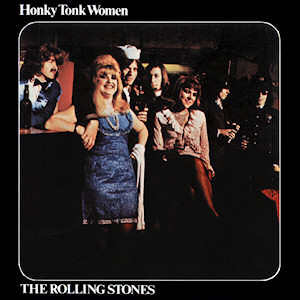
But 1969 wasn’t all about introspection; it was also a year of unrestrained expression and pushing boundaries. Creedence Clearwater Revival’s “Bad Moon Rising” hinted at a sense of looming danger, with its ominous lyrics striking a nerve during a time of political upheaval. In contrast, “Honky Tonk Women” by The Rolling Stones embraced the gritty allure of rock and roll without aiming for a larger societal message. Jagger’s tales of chance encounters and gin-soaked nights represent the Stones’ unapologetic celebration of indulgence, sidestepping introspection in favor of pure hedonism.

Amidst the wild spirit of rock, 1969 also offered more uplifting messages with a hint of idealism. Sly & The Family Stone’s “Everyday People” and The Youngbloods’ “Get Together” conveyed calls for unity that resonated deeply in an era fraught with political and racial tensions. Sly Stone’s anthem became a rallying cry for acceptance, emphasizing individuality while embracing common ground. Similarly, “Aquarius/Let the Sunshine In” by The 5th Dimension captured the essence of the countercultural movement in all its utopian ambitions, even if the optimism was a bit idealistic in hindsight.

Then there was the music that addressed disillusionment head-on, perhaps best captured by Simon & Garfunkel’s “The Boxer” and Peggy Lee’s “Is That All There Is?” Both songs offer reflective, sometimes jaded perspectives on life’s struggles and the disappointments that can accompany maturity. Where “The Boxer” tells the story of a young man grappling with hardship and loss, Lee’s dry wit in “Is That All There Is?” confronts the emptiness that can lie beneath life’s surface pleasures.

Ultimately, this playlist from 1969 feels like a time capsule of an era balancing between hope and disillusionment. From the raw proto-punk of The Stooges to the tender balladry of Stevie Wonder’s “My Cherie Amour,” the year’s music speaks to a generation grappling with unprecedented social changes. Through these songs, 1969 continues to resonate, reminding us that music often reflects the spirit of its time while challenging listeners to consider where they stand.

Follow Tunes Du Jour on Facebook

Follow Tunes Du Jour on Twitter

Follow me on Instagram

Your (Almost) Daily Playlist: 12-11-23

The first time Brenda Lee topped the Billboard Hot 100 was with “I’m Sorry” in 1960. The most recent time Brenda Lee topped the Billboard Hot 100 was a few days ago, when her 1958 single “Rockin’ Around the Christmas Tree” finally ascended to the top of the chart. That makes Lee the oldest person to ever have a US number one single and marks the longest-ever climb to number one and the longest gap between number one singles for an artist. 

Brenda Lee was born on this in 1944. A couple of her hits are included on today’s playlist.

Follow Tunes du Jour on Facebook

Follow Tunes du Jour on Twitter

Follow me on Instagram

Throwback Thursday: 1975

Today’s Throwback Thursday playlist revisits the music of 1975. Each of the 30 songs below made the pop top 40. I miss the days before radio became so segmented and one could hear Eagles rubbing up against Minnie Riperton next to Bob Dylan followed by Labelle with Bruce Springsteen’s first hit playing with The Captain & Tennille’s first hit on deck. It satisfies the musical omnivore that I am.

A Neil Diamond Playlist

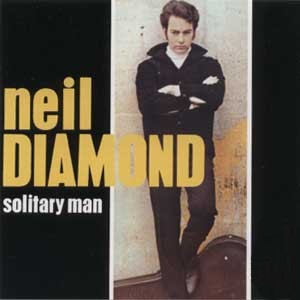
Today Tunes du Jour pays homage to Neil Diamond (b. January 24, 1941). Included in today’s playlist are hits Diamond had as a performer, songs of his that were hits for other artists, and “The Pot Smoker’s Song” and “Reggae Strut,” because I think you need to be aware of them, the latter sounding like it wasn’t written by the guy who espoused the views of the former.

Follow Tunes du Jour on Facebook.

Follow Tunes du Jour on Twitter.

Follow me on Instagram.