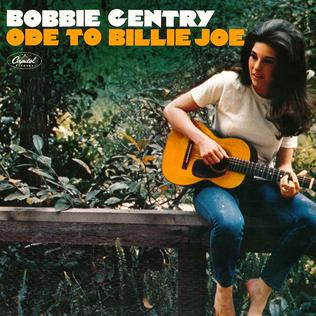
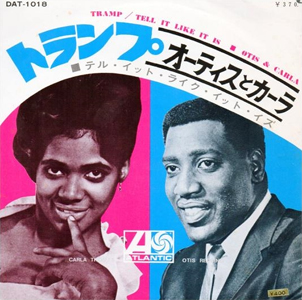
For those of you outside the U.S., today is National Joe Day — an important holiday stateside. Anyone named Joe (or Joseph, Josephine, Joey or Johanna) gets the day off. No work, no mail delivery, no access to federal buildings. Some Joels try to sneak in on the action, but they’re swiftly dealt with—usually by a retired mall cop wielding a two-by-four.
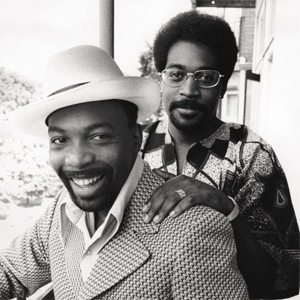
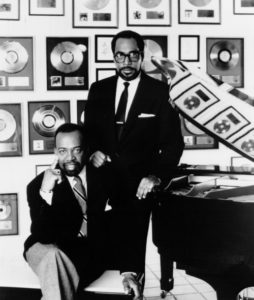
In the 1970s, Kenneth Gamble and Leon Huff shaped the sound of a generation with their signature brand of sophisticated, richly orchestrated soul music. As the architects of what became known as Philly soul, the duo crafted anthems that balanced deep emotional resonance with tight, danceable grooves. Their work as producers at Philadelphia International Records (PIR) established a sonic identity that was as polished as it was powerful, laying the foundation for later developments in R&B and disco.
Philly soul stood apart from other regional styles of the time, thanks in large part to Gamble and Huff’s emphasis on lush string arrangements, driving rhythm sections, and socially conscious lyrics. With a stable of top-tier session musicians—collectively known as MFSB—they created an expansive sound that was both cinematic and immediate. Songs like “Back Stabbers” by The O’Jays and “The Love I Lost” by Harold Melvin & The Blue Notes turned heartbreak and betrayal into dramatic musical statements, while dancefloor favorites like “Do It Any Way You Wanna” by People’s Choice showcased their ability to craft irresistibly propulsive rhythms.
As producers, Gamble and Huff had a particular talent for pairing the right voices with the right material. Lou Rawls’ baritone found a new dimension on “You’ll Never Find Another Love Like Mine,” and Billy Paul’s jazz-influenced phrasing made “Me and Mrs. Jones” a timeless tale of illicit romance. They also helped usher in the rise of Teddy Pendergrass, whose raw, commanding delivery gave Harold Melvin & The Blue Notes a distinct edge on tracks like “Wake Up Everybody” and “Don’t Leave Me This Way” before his successful solo career under their guidance.
Beyond crafting individual hits, Gamble and Huff understood the power of music as a cultural force. Songs like “Love Train” promoted unity and optimism, while “For the Love of Money” took a hard look at greed and materialism. Their productions weren’t just about making records—they were about shaping the mood of the era. Even their instrumental work, such as MFSB’s “T.S.O.P. (The Sound of Philadelphia),” became anthemic, doubling as the theme for Soul Train and solidifying Philly soul’s influence on popular culture.
The legacy of Gamble and Huff’s production work is undeniable. Their seamless blend of elegance and groove paved the way for the disco explosion, influenced generations of R&B artists, and remains a touchstone for contemporary soul revivalists. Whether through the soaring harmonies of The Three Degrees, the anthemic hooks of The Jacksons, or the velvet-toned storytelling of Jerry Butler, their music continues to resonate—proof that the sound of Philadelphia was more than just a moment in time. It was, and still is, a movement.
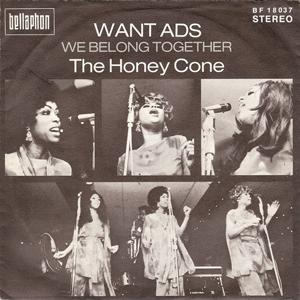
The Honey Cone was the first act signed to Hot Wax Records, a label started in 1968 by Eddie and Brian Holland and Lamont Dozier, who previously were staff writers and producers at Motown Records and in that role wrote twelve number one singles between 1962 and 1967, two performed by The Four Tops and the other ten by The Supremes, with lead vocals by Diana Ross, who would soon leave the trio and be replaced by Jean Terrell in 1970, with Terrell being replaced in 1973 by Scherrie Payne, who before then was the singer in a group called Glass House, also signed to Hot Wax Records, who recorded “Want Ads” prior to The Honey Cone, but neither Scherrie nor the track’s producer, Greg Perry, liked their version, leading Scherrie to re-record the song with her sister Freda, who had a number 3 record in 1970 with “Band of Gold,” a song co-penned by Holland-Dozier-Holland under assumed names, but the sisters’ version of “Want Ads” was also discarded, which then led Scherrie to suggest to Perry that he try the song again with Edna Wright singing, Wright being the lead singer for The Honey Cone and the sister of Darlene Wright, the singer for the group The Blossoms, and while you may not recognize the names Darlene Wright or The Blossoms, you may know their music, for producer Phil Spector renamed Darlene Wright Darlene Love (without her knowledge) and released records by The Blossoms under the name The Crystals, who hit number 1 with “He’s a Rebel,” and should not be but will be confused with another group called The Crystals, also produced by Phil Spector at the same time he was working with Wright/Love and The Blossoms, but let’s get back to Edna Wright, who recorded “Want Ads” with backing vocals by the other two members of The Honey Cone, Shellie Clark, who a couple of years earlier was singing backup for Ike and Tina Turner, and Carolyn Willis, who toured as a member of Bob B. Soxx & the Blue Jeans, a group whose records were produced by Phil Spector and featured vocals from Darlene Wright/Love. In June of 1971 The Honey Cone took “Want Ads” to number 1. (This paragraph is pulled from my long-awaited (by me, anyway) book, which I’m trying to get out this year.)
The late Edna Wright of The Honey Cone was born on this date in 1945. A couple of the group’s best-known songs, including “Want Ads,” are on today’s playlist.
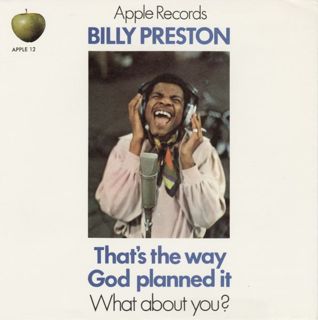
Today’s playlist celebrates the September 1 birthdays of Archie Bell, Bee Gees’ Barry Gibb, Conway Twitty, Alton Ellis, Gloria Estefan, Lily Tomlin, The Noisettes, and Steven Grossman; and the September 2 birthdays of Billy Preston, Joe Simon, Bobby Purify, Chris Knox, Eleanor Friedberger, Zedd, King Missile’s John S. Hall, K-Ci, and Victor Lundberg.
Not all records classified as Philly Soul come from Philadelphia-based artists, though all share characteristics – orchestral string arrangements married to rhythm and blues with a funk influence that bridged the way toward disco. Here are thirty examples of the genre, with the songwriting-production team of Kenny Gamble and Leon Huff working on the lion’s share of these releases.
You may not know their names, but you know many of their songs. Individually, but more often as a team, Kenny Gamble and Leon Huff wrote and/or produced a lot of timeless classic songs in the soul music genre. They were the pre-eminent rhythm and blues architects of the first half of the 1970s, and their production style paved the way for disco, before that genre got watered down. Plenty of their records found their way to the top of the pop charts as well.
Today is Kenny Gamble’s 75th birthday. To celebrate, Tunes du Jour presents a playlist of twenty great Gamble and Huff sides.
On May 31, President Obama issued a proclamation declaring June 2016 as African American Music Appreciation Month. The designation has actually been around since 1979, when President Carter commemorated the cultural and financial contributions of music made by African Americans at a reception at the White House. Back then it was Black Music Month, an idea conceived by music industry executive and radio personality Dyana Williams and her husband, Kenny Gamble.
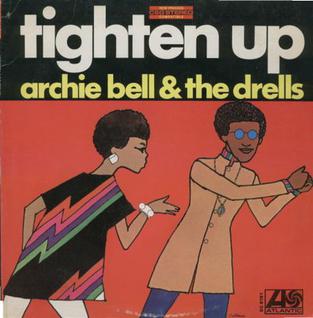
You may not know Gamble’s name, but you know his music. The co-founder of Philadelphia International Records with Leon Huff, Gamble and his music partner have written and produced hits for Diana Ross & the Supremes and the Temptations, Dusty Springfield, the Jacksons, the O’Jays, Harold Melvin & the Blue Notes, Jerry Butler, Archie Bell and the Drells, the Three Degrees, Joe Simon, MFSB, Billy Paul, the Soul Survivors, Teddy Pendergrass, the Intruders, Lou Rawls, People’s Choice and the Jones Girls.
Tunes du Jour’s weekly dance party celebrates African American Music Appreciation Month with twenty dance floor packers, kicking off with a few of Gamble and Huff’s gems.