Tunes Du Jour Presents Stevie Nicks

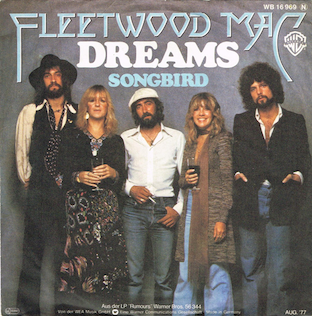
In a career that’s stretched across decades, bands, and Billboard charts, Stevie Nicks has managed a rare feat: establishing herself as both a defining voice in a group and a singular presence as a solo artist. Her work with Fleetwood Mac and on her own often feels like two sides of the same coin—distinct but inseparable. On one hand, there’s the collaborative dynamic of Fleetwood Mac, captured in songs like “Dreams,” “Rhiannon,” and “Landslide,” where her voice served not just as a sonic anchor but as a narrative thread in the band’s often-turbulent story. On the other, there’s the independence of Bella Donna and The Wild Heart, where she claimed space on her own terms with tracks like “Edge of Seventeen” and “Stand Back.”

What makes Nicks especially compelling isn’t just her voice, though that husky, otherworldly tone is unmistakable. It’s her songwriting. The stories she tells—whether personal or imagined—have a way of blurring the line between autobiography and myth. “Sara” and “Gypsy” evoke emotional landscapes more than plotlines, while “Silver Springs” is pointed and raw, its pain delivered without melodrama. Even her more radio-friendly hits like “Talk To Me” and “I Can’t Wait” retain a kind of emotional undertow that separates them from the disposable pop of their era.

She’s also a master of collaboration, though not in the typical sense. Her duets with Tom Petty (“Stop Draggin’ My Heart Around”) and Don Henley (“Leather and Lace”) don’t just showcase vocal chemistry; they underscore how well she uses other voices to sharpen her own perspective. And while she occasionally lent her voice to projects like Kenny Loggins’ “Whenever I Call You Friend,” it’s usually within settings that still feel connected to her larger musical identity—romantic, reflective, occasionally mysterious.

Dig deeper into her solo catalog, and you find tracks like “Nightbird,” “Outside the Rain,” and “Think About It”—songs that may not have hit the top of the charts but round out the portrait. These aren’t diversions from her work with Fleetwood Mac but extensions of it, revealing a consistent worldview: introspective but not self-pitying, emotional but rarely unhinged. Even a track like “Planets of the Universe,” recorded decades after her commercial peak, holds to the same creative compass that’s guided her from the start.

Stevie Nicks isn’t just a singer or a lyricist or a performer; she’s a builder of emotional spaces. Whether she’s conjuring the vulnerability of “Storms,” the weariness of “After the Glitter Fades,” or the defiance of “The Highwayman,” there’s a sense that she’s letting listeners into her interior life—sometimes invitingly, sometimes at arm’s length. Either way, it’s a voice you don’t mistake for anyone else’s.

Follow Tunes Du Jour on Facebook

Follow me on Bluesky

Follow me on Instagram

Your (Almost) Daily Playlist: 7-29-24

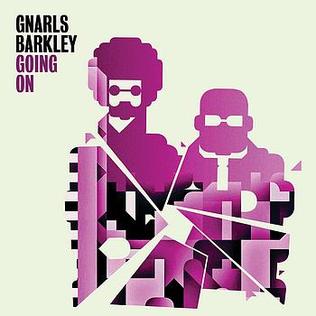
“You ask me why we’re called Gnarls Barkley and I’m asking you ‘why not?’ The name Gnarls Barkley isn’t anchored down. It’s a drifter. A High Plains drifter, I might add.” – CeeLo Green

“There’s no story behind it. The name doesn’t have anything to do with anything.” – Danger Mouse

Gnarls Barkley’s Danger Mouse was born Brian Burton on this date in 1977. A handful of their songs are included on today’s playlist.

Giorgio By Moroder

“What the hell is this, Giorgio?”

That is what Donna Summer asked Giorgio Moroder, the producer who brought her to international fame with the track “Love to Love You Baby,” upon hearing a song Moroder intended for her 1977 album I Remember Yesterday. The album’s concept was to combine modern sounds with sounds reminiscent of past musical eras. The title track opens the album with a 1920s feel, which is followed by a fifties throwback and a sixties throwback. The song that perplexed Donna was intended to signify the future.

The synthesizer-based futuristic track was the b-side of the album’s first single, a ballad entitled “Can’t We Just Sit Down (And Talk It Over).” Releasing a ballad as the first single for the Disco Queen’s new album was a strange move. The song failed to make the pop charts, though it did the top twenty of the r&b chart, Summer’s first single to do so since “Love to Love You Baby.”

In some foreign markets, the synth track was the single’s A-side. It made noise, ultimately topping the charts in the U.K., the Netherlands, France, Australia, Italy, Belgium, and Austria. It reached #3 in Germany, where David Bowie was recording with produce Brian Eno. Bowie remembered Eno running into the studio with a copy of the song. Eno played it for Bowie, who recalled him saying “’This is it, look no further. This single is going to change the sound of club music for the next fifteen years.’ Which was more or less right.”

In the U.S. this B-side became the A-side, and reached #6 on the pop chart. Rolling Stone magazine included the track, entitled “I Feel Love,” on its list of the 500 Greatest Songs of All-Time.

Today, Giorgio Moroder, who has four Grammy Awards and three Academy Awards to his credit, turns 75 years old. He has a new album, Déjà Vu, featuring guest vocalists such as Britney Spears (on a cover of Suzanne Vega’s “Tom’s Diner”), Kylie Minogue, Sia, Kelis, and Charli XCX, due to be released this June. Here are twenty career highlights.


Click here to like Tunes du Jour on Facebook!
Follow me on Facebook: @TunesDuJour

Winston + Bobby Brown

The Song Retains The Name

Winston + Bobby Brown
Today is Bobby Brown’s 46th birthday. A former member of New Edition, Brown had his first solo hit in 1988 with “Don’t Be Cruel,” which reached #8 on the Hot 100. Though it shares its title with an Elvis Presley #1 hit from 1956, Brown’s “Don’t Be Cruel” is not a remake.

That brings us to today’s playlist, which I call The Song Retains the Name. It consists of different songs with the same title. I initially planned to include twenty such songs, but more kept springing to mind. Before I knew it, I passed 100 entries. There are plenty more, so I decided to open this up to my reader(s). If you have songs that share titles you’d like to add, feel free to do so.

(NOTES: I included The Jacksons’ “This Place Hotel” because when it was released in 1980 its title was “Heartbreak Hotel.” Thought he didn’t have to, Michael Jackson, the song’s writer, later changed its name to “This Place Hotel” to avoid confusion with the Elvis Presley song “Heartbreak Hotel.” Whitney Houston didn’t feel the need to make the same Hotel accommodation.

Also, though it is listed on Spotify as “The Best of My Love,” the Eagles track does not have a “The” on the 45 or the band’s On the Border album.)

Click here to follow Tunes du Jour on Facebook!
Follow me on Twitter: @TunesDuJour