Tunes Du Jour Presents 1976

By 1976, disco had moved from underground clubs to the top of the charts, and rock music found itself facing challenges from multiple fronts. Donna Summer’s “Love to Love You Baby” and Diana Ross’ “Love Hangover” showcased the genre’s hypnotic groove and sensuality, while Wild Cherry’s “Play That Funky Music” blurred the lines between rock and funk, proving that even guitar-driven bands weren’t immune to disco’s influence. Hits like Andrea True Connection’s “More, More, More” and Candi Staton’s “Young Hearts Run Free” reinforced that this was no passing trend—it was a movement reshaping popular music.

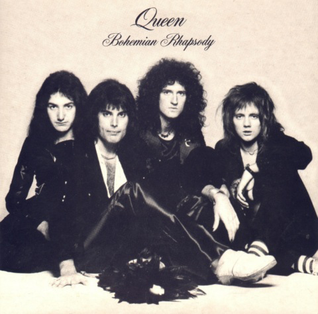
Mainstream rock, meanwhile, leaned into grandeur and melody. Queen’s “Bohemian Rhapsody” became a landmark in songcraft, a multi-part epic that defied conventional structure and solidified the band’s place in rock history. Boston’s “More Than a Feeling” offered a soaring, polished take on arena rock, while Blue Öyster Cult’s “(Don’t Fear) The Reaper” balanced an ethereal mood with a sinister undercurrent. Even David Bowie, ever the shape-shifter, leaned into a sleeker sound with “Golden Years.”

Yet, outside of the glossy productions and layered harmonies, a different kind of energy was brewing. The Sex Pistols’ “Anarchy in the U.K.” was a shot across the bow, rejecting the excesses of rock in favor of raw urgency. While not a punk act, Thin Lizzy’s “The Boys Are Back in Town” carried a swagger and directness that resonated with rock fans who would soon embrace punk’s stripped-down ethos. Punk’s full-blown arrival was just around the corner, but 1976 gave the first clear signs that the dominant sounds of the decade were about to face a reckoning.

Beyond disco and rock, R&B and soul continued to thrive, offering both lush ballads and infectious grooves. The Manhattans’ “Kiss and Say Goodbye” and Lou Rawls’ “You’ll Never Find Another Love Like Mine” showcased rich, emotive vocal performances, while Spinners’ “The Rubberband Man” and Boz Scaggs’ “Lowdown” leaned into rhythmic sophistication. Daryl Hall & John Oates’ “She’s Gone” marked a breakthrough for the duo, setting the stage for their string of hits in the late 1970s and early 1980s, where they refined their blend of blue-eyed soul and pop.

In a year that saw both nostalgia and forward momentum, songs like the Four Seasons’ “December, 1963 (Oh, What a Night)” and Gordon Lightfoot’s “The Wreck of the Edmund Fitzgerald” reminded listeners of storytelling’s power in song. Meanwhile, ABBA’s “Mamma Mia” and Elton John and Kiki Dee’s “Don’t Go Breaking My Heart” offered sheer pop exuberance. The music of 1976 reflected an industry in transition—disco was ascendant, rock was splintering, and a new wave of rebellion was beginning to make itself heard.

Follow Tunes Du Jour on Facebook

Follow me on Bluesky

Follow me on Instagram
Tunes Du Jour Presents Elton John

In the vast landscape of popular music, few names shine as brightly or endure as steadfastly as Elton John’s. With a career spanning over half a century, Sir Elton John, born Reginald Dwight, has left an indelible mark on the world of music. His repertoire is a rich tapestry woven with threads of rock, pop, and ballads, each song a testament to his unparalleled talent and versatility.

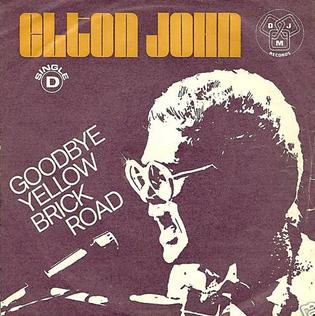
From the iconic “Goodbye Yellow Brick Road” to the soul-stirring “Your Song,” Elton John’s music resonates with audiences across generations. His ability to craft melodies that evoke emotion and lyrics that tell stories has earned him a place in the pantheon of musical legends. Tracks like “Rocket Man” transports listeners to otherworldly realms, while “Crocodile Rock” ignites a sense of joy and nostalgia.

Yet, beyond his musical prowess, Elton John’s legacy extends far into the realms of philanthropy and activism. As an openly gay man in the music industry during a time when such visibility was rare, he became a trailblazer for LGBTQ+ rights. His foundation, the Elton John AIDS Foundation, has been at the forefront of the fight against HIV/AIDS since its inception in 1992, raising millions of dollars to support prevention, treatment, and advocacy efforts worldwide.

Moreover, Elton John’s commitment to diversity and inclusion is evident not only in his music but also in his actions. He has used his platform to champion marginalized voices and challenge societal norms, paving the way for greater acceptance and understanding.

As we journey through the vast expanse of Elton John’s discography, we not only revel in the brilliance of his music but also recognize the depth of his impact on the world. His melodies echo through the corridors of time, serving as a reminder of the transformative power of art and the enduring legacy of one of music’s greatest maestros.

Follow Tunes du Jour on Facebook

Follow Tunes du Jour on Twitter

Follow me on Instagram

Throwback Thursday: 1976

This week’s Throwback Thursday playlist focuses on 1976. It’s easy to remember some of the cheesier songs to make the pop chart (I’ve included examples of those), though there were a lot of great hits as well. Disco was still growing in popularity and having an influence on r&b and pop music. Punk rock was now on major labels, though it wouldn’t influence the pop chart for a while. Pick out the gems of 1976’s output and you’ll have a nice selection of tunes, as evidenced below.

Follow Tunes du Jour on Facebook.

Follow Tunes du Jour on Twitter.

Follow me on Instagram.

Elton John’s Derivative Rock

British-born Reginald Kenneth Dwight, better known by his stage name, Elton John, hit #1 on the singles and album charts in the U.S. prior to doing so in his home country.

His first #1 album stateside was Honky Château, which topped the chart in 1972, thanks to hit singles “Rocket Man” (#6) and “Honky Cat” (#8).

The first single off his follow-up album was inspired by a song Elton discovered while touring Australia the year Château was released. A local band named Daddy Cool had a million-selling smash in that country called “Eagle Rock,” which remained at #1 on their singles chart for ten weeks. The song told of a popular American dance from the 1920s.

Bernie Taupin, Elton’s lyricist in those days, wrote of a fictional American dance from the early days of rock and roll. Taking Bill Haley & His Comets’ “See You Later Alligator” as inspiration for this dance, Taupin called it the “Crocodile Rock.” Another Haley classic is referenced in the song, as Elton sings “while the other kids were rockin’ ‘round the clock.”

Other early rock-and-roll tunes inspired the writers (Elton composed the music) as well. Buddy Kaye, writer of “Speedy Gonzales,” a 1962 hit for homophobic shitbag Pat Boone, accused Elton of copying that tune for “Crocodile Rock”’s “la la la la la” refrain. Elton’s response to Kaye’s claim was that “Crocodile Rock” was “a really blatant homage to ‘Speedy Gonzales’ and all the great ’50s and ’60s records that we used to love.” So there!

“Crocodile Rock,” which, by the way, contains eighty “la’s,” was released as a single in the U.S. in November of 1972, the first single released by MCA Records. It became the first of eight #1 singles for Elton John. In the U.K. the single peaked at #3. The long-player from which it was taken, Don’t Shoot Me I’m Only the Piano Player, became the second of seven #1 Elton John albums in the U.S. and his first #1 album in the U.K.

(Elton’s first solo single to top the charts in the U.K. was 1990’s “Sacrifice.” He previously topped the U.K. chart with “Don’t Go Breaking My Heart,” a duet with Kiki Dee, in 1976.)

Of Elton’s first U.S. #1, Bernie Taupin said “I don’t want people to remember me for ‘Crocodile Rock.’ … But there are things like ‘Crocodile Rock’ which was fun at the time, but it was pop fluff. It was like, ‘Okay, that was fun for now, throw it away, and here’s the next one’” and called the song “a strange dichotomy because I don’t mind having created it, but it’s not something I would listen to.”

Elton’s retort to critics who called the song derivative was “it’s derivative in every sense of the word.”

Today Elton John turns 68 years old. Here are twenty tracks from when he and his rock were young.

Click here to like Tunes du Jour on Facebook!
Follow me on Twitter: @TunesDuJour