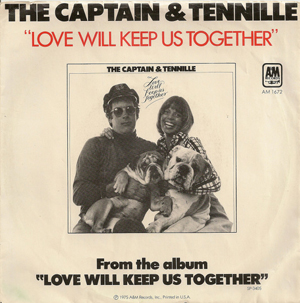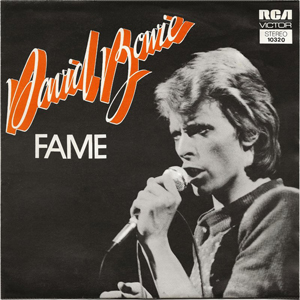
Tunes Du Jour Presents 1975

Fifty years ago, radio dials and turntables were spinning an uncommonly diverse mix of sounds. The charts of 1975 didn’t follow a single storyline—instead, they captured a moment when multiple musical currents were flowing with equal strength. Disco was gaining momentum but hadn’t yet dominated everything in its path. Rock was simultaneously reaching for arena-sized ambition and stripping down to raw emotion. Soul and funk were evolving into more sophisticated forms, while pop continued doing what it does best: making people hum along whether they meant to or not.

The year belonged, in many ways, to artists who understood that hooks and ambition weren’t mutually exclusive. Bruce Springsteen’s “Born to Run” arrived like a desperate prayer wrapped in Phil Spector production, while Queen’s “Killer Queen” proved that flamboyance and precision could coexist in three minutes of glam-rock perfection. Led Zeppelin stretched “Kashmir” across nearly nine minutes of Eastern-influenced grandeur, and Pink Floyd’s “Wish You Were Here” turned melancholy into an art form. Even Bob Dylan, never one to stand still, was crafting the narrative complexity of “Tangled Up in Blue.” These weren’t just songs—they were statements about how far popular music could reach while still connecting with listeners.

Meanwhile, dance floors were becoming cultural epicenters. KC and the Sunshine Band’s “That’s the Way (I Like It)” and Gloria Gaynor’s “Never Can Say Goodbye” helped establish disco as something more than a passing trend. The Bee Gees’ “Jive Talkin'” showed that the brothers Gibb could pivot from balladeers to funk-influenced hitmakers. Labelle’s “Lady Marmalade” brought New Orleans sass and unapologetic sexuality to the mainstream, while Earth, Wind & Fire’s “Shining Star” blended funk, soul, and jazz into something that felt both cosmic and grounded. The groove wasn’t just a rhythm—it was becoming a philosophy.

What’s striking about 1975 is how much sonic territory gets covered without any single approach dominating. 10cc’s “I’m Not in Love” used studio technology to create something hauntingly atmospheric, while Kraftwerk’s “Autobahn” was quietly suggesting what electronic music might become. Barry White continued orchestrating romantic opulence, Minnie Riperton’s five-octave range soared through “Lovin’ You,” and Linda Ronstadt’s “You’re No Good” proved that straightforward rock could still pack a punch. David Bowie’s “Fame,” co-written with John Lennon, showed him already moving past glam into funk-inflected territory. Glen Campbell brought “Rhinestone Cowboy” to country-pop crossover success, while Average White Band demonstrated that Scottish musicians could master American funk with “Pick Up the Pieces.”

Listening to these songs now, what emerges isn’t just nostalgia but a reminder of a particular kind of creative confidence. These artists weren’t afraid to be big or vulnerable, funky or introspective, polished or raw—sometimes all within the same track. The year didn’t belong to any single movement or sound, and that might be exactly what made it memorable. It was a time when the radio could take you from the Staple Singers’ gospel-infused soul to Sweet’s glitter-rock crunch to ABBA’s pristine pop architecture without anyone thinking twice about the journey. That kind of range feels worth celebrating.

Follow Tunes Du Jour on Facebook

Follow me on Bluesky

Follow me on Instagram
Tunes Du Jour Presents Covers Of The Rolling Stones

One of the best ways to understand a song’s true strength is to hear it played by someone else. When a song can be lifted from its original context, performed by a different artist in a new style, and still resonate, you know the writers built it on a solid foundation. Looking at the sheer breadth of artists who have successfully interpreted the songs of Mick Jagger and Keith Richards, it becomes clear that their songwriting partnership created something remarkably durable. While their own recordings as The Rolling Stones are iconic, it’s the cover versions that reveal the fundamental power of the compositions themselves.

The playlist immediately highlights how deeply their writing is rooted in the American soul and R&B they revered. It’s one thing to be influenced by a genre; it’s another to write songs that the masters of that genre can inhabit as their own. When you hear Aretha Franklin transform “Jumpin’ Jack Flash” into a gospel-fueled force of nature, or Ike & Tina Turner inject “Honky Tonk Women” with their signature high-octane energy, you realize the songs contain an authentic rhythmic and emotional core. This goes even deeper with Solomon Burke’s take on “I Got the Blues” or Bettye LaVette’s searing, world-weary version of “Salt of the Earth.” These aren’t just covers; they are reclamations, demonstrating that the blueprints Jagger and Richards created were so solid that they could hold the weight of the most powerful voices in soul music.

What’s also remarkable is the structural flexibility of their work. A great Jagger/Richards song often has a distinct personality, yet its core components—melody, lyrical theme, and chordal movement—are adaptable enough to thrive in entirely new environments. The post-punk angularity of Devo’s “(I Can’t Get No) Satisfaction” strips away the blues swagger to expose the lyric’s timeless complaint of modern alienation. The Sundays reimagine the country-tinged “Wild Horses” as a piece of shimmering, ethereal dream pop, proving the song’s beautiful melody is its true anchor. Even more extreme, the Ramones boil “Out of Time” down to its raw essentials, recasting the shuffling pop song as a driving, three-chord punk declaration, while Ituana finds a relaxed, bossa nova groove in the epic “You Can’t Always Get What You Want.” The songs don’t just survive these transformations; they reveal different facets of their character.

Ultimately, this collection of performances underscores that the Jagger/Richards catalog is more than a collection of iconic riffs and rock and roll attitude. These are fundamentally well-crafted songs. They can be country laments in the hands of Johnny Cash (“No Expectations”) or Steve Earle (“Dead Flowers”). They can be theatrical pop statements for David Bowie (“Let’s Spend The Night Together”) or Bryan Ferry (“Sympathy for the Devil”). They can even be played for laughs by “Weird Al” and The Folksmen precisely because the source material is so instantly recognizable. The Rolling Stones’ versions will always be definitive, but these interpretations from other artists give us a clearer view of the writers’ craft, proving the songs stand on their own, ready for anyone to find a piece of their own story within them.

Follow Tunes Du Jour on Facebook

Follow me on Bluesky

Follow me on Instagram

Tunes Du Jour Presents The Smokey Robinson Songbook

ABC wasn’t wrong—when Smokey sings, everything is wonderful. But just as impressive as his voice is his pen. Smokey Robinson didn’t just write hit songs; he crafted narratives, emotions, and melodies so timeless that they continue to be recorded and reinterpreted decades later. His songwriting, marked by poetic lyricism and effortless hooks, helped define the Motown sound and set a gold standard for pop and R&B composition.

His songs weren’t just catchy; they were masterclasses in storytelling. “My Girl” gave The Temptations a signature hit with a lyric so simple yet evocative that it remains a cultural touchstone. “My Guy” did the same for Mary Wells, its playful devotion making it an anthem of unwavering love. Whether it was the swagger of “Get Ready,” the tenderness of “Ooh Baby Baby,” or the clever metaphor of “The Hunter Gets Captured by the Game,” Smokey knew how to tap into universal feelings and dress them in melodies that lingered.

His influence extended far beyond Motown, as shown by the sheer range of artists who have covered his work. The Beatles took on “You Really Got a Hold on Me,” Elvis Costello recorded “From Head to Toe,” The Rolling Stones tackled “Going to a Go-Go,” D’Angelo put his own spin on “Cruisin’,” and Peter Tosh reimagined “(You Gotta Walk And) Don’t Look Back.” Whether through his own performances or the countless reinterpretations of his songs, Smokey Robinson’s writing continues to resonate, proving that while it’s great when Smokey sings, it’s just as magical when Smokey writes.

Follow Tunes du Jour on Facebook

Follow me on Bluesky

Follow me on Instagram
Tunes Du Jour Presents Holland-Dozier-Holland

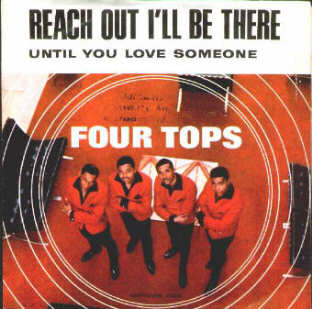
Brian Holland, Lamont Dozier, and Eddie Holland, collectively known as Holland-Dozier-Holland (H-D-H), are synonymous with the sound of Motown. Their string of hits in the 1960s and beyond fueled the success of the record label, shaping popular music and paving the way for R&B to dominate the airwaves. Each song on this playlist, from The Four Tops’ powerful “Reach Out (I’ll Be There)” to The Supremes’ iconic “Where Did Our Love Go,” credits one or more members of H-D-H. With a blend of melody, rhythm, and hooks that remain timeless, the team’s work redefined what hit songwriting could accomplish.

This songwriting trio didn’t merely write songs—they crafted narratives of love, heartbreak, and resilience that resonated with audiences across generations. Tracks like “This Old Heart of Mine (Is Weak for You)” by The Isley Brothers and Marvin Gaye’s “Can I Get a Witness” reveal the emotional depth in their compositions, supported by rhythms and production styles that have endured decades of cover versions. Their songs often feel instantly recognizable, whether it’s the infectious chorus of Chairmen of the Board’s “Give Me Just a Little More Time” or the stomping beat of Junior Walker & the All-Stars’ “(I’m A) Road Runner.”

The irony, however, is that Eddie Holland, despite being a key member of the team, had only one top 40 pop single as a solo artist, “Jamie”—and it wasn’t written by any member of Holland-Dozier-Holland. Instead, it was penned by Barrett Strong and William “Mickey” Stevenson, fellow Motown talents who contributed in their own right to the label’s powerhouse status. Though Eddie found his calling behind the scenes rather than as a performer, his experience as an artist gave him unique insight into the singer’s perspective, a quality that helped make H-D-H’s songs vocally compelling and relatable.

Beyond Motown, the trio’s influence stretched into rock, pop, and soul genres, as evident from covers and reinterpretations by artists like The Rolling Stones, Rod Stewart, and Bananarama. These renditions, like Linda Ronstadt’s cover of “Heat Wave” or James Taylor’s soulful take on “How Sweet It Is (To Be Loved by You),” show how their music transcended genre boundaries. Each version emphasizes the versatility of H-D-H’s songwriting, capable of adapting to various musical expressions while retaining its core appeal.

Ultimately, the legacy of Holland-Dozier-Holland isn’t just in their impressive catalog but in their contributions to the very essence of popular music. They captured the spirit of a generation through music that continues to find new audiences, sounding as fresh today as it did over half a century ago. Their work endures, a testament to their genius, and is rightly celebrated by the many artists who’ve covered and revived their timeless songs.

Follow Tunes Du Jour on Facebook

Follow Tunes Du Jour on Twitter

Follow me on Instagram


Your (Almost) Daily Playlist: 8-27-23

The Captain & Tennille’s “Love Will Keep Us Together” was a huge hit in 1975, but not everyone agreed with its message. Ian Curtis, the leader of Joy Division and a newlywed in 1975, was one of them. His composition “Love Will Tear Us Apart” could be seen as a response to the cheerful song, expressing his disillusionment with love and life. He took his own life in 1980, a month before his song was released as a single, on its way to becoming a classic.

Daryl Dragon, better known as The Captain, a nickname given to him by The Beach Boys’ Mike Love, was born on this date in 1942. A few of his duo’s hits are included on today’s playlist.

Follow Tunes du Jour on Facebook

Follow Tunes du Jour on Twitter

Follow me on Instagram